
Participating Lender Network





How to Finance Asbestos Abatement
A popcorn ceiling in a home built before the 1980s, old vinyl floor tiles lifting at the corners, or deteriorating insulation around a basement pipe can quickly turn a routine renovation into a much bigger question: could asbestos be hiding in the materials you are about to disturb? Once asbestos is confirmed, handling it correctly protects your household’s health and keeps a renovation legal and on schedule. Asbestos abatement costs about $1,200 to $3,300 for a single area and $15,000 to $50,000 or more for a whole-home job, and how you pay depends on what material contains it, whether you remove or seal it, and whether a covered event disturbed it. The detail that saves the most money is one many homeowners never learn: intact asbestos can often be sealed in place for a fraction of the cost of full removal.
Key Takeaways
- Cost depends on the material and location: a popcorn ceiling runs $3 to $10 per square foot, floor tile $5 to $15, and pipe wrap $200 to $400 per linear foot.
- Encapsulation (sealing in place) costs 50% to 70% less than removal and is allowed when the material is intact and not in a renovation path.
- A single-area job averages around $2,200, while whole-home abatement across multiple materials reaches $15,000 to $50,000+.
- Disposal and containment aren’t optional line items: hazardous-waste disposal alone can run $500 to $2,000 and makes up a meaningful share of the bill.
- Asbestos work legally requires a licensed, certified contractor in most states; DIY removal is illegal in many and risky everywhere.
- Insurance covers abatement only when a covered peril disturbed the asbestos, not for voluntary or pre-sale removal.
How Much Does Asbestos Abatement Cost by Material?
The single biggest cost driver isn’t the contractor or your location, it’s what material the asbestos is bonded into, since that determines how easily fibers release and how much containment the job needs. Most single-area abatement runs $460 to $6,000, averaging around $2,200, while whole-home projects across several materials reach $15,000 to $50,000 or more.
| Material | Removal Cost | Friable? |
|---|---|---|
| Popcorn ceiling | $3-$10 / sq ft | Yes (spray texture) |
| Floor tile & mastic | $5-$15 / sq ft | No (unless broken) |
| Cement-asbestos siding | $8-$20 / sq ft | No (unless broken) |
| Vermiculite attic insulation | $5-$15 / sq ft | Yes |
| Pipe / boiler wrap | $200-$400 / linear ft | Yes (high risk) |
Cost ranges from UseCalcPro and HomeGuide. Friable material (crumbles by hand) needs the most rigorous containment.
Asbestos Removal Cost by Material
Bars show relative cost per square foot (removal in blue, encapsulation in green). Figures from UseCalcPro.
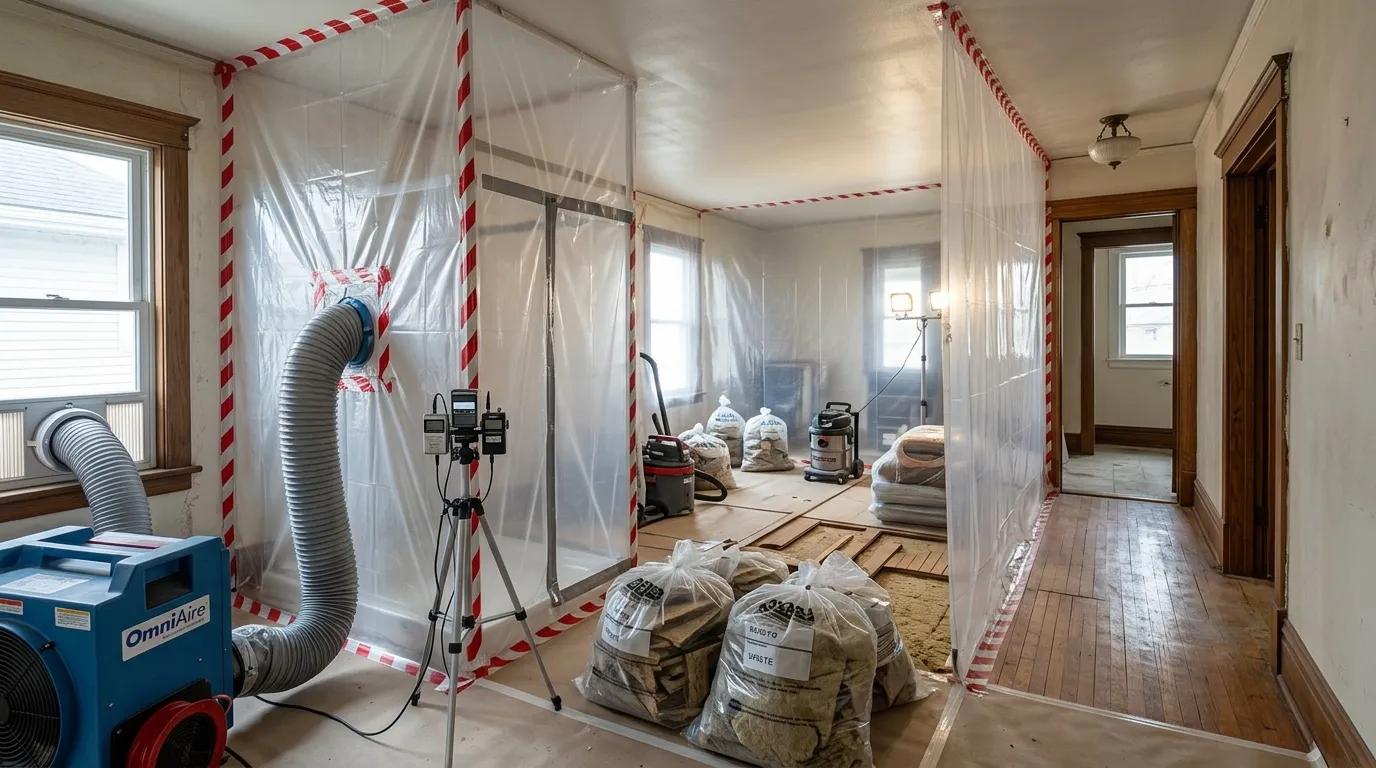
Beyond the material rate, every job carries fixed costs that set a floor of roughly $1,500 even for a small area:
- Testing: a pre-removal lab test runs $250 to $850, and post-abatement air clearance adds $200 to $400. Clearance uses one of two lab methods: phase contrast microscopy (PCM) for standard residential jobs, and the more sensitive transmission electron microscopy (TEM), which is required under EPA AHERA rules for schools and larger abatements.
- Containment: poly sheeting, HEPA negative-air machines, and a decontamination chamber make up 60% to 70% of a small-job bid.
- Disposal: hazardous-waste transport and licensed-landfill fees run $500 to $2,000 and can be 20% to 30% of the total.
- Replacement: whatever gets removed (ceiling, floor, siding) needs replacing, a separate cost on top of abatement.
Costs also land at the higher end in strict-regulation states like New York and California.
Asbestos Removal or Encapsulation: Which Option Makes More Sense?
This is the decision that most changes your bill, and many homeowners don’t know they have a choice. Encapsulation seals the asbestos in place with a specialty bonding coating so fibers can’t release, and it runs $2 to $6 per square foot versus $5 to $25 for full removal, making it 50% to 70% cheaper because it skips demolition, hazardous-waste disposal, and extensive clearance testing.
The catch is that encapsulation leaves the asbestos in the home, so the choice comes down to the material’s condition and your plans:
- Encapsulation fits when: the material is intact, non-friable, and not in the path of a renovation, for example solid cement siding or an undisturbed floor under new flooring.
- Removal is required when: the material is damaged, friable (crumbling), or has to come out for a remodel or demolition, since sealing won’t help if you’re cutting into it anyway.
Encapsulation lowers today’s cost but defers the problem: if you later renovate, sell to a buyer who wants it gone, or the material deteriorates, you pay for removal then. Factor that into which one you finance.
Do You Need a Licensed Contractor to Remove Asbestos?
Yes, and this isn’t a corner you can cut to save money. Asbestos abatement legally requires a licensed, certified contractor in most states, and DIY removal is illegal in many jurisdictions because improper handling releases fibers that cause mesothelioma and lung cancer.
The rules that shape the cost and the process come from federal law and are often stricter at the state level:
- Certified-only work: most states require a licensed abatement contractor regardless of the building type, and many require a permit before work begins.
- Disposal is regulated: under EPA NESHAP rules, asbestos waste must be sealed in labeled, leak-tight 6-mil bags and taken to a specially permitted landfill, never regular trash. Improper disposal is a federal offense.
- Notification thresholds: for larger jobs (generally 160 square feet or 260 linear feet), the contractor must notify the state air regulator about 10 working days before starting.
- Documentation: the contractor provides the survey, the waste shipment manifest, and the air clearance report, paperwork a future buyer’s inspector will want to see.
Using an unlicensed contractor who quotes low by skipping notifications and proper disposal shifts the legal and financial liability onto you. The remediation and restoration hub covers certified-contractor requirements across hazard types.
Does Homeowners Insurance Cover Asbestos Removal?
Usually not, with one important exception. A standard policy treats asbestos as an excluded pollutant, so it won’t pay for voluntary or pre-sale removal, but it may cover abatement when a covered peril, like a fire, storm, or burst pipe, disturbed previously stable asbestos.
The distinction works like this:
- Not covered: deciding to remove asbestos on your own, finding it during a planned renovation, or abating it before a sale. These come out of pocket.
- Often covered: when a fire or a tree through the roof disturbs asbestos shingles or insulation, the abatement is typically folded into the covered damage claim, since it’s part of restoring a covered loss.
When abatement is tied to a covered loss, the contractor usually works through the insurance adjuster’s pricing, and you finance only the deductible and anything above your coverage limit. Some counties also run small grant programs ($500 to $2,500) for income-qualified homeowners facing asbestos hazards, worth checking before you borrow.
How Do You Finance Asbestos Abatement?
With jobs ranging from about $1,500 to $50,000, the right option depends on the size of the project and how urgent it is.
- Personal loan: funds within days with no lien on your home, which fits a single-area abatement or an urgent hazard, and works with any licensed contractor.
- Home equity loan or HELOC: usually the lowest rate for a large whole-home abatement, with the tradeoff of closing costs and a few weeks to fund.
- FHA Title I loan: can finance asbestos removal as a health-and-safety improvement up to $25,000 without home equity, useful when you lack equity to draw on.
- Contractor payment plans: some abatement firms structure payment in installments tied to project milestones, but compare the total against an outside loan first.
How Do You Qualify for Asbestos Abatement Financing?
Qualifying starts with confirming the material and the abatement method, since those decide how much you actually need to finance.
Get a licensed inspection and pin down remove vs. encapsulate. Have a certified inspector survey and lab-test the material, then get bids for both removal and encapsulation where the material is intact. This can cut the amount you finance dramatically, so it’s the first step, not an afterthought.
Get itemized bids that separate abatement, disposal, and replacement. Insist each quote breaks out testing, containment, disposal, and the replacement of whatever’s removed, since a lump-sum bid hides where the money goes and a lowball number often means skipped disposal or notification. Finance the complete, compliant job.
Match the loan to size and urgency, then check your credit. A prequalified personal loan funds fast for a single area; a home equity option costs less for a whole-home job. Review your credit report for errors and prequalify with a soft credit check to compare offers without affecting your score.
The Bottom Line
How you pay for asbestos abatement depends on the material, whether you remove or seal it, and whether a covered event caused the exposure. If a fire or storm disturbed the asbestos, file the insurance claim and finance only the gap. For voluntary or renovation-driven work, the cost is yours: a personal loan funds fast for a single area, a home equity loan costs less for a whole-home job, and an FHA Title I loan helps when you lack equity.
Before you borrow, get a licensed inspection and ask for both removal and encapsulation bids, since sealing intact asbestos in place can cost less than half of full removal and may shrink the loan you need, or remove it entirely.
Explore related resources
The information provided by Pasha Funding is for educational and informational purposes only and should not be considered financial, legal, or tax advice. Every homeowner’s financial situation is different, and the financing options discussed may not be suitable for everyone. Before choosing a financing solution, carefully review the lender’s terms and consider consulting a qualified financial professional if needed.
Pasha Funding is a financing marketplace that connects homeowners with financing options offered by participating lending partners. We do not make loans, determine credit eligibility, or guarantee approval or specific loan terms. Pasha Funding is not a direct lender. We may receive compensation from participating lending partners when users submit an application or obtain a loan through our platform. This compensation may affect how and where financing options appear, but it does not influence our editorial evaluations.
Financing offers, rates, terms, and availability are determined solely by participating lenders and may change without notice. Our editorial content is created independently to help consumers better understand home improvement financing. While we strive to keep information accurate and current, financing products, lender requirements, rates, and offers may change over time. Any opinions expressed are those of the author and have not been reviewed, approved, or endorsed by our lending partners.


Frequently Asked Questions
In this guide
- How much does a bathroom remodel cost?
- Should you finance a bathroom remodel or pay cash?
- What are the best ways to finance a bathroom remodel?
- Which bathroom remodel financing option is right for you?
- What do you need to qualify for bathroom remodel financing?
- What do bathroom remodel loan rates look like?
- How to improve your chances of approval for a bathroom remodel loan
- Common costs and fees to consider
- Will a bathroom remodel increase your home’s value?
- The bottom line
how it works
3 Simple steps to
finance your project.
Getting started only takes a minute. Complete one simple application to compare available financing offers from over 18+ lenders, choose the option that fits your budget, and move forward with your home improvement project.
Asbestos Abatement Financing Calculator
1. Enter Your Desired Loan Amount
Your Estimate
Monthly Payment
-
This calculator provides estimates for illustrative purposes only and does not constitute an offer of credit or a commitment to lend. Final APRs, loan amounts, and terms depend on credit approval, income verification, and lender underwriting criteria. Minimum and maximum rates/terms vary by state.
Powered by: Pasha Funding
Risk-Free Prequalification
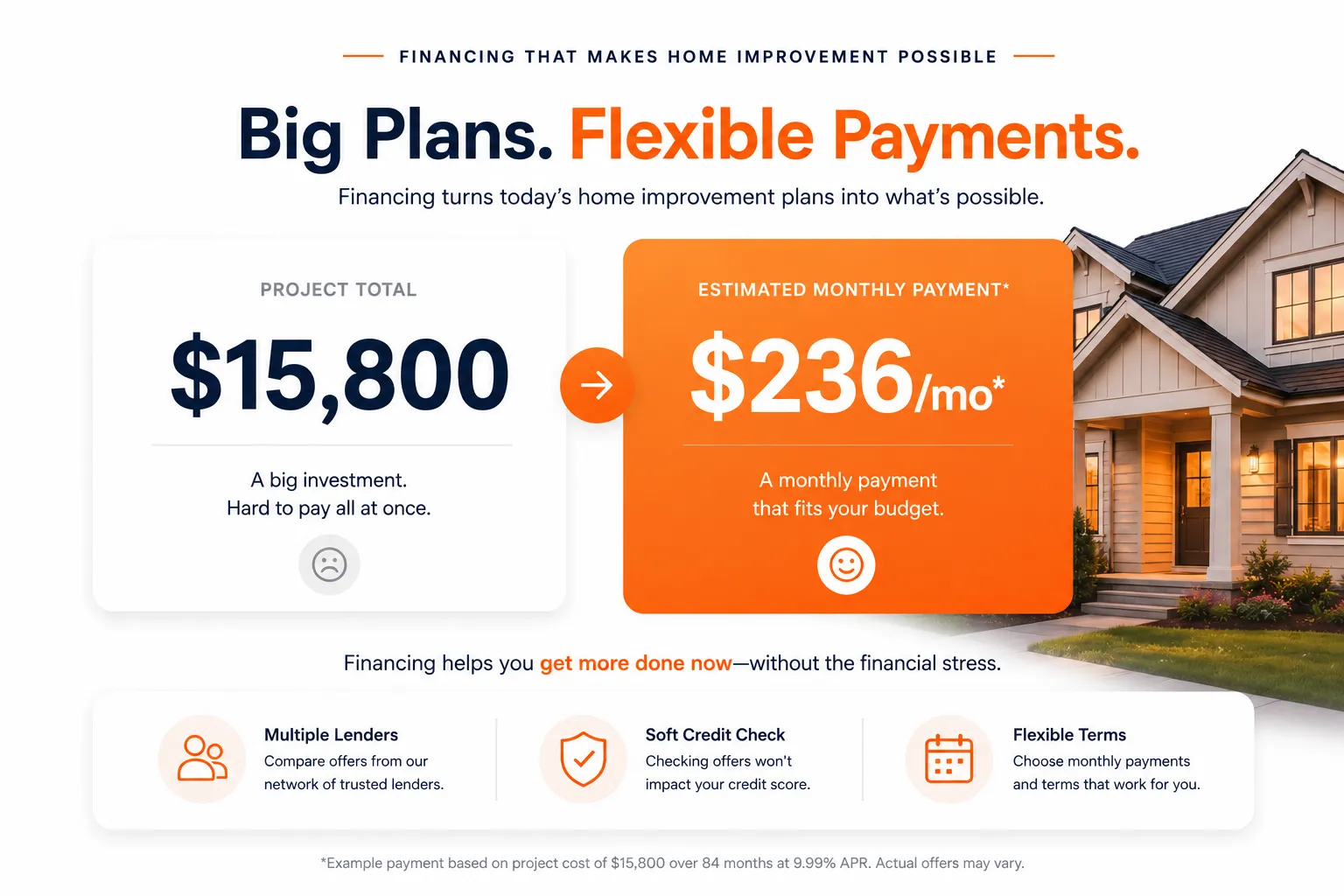
Checking offers won’t impact your credit.
It’s common for homeowners to delay applying because they’re worried about their credit score. With a soft credit check, you can review available financing options without any impact to your credit score.2