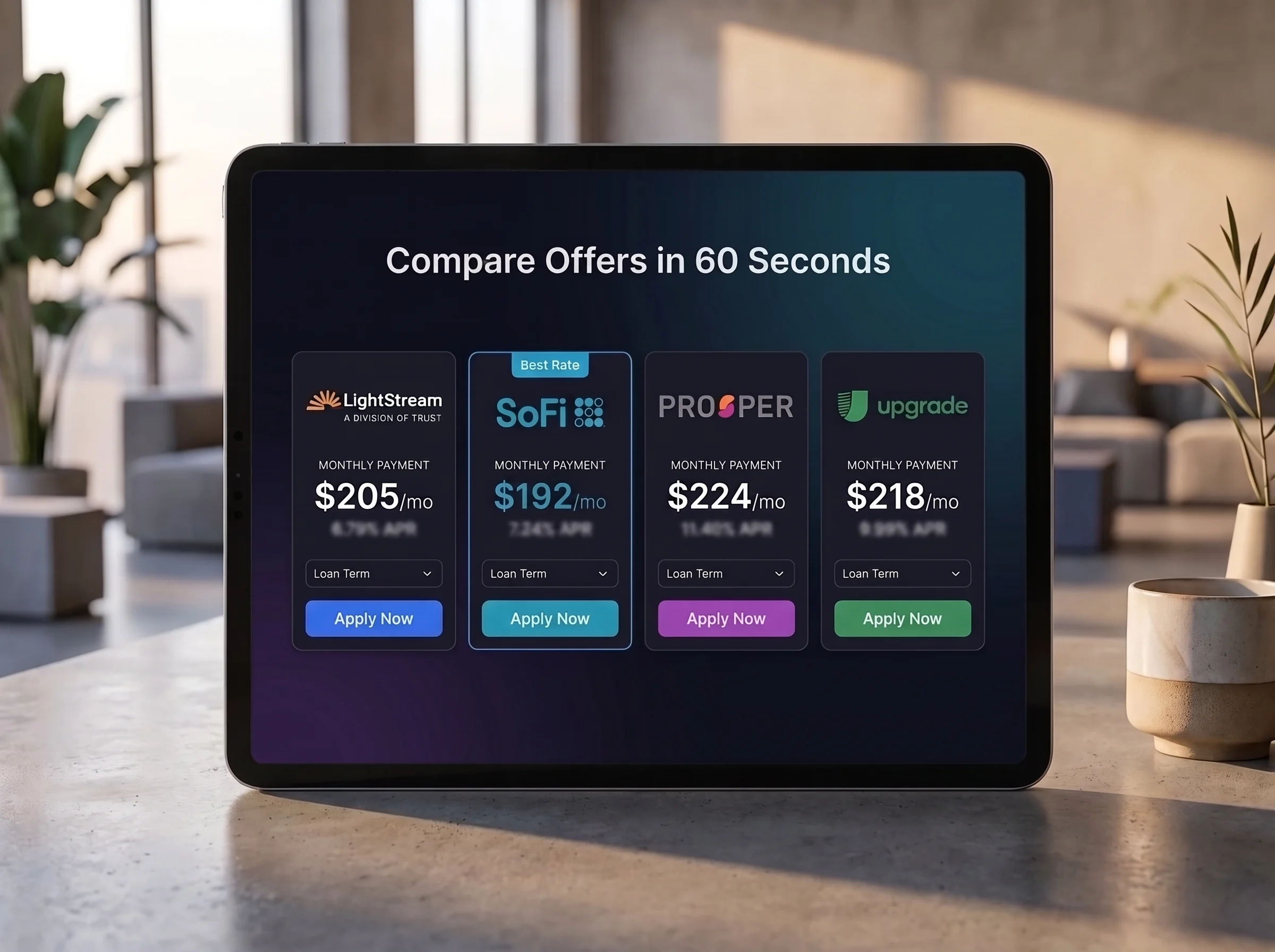
Participating Lender Network





How to Finance a New or Used Manufactured Home
Financing a manufactured home comes down to one question more than any other: is the home titled as personal property or as real estate? That single distinction, not your credit score or the price, usually decides whether you get a low-rate mortgage or a costlier chattel loan. A home on a permanent foundation on land you own can be financed like any house, through FHA, VA, USDA, or conventional programs, while a home on leased land or not permanently affixed is typically financed with a personal property loan at a higher rate. Understanding which path applies to you, and whether you can move from one to the other, is the most valuable thing you can do before you borrow.
Key Takeaways
- How the home is titled, personal property or real estate, matters more than any other factor in setting your rate.
- A chattel loan (personal property) typically costs 2 to 4 percentage points more than a mortgage, with shorter terms and fewer protections.
- A home on a permanent foundation on owned land, titled as real estate, can qualify for FHA, VA, USDA, or conventional mortgages.
- About 42% of manufactured homes are bought with chattel loans, and some of those buyers could have qualified for a cheaper mortgage.
- Down payments range from 0% (VA and USDA) to 3.5% (FHA) to 5% or more (conventional), with tougher credit requiring more.
- Only homes built to the HUD Code after June 15, 1976 qualify for most of these loan programs.
Manufactured, Mobile, or Modular? What You’re Financing
The label on the home affects which loans you can get, so it helps to be precise. A manufactured home is one built in a factory to the federal HUD Code after June 15, 1976, and that build date is a hard line for financing.
Homes built before June 15, 1976, are properly called mobile homes, and most modern loan programs, including FHA, will not finance them. Manufactured homes built after that date to the HUD Code are eligible for the full range of programs, provided they meet each program’s requirements. Modular homes are a separate category: they are also factory-built but constructed to the same state and local codes as site-built houses, and they are generally financed like any conventional home rather than under manufactured-home rules. Before you shop for a loan, confirm the home’s build date and that it carries its HUD certification label, since that determines which doors are open to you.
Personal Property vs. Real Property: Why It Matters for Manufactured Home Financing
How your manufactured home is classified can have a major impact on your financing options, loan terms, and overall borrowing costs. A manufactured home titled as personal property is financed with a chattel loan, while one titled as real estate can be financed with a standard mortgage at a substantially lower rate.
According to the Consumer Financial Protection Bureau, a manufactured home titled as personal property generally must be financed with a chattel loan, the same category of loan used for vehicles. Chattel loans are easier to get and close quickly, but they carry interest rates that run roughly 2 to 4 percentage points higher than mortgages, shorter terms of 15 to 20 years, higher denial rates, and fewer consumer protections. A home on a permanent foundation on land you own, titled together as real estate, can instead be financed with a mortgage, at a lower rate, over up to 30 years, with the standard borrower protections. The CFPB has found that about 42% of manufactured homes are bought with chattel loans, and notably, many of those borrowers own their land and could have qualified for a mortgage. Converting a home from personal property to real property, where your situation allows it, can drop your rate by those same 2 to 4 points, which adds up to a large sum over the life of the loan.
What Loan Options Are Available for a Manufactured Home?
Several programs finance manufactured homes, and which fit depends mainly on whether the home is real or personal property, whether you own the land, and your credit. Here is how the main options compare.
FHA Loans (Title I and Title II)
The FHA offers two paths. Title I can finance a home only, without the land, which makes it one of the few government-backed options for a home on leased land, with terms up to 20 years for a home alone or 25 years with a lot. Title II finances the home and land together as real estate over up to 30 years, and accepts credit scores as low as 580 with 3.5% down, or 500 with 10% down, which makes it a strong option for weaker credit.
VA and USDA Loans
For eligible veterans and service members, a VA loan can finance a manufactured home, often with no down payment, though the home must be on a permanent foundation, titled as real estate, and meet minimum size rules. USDA loans do the same for buyers in eligible rural areas who meet income limits, also with no down payment. Both require the home to be real property.
Conventional Loans (Fannie Mae and Freddie Mac)
Fannie Mae’s MH Advantage and Freddie Mac’s CHOICEHome programs finance manufactured homes as real estate over 30 years, with down payments as low as 3% and the lowest rates of the group. In exchange, they have the strictest requirements: typically a 620 credit score, a debt-to-income ratio under 43%, a permanent foundation, and design features like a driveway and sidewalk.
Chattel and Personal Loans
A chattel loan finances the home as personal property, which is often the only route for a home on leased land in a manufactured housing community. It closes fast but costs more. A personal loan, with its short term and high rate, is a last resort for small amounts when nothing else is available.
What Down Payment and Credit Score Do You Need for a Manufactured Home?
Requirements vary widely by program, which is one more reason the loan type matters. Down payments run from nothing to 20% or more, and credit requirements from around 500 to 620, depending on the loan.
VA and USDA loans can require no down payment for eligible borrowers, FHA asks as little as 3.5% with a 580 score, and conventional programs generally start at 5% and want a 620 score. Chattel loans commonly require 5% to 20% down, and borrowers with weaker credit may need considerably more, sometimes up to 40%. On credit, FHA and some chattel lenders will work with scores in the 500 to 580 range if you bring a larger down payment, while the lowest-rate conventional loans want 620 or higher. Because the same borrower can qualify for very different terms across programs, it pays to check where you stand and compare several options before committing.
Can You Finance a Manufactured Home With Bad Credit?
Yes, though weaker credit narrows your choices and raises your costs. Approval usually comes with a higher rate and a larger down payment, so confirm the monthly payment fits your budget before you commit.
FHA loans are typically the most forgiving, accepting scores as low as 500 with a 10% down payment, and specialized manufactured-home lenders often work with lower-credit borrowers who can put more money down. A cosigner with stronger credit can improve your terms, and credit unions are sometimes more flexible than large banks. Because a chattel loan already carries a higher rate, a lower score on top of it can make the loan expensive, so it is worth improving your credit where you can, correcting report errors and paying down balances, before you apply, and comparing a real-property mortgage option if your home and land situation allows one.
How Do You Qualify for a Manufactured Home Loan?
Lenders look at your credit, your income against your debts, your down payment, and, above all, how the home is classified. A little groundwork about the home itself comes first. Here is the order that works well:
- Confirm the home’s classification and eligibility. Check the build date and HUD label, and whether the home is titled as real property or personal property, and whether it sits on owned or leased land, since this determines which loans you can even apply for.
- Check your credit and debt load. Review your credit report for errors and total your monthly debts, since most lenders want your total debt, including the new payment, at or below about 43% of your gross income.
- Compare programs, then prequalify. Weigh FHA, VA, USDA, and conventional options for a real-property home, or FHA Title I and chattel for a home on leased land. Prequalify with a soft credit check where possible and judge offers on total cost over the full term, not the monthly payment.
| Loan Type | Best For | Property Type |
|---|---|---|
| FHA Title II / conventional | Home and land, best rates | Real estate |
| VA / USDA | Eligible veterans or rural buyers | Real estate |
| FHA Title I / chattel | Home on leased land | Personal property |
Choose financing that fits your situation. If you own, or plan to buy, the land beneath the home, a traditional real-property mortgage may offer lower borrowing costs. If the home will sit on leased land, financing is often limited to options such as FHA Title I or a chattel loan.
The Bottom Line
The best financing option depends on how the home is titled, whether you own the land, your credit, and your eligibility for government-backed programs. When the home is on a permanent foundation on land you own, a real-property mortgage, through FHA Title II, VA, USDA, or a conventional program like MH Advantage or CHOICEHome, almost always offers the lowest rate and the longest term. When the home sits on leased land, FHA Title I or a chattel loan is usually the path, at a higher cost. Veterans and rural buyers should check VA and USDA options, which can require no down payment, and buyers with weaker credit will often find FHA the most accessible.
Before you borrow, confirm how the home is classified and whether it can be titled as real property, since that one step can move you from a costly chattel loan to a far cheaper mortgage. Compare several lenders and programs, and weigh offers on the total amount you’ll repay rather than the monthly payment. This is general information rather than personalized advice, so a loan officer or housing counselor can help you match a program to your situation.
The information provided by Pasha Funding is for educational and informational purposes only and should not be considered financial, legal, or tax advice. Every homeowner’s financial situation is different, and the financing options discussed may not be suitable for everyone. Before choosing a financing solution, carefully review the lender’s terms and consider consulting a qualified financial professional if needed.
Pasha Funding is a financing marketplace that connects homeowners with financing options offered by participating lending partners. We do not make loans, determine credit eligibility, or guarantee approval or specific loan terms. Pasha Funding is not a direct lender. We may receive compensation from participating lending partners when users submit an application or obtain a loan through our platform. This compensation may affect how and where financing options appear, but it does not influence our editorial evaluations.
Financing offers, rates, terms, and availability are determined solely by participating lenders and may change without notice. Our editorial content is created independently to help consumers better understand home improvement financing. While we strive to keep information accurate and current, financing products, lender requirements, rates, and offers may change over time. Any opinions expressed are those of the author and have not been reviewed, approved, or endorsed by our lending partners.


Frequently Asked Questions
In this guide
- How Much Does an Outdoor Kitchen Cost?
- What the “Average” Price Leaves Out: Appliances and Utility Hookups
- How Do You Finance an Outdoor Kitchen?
- Do You Need a Permit for an Outdoor Kitchen?
- Does Homeowners Insurance Cover an Outdoor Kitchen?
- How Do You Qualify for Outdoor Kitchen Financing?
- The Bottom Line
how it works
3 Simple steps to
finance your project.
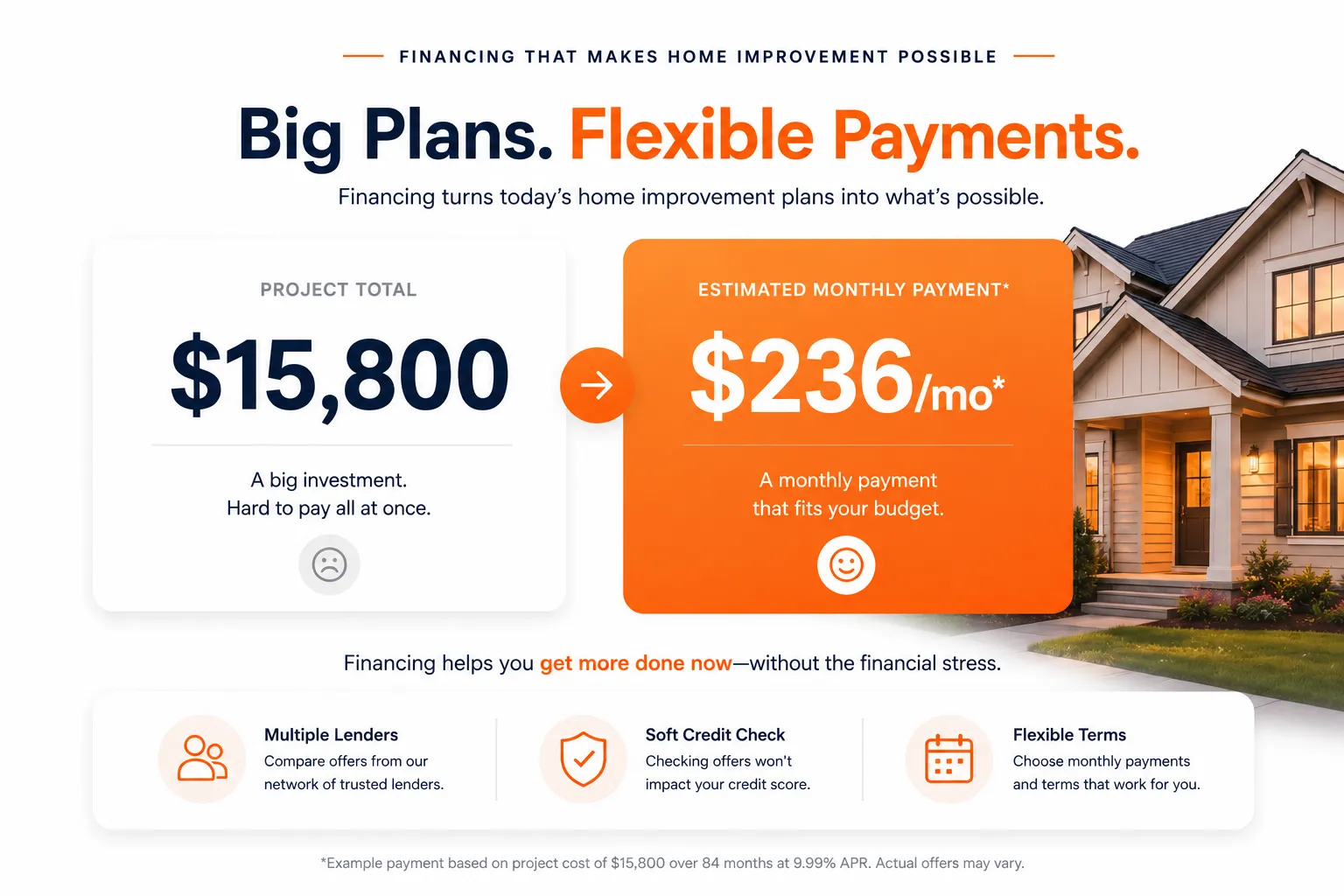
Getting started only takes a minute. Complete one simple application to compare available financing offers from over 18+ lenders, choose the option that fits your budget, and move forward with your home improvement project.
Manufactured Home Financing Calculator
1. Enter Your Desired Loan Amount
Your Estimate
Monthly Payment
-
This calculator provides estimates for illustrative purposes only and does not constitute an offer of credit or a commitment to lend. Final APRs, loan amounts, and terms depend on credit approval, income verification, and lender underwriting criteria. Minimum and maximum rates/terms vary by state.
Powered by: Pasha Funding
Risk-Free Prequalification
Checking offers won’t impact your credit.
It’s common for homeowners to delay applying because they’re worried about their credit score. With a soft credit check, you can review available financing options without any impact to your credit score.2