Participating Lender Network





How to Finance Home Insulation Projects
You can finance home insulation with a personal loan, a home equity loan or HELOC, a credit card, contractor financing, or a government-backed energy loan. Because insulation usually costs a few thousand dollars, the choice comes down to how fast you need the work done and whether you want to borrow against your home.
The process runs in four stages: get contractor quotes, choose a financing method, compare offers, then schedule the work once funds clear. Below is what each option costs, who it fits, and how to pay the least over the life of the loan.
Key Takeaways
- Most insulation projects cost between $1,700 and $8,000, small enough that they rarely justify borrowing against your home.
- Unsecured options like a personal loan, a 0% card, or contractor financing need no equity and fund quickly, which fits most standalone insulation jobs.
- Home equity loans and HELOCs usually cost less but make sense only when insulation is part of a larger renovation.
- A 0% credit card can cover a small attic top-up with no interest if you repay it before the promotional window ends.
- Energy savings lower the real cost of the project but rarely cover the loan payment on their own, so do not count on it paying for itself.
- Compare at least three offers on total cost over the full term, and check your utility and state energy office for insulation rebates.
How Much Does Home Insulation Cost?
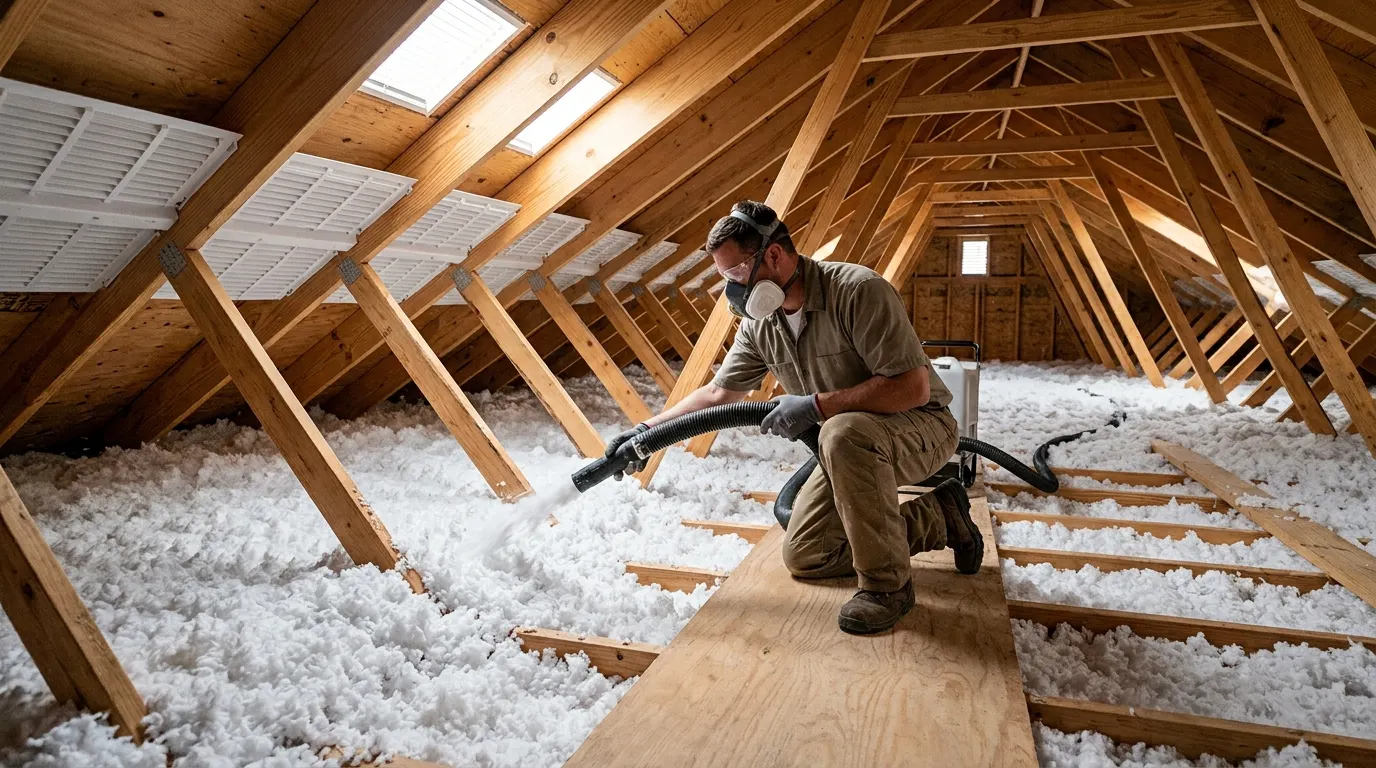
Most insulation projects cost between $1,700 and $8,000, and a whole-house job averages around $6,400. The figure depends on the area insulated, the material, and whether old insulation has to come out first.
Here is how the common projects price out:
| Project | Typical Cost | Notes |
|---|---|---|
| Attic top-up | $1,000 to $2,700 | Blown-in or batt over existing insulation |
| Whole-house | $2,800 to $12,300 | Attic, walls, floors, sometimes crawl space |
| Spray foam (single area) | $1,900 to $9,000 | Highest material cost, best air sealing |
| Air sealing add-on | $200 to $600 | Often paired with attic work |
Insulation is a mid-size expense, which matters for financing. It usually falls below the amount where home equity borrowing pays off, and within the range a personal loan, a 0% card, or savings can cover.
What Is the Best Way to Finance Insulation?
The best option depends on how fast you need it done and whether you have home equity. For a standalone insulation job, an unsecured option such as a personal loan or a 0% card usually fits better than a home equity loan, since a smaller project rarely justifies the closing costs and multi-week timeline of secured borrowing.
Here’s a quick comparison of the options:
| Option | Home at Risk? | Typical Speed | Best For |
|---|---|---|---|
| Personal loan | No | Days | Most projects; no equity needed |
| Cash | No | Immediate | Small jobs you can save for |
| Credit card (0%) | No | Immediate | Attic top-ups under the card limit |
| Contractor financing | Usually no | Days | Convenience, if you compare it |
| Home equity loan / HELOC | Yes | 2 to 6 weeks | Insulation bundled with a larger renovation |
| Government energy loan | Sometimes | Varies | Income-qualified or utility-backed programs |
Financing Options for Home Insulation
Personal Loans
A personal loan is an unsecured lump sum you repay on a fixed schedule, and it is the most common way to finance insulation. Because it is unsecured, your home is not collateral and the lender records no lien against your property.
That structure fits insulation well. The project rarely costs enough to justify a home equity loan’s closing costs, and a personal loan skips the appraisal and title work, so funds often arrive within days.
How a personal loan works for insulation:
- The lender reviews your credit, income, and existing debt. No appraisal, no home equity required.
- You are approved for a fixed amount at a fixed rate over a set term.
- Funds arrive as a lump sum, and you repay the same amount monthly until the balance is zero.
Pros:
- No equity required: Recent buyers and long-time owners qualify on the same footing.
- Your home stays out of it: Nothing is recorded against the property, and a missed payment cannot put the house at risk.
- No closing costs: You skip the 2% to 5% that home equity products charge.
- Fast and fixed: Funds in days, with a payment that cannot rise and a clear payoff date.
Cons:
- Costs more than home-secured borrowing: Lenders price unsecured debt higher, so if you have equity and a much larger project, a home equity loan may cost less.
- Shorter terms: Two to seven years is typical, which keeps the monthly payment higher than a long home-equity term.
- Credit drives pricing: Fair-credit borrowers are offered worse terms, so comparing several offers is important.
💡 Best for
Most insulation projects, especially for homeowners without equity, those who want funds quickly, or anyone who prefers not to secure a small project against their house.
💡 Pro tip
Apply to several lenders within a two-week window. Multiple inquiries for the same loan type generally count as one for FICO scoring, so you can compare real offers without extra damage to your score.
Cash
Paying cash costs nothing to borrow and is the right choice for any insulation job you can plan ahead for. Attic top-ups in the $1,000 to $2,700 range are reachable for many households within a few months of saving.
If high energy bills or an uncomfortable home are the reason you are acting now, saving may cost more in wasted energy than a loan would in interest.
💡 Best for
Smaller jobs you can schedule around your savings.
Credit Cards and 0% Offers
A credit card works well for insulation because many projects fit under a card’s limit and can be repaid inside a 0% introductory window. Those windows commonly run six to 18 months, long enough to clear a $2,000 attic job without interest.
The risk is what happens after the window. Any balance left when it closes moves to the standard rate, the highest cost of any option here.
💡 Best for
Attic top-ups and small jobs you can repay before the 0% window ends.
Contractor Financing
Contractor financing is arranged on site and funds quickly, but the terms come from a company that profits from a larger job. Read the offer closely before signing.
Plans labeled “no interest if paid in full” are usually deferred interest, not a true 0%. Missing the payoff deadline by even a small balance triggers interest charged back to the original purchase date.
💡 Best for
Convenience, once you have compared it against outside lenders.
Home Equity Loans and HELOCs
A home equity loan or HELOC borrows against your home’s value and generally costs less than unsecured borrowing, but it makes sense only when bundled with a larger renovation. For a standalone $3,000 attic job, the closing costs and multi-week timeline rarely pay off.
Most lenders cap borrowing at 80% to 85% of your home’s value, counting your first mortgage. That is your CLTV, or combined loan-to-value. You also pay 2% to 5% in closing costs, wait two to six weeks, and your home secures the debt.
💡 Best for
Insulation bundled into a whole-home efficiency or remodel project large enough to absorb the costs.
Government and Utility Energy Loans
Some states, utilities, and federal programs offer low-cost loans or on-bill financing for energy-efficiency work, including insulation. Availability depends on your location, income and utility provider.
Common paths include state energy-office loan programs, utility on-bill financing that adds the cost to your monthly bill, and the USDA’s rural home repair loans and grants for eligible households. Start with your utility and your state energy office.
💡 Best for
Income-qualified households and customers of utilities that run efficiency financing.
What Do You Need to Qualify for Insulation Financing?
Qualification depends on whether the loan is secured by your home. Unsecured options weigh credit and income; home-secured options add an equity and value test.
| Qualification Metric | Personal Loans (Unsecured) | Home Equity Loans / HELOCs (Secured) |
|---|---|---|
| Minimum credit score | 580 to 640, fair credit accepted | 620 to 680+, 680+ preferred for HELOCs |
| Minimum home equity | 0%, none required | 15% to 20% remaining after the loan |
| Max combined loan-to-value | N/A, home not appraised | 80% to 85% |
| Max debt-to-income | 43% to 50% | 43%, strict cap |
Thresholds reflect published underwriting standards. Because insulation is a smaller project, an unsecured loan is often available even to homeowners who could not clear the equity test for a home equity loan.
Does Insulation Pay for Itself?
Insulation is one of the few home upgrades that starts lowering your bills immediately, but it rarely pays for itself fast enough to cover a loan on its own. Treat the energy savings as a reduction in the real cost of the project, not as a way to make the payments.
Two numbers frame the value. The U.S. Department of Energy estimates that combining air sealing with insulation can cut heating and cooling costs by about 15% on average. At resale, the National Association of Realtors has reported homeowners recoup a large share of an insulation upgrade’s cost, more than most interior projects return.
Where a loan payment lands close to your monthly energy savings, the upgrade can be roughly cash-flow neutral: what you save on utilities offsets much of what you pay on the loan. That balance depends on your climate, energy prices and how leaky your home was to begin with, so ask your contractor for an estimated annual savings figure before you borrow.
💡 Pro tip
Ask for a blower-door test or energy audit before the work. It identifies where you are actually losing energy, so you insulate the areas that cut bills most rather than paying to over-insulate a space that was already sealed.
How to Apply for Insulation Financing
Insulation financing follows a predictable sequence: prepare your credit, get itemized quotes, compare offers, secure funding, then schedule the work. Knowing the order helps you avoid the two most common problems, paying a deposit before your loan is approved and letting a signed contract sit while financing drags.
-
Prepare your credit and finances.
A few weeks before you apply, pull your credit reports and dispute any errors, since a single correction can move your score. Credit utilization, the share of your available credit you are using, affects your score faster than almost anything else, so paying a card down from 80% to 30% of its limit can lift your score within a cycle or two. Avoid opening new accounts until your loan closes, and check your debt-to-income ratio, since lenders count the new payment against it.
-
Get two or three itemized contractor quotes.
Compare quotes on scope and R-value, the measure of an insulation material’s resistance to heat flow, not just the bottom-line price. Ask each quote to separate materials, labor, and any removal of old insulation, which is a common surprise cost billed at $1 to $1.50 per square foot. A cheaper quote using a lower R-value may cost more in energy over time.
-
Pick your financing method and compare offers.
Match the method to the project: a personal loan for most standalone jobs, a home equity loan only if insulation is part of a larger renovation, a 0% card for a small attic top-up. Prequalify with two or three lenders using soft credit pulls, then compare the total you would repay over the full term rather than the monthly figure, since a lower payment often just means a longer term and more interest. Check each offer for origination fees and prepayment penalties, and confirm the approved amount covers your bid plus a 10% buffer.
-
Confirm funding, then schedule the work.
Wait until the money is committed before you sign a contract with a start date or pay any deposit, so a financing delay never leaves you owing a contractor you cannot yet pay. Applying to several lenders within a two-week window generally counts as a single inquiry for FICO scoring, so you can shop without stacking damage on your score.
-
Keep your paperwork.
Save the itemized invoice and proof of payment. You will want them for any utility rebate application and for your records if you sell the home later.
A personal loan can take you from application to funded in as little as one to five business days, since it needs no appraisal. A home equity loan or HELOC typically adds two to six weeks for the home valuation and title work.
The Bottom Line
The right financing option depends on the size of your insulation project and whether you have available home equity. A personal loan is often a practical choice because it provides fast funding without requiring collateral. If the project is small, paying cash or using a 0% introductory APR credit card may cost less. If insulation is part of a larger renovation and you have home equity, a home equity loan or HELOC may offer lower borrowing costs. Before choosing a financing option, get multiple contractor quotes, compare at least three loan offers based on APR and total borrowing costs, and check for available utility rebates or state energy-efficiency incentives.
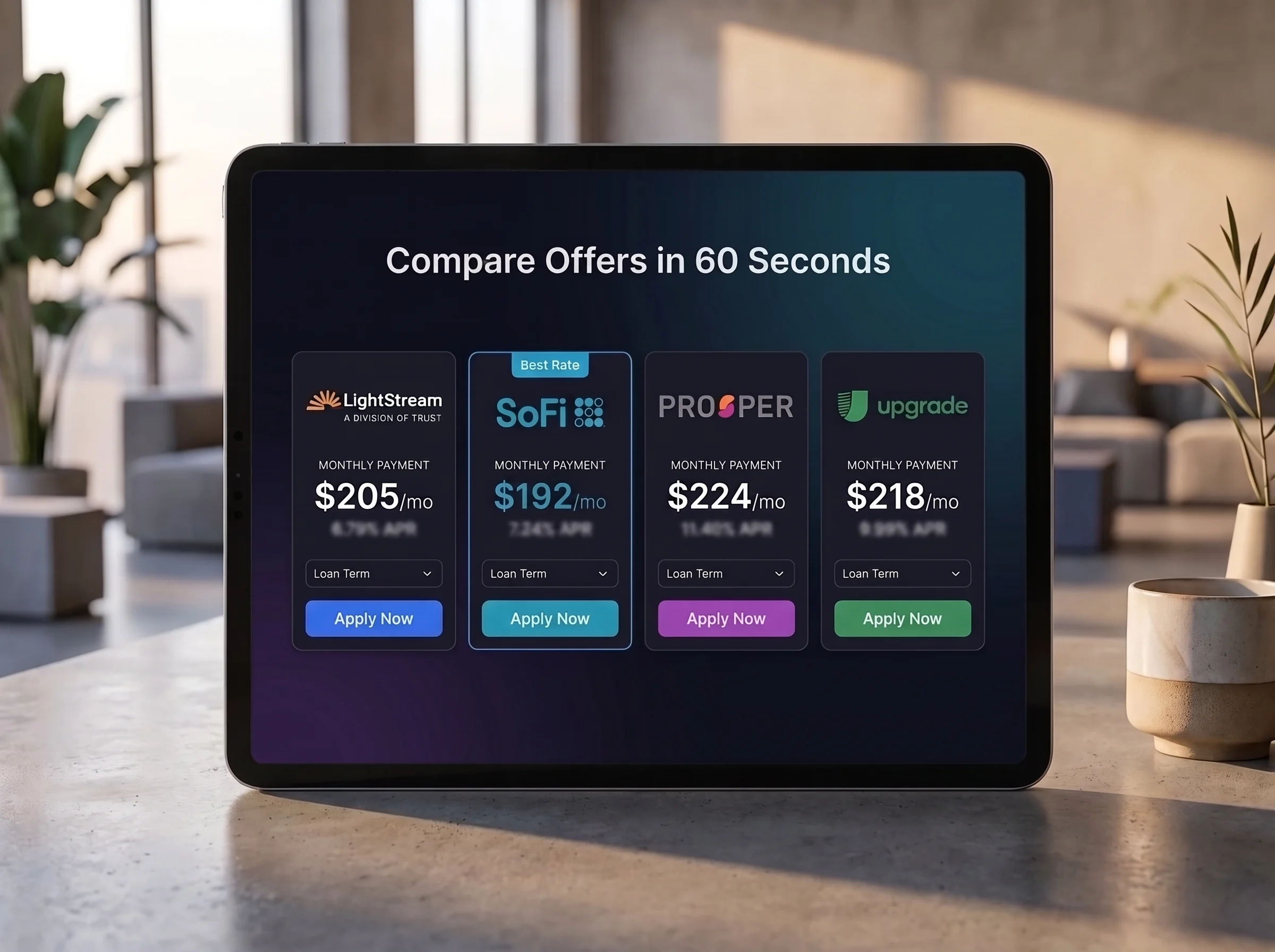
Offers are available from banks, credit unions, and online lending marketplaces, including Pasha Funding, which connects homeowners with multiple lenders through one application so you can review what you qualify for. Checking a rate takes just minutes.
The information provided by Pasha Funding is for educational and informational purposes only and should not be considered financial, legal, or tax advice. Every homeowner’s financial situation is different, and the financing options discussed may not be suitable for everyone. Before choosing a financing solution, carefully review the lender’s terms and consider consulting a qualified financial professional if needed.
Pasha Funding is a financing marketplace that connects homeowners with financing options offered by participating lending partners. We do not make loans, determine credit eligibility, or guarantee approval or specific loan terms. Pasha Funding is not a direct lender. We may receive compensation from participating lending partners when users submit an application or obtain a loan through our platform. This compensation may affect how and where financing options appear, but it does not influence our editorial evaluations.
Financing offers, rates, terms, and availability are determined solely by participating lenders and may change without notice. Our editorial content is created independently to help consumers better understand home improvement financing. While we strive to keep information accurate and current, financing products, lender requirements, rates, and offers may change over time. Any opinions expressed are those of the author and have not been reviewed, approved, or endorsed by our lending partners.


Frequently Asked Questions
how it works
3 Simple steps to
finance your project.
Getting started only takes a minute. Complete one simple application to compare available financing offers from over 18+ lenders, choose the option that fits your budget, and move forward with your home improvement project.
Insulation Financing Calculator
1. Enter Your Desired Loan Amount
Your Estimate
Monthly Payment
-
This calculator provides estimates for illustrative purposes only and does not constitute an offer of credit or a commitment to lend. Final APRs, loan amounts, and terms depend on credit approval, income verification, and lender underwriting criteria. Minimum and maximum rates/terms vary by state.
Powered by: Pasha Funding
Risk-Free Prequalification
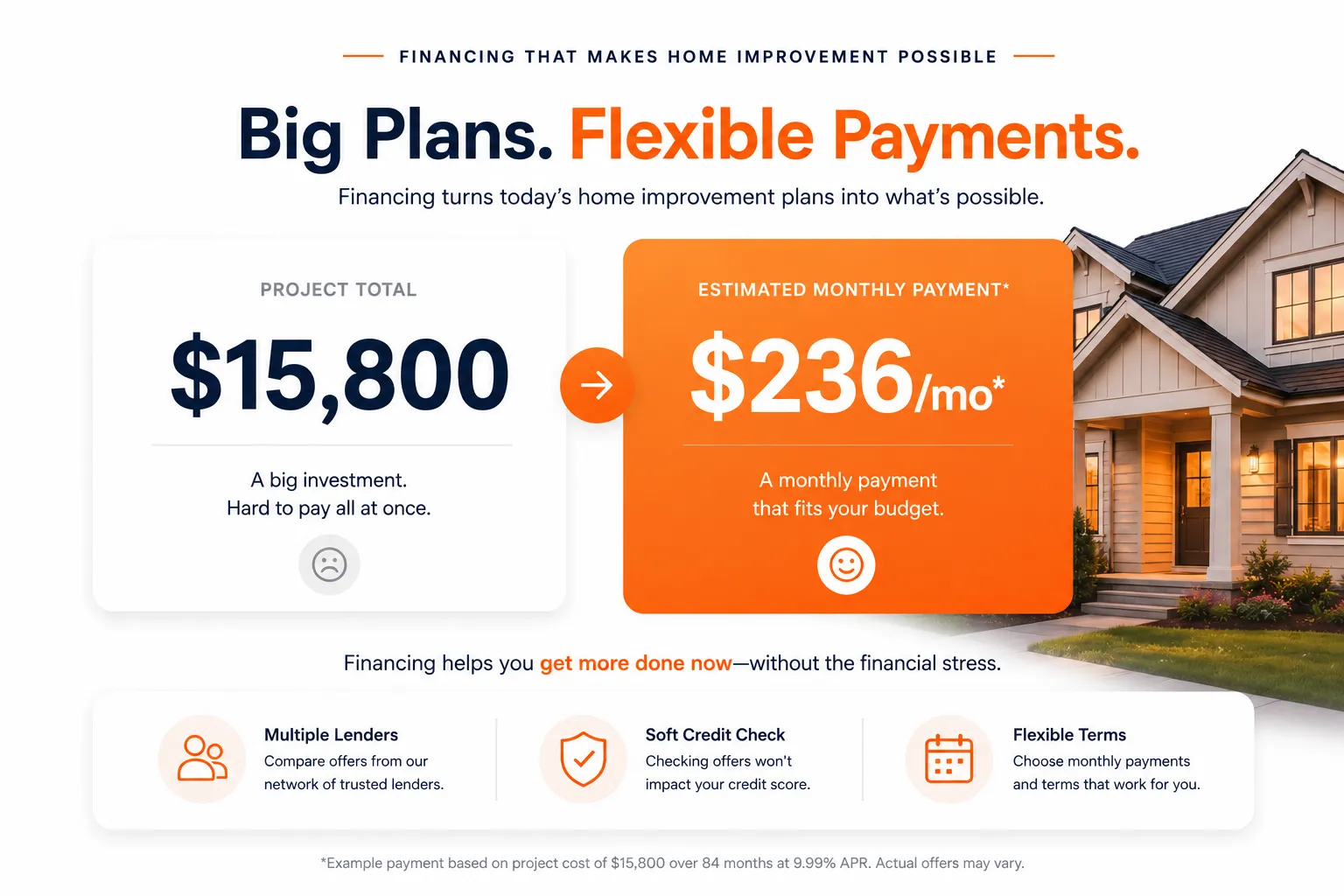
Checking offers won’t impact your credit.
It’s common for homeowners to delay applying because they’re worried about their credit score. With a soft credit check, you can review available financing options without any impact to your credit score.2