Participating Lender Network





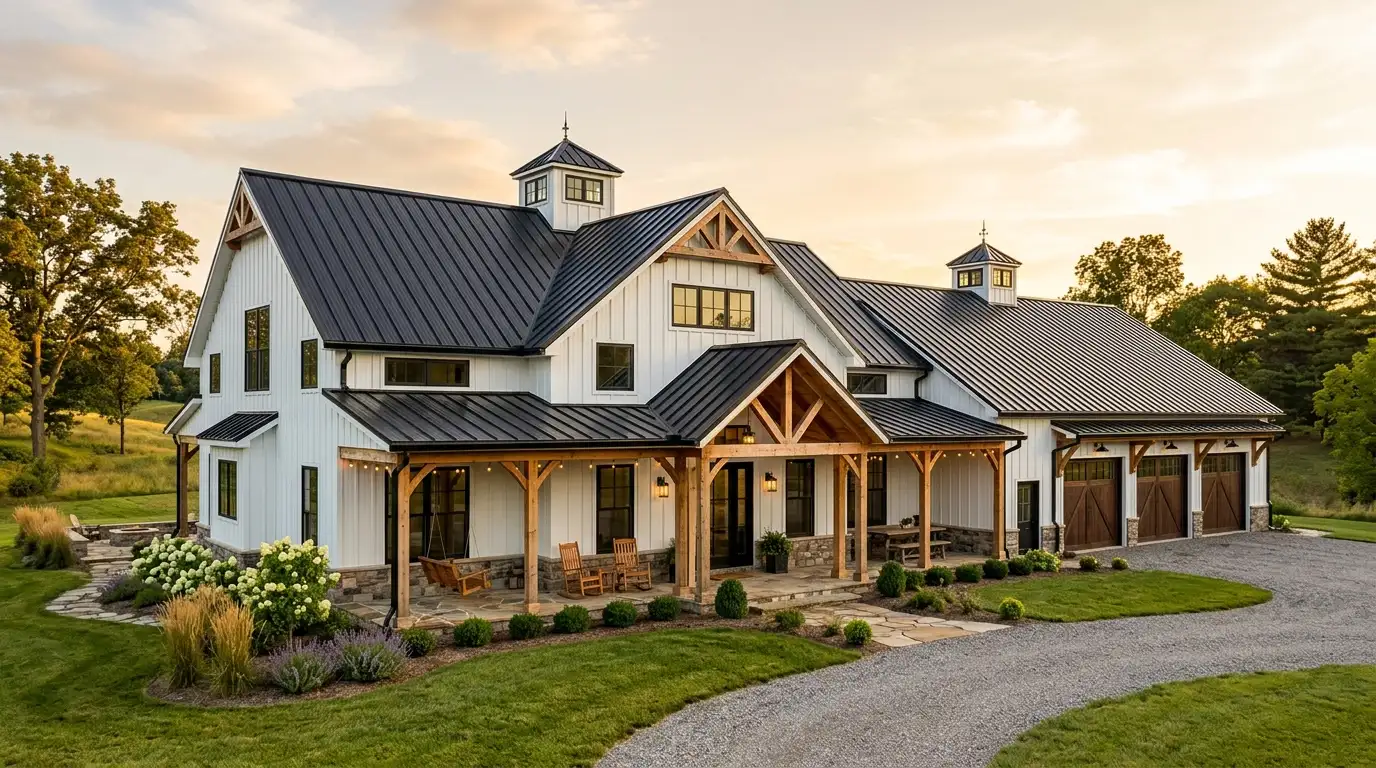
How to Finance a Barndominium
Financing a barndominium works differently from financing a typical home purchase, because in most cases you are building rather than buying. The main options are a construction-to-permanent loan, a USDA, FHA, or VA government-backed loan, a conventional construction loan, or Farm Credit financing. With most barndominiums costing $180,000 to $400,000 to build, these are mortgage-scale loans, and the right one depends on where you are building, your credit, and whether you qualify for a government program.
Key Takeaways
- Most barndominiums are financed with a construction-to-permanent loan, which funds the build in stages and converts to a mortgage when the home is finished.
- Government-backed USDA, FHA, and VA loans can lower the down payment to as little as 0% to 3.5% for those who qualify.
- The biggest obstacle is usually the appraisal, not your credit: barndominiums have few comparable sales, which makes lenders cautious.
- Expect a down payment of 20% or more on a conventional construction loan, and often more when buying land and building at once.
- A licensed builder and a detailed, itemized cost breakdown dramatically improve your odds of approval.
- Personal loans are too small to build a barndominium, but can be useful for finishing work, a prefab shell, or bridging a funding gap.
How Much Does a Barndominium Cost?
A barndominium usually costs $180,000 to $400,000 to build, though a bare shell can run far less and a large custom home far more. Because lenders release money against the build cost, an accurate, itemized budget is not just useful, it is central to getting approved.
What a Barndominium Costs to Build
Typical all-in cost range by build type.
Bar length reflects the top of each range. Figures from BarndoCosts and HomeGuide.
The land, foundation, and the level of interior finish move the number the most. A steel or post-frame shell is relatively cheap; it is the plumbing, electrical, HVAC, and finishes that turn a shell into a home and drive most of the cost.
Why Barndominiums Are Harder to Finance
The main reason a barndominium is harder to finance is not your credit or income; it is the appraisal. Lenders rely on comparable sales, or “comps,” to confirm a property’s value, and because barndominiums are still relatively uncommon in many markets, there often are not enough comparable sales nearby for an appraiser to support the value.
When a lender cannot easily confirm what your finished home will be worth, it sees the loan as riskier, which can lead to stricter terms or a denial. The non-traditional construction, steel or post-frame rather than conventional stick-built, adds to that hesitation with lenders who are unfamiliar with it.
The practical takeaway shapes everything below: your goal is to present the project as a standard, livable home with a clear, supportable value. A licensed builder, a complete set of plans, and an itemized budget do most of that work, and choosing a lender who already understands barndominiums removes much of the friction.
How to Finance a Barndominium
Because a barndominium is usually built rather than bought, most of these options are construction loans rather than standard mortgages. Here is how the main paths compare.
Construction-to-Permanent Loans
A construction-to-permanent loan is what most barndominium builders use. It funds the build in stages, called draws, released as the work hits milestones, then converts automatically into a long-term mortgage once the home passes final inspection. Because you close once, you pay a single set of closing costs.
The alternative is a construction-only loan, which finances just the build and requires a second loan, and a second closing, to refinance into a permanent mortgage when construction ends. The single-close route is simpler and usually cheaper.
USDA Construction Loans
If you are building in a USDA-eligible rural area and your income is within local limits, a USDA construction loan can require little or no money down. It is a single-close, construction-to-permanent loan backed by the U.S. Department of Agriculture, and it often carries competitive rates. The main limits are location, income caps, and property standards, covered in the USDA section below.
FHA Construction Loans
An FHA one-time-close construction loan allows a down payment as low as 3.5% and is not restricted to rural areas. The trade-offs are mortgage insurance and county loan limits, which can be tight for a larger rural build, plus the requirement that licensed contractors complete the work.
VA Construction Loans
For eligible veterans, active-duty service members, and some surviving spouses, a VA construction loan is often the strongest option available. It can require no down payment and no private mortgage insurance. As with any barndominium loan, the property still has to appraise and meet the lender’s standards.
Conventional Construction Loans
A conventional construction loan is not government-backed, so it has stricter requirements: commonly a 20% or larger down payment and a higher credit score. It is the standard path for buyers who do not qualify for a government program but have strong credit and savings.
Farm Credit and Rural Lenders
Farm Credit lenders and rural-focused banks finance many barndominiums, especially on acreage, and often value the land and any outbuildings toward your loan. They tend to understand non-traditional rural builds better than a typical bank, which can make approval smoother.
Where Personal Loans Fit
A personal loan is not big enough to build a barndominium, and it is not a substitute for a construction loan. Where it can help is around the edges: finishing an interior in phases, covering a prefab shell or specific upgrade, or bridging a short funding gap. Used that way, it funds fast and needs no equity, but it is a supplement to a mortgage-scale loan, not the main event.
Can You Get a USDA Loan for a Barndominium?
Yes, you can build a barndominium with a USDA construction loan, as long as the property sits in a USDA-eligible rural area and both you and the home meet the program’s requirements. It is one of the few paths to a zero-down barndominium.
The core USDA requirements include a property in an eligible rural location, household income within the area limit, and a home that meets USDA and HUD standards, including a permanent, HUD-compliant foundation. Lenders commonly look for a credit score around 640 or higher and a debt-to-income ratio near 41%, though those vary. The build must be a single-family primary residence, not an investment property or a working farm building.
One practical note: USDA construction loans are genuinely harder to find than USDA purchase loans, because not every USDA lender offers the construction version. It is worth confirming a lender handles USDA construction financing for barndominiums before you get far into planning.
Can You Get an FHA or VA Loan for a Barndominium?
Yes, both FHA and VA loans can finance a barndominium if the property qualifies, and each has a different appeal.
An FHA construction loan allows a down payment as low as 3.5% and is available nationwide rather than only in rural areas, which makes it a flexible option for buyers with moderate credit or limited savings. The trade-offs are mortgage insurance and FHA county loan limits, which can cap a larger build, and the property must meet FHA minimum standards on a permanent foundation.
A VA construction loan is often the single best option for those who qualify. Eligible veterans, active-duty service members, and some surviving spouses can build with no down payment and no private mortgage insurance. As with every barndominium loan, the appraisal and property standards still apply, so a supportable value and a licensed builder remain essential.
Barndominium Loan Requirements
Requirements vary by loan type, but lenders consistently look at the same core factors. Meeting them, and documenting them well, is what separates an approved file from a denied one.
| Requirement | Conventional Construction | Government-Backed (USDA / FHA / VA) |
|---|---|---|
| Credit score | 680 to 720+, best rates above 740 | Often 640+, varies by program |
| Down payment | 20% or more | 0% (USDA, VA) to 3.5% (FHA) |
| Builder | Licensed contractor required | Licensed contractor required |
| Plans and budget | Full plans and itemized cost breakdown | Full plans and itemized cost breakdown |
Some lenders operate nationwide and specialize in these builds, which can be worth seeking out if local banks are hesitant.
How to Improve Your Approval Odds
Because the appraisal is the real hurdle, qualifying for a barndominium loan is as much about presentation as it is about your finances. A few steps meaningfully improve your chances.
- Present the project as a standard home.
Emphasize that the finished barndominium is a permanent, livable residence with a foundation, standard utilities, and code-compliant construction. The more it reads like a conventional home on paper, the easier it is for an appraiser and lender to support.
- Use a licensed, experienced builder.
Lenders strongly prefer a licensed contractor, and one who has built barndominiums before can supply the plans, specs, and cost detail underwriters expect. This alone removes a common reason files stall.
- Bring complete plans and an itemized budget.
A full plan set and a line-by-line cost breakdown let the lender size the loan and schedule draws with confidence. Strengthen your own file too, by checking your credit, keeping debt-to-income in range, and saving toward the down payment.
- Choose a lender who knows barndominiums.
Not every bank will finance a non-traditional build. A lender experienced with barndominiums, including many Farm Credit and rural lenders, is far more likely to approve the project and price it fairly.
The Bottom Line
There is no single best way to finance a barndominium, since it depends on where you are building and what you qualify for. A construction-to-permanent loan is the standard choice for most builds, converting to a mortgage once the home is done. A USDA or VA loan could be the best fit if you qualify, since both can require zero down, while an FHA loan could work if you want a low down payment without a rural-area requirement. Whichever path fits, the appraisal is the real hurdle, so a licensed builder, complete plans, and an itemized budget matter as much as your credit.
Before you commit, settle your plans and budget with a builder who has built barndominiums before, confirm your property and loan eligibility early, and compare offers from lenders who understand these homes, on total cost rather than the monthly payment.
The information provided by Pasha Funding is for educational and informational purposes only and should not be considered financial, legal, or tax advice. Every homeowner’s financial situation is different, and the financing options discussed may not be suitable for everyone. Before choosing a financing solution, carefully review the lender’s terms and consider consulting a qualified financial professional if needed.
Pasha Funding is a financing marketplace that connects homeowners with financing options offered by participating lending partners. We do not make loans, determine credit eligibility, or guarantee approval or specific loan terms. Pasha Funding is not a direct lender. We may receive compensation from participating lending partners when users submit an application or obtain a loan through our platform. This compensation may affect how and where financing options appear, but it does not influence our editorial evaluations.
Financing offers, rates, terms, and availability are determined solely by participating lenders and may change without notice. Our editorial content is created independently to help consumers better understand home improvement financing. While we strive to keep information accurate and current, financing products, lender requirements, rates, and offers may change over time. Any opinions expressed are those of the author and have not been reviewed, approved, or endorsed by our lending partners.

Frequently Asked Questions
how it works
3 Simple steps to
finance your project.
Getting started only takes a minute. Complete one simple application to compare available financing offers from over 18+ lenders, choose the option that fits your budget, and move forward with your home improvement project.
Risk-Free Prequalification
Checking offers won’t impact your credit.
It’s common for homeowners to delay applying because they’re worried about their credit score. With a soft credit check, you can review available financing options without any impact to your credit score.2