
Participating Lender Network





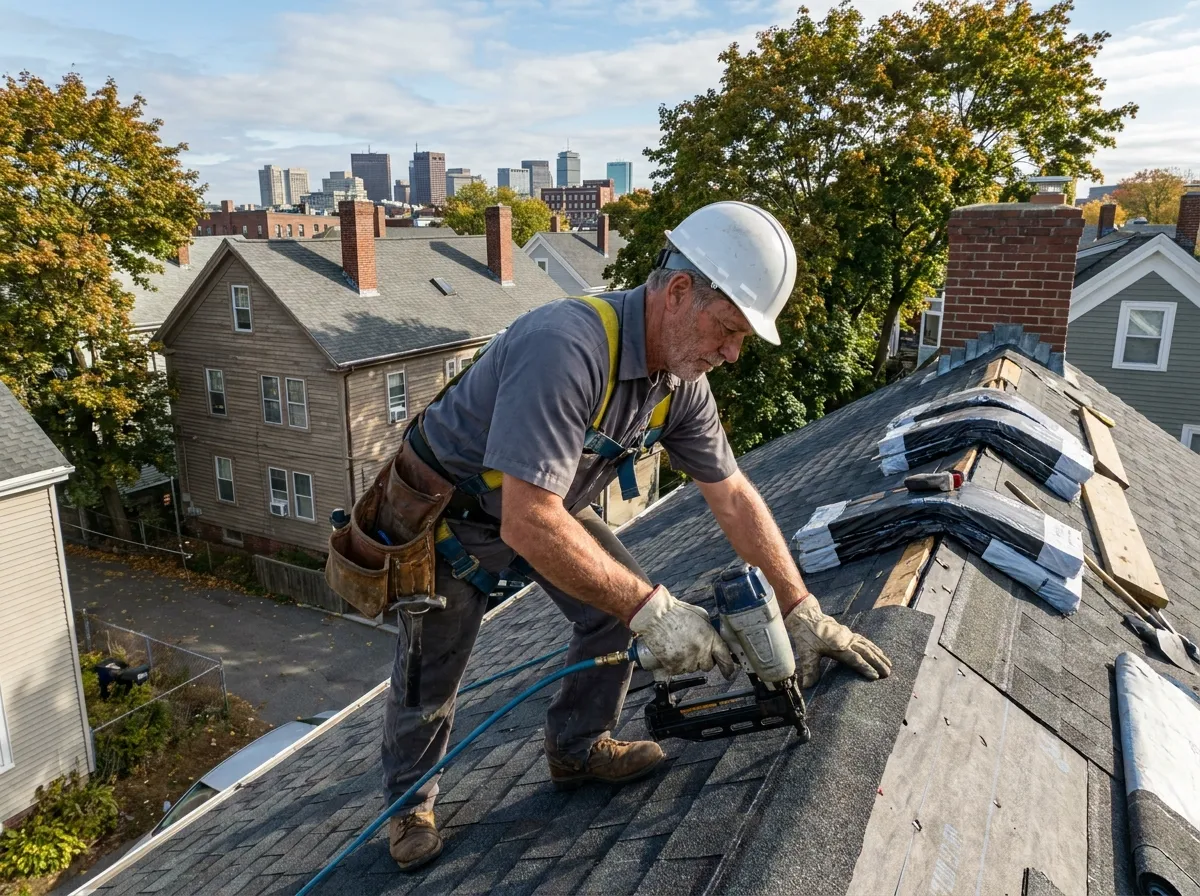
How to Finance a New Roof
A failing roof is rarely something you can put off, so the first question is usually how to pay for it fast without overpaying. You can finance a new roof with a personal loan, a home equity loan or HELOC, contractor financing, a cash-out refinance, or a government-backed loan, and if storm damage is involved, homeowners insurance may cover much of the cost. With most replacements running $8,000 to $25,000 and averaging around $9,500 to $16,000, the right choice depends on your timeline, credit, equity, and whether insurance is in play.
Key Takeaways
- Most roof replacements cost $8,000 to $25,000, averaging around $9,500 to $16,000, and premium materials can exceed $45,000.
- If damage came from a covered event like a storm, file an insurance claim first, then finance only the gap.
- A personal loan funds in days with no equity required, which suits an urgent roof or bridging an insurance shortfall.
- A home equity loan or HELOC usually carries the lowest rate if you have equity and can wait a few weeks to close.
- Know your policy’s ACV vs. RCV terms: an older roof on an actual-cash-value policy can leave a large out-of-pocket gap.
- Be cautious of storm-chaser roofers who appear after bad weather with high-pressure offers or inflated insurance claims.
How Much Does a New Roof Cost?
Most roof replacements run $8,000 to $25,000, with the national average around $9,500 to $16,000. Material is the biggest driver: asphalt shingles are the most affordable, while metal, tile, and slate cost considerably more.
What a New Roof Costs by Material
Typical installed cost range for an average home.
Bar length reflects the top of each range. Figures from NerdWallet and HomeGuide.
Beyond material, your total depends on the size and pitch of the roof, its complexity (valleys, dormers, and chimneys add labor), your local labor rates, and whether the crew finds rotted decking or other structural repairs once the old roof is off. A good contractor will note the possibility of hidden repairs in the estimate, so ask before signing.
Does Insurance Cover a New Roof?
Sometimes, and it is the first thing to check, because a covered claim can dramatically reduce what you need to finance. Homeowners insurance may pay for a roof damaged by a covered event, such as a storm, hail, wind, or a fallen tree, minus your deductible. It does not cover a roof that simply wore out with age, which is considered maintenance.
If your damage qualifies, file the claim before arranging financing, since you may only need to borrow the gap, or nothing at all. Two policy details decide how much that gap is:
ACV vs. RCV
How your policy settles a claim makes a large difference. A replacement cost value (RCV) policy pays what it costs to replace the roof today, without subtracting for age. An actual cash value (ACV) policy pays the depreciated value, replacement cost minus depreciation, so an older roof yields a smaller payout and a bigger out-of-pocket gap. Many RCV policies also pay in two stages: the depreciated amount first, then the remaining “recoverable depreciation” after you complete the work and submit documentation.
Financing the Gap
Even with a covered claim, you are responsible for your deductible and anything the payout does not cover. If insurance pays $10,000 on a $16,000 roof, you finance the $6,000 difference, often with a personal loan or a home equity option. Knowing your payout first lets you borrow the right amount.
💡 Watch for storm chasers
Be wary of roofers who show up unsolicited right after a storm offering to “handle” your insurance claim. Some use high-pressure tactics or inflate claims, which can leave you liable. Work with established, local, licensed contractors and get more than one estimate.
How Do You Finance a New Roof?
If insurance does not cover the full cost, or the roof is failing from age rather than damage, several financing options compete. The best one depends on how fast you need the work done, your credit, and your equity.
Personal Loans
A personal loan is an unsecured lump sum you repay at a fixed rate. It funds in as little as one to five business days, needs no home equity, and records no lien against your property. That speed makes it a strong fit for an urgent roof or for bridging an insurance shortfall, since you can move before more water damage sets in. Terms usually run two to seven years. Because it is unsecured, the rate is higher than a home-equity option, so if the roof can wait a few weeks and you have equity, compare a HELOC.
Home Equity Loans and HELOCs
If you have equity and a little time, a home equity loan or HELOC usually carries the lowest rate. A home equity loan gives a fixed lump sum; a HELOC works like a credit line. Both use your home as collateral, involve closing costs, and take longer to fund, often two to six weeks, which can be a drawback for an active leak. Most lenders cap combined borrowing at 80% to 85% of your home’s value, counting your first mortgage.
Contractor Financing
Many roofing companies offer financing at the point of sale, often with a promotional 0% period. It is convenient and can be genuinely low-cost, but confirm whether a “0%” offer is true zero interest or deferred interest, where missing the payoff deadline triggers back-charged interest. Read the terms and compare against an outside loan.
Cash-Out Refinance
A cash-out refinance replaces your mortgage with a larger one and gives you the difference for the roof. It can work if you can improve your mortgage rate too, but rarely if it means giving up a low existing rate on your whole balance.
Government-Backed Loans
For homeowners who cannot easily qualify elsewhere, the FHA Title I property improvement loan insures loans for repairs like a roof, with terms up to 20 years and no equity or appraisal required for smaller amounts. It allows up to $25,000 on a single-family home, and HUD sets no minimum credit score, though individual lenders do. Eligible rural homeowners may also qualify for USDA repair loans and grants.
0% Credit Cards
For a smaller repair or to cover a modest gap, a card with a true 0% introductory offer can be interest-free if you clear the balance before the promotion ends. For a full replacement in the thousands, a card is rarely the cheapest route once the standard rate kicks in.
Should You Finance a Roof or Wait?
With most home projects you can weigh waiting against acting, but a roof tilts toward acting, because the cost of delay is real. A small leak rarely stays small. Water works its way into decking, insulation, drywall, and framing, and can lead to mold, so a delayed roof often turns a five-figure job into a much larger one once interior repairs are added. If your roof is actively leaking or has storm damage, financing the fix now is usually cheaper than paying for the damage later.
The calculus is different if your roof is simply aging but still sound. In that case there is time to plan: get an inspection, gather estimates, and save toward part of the cost so you finance less when replacement does become necessary. The honest rule of thumb is to act quickly when there is active damage, and to plan and save when you are ahead of the problem.
Can You Finance a Roof With Bad Credit?
Yes, financing a roof with less-than-perfect credit is possible, though your options narrow and the cost rises. Because a failing roof is often urgent, having a path that does not depend on strong credit matters.
Credit unions and community banks are often the most flexible traditional lenders, and marketplace personal loans let you prequalify with a soft credit pull, so you can compare real offers without denting your score. Government-backed options help here too: the FHA Title I program is designed for home repairs and does not impose a federal minimum credit score, and some contractor plans approve lower scores, though sometimes on deferred-interest terms to watch closely. If a covered insurance claim applies, it can also shrink or eliminate the amount you need to borrow.
How Do You Qualify for Roof Financing?
Qualifying comes down to your credit, your income relative to your debts, and, for a secured loan, your home equity. A few steps improve your odds and your rate, even when time is tight.
- Check insurance and get an itemized quote.
If the damage may be covered, file the claim first so you know your payout. Then get a written, itemized roofing estimate, including possible decking repairs, so you finance the right amount once.
- Check your credit and debt-to-income ratio.
Pull your credit report, dispute errors, and pay down card balances, since utilization moves your score quickly. Most lenders want total monthly debt, including the new payment, at or below 43% of gross monthly income.
- Prequalify with two or three lenders.
Use soft-pull prequalification to compare real offers without affecting your score, then hold those against any contractor promotion. Compare on total cost over the full term, and check for origination fees and prepayment penalties.
| Qualification Metric | Personal Loans (Unsecured) | Home Equity (Secured) |
|---|---|---|
| Minimum credit score | 580 to 640, fair credit accepted | 620 to 680+ |
| Home equity needed | None | 15% to 20% |
| Funding speed | 1 to 5 days | 2 to 6 weeks |
These are typical benchmarks rather than firm cutoffs, and each lender sets its own bar. An unsecured loan skips the equity and appraisal steps, so it stays open to homeowners who cannot meet a secured loan’s requirements and need to act quickly, though it will not always be the cheapest.
The Bottom Line
There is no single best way to finance a roof, since it depends on your timeline, equity, and whether insurance is involved. If storm or other covered damage caused the problem, filing a claim first could cover most of the cost and leave only a small gap to finance. A personal loan could be the best fit when the roof is urgent or you lack equity, since it funds in days, while a home equity loan or HELOC could cost less if the roof can wait and you have equity. For weaker credit, an FHA Title I loan is worth a look. Because roof damage tends to compound, acting promptly on active damage usually beats waiting.
Before you commit, check your insurance coverage, get an itemized quote from a licensed local contractor, and prequalify with a few lenders so you can compare offers on the total you will repay rather than the monthly payment.
The information provided by Pasha Funding is for educational and informational purposes only and should not be considered financial, legal, or tax advice. Every homeowner’s financial situation is different, and the financing options discussed may not be suitable for everyone. Before choosing a financing solution, carefully review the lender’s terms and consider consulting a qualified financial professional if needed.
Pasha Funding is a financing marketplace that connects homeowners with financing options offered by participating lending partners. We do not make loans, determine credit eligibility, or guarantee approval or specific loan terms. Pasha Funding is not a direct lender. We may receive compensation from participating lending partners when users submit an application or obtain a loan through our platform. This compensation may affect how and where financing options appear, but it does not influence our editorial evaluations.
Financing offers, rates, terms, and availability are determined solely by participating lenders and may change without notice. Our editorial content is created independently to help consumers better understand home improvement financing. While we strive to keep information accurate and current, financing products, lender requirements, rates, and offers may change over time. Any opinions expressed are those of the author and have not been reviewed, approved, or endorsed by our lending partners.
Explore related resources from Pasha Funding:
- Roof Financing Options for Good & Bad Credit
- Metal Roof Financing
- Shingle Roof Financing
- Commercial Roof Financing
- Solar Roof Financing


FAQs
Roofing Financing Calculator
1. Enter Your Desired Loan Amount
Your Estimate
Monthly Payment
-
This calculator provides estimates for illustrative purposes only and does not constitute an offer of credit or a commitment to lend. Final APRs, loan amounts, and terms depend on credit approval, income verification, and lender underwriting criteria. Minimum and maximum rates/terms vary by state.
Powered by: Pasha Funding
how it works
3 Simple steps to
finance your project.
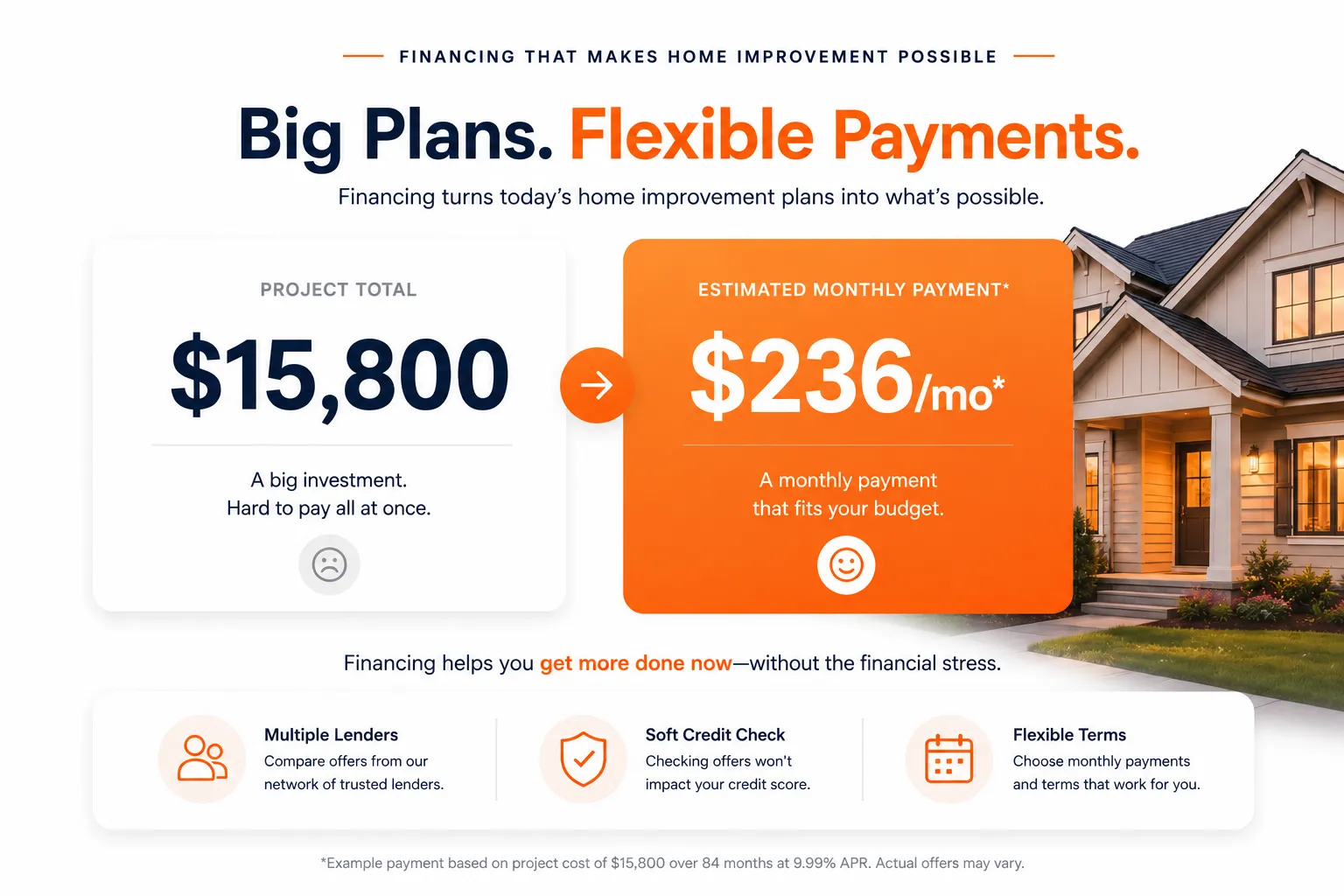
Getting started only takes a minute. Complete one simple application to compare available financing offers from over 18+ lenders, choose the option that fits your budget, and move forward with your home improvement project.
Risk-Free Prequalification
Checking offers won’t impact your credit.
It’s common for homeowners to delay applying because they’re worried about their credit score. With a soft credit check, you can review available financing options without any impact to your credit score.2