
Participating Lender Network






Flooring Business Financing Options
Advertising Disclosure
Why Flooring Contractors Need Customer Financing to Win More Jobs
New flooring can completely change the look, comfort, and value of a home, but the cost often prevents homeowners from moving forward. Even customers who urgently need to replace damaged, outdated, or unsafe floors may hesitate when they see the total price on an estimate.
New flooring costs approximately $4 to $15 per square foot on average to install or replace. Material prices can range from $1 to $50 per square foot, while professional flooring labor commonly costs $2 to $8 per square foot. The final price depends on the flooring material, room layout, subfloor condition, removal requirements, and installation complexity.
For a homeowner replacing flooring throughout several rooms, the project can quickly become a major household expense. Expecting every customer to pay the full amount out of pocket limits your opportunities and leaves qualified projects sitting in your pipeline.
Customer financing gives homeowners another way to move forward. Instead of delaying the project, cutting the scope, or choosing the lowest-priced contractor, they can review monthly payment options that may fit more comfortably into their budget.
For your flooring business, offering financing can help you close more estimates, sell better materials, protect your pricing, and compete without relying on discounts.
How Flooring Contractor Financing Works
Flooring contractor financing allows you to introduce payment options during the sales process without lending your own money or collecting monthly payments from the homeowner. A third-party lender evaluates the application, issues the loan when approved, and manages repayment directly with the customer.
The process can be incorporated into your existing estimates and consultations without creating a complicated administrative burden.
Step 1: Introduce Financing During the Flooring Consultation
Let the homeowner know that monthly payment options are available while you discuss flooring materials, project goals, and the installation timeline. Introducing financing early prevents the conversation from becoming entirely focused on the final price.
Step 2: Send the Customer a Secure Application
The homeowner receives a secure online application link that can be completed on a phone, tablet, or computer. A single application may connect the customer with multiple lending partners, depending on the financing platform.
Step 3: Customer Checks Available Financing Offers
The customer completes a soft credit prequalification to review potential offers without affecting their credit score. Available loan options may include different monthly payments, repayment periods, interest rates, and promotional programs.
Step 4: Customer Selects a Payment Plan
The homeowner reviews the available offers and chooses the option that best fits their budget. The lender may request additional verification or complete a hard credit inquiry before issuing final approval.
Step 5: Finalize the Flooring Contract
Once the financing is approved and the customer signs your flooring contract, your team can order materials, schedule the installation, and begin completing the agreed project milestones.
Step 6: Complete the Flooring Installation
Your crew removes the existing flooring when required, prepares the subfloor, installs the selected materials, and completes finishing work according to the project agreement.
Step 7: Your Flooring Business Gets Paid
After the applicable funding requirements are met, the lender pays your company directly by electronic transfer. The customer then makes payments to the lender according to the loan agreement.
Your business is not responsible for collecting monthly loan payments or servicing the customer’s financing account.
Benefits of Offering Customer Financing for Flooring Contractors
Financing is more than an alternative payment method. When your team presents it consistently, it can strengthen nearly every part of your flooring sales process.
Close More Flooring Jobs
Many flooring estimates are lost because of timing rather than a lack of interest. The homeowner may want the project but may not have enough available cash to cover the entire installation at once.
Offering monthly payment options gives that customer another path forward. Instead of telling you they need to save money or think about the project for several months, they can check available financing offers while your estimate is still active.
Increase Your Average Flooring Project Size
Homeowners paying entirely out of pocket often limit the project to the rooms that need immediate attention. They may replace flooring in one room now and postpone the remaining areas indefinitely.
Financing can make a larger project more manageable. A customer may decide to replace flooring throughout an entire level, include adjoining rooms, or complete the full home rather than breaking the work into several smaller jobs.
Reduce Price Objections
A large total can cause a homeowner to focus only on the upfront cost. Monthly payment options help create a different conversation centered on affordability, project value, and how soon the work can begin.
This does not mean hiding the total project price. It means giving customers a clear way to compare paying in full with spreading the cost over time.
Sell Premium Flooring Materials
Customers may prefer hardwood, luxury vinyl plank, engineered wood, porcelain tile, or another higher-quality material but downgrade because of the upfront cost.
When financing is available, the difference between entry-level and premium flooring may feel more manageable when viewed as part of a monthly payment. This allows you to recommend materials based on durability, appearance, maintenance, and long-term value instead of price alone.
Protect Your Profit Margins
Discounting is one of the fastest ways to weaken the profitability of a flooring project. Once a customer objects to the price, contractors often feel pressured to reduce labor charges, remove services, or substitute less expensive materials.
Financing gives you another response to the objection. Instead of immediately cutting your price, you can help the customer explore payment options that preserve the original project scope.
Improve Cash Flow
Your business needs dependable cash flow to purchase flooring materials, pay installers, cover transportation, and manage overhead. Waiting for customers to make several informal payments can place unnecessary pressure on your operation.
With third-party financing, your business is paid according to the lender’s funding process while the homeowner repays the loan separately. You do not have to become the bank or carry the balance on your books.
Create a Better Customer Experience
Floor replacement can be stressful. Homeowners must choose materials, move furniture, coordinate installation, and manage a significant expense at the same time.
A simple digital financing process gives customers more control over how they pay. They can review potential terms privately and select an offer without handing sensitive financial information to your sales representative.
Compete with Larger Flooring Companies
National flooring retailers frequently advertise monthly payments and promotional financing. Independent contractors that only accept cash, checks, or credit cards may appear less flexible, even when their workmanship and service are better.
Offering customer financing allows your company to provide the payment flexibility customers expect while preserving the personal service of a local flooring contractor.
Flooring Projects Customers Commonly Finance
Financing can be used for much more than complete whole-house flooring replacement. Depending on lender requirements, customers may be able to finance a wide range of residential flooring services.
Hardwood Flooring Installation
Solid and engineered hardwood can be a substantial investment, especially when the project includes multiple rooms, staircases, custom transitions, or intricate layouts. Financing can help homeowners choose the wood species, plank width, and finish they actually want.
Luxury Vinyl Plank Flooring
Luxury vinyl plank is popular because it combines durability, water resistance, and a broad range of design options. Customers may finance large LVP installations that cover kitchens, living rooms, hallways, bedrooms, and finished basements.
Tile Flooring Installation
Tile projects can involve extensive preparation, waterproofing, layout work, and skilled labor. Financing can cover installations in bathrooms, kitchens, entryways, laundry rooms, mudrooms, and other high-moisture areas.
Carpet Installation and Replacement
Replacing carpet throughout a home can become expensive once padding, removal, disposal, stairs, and installation labor are included. Monthly payments can make it easier to replace worn or stained carpeting across several rooms at once.
Laminate Flooring Installation
Laminate offers an affordable alternative to natural wood, but larger installations still require a meaningful upfront investment. Financing can help customers complete the entire project instead of replacing one section at a time.
Floor Refinishing and Restoration
Hardwood refinishing may include sanding, repairs, staining, sealing, and replacing damaged boards. Customers can use financing to restore existing floors rather than covering them with a cheaper material.
Water-Damaged Flooring Replacement
Leaks, flooding, appliance failures, and plumbing problems can damage flooring without warning. When insurance does not cover the full cost, financing gives homeowners a way to complete necessary removal, drying, subfloor repair, and replacement work.
Commercial Flooring Projects
Small businesses may need financing for flooring in offices, retail spaces, restaurants, salons, rental properties, and other commercial environments. Commercial financing availability and requirements will depend on the lending program.
What Flooring Services Can Be Included in a Financing Package?
A flooring financing package can often include the complete project rather than only the visible flooring material. Exact eligibility depends on the lender and the terms of the approved loan.
Common project costs may include:
- Hardwood, engineered wood, vinyl, tile, carpet, laminate, cork, or other flooring materials
- Professional flooring installation labor
- Removal and disposal of existing flooring
- Subfloor inspection, leveling, repair, or replacement
- Moisture barriers, underlayment, padding, and adhesives
- Floor sanding, staining, refinishing, and sealing
- Baseboards, quarter-round molding, thresholds, and transitions
- Stair treads, risers, landings, and custom trim work
- Furniture moving and appliance relocation
- Moisture testing and surface preparation
- Delivery charges and material handling
- Repairs related to water, pet, or structural damage
- Protective coatings and upgraded finishes
- Extended warranties or qualifying maintenance plans
Bundling the full scope into one financing request gives the homeowner a clearer view of the complete project and reduces the chance that important preparation work will be removed to lower the upfront cost.
Flooring Financing Options Contractors Can Offer Customers
Homeowners have several ways to pay for flooring, but not every option gives your business the same level of control, visibility, or convenience.
Point-of-Sale Flooring Financing
Point-of-sale financing is offered directly during the flooring sales process. The homeowner receives a digital application from your company and checks available financing offers before leaving the consultation or shortly afterward.
This option keeps the payment conversation connected to your estimate and may allow the customer to compare offers from multiple lenders through one application.
Unsecured Personal Loans
A homeowner can independently apply for a personal loan through a bank, credit union, or online lender. These loans do not typically require home equity, but the process happens outside your sales system.
Your company may have little visibility into the application status, and the customer may delay the flooring project while researching lenders.
Credit Cards
Credit cards are convenient for smaller flooring repairs or deposits. However, large projects can use a significant portion of the customer’s available credit and may carry high interest rates.
Processing fees can also reduce the amount your company receives unless those costs have already been considered in your pricing.
Home Equity Loans and HELOCs
Homeowners with sufficient equity may use a home equity loan or line of credit. These products can offer competitive rates, but applications may involve property valuations, additional documentation, closing costs, and longer approval periods.
They may not be practical for customers who want to begin a flooring project quickly.
Manufacturer or Retailer Financing
Some flooring manufacturers and large retailers provide financing tied to specific products or purchases. These programs can be useful, but they may restrict material selection or require the contractor to follow particular dealer terms.
In-House Payment Plans
Some contractors allow customers to make payments directly to the flooring company. This can create serious cash flow and collection risks because your business is responsible for carrying the unpaid balance.
Third-party financing allows you to offer monthly payments without servicing the loan yourself.
Features to Look for in a Flooring Contractor Financing Program
The financing platform you choose will affect your customers, sales team, cash flow, and profitability. Look beyond promotional claims and evaluate how the program works during a real flooring sale.
Access to Multiple Lending Partners
A single lender may serve only a narrow range of applicants. A multi-lender platform can connect customers with different loan programs designed for varying credit profiles, project sizes, and repayment preferences.
Soft Credit Prequalification
Customers are more willing to explore financing when they can check potential offers without affecting their credit score. Make sure the platform clearly explains when a soft inquiry is used and whether a hard inquiry may occur later.
Simple Mobile Application
Your customers should be able to complete the application easily from a smartphone without printing forms, visiting a bank, or giving financial information to your employees.
Fast Credit Decisions
Long delays can weaken the momentum of a flooring sale. Look for a platform that can provide timely decisions while clearly explaining that final approval and funding depend on lender requirements.
Flexible Loan Terms
Different customers need different payment structures. A strong platform may provide access to short-term, long-term, fixed-payment, or promotional financing options for qualified applicants.
Funding That Fits Your Workflow
Ask exactly when and how your flooring business gets paid. Some lenders release funds after the customer signs the loan documents, while others require project completion, customer confirmation, or supporting documentation.
Clear Contractor Fees
Dealer fees can reduce your profit on every financed installation. Review all setup fees, monthly charges, transaction costs, and per-project dealer fees before selecting a program.
Training and Ongoing Support
Your salespeople and estimators need to understand how to introduce financing without making promises about approval, rates, or monthly payments. Choose a platform that provides useful training, clear disclosures, and responsive support.
How to Offer Financing During the Flooring Sales Process
Adding financing to your website is not enough. Your team must present it naturally and consistently throughout the customer journey.
Introduce Financing Early
Mention payment options while learning about the customer’s flooring goals. A simple statement can prevent financing from feeling like a last-minute response to a price objection.
Example Flooring Financing Script
“We offer financing through a network of third-party lenders. You can complete one online application, review any offers available to you, and decide whether one fits your budget.”
Present Good, Better, and Best Flooring Options
Give the homeowner several material and project options rather than a single take-it-or-leave-it estimate. Financing can help customers compare how upgraded materials, additional rooms, or enhanced preparation affect the overall payment.
Show the Complete Project Price
Always present the full project cost clearly. Financing should make the price easier to manage, not hide it. Customers should understand the total estimate before reviewing any loan offers.
Offer Financing on Every Estimate
Do not assume who needs financing based on income, neighborhood, home value, or appearance. Some customers use financing because they need it, while others prefer to preserve cash for other expenses.
Making financing a standard part of every estimate creates a more consistent and professional sales process.
Let the Customer Complete the Application Privately
Your employees should not complete financial applications for customers, recommend a specific loan, or make predictions about approval. Send the secure application and allow the homeowner to enter the information directly.
Avoid Promising Approval or Specific Rates
Credit decisions, interest rates, loan amounts, and repayment terms are determined by the lender. Your team should explain how to access the application without acting as a financial adviser.
Follow Up on Open Estimates
When following up with a homeowner who has not accepted the estimate, remind them that financing is available. They may have delayed the project because they assumed full payment was required upfront.
Why Access to Multiple Lenders Helps Flooring Contractors Close More Sales
Homeowners do not all have the same credit profile, income, borrowing history, or project budget. Relying on one lender means every applicant must fit that lender’s underwriting requirements.
A multi-lender financing marketplace can provide access to a broader range of potential loan options. One lender may focus on borrowers with excellent credit, while another may be designed for near-prime or lower-credit applicants.
This does not guarantee approval, but it can give customers more opportunities to find a suitable offer through one application.
Access to multiple lenders can also give approved customers a choice between different repayment terms and monthly payment structures. Instead of being presented with one option, they may be able to compare offers and select the one that best matches their financial goals.
For your flooring company, this can reduce the number of estimates lost because one financing provider declined the application or offered terms the customer did not want.
How to Choose the Best Flooring Contractor Financing Company
The best flooring financing company is not simply the one advertising the lowest rate. It is the platform that creates a dependable experience for both your business and your customers.
Before signing up, ask the following questions:
- Does the platform connect customers with one lender or multiple lending partners?
- Can homeowners check potential offers through a soft credit inquiry?
- Is the application easy to complete on a mobile device?
- Which flooring project sizes and services are eligible?
- How quickly are lending decisions typically returned?
- When does the contractor receive payment?
- Are there setup fees, monthly fees, transaction charges, or dealer fees?
- Does the platform offer programs for different credit profiles?
- Who handles underwriting, loan servicing, and customer collections?
- Does the provider offer training and support for your flooring sales team?
Read the contractor agreement carefully and make sure all costs, responsibilities, funding requirements, and marketing rules are clearly explained.
Why Flooring Contractors Partner with Pasha Funding
Pasha Funding helps flooring contractors offer customer financing without becoming lenders or managing monthly payment collections. Through one online application, homeowners can check potential loan offers from a network of third-party lending partners.
One Simple Online Application
Customers can complete a secure digital application from their phone, tablet, or computer. Your team does not need to collect sensitive financial information or manage paper applications.
Access to Multiple Lending Partners
Pasha Funding connects applicants with lending partners serving different credit profiles. This gives qualified customers more opportunities to review potential payment options than they would receive from a single-lender program.
No Impact on Credit for Checking Offers
Homeowners can check potential offers through a soft credit prequalification with no impact on their credit score. A lending partner may perform a hard credit inquiry if the customer decides to proceed with an offer.
Financing for Different Project Sizes
Customers can explore financing for projects ranging from individual room replacements to larger whole-home flooring installations, subject to lender approval and program requirements.
Flexible Repayment Options
Available offers may include different repayment periods, interest rates, and monthly payment structures. Loan availability and terms depend on the applicant’s qualifications and the lending partner’s requirements.
Direct Contractor Payment
After the required documents and project milestones are completed, the lender pays your flooring business directly. Your company does not have to collect the homeowner’s monthly loan payments.
No Setup or Monthly Platform Fees
There are no setup fees or recurring monthly platform fees for flooring contractors. You can introduce financing without adding another fixed software expense to your business.
Start Offering Flooring Financing to Your Customers Today
High upfront costs should not be the reason a qualified flooring project falls through. Offering customer financing gives homeowners a practical way to replace worn, damaged, or outdated flooring without paying the entire cost at once.
For your flooring company, financing can help you close more estimates, complete larger projects, sell better materials, preserve your margins, and compete with companies already promoting monthly payment options.
Pasha Funding makes it easier to connect your customers with multiple third-party lending partners through one streamlined online application. Homeowners can check potential offers without affecting their credit score, compare available payment options, and choose whether financing is right for them.
More contractor financing solutions by project type:
- Accessory Dwelling Unit Contractor Financing
- Artificial Grass & Turf Financing for Contractors
- Bathroom Remodel Contractor Financing
- Custom Closet & Storage Financing for Customers
- Concrete Contractor Financing
- Decks & Patio Financing for Contractors
- Contractor Financing for Electric Services
- Contract Financing for Flooring Contractors
- Gutter Contractor Financing Options
- Garage Door Contractor Financing
- HVAC Financing Solutions for Contractors
- Insulation Contractor Financing for Customers
- Contractor Financing for Landscaping Businesses
- Kitchen Remodel Contractor Financing
- Masonry Contractor Financing
- Financing Options for Plumbing Contractors
- Contractor Financing for Painters
- Roofing Contractor Financing
- Solar Contractor Financing
- Swimming Pool Contractor Financing
- Siding & Exterior Contractor Financing
- Fencing Contractor Financing Options
- Windows & Doors Contractor Financing
- Window Blinds & Shades Financing for Customers
FAQs
In this guide
- Why Flooring Contractors Need Customer Financing to Win More Jobs
- How Flooring Contractor Financing Works
- Flooring Projects Customers Commonly Finance
- What Flooring Services Can Be Included in a Financing Package?
- Flooring Financing Options Contractors Can Offer Customers
- Features to Look for in a Flooring Contractor Financing Program
- How to Offer Financing During the Flooring Sales Process
- Why Access to Multiple Lenders Helps Flooring Contractors Close More Sales
- How to Choose the Best Flooring Contractor Financing Company
- Why Flooring Contractors Partner with Pasha Funding

For illustrative purposes only
How Contractor Financing Works
3 steps from estimate
to funded.
Offering financing is simple. Homeowners compare offers from third-party lenders using one simple application, while the lender handles underwriting, funding, servicing, and payment collection.
Why Contractors Partner With Us
A smarter way to offer
customer financing.
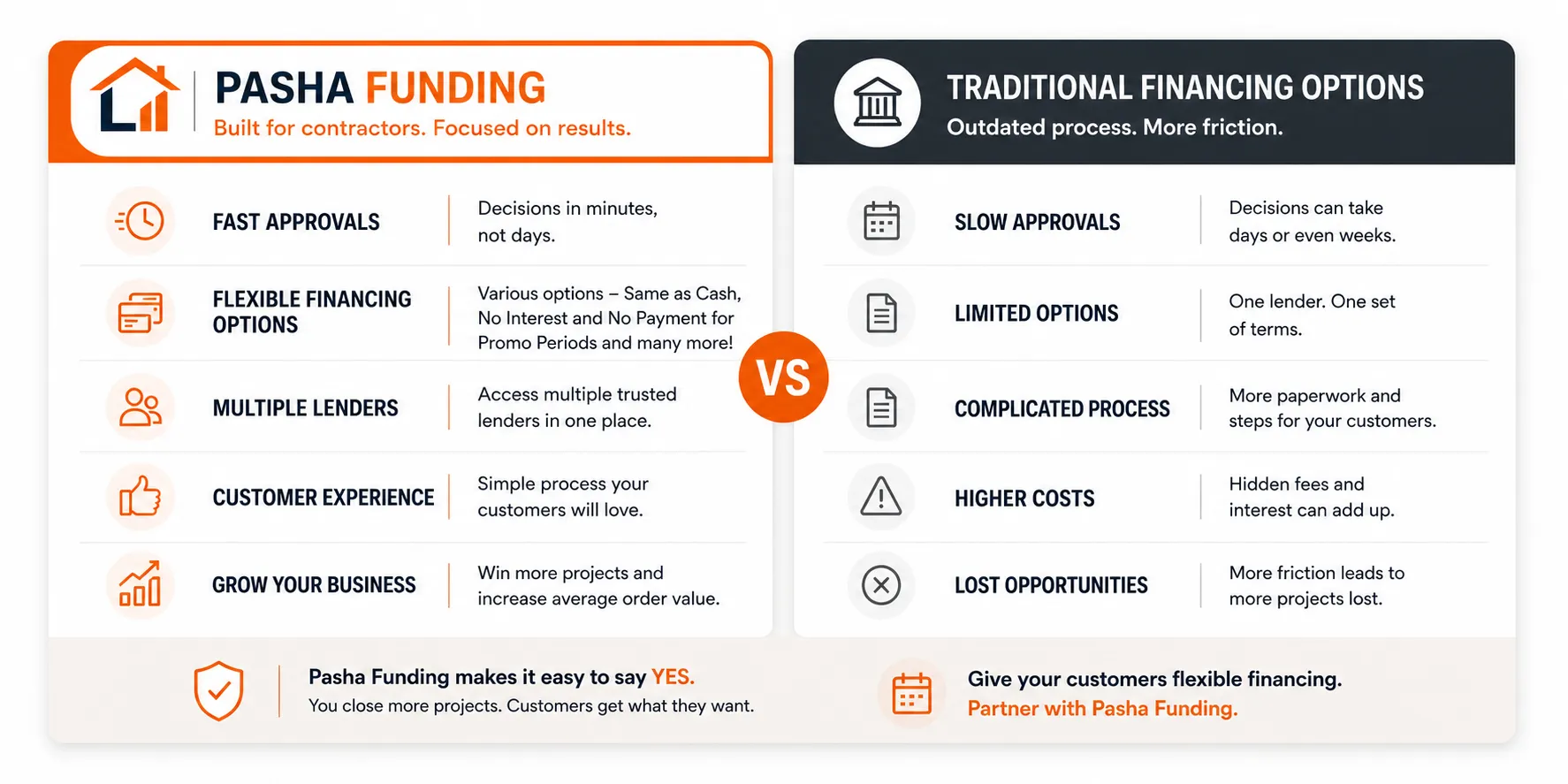
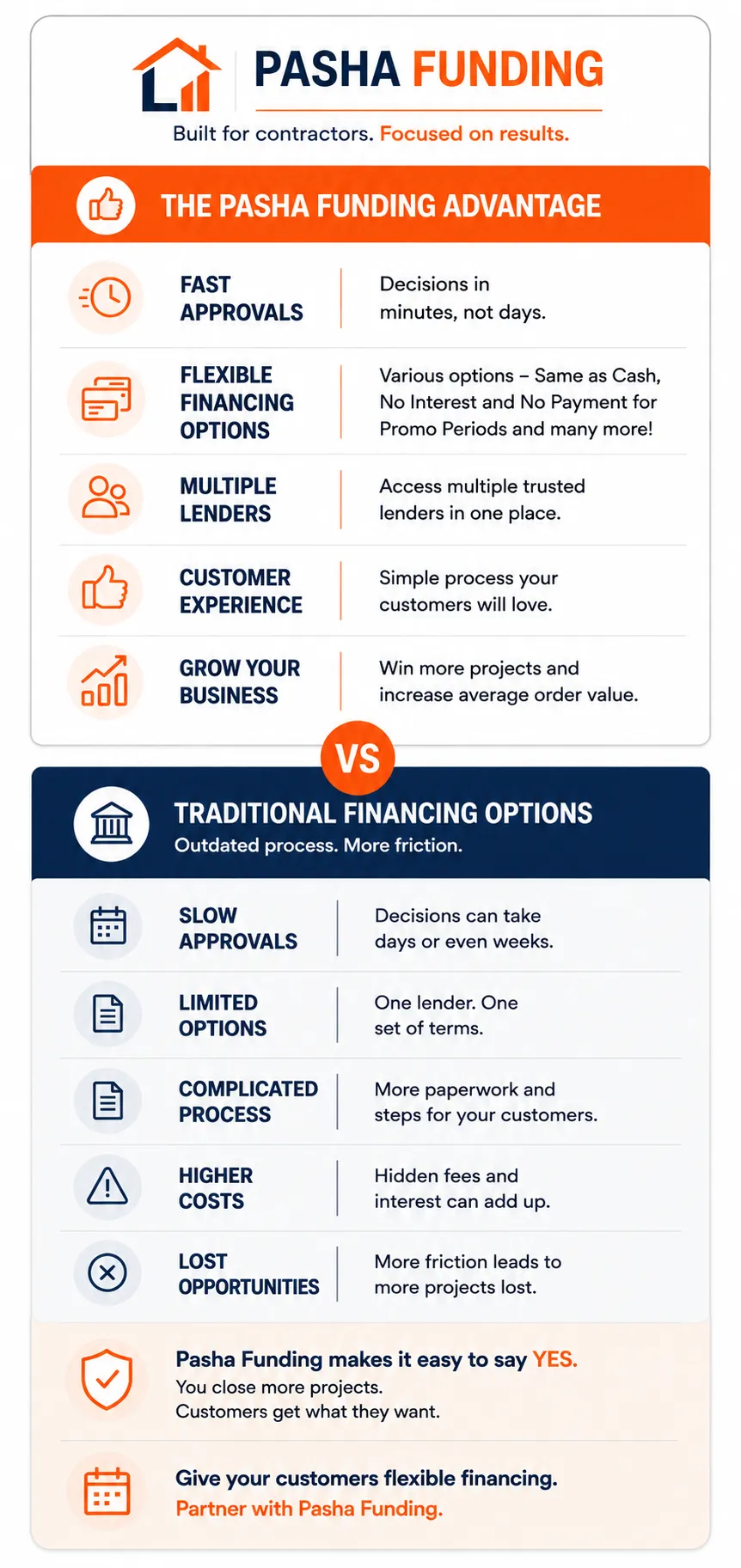
A Smarter Way to Offer Financing
Pasha Funding vs.
traditional programs
Find Home Improvement Contractor Financing for Customers Near You
- Atlanta Contractor Financing
- Austin Contractor Financing
- Boston Contractor Financing
- Charlotte Contractor Financing
- Chicago Contractor Financing
- Cleveland Contractor Financing
- Columbus Contractor Financing
- Connecticut Contractor Financing
- Dallas Contractor Financing
- Denver Contractor Financing
- Detroit Contractor Financing
- Fort Worth Contractor Financing
- Houston Contractor Financing
- Indianapolis Contractor Financing
- Jacksonville Contractor Financing
- Los Angeles Contractor Financing
- Miami Contractor Financing
- Nashville Contractor Financing
- New York City Contractor Financing
- Orlando Contractor Financing
- Philadelphia Contractor Financing
- Phoenix Contractor Financing
- Portland Contractor Financing
- Providence Contractor Financing
- Raleigh Contractor Financing
- Salt Lake City Contractor Financing
- San Antonio Contractor Financing
- San Diego Contractor Financing
- San Jose Contractor Financing
- Seattle Contractor Financing
- St. Paul Contractor Financing
- Tampa Contractor Financing
- Washington Contractor Financing