
Participating Lender Network





How to Finance Home Remediation & Restoration
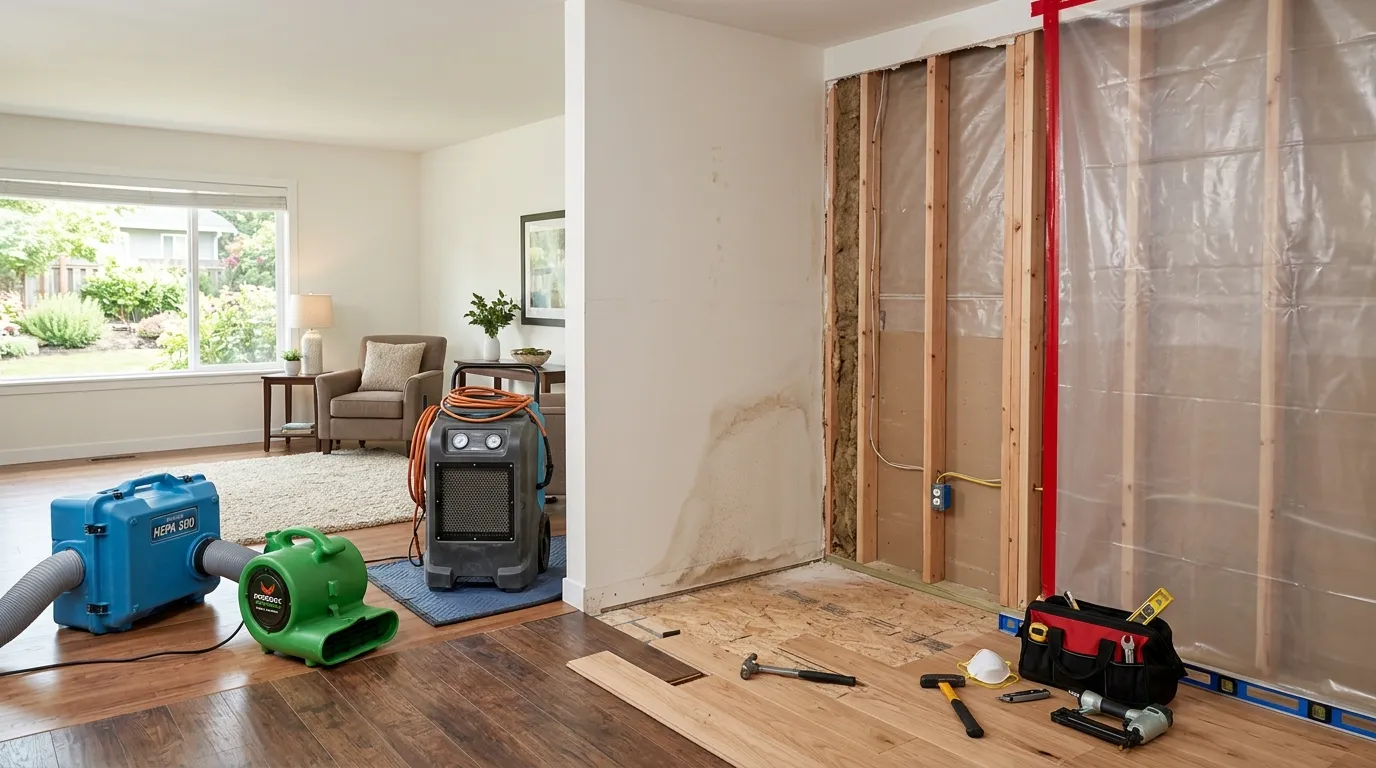
Remediation and restoration costs run a wide range, from about $1,000 for a radon system to $50,000 or more for whole-home asbestos abatement or major fire restoration, and how you pay for it hinges on one question most other home projects don’t raise: whether your homeowners insurance will cover it. The short answer is that insurance often pays when the damage comes from a sudden covered event, but not when it’s a maintenance issue, which is exactly the line that decides whether you’re filing a claim or financing the whole bill.
Key Takeaways
- Costs vary widely by hazard: radon mitigation averages around $1,000, mold remediation $1,200 to $3,800, and fire or whole-home asbestos work can reach $50,000 or more.
- The pivotal question is insurance: a policy generally pays when a covered peril caused the damage (a burst pipe, a fire) but not when it’s gradual wear or a pollutant left alone.
- When insurance applies, you typically finance only the gap: the deductible plus anything above the coverage limit, not the whole cost.
- A personal loan funds fast for an urgent hazard, while a home equity loan may cost less for a large restoration you can plan.
- Many of these jobs legally require a licensed, certified contractor (asbestos and lead especially), which rules out the cheap DIY route.
- Some low-income homeowners qualify for county or state hazard-remediation grants, worth checking before you borrow.
What Counts as Remediation or Restoration?
These are two related but distinct kinds of work, and knowing which you’re dealing with shapes both the cost and the insurance answer:
- Remediation removes or neutralizes an environmental hazard already in the home, mold, asbestos, radon, or lead paint. It’s often triggered by an inspection, a health concern, or a home sale rather than a sudden event.
- Restoration repairs sudden damage from a specific event, most often water or fire. It’s usually urgent, and it’s the category most likely to be insured, since a burst pipe or a fire is typically a covered peril.
The two overlap constantly: water damage breeds mold, and a fire in an older home can disturb asbestos, so a single event can pull in several of these jobs at once.
How Much Does Remediation and Restoration Cost?
Costs span from a four-figure radon system to a five- or six-figure whole-home restoration, driven mostly by the hazard type and how much of the home is affected.
| Project | Typical Cost | Usually Insured? |
|---|---|---|
| Radon mitigation | $800-$2,500 | No (voluntary safety upgrade) |
| Mold remediation | $1,200-$3,800 | Sometimes (if from a covered leak) |
| Lead paint removal | $1,500-$15,000 | Rarely (unless disturbed by a peril) |
| Asbestos abatement | $1,500-$30,000+ | Rarely (unless disturbed by a peril) |
| Water damage restoration | $2,000-$43,000+ | Often (if sudden and accidental) |
| Fire & smoke restoration | $3,000-$51,000+ | Usually (fire is a covered peril) |
Cost ranges from HomeAdvisor (mold, lead), HomeGuide, and Palm Build. Insurance outcomes depend on your policy and the cause of loss.
Each figure links to a detailed financing guide for that specific hazard. Costs also run higher in dense metro markets and in states with strict licensing for hazard work.
Does Homeowners Insurance Cover Remediation and Restoration?
This is the question that decides how much you actually have to finance, and the answer turns on the cause of the damage, not the hazard itself. A standard homeowners policy covers damage from a sudden, accidental, covered peril, but excludes gradual wear, neglect, and pollutants left in place, which is the line that separates a covered claim from an out-of-pocket bill.
Here’s how it breaks down across the cluster:
- Usually covered: fire and smoke damage, and sudden water damage from a burst pipe or an appliance failure, since these are covered perils under most policies.
- Covered only when a peril disturbs it: asbestos and lead paint are treated as excluded pollutants, but if a fire, storm, or burst pipe disturbs previously stable material, the abatement is often paid as part of the covered restoration.
- Usually not covered: mold from a long-term leak, gradual seepage, sewer backup without a specific endorsement, and voluntary hazard removal like radon mitigation or pre-sale asbestos work.
Two gaps catch people off guard: flood damage is never covered by a standard policy and needs separate NFIP or private flood insurance, and sewer or drain backup usually requires a specific endorsement. If the cause is sudden, document it before any cleanup begins, since your claim depends on proving the origin.
How Do You Finance Remediation and Restoration?
Once you know what insurance will and won’t cover, the financing choice comes down to how urgent the work is and how large the uncovered portion is.
- Personal loan: funds within days with no lien on your home, which fits an urgent hazard or an emergency restoration where the work can’t wait. Best for covering a deductible or a fast, mid-sized job.
- Home equity loan or HELOC: usually the lowest rate for a large restoration you can plan, like a major fire rebuild, with the tradeoff of closing costs and a few weeks to fund.
- Contractor payment plans: many restoration and abatement firms offer them, and some structure payments in installments tied to project milestones, but compare the total against an outside loan before signing.
- Grants and assistance: some counties and states run hazard-remediation grant programs (often $500 to $2,500) for income-qualified homeowners facing asbestos, lead, or radon hazards, administered through local housing authorities.
Do You Need a Licensed Contractor for Remediation?
For several of these hazards, yes, and it’s not optional. Asbestos and lead paint abatement legally require an EPA-certified or state-licensed contractor in most states, because improper removal releases fibers or dust that create a worse health hazard than leaving the material alone.
Mold and water restoration aren’t always legally licensed, but the reputable firms follow industry standards (the IICRC S500 for water and S520 for mold), and some states like Florida, Texas, Louisiana, and New York do license mold work. Radon mitigation should be done by a certified radon professional so the system actually lowers levels to the EPA guideline. Using an uncertified contractor on asbestos or lead doesn’t just risk your health; it can void an insurance claim, fail a required clearance test, and create a disclosure problem when you sell. Confirm certification and get the clearance or verification testing in writing as part of any quote.
How Do You Qualify for Remediation Financing?
Qualifying starts with pinning down the covered-versus-uncovered split, since that determines how much you actually need to borrow.
File the claim and get the adjuster’s scope first. Before applying for any loan, file with your insurer if the damage came from a sudden event, and get the covered scope and payout in writing. This tells you the real gap to finance rather than the full estimate.
Get itemized bids from certified contractors. For asbestos, lead, or mold, confirm the contractor is certified and that the quote includes containment, disposal, and clearance testing, since those are real costs that a lowball bid may omit. Finance the complete, tested job.
Match the loan to urgency, then check your credit. A prequalified personal loan funds fast for an emergency; a home equity option costs less for a large planned restoration. Review your credit report for errors and prequalify with a soft credit check to compare offers without affecting your score.
The Bottom Line
How you pay for remediation or restoration depends first on whether insurance covers it. When the damage comes from a sudden covered event, file the claim and finance only the gap, the deductible plus anything over your limit. When it’s a maintenance-type hazard like mold from an old leak, radon, or voluntary asbestos removal, the cost is usually yours: a personal loan funds fast for an urgent problem, a home equity loan costs less for a large planned job, and a county grant may help if you qualify.
Before you borrow, document the cause of any sudden damage and file your claim first, then get itemized bids from certified contractors so you finance the complete, code-compliant job rather than a number that grows once the walls come open.
Explore related resources
The information provided by Pasha Funding is for educational and informational purposes only and should not be considered financial, legal, or tax advice. Every homeowner’s financial situation is different, and the financing options discussed may not be suitable for everyone. Before choosing a financing solution, carefully review the lender’s terms and consider consulting a qualified financial professional if needed.
Pasha Funding is a financing marketplace that connects homeowners with financing options offered by participating lending partners. We do not make loans, determine credit eligibility, or guarantee approval or specific loan terms. Pasha Funding is not a direct lender. We may receive compensation from participating lending partners when users submit an application or obtain a loan through our platform. This compensation may affect how and where financing options appear, but it does not influence our editorial evaluations.
Financing offers, rates, terms, and availability are determined solely by participating lenders and may change without notice. Our editorial content is created independently to help consumers better understand home improvement financing. While we strive to keep information accurate and current, financing products, lender requirements, rates, and offers may change over time. Any opinions expressed are those of the author and have not been reviewed, approved, or endorsed by our lending partners.


Frequently Asked Questions
In this guide
- How much does a bathroom remodel cost?
- Should you finance a bathroom remodel or pay cash?
- What are the best ways to finance a bathroom remodel?
- Which bathroom remodel financing option is right for you?
- What do you need to qualify for bathroom remodel financing?
- What do bathroom remodel loan rates look like?
- How to improve your chances of approval for a bathroom remodel loan
- Common costs and fees to consider
- Will a bathroom remodel increase your home’s value?
- The bottom line
how it works
3 Simple steps to
finance your project.
Getting started only takes a minute. Complete one simple application to compare available financing offers from over 18+ lenders, choose the option that fits your budget, and move forward with your home improvement project.
Restoration & Remediation Financing Calculator
1. Enter Your Desired Loan Amount
Your Estimate
Monthly Payment
-
This calculator provides estimates for illustrative purposes only and does not constitute an offer of credit or a commitment to lend. Final APRs, loan amounts, and terms depend on credit approval, income verification, and lender underwriting criteria. Minimum and maximum rates/terms vary by state.
Powered by: Pasha Funding

Risk-Free Prequalification
Checking offers won’t impact your credit.
It’s common for homeowners to delay applying because they’re worried about their credit score. With a soft credit check, you can review available financing options without any impact to your credit score.2