

Participating Lender Network





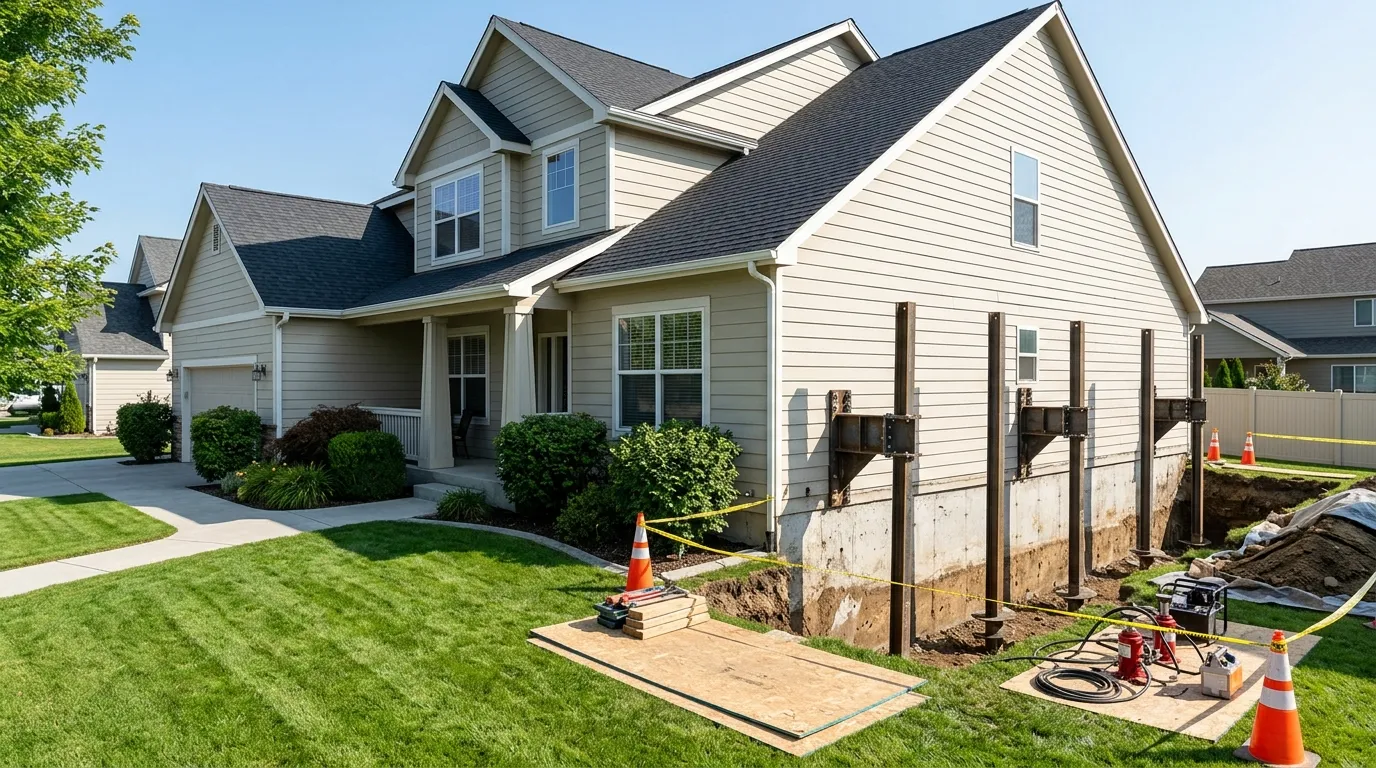
How to Finance Structural Foundation Repairs
Foundation problems rarely arrive at a convenient time, and they do not improve on their own. Once you see cracks widening, a door that will not latch, or a floor starting to slope, the only real questions are when to fix it and how to pay for it. Most homeowners cover foundation repair with a personal loan, a home equity loan or HELOC, an FHA Title I loan, or a contractor payment plan. The right choice turns on how big the repair is and whether you have equity, with jobs running from a few hundred dollars for a sealed crack to $20,000 or more for major underpinning.
Key Takeaways
- Foundation repair ranges from about $500 for a sealed crack to $20,000 or more for underpinning, with a national average near $5,100.
- The repair method depends on the severity, and more severe damage means a more invasive and expensive fix.
- A personal loan fits most repairs: it funds in days, needs no equity, and lets you hire any contractor.
- A home equity loan or HELOC usually costs less on a large job if you have equity and can wait to close.
- Standard homeowners insurance rarely pays, since settling and soil movement are excluded from most policies.
- Foundation damage worsens with time, so waiting often pushes a repair into a costlier method.
What Are the Main Foundation Repair Methods, and What Do They Cost?
“Foundation repair” covers everything from a tube of sealant to lifting a house, so the price range is enormous. The method your contractor recommends depends on the type and severity of the damage, and the methods get more expensive as the problem gets worse. Here are the common ones, from least to most involved.
Crack Sealing and Injection
For hairline or non-structural cracks, epoxy or polyurethane injection seals the crack and keeps water out. This is the least expensive repair, usually $400 to $1,500, and the most common starting point when a homeowner first notices a problem.
Slabjacking and Foam Injection
When a slab has sunk, slabjacking (also called mudjacking) pumps a slurry beneath it to lift it back into place, typically $500 to $3,000. Polyurethane foam injection does the same job with a lighter, waterproof material and costs more. Both suit slab-on-grade foundations but are not right for every soil type.
Wall Bracing and Anchors
For a bowing basement wall, carbon fiber straps, steel I-beams, or wall anchors hold the wall and stop it from moving further. Costs run a few hundred to over a thousand dollars per strap or anchor, and a full wall can reach $8,000 to $22,000.
Piering and Underpinning
When a foundation has settled, steel push piers or helical piers are driven down to stable soil to lift and support it. Piers run $1,500 to $3,500 each, and a typical home needs three to eight, putting most pier jobs at $5,000 to $15,000. Severe settlement needing ten or more piers can reach $15,000 to $30,000.
Major Underpinning and House Lifting
The most extensive repairs (full-perimeter underpinning, or lifting the house to rebuild the foundation) are reserved for severe structural failure and can run from $20,000 to $80,000 or more.
What Foundation Repair Costs by Repair Type
Typical installed cost range
Bar length reflects the top of each range. Figures from FoundationCosts and HomeAdvisor.
Why Does Foundation Repair Cost So Much, and What Drives the Price?
The severity of the damage is the single biggest factor, since it determines the method, but several other things affect the price. Your foundation type matters: a slab-on-grade home usually costs less to repair than a full basement, which needs wall work. Soil plays a large role too: expansive clay that swells and shrinks with moisture puts constant pressure on a foundation and is common in problem regions. Access, home size, and local labor rates fill in the rest, and repairs in high-cost metros can run 20% to 40% above the national average.
One thing to watch for is what a headline quote leaves out. A structural engineer’s report ($300 to $3,000), soil testing, permits, and the cost of restoring landscaping or interior finishes disturbed during the work are often excluded from the first number you hear. Ask each contractor exactly what the estimate covers, and because opening up a foundation can uncover more than expected, it is wise to finance a buffer of 10% to 20% above the quote.
Does Homeowners Insurance Cover Foundation Repair?
Usually not, so do not count on a claim to cover it. Homeowners insurance pays for foundation damage only when a sudden, covered peril causes it, and excludes the gradual causes behind most foundation problems.
A burst pipe, a vehicle hitting the house, a fire, or a fallen tree can trigger coverage under the dwelling portion of your policy. But the policy generally excludes earth movement and the settling, cracking, and expansion that come from soil conditions, slow leaks, tree roots, and age, which is what causes the large majority of foundation damage. If you believe a sudden covered event is responsible, document it right away, ideally with a plumber’s or engineer’s report, before filing. Keep in mind that a claim that gets denied can still show up on your insurance history, so confirm the cause is covered first. If your home is newer, check whether a builder’s structural warranty applies, since those often run up to 10 years.
Should You Finance Foundation Repair Now or Wait?
With foundation work, waiting is usually the expensive choice. Because the repair method is set by how bad the damage is, letting a problem progress can move you from a minor fix to a major one.
A crack that costs a few hundred dollars to seal today can, left alone, let in water and let the foundation shift until it needs piering that runs into the thousands. Foundation companies and cost guides consistently report the same pattern: a $500 repair now routinely prevents a five-figure job in a few years, and a wall that bows an inch this year may crack at two inches the next. Financing a needed repair promptly almost always costs less than saving up while the damage compounds. The exception is a purely cosmetic hairline crack that an engineer confirms is not structural, which can wait. When there is real movement, though, the cost of delay is not just interest, it is a bigger repair.
How Do You Finance Foundation Repair?
Foundation repair is rarely a planned expense, so most homeowners reach for financing. Here is how the main options compare for a repair that usually cannot wait.
Personal Loans
A personal loan gives you a fixed amount quickly, often within a few days, without touching your home equity or putting a lien on the property. That speed and simplicity fit an urgent structural repair, and because the loan is not tied to a lender’s contractor network, you can hire the foundation company you choose. The rate is higher than a home-secured loan since nothing backs it, so for a large repair where you have equity, compare a HELOC first.
Home Equity Loans and HELOCs
If you have equity and a little time, borrowing against your home usually brings the lowest rate, which matters most on a five-figure repair. The trade-offs are closing costs, an appraisal, a funding timeline of a few weeks, and your home as collateral. A HELOC also lets you draw only what the final repair costs, useful when the scope is not certain until the work begins.
FHA Title I Loans
The FHA Title I property improvement loan is built for exactly this kind of work. It insures loans up to $25,000 on a single-family home, with terms as long as 20 years and no equity or appraisal required for smaller amounts. HUD sets no minimum credit score, though individual lenders do, which makes it a practical route for a structural repair when you lack equity.
Contractor Payment Plans
Many foundation companies offer financing at the point of sale, sometimes with a promotional 0% period. It is convenient and lets the work start fast, but the terms come from a business with a stake in the sale, and a “0%” offer may carry deferred interest. Compare it against an outside loan before signing, and confirm the warranty terms at the same time.
Is Foundation Repair Tax Deductible?
Usually not for your own home, despite what some contractor pages suggest. The IRS treats a foundation repair on your primary residence as a personal expense, so you generally cannot deduct it, and interest on a loan used to pay for it is usually not deductible either.
Home equity interest is deductible only when the borrowed money substantially improves the home, which the IRS defines as work that adds value, prolongs the home’s life, or adapts it to new use. A repair that simply restores the foundation to its prior condition generally does not clear that bar. There is a real tax benefit, but it comes later: the cost of a major foundation job can be added to your home’s cost basis, which can reduce the capital gains tax you owe when you sell, so keep every receipt. The rules differ for a rental or investment property, where a repair is often deductible against rental income the same year. Because the line between repair and improvement is specific to your situation, confirm the treatment with a tax professional rather than assuming.
Can You Finance Foundation Repair With Bad Credit?
A low credit score makes financing harder but not impossible, and with an urgent structural repair, you may not have the luxury of waiting to rebuild it first. Expect a higher rate and a smaller loan, and check that the monthly payment fits your budget before signing.
Credit unions and community banks are often the most flexible traditional lenders, and prequalifying through an online marketplace lets you see real offers with only a soft credit check. The FHA Title I program helps most here, since it is designed for home repairs and sets no federal minimum credit score, though lenders apply their own. A home equity option may also be within reach even with weaker credit, because your home secures it, though the rate will reflect the added risk. Adding a cosigner with stronger credit can improve your terms.
How Do You Qualify for Foundation Repair Financing?
Lenders weigh your credit, your income against your existing debts, and, for a secured loan, your home equity. A few steps put you in a stronger position, even when the repair is urgent.
- Get an engineer’s assessment and itemized bids.
An independent structural engineer can confirm the scope and pier count in writing, which lets you compare contractor bids fairly and avoid financing an over-scoped repair. Make sure each quote lists engineer fees, permits, and restoration.
- Check your credit and debt-to-income ratio.
Review your credit report for errors and total up your monthly debts against your income. Most lenders want your total debt, including the new payment, at or below about 43% of gross monthly income.
- Prequalify with several lenders.
Use soft-pull prequalification to compare real offers without affecting your score, and weigh any contractor plan against them. Judge offers on the total repaid over the full term, not the monthly payment.
| Qualification Metric | Personal Loan | FHA Title I |
|---|---|---|
| Minimum credit score | 580 to 640, fair credit accepted | No federal minimum (lenders set their own) |
| Home equity needed | None | None for smaller amounts |
| Loan cap | Varies by lender and income | $25,000 (single-family) |
These figures are general guides, not fixed rules, and every lender sets its own terms. An unsecured loan skips the equity and appraisal steps and funds fast, while the FHA Title I program trades a little more paperwork for flexibility on credit and equity.
The Bottom Line
Foundation repair is one of the few home projects where moving quickly saves money, so the financing question is usually which option lets you fix it promptly at the lowest cost. A personal loan funds in days and needs no equity, which suits most urgent repairs; a home equity loan or HELOC costs less on a large job if you have equity and a few weeks; and the FHA Title I program helps when you lack equity or have weaker credit. Whatever you choose, a transferable warranty on the repair protects your home’s resale value, so confirm the terms before signing.
Before you borrow, a couple of steps can keep the cost down: get an independent engineer’s assessment and itemized bids so you finance the right repair and a sensible buffer, then prequalify with a few lenders and compare the total you will repay rather than the monthly payment.
The information provided by Pasha Funding is for educational and informational purposes only and should not be considered financial, legal, or tax advice. Every homeowner’s financial situation is different, and the financing options discussed may not be suitable for everyone. Before choosing a financing solution, carefully review the lender’s terms and consider consulting a qualified financial professional if needed.
Pasha Funding is a financing marketplace that connects homeowners with financing options offered by participating lending partners. We do not make loans, determine credit eligibility, or guarantee approval or specific loan terms. Pasha Funding is not a direct lender. We may receive compensation from participating lending partners when users submit an application or obtain a loan through our platform. This compensation may affect how and where financing options appear, but it does not influence our editorial evaluations.
Financing offers, rates, terms, and availability are determined solely by participating lenders and may change without notice. Our editorial content is created independently to help consumers better understand home improvement financing. While we strive to keep information accurate and current, financing products, lender requirements, rates, and offers may change over time. Any opinions expressed are those of the author and have not been reviewed, approved, or endorsed by our lending partners.


Frequently Asked Questions
In this guide
- What Are the Main Foundation Repair Methods, and What Do They Cost?
- Why Does Foundation Repair Cost So Much, and What Drives the Price?
- Does Homeowners Insurance Cover Foundation Repair?
- Should You Finance Foundation Repair Now or Wait?
- How Do You Finance Foundation Repair?
- Is Foundation Repair Tax Deductible?
- Can You Finance Foundation Repair With Bad Credit?
- How Do You Qualify for Foundation Repair Financing?
- The Bottom Line
how it works
3 Simple steps to
finance your project.
Getting started only takes a minute. Complete one simple application to compare available financing offers from over 18+ lenders, choose the option that fits your budget, and move forward with your home improvement project.

Foundation Repair Financing Calculator
1. Enter Your Desired Loan Amount
Your Estimate
Monthly Payment
-
This calculator provides estimates for illustrative purposes only and does not constitute an offer of credit or a commitment to lend. Final APRs, loan amounts, and terms depend on credit approval, income verification, and lender underwriting criteria. Minimum and maximum rates/terms vary by state.
Powered by: Pasha Funding
Risk-Free Prequalification
Checking offers won’t impact your credit.
It’s common for homeowners to delay applying because they’re worried about their credit score. With a soft credit check, you can review available financing options without any impact to your credit score.2