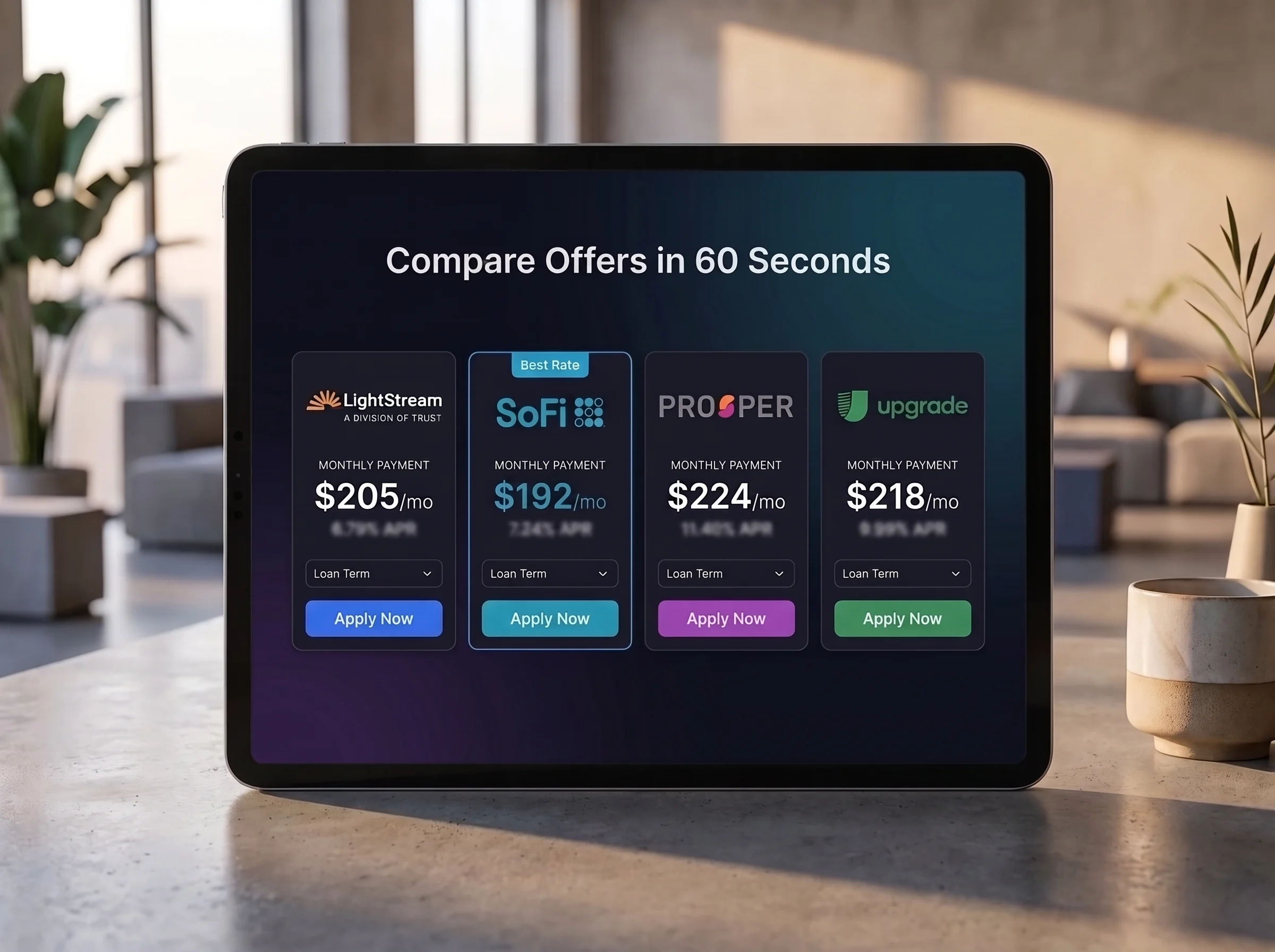
Participating Lender Network





Financing a Custom Closet: Cost & Loan Options
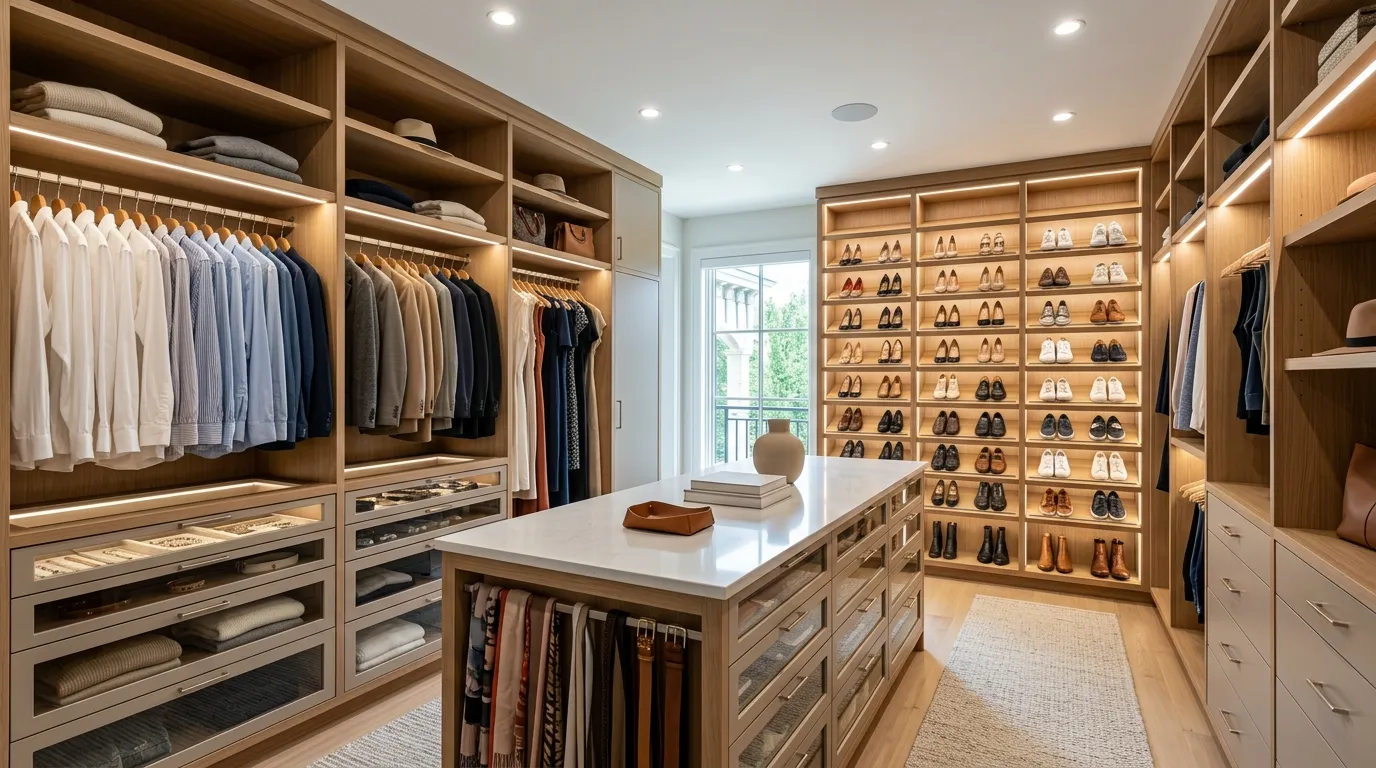
A custom closet project can range from a $500 modular reach-in kit to a $15,000 built-in walk-in suite with custom cabinetry, integrated lighting, and an island. Because the scope decides whether this is a quick out-of-pocket expense or a project worth financing, it pays to set your budget early. Entry-level systems are easily covered with savings or a 0% intro credit card, while extensive custom builds are where a personal loan, home equity line of credit (HELOC), or home equity loan makes sense. Pinning down how much storage you actually need is what points you to the right way to pay before the work starts.
Key Takeaways
- Closet type sets the price: a reach-in system runs about $500 to $3,800, while a walk-in runs $1,000 to $8,000, driven mostly by linear feet of shelving and hanging space.
- Material is the other big lever: wire is cheapest ($130 to $800), melamine or laminate sits in the middle, and solid wood or premium built-ins run $6,000 to $20,000+.
- A prefab kit can save up to 60% versus a fully custom build, so many homeowners finance only the higher-end walk-ins and pay cash for a reach-in.
- The same closet costs less from an independent installer than a national franchise, often by thousands for identical work.
- Closets are one of the few upgrades buyers actively reward: a custom closet rarely recoups its full cost, but it helps a home show well and sell faster.
- Standard quotes often exclude demo, drywall repair, painting, and lighting electrical, so confirm what’s included before you borrow.
How Much Does a Custom Closet Cost?
The price tracks the size of the closet and the material far more than the brand itself. A reach-in closet system runs about $500 to $3,800, a walk-in runs $1,000 to $8,000, and a large built-in with premium materials can pass $15,000. Custom systems are often priced by the linear foot, roughly $100 to $350 installed, so a longer run of shelving, hanging, and drawers is what moves the total.
Costs also run higher in expensive metro areas and where an install requires demo, drywall repair, or new electrical for lighting.
What Drives the Price of a Custom Closet?
Beyond size, a few choices move the total more than anything else:
- Material ($130 to $20,000+ range): wire shelving is cheapest, melamine or laminate is the durable mid-range that covers most closets, and solid wood or wood veneer sits at the top.
- Accessories ($1,000 to $3,000+ added): pull-out racks, drawer stacks, jewelry trays, and integrated lighting add up fast, and a basic walk-in can jump 50% once they’re included.
- Installer type: a national franchise typically prices a walk-in thousands above an independent carpenter for comparable work, since you’re also paying for the showroom and brand.
- Site prep (often excluded): demo of the old system, drywall repair, painting, and electrical for lighting are frequently left out of the base quote and billed separately.
Custom Closet Kit vs. Built-In System: Which Is Right for You?
This choice decides whether you finance at all. A prefab or wire kit from a home store handles a utility closet or a starter setup for a few hundred dollars, and it installs as a straightforward DIY project. A fully custom system costs several times more but is measured and built to your exact space, uses no wasted inches, and holds up to daily use in a primary bedroom in a way wire shelving doesn’t.
The middle path is where most people land: a semi-custom melamine system, professionally installed, that looks built-in without the solid-wood price. If you’re outfitting a spare or utility closet, a kit you install yourself keeps the project in cash territory. If you’re redoing a primary walk-in you’ll use every day and want to show well at resale, the custom system is where financing starts to make sense.
Does a Custom Closet Add Resale Value?
More than most amenity upgrades, though not dollar for dollar. A custom closet typically recoups at least 50% of its cost in resale value, and its bigger effect is on how the home shows: organized, built-in storage signals a well-kept house and helps it sell faster. Referencing National Association of Realtors data, one report found that a majority of buyers will pay more for a home with a custom closet.
The nuance is that closets move market value more than appraised value, since appraisers lean on square footage and comparable sales rather than closet fit-out. Two rules protect the return: don’t over-customize (a dedicated shoe wall or ultra-specific layout appeals to fewer buyers than flexible shelving), and don’t let a showpiece closet come at the expense of a dated kitchen or bath that buyers weigh more heavily. A tasteful, flexible built-in in a primary suite is the version that pays back best.
How Do You Finance a Custom Closet?
If you decide to borrow, match the loan to the size of the project and whether the closet stands alone or is part of a larger renovation.
| OPTION | RELATIVE COST | BEST FOR | KEY RISKS & FEES |
|---|---|---|---|
| Personal loan | Fixed rate, higher than home equity | Standalone walk-in builds or multi-closet refreshes | Origination fee deducted upfront; no lien on your home |
| Home equity loan / HELOC | Lower rate, secured by the home | Premium built-in suites or whole-home remodels | Closing and appraisal costs; foreclosure risk on default |
| 0% intro APR card | No interest during the promo window | Reach-in systems, semi-custom kits, or materials | Interest owed if not cleared before the promo ends |
| Installer / store financing | Compare before signing | Franchise-installed walk-in packages | Often deferred interest (see below) |
Is Custom Closet Financing Tax-Deductible?
Usually not. Interest on a home equity loan or HELOC is deductible only when the funds substantially improve the home securing the loan, per IRS Publication 936, and a standalone closet fit-out generally doesn’t clear that bar the way a structural addition or a new primary suite would. Modular shelving and freestanding cabinetry don’t qualify, and a personal loan or credit card used for a closet isn’t deductible at all. The main exception is a closet built as part of a broader renovation that adds square footage or substantially upgrades the home, so if that’s your situation, confirm it with a CPA before claiming anything.
How Do You Qualify for Custom Closet Financing?
Because the amounts are smaller than with many home renovations, qualifying is usually less involved. A few key steps can help keep the loan amount aligned with what the project actually costs.
Decide what to pay cash for and what to finance. A reach-in or utility closet often fits your budget outright, so reserve any loan for a premium walk-in or a multi-closet project. That alone shrinks what you need to borrow.
Get an itemized quote that lists what’s excluded. Ask each installer to spell out whether demo, drywall repair, painting, and lighting electrical are included, since those add-ons can change the real number, and fold them into the amount you finance.
Check your credit and prequalify with a soft pull. Review your credit report, then prequalify with a soft credit check to compare real offers without affecting your score, and weigh them on total repayment rather than the monthly figure.
Having your paperwork ready before you apply speeds things up. Most lenders will want:
- Proof of income: recent pay stubs, W-2s, or tax returns if you’re self-employed.
- Your debt-to-income ratio: lenders generally prefer total monthly debt payments below 36% to 43% of gross income, so it helps to know where you land before applying.
- An itemized quote breakdown: a quote that spells out whether site prep (demo, drywall repair, painting, lighting electrical) is included or billed separately, which also keeps the financed amount accurate.
- Equity documentation (for home equity borrowing): a recent mortgage statement or property valuation, plus the appraisal a HELOC or home equity loan lender will usually order.
The Bottom Line
How you pay for a custom closet comes down to which project you’re taking on. A wire kit or reach-in system is affordable enough to pay for outright, while a full walk-in or a premium built-in is where financing makes sense. For a mid-size system, a personal loan funds quickly without touching your equity. For a large built-in or a closet that’s part of a broader remodel, a home equity loan or HELOC usually costs less, and a smaller system may fit a 0% intro card you can repay in the promotional window.
One move worth making before you sign: compare a franchise quote against an independent installer’s for the same design, then confirm which site-prep costs each one includes. Match the closet to how you’ll use the space and to your home’s value, and remember that a custom closet is one of the more resale-friendly upgrades you can make, though the return comes from a tasteful, flexible design rather than the most elaborate build you can finance.
The information provided by Pasha Funding is for educational and informational purposes only and should not be considered financial, legal, or tax advice. Every homeowner’s financial situation is different, and the financing options discussed may not be suitable for everyone. Before choosing a financing solution, carefully review the lender’s terms and consider consulting a qualified financial professional if needed.
Pasha Funding is a financing marketplace that connects homeowners with financing options offered by participating lending partners. We do not make loans, determine credit eligibility, or guarantee approval or specific loan terms. Pasha Funding is not a direct lender. We may receive compensation from participating lending partners when users submit an application or obtain a loan through our platform. This compensation may affect how and where financing options appear, but it does not influence our editorial evaluations.
Financing offers, rates, terms, and availability are determined solely by participating lenders and may change without notice. Our editorial content is created independently to help consumers better understand home improvement financing. While we strive to keep information accurate and current, financing products, lender requirements, rates, and offers may change over time. Any opinions expressed are those of the author and have not been reviewed, approved, or endorsed by our lending partners.


Frequently Asked Questions
how it works
3 Simple steps to
finance your project.
Getting started only takes a minute. Complete one simple application to compare available financing offers from over 18+ lenders, choose the option that fits your budget, and move forward with your home improvement project.
Custom Closet Financing Calculator
1. Enter Your Desired Loan Amount
Your Estimate
Monthly Payment
-
This calculator provides estimates for illustrative purposes only and does not constitute an offer of credit or a commitment to lend. Final APRs, loan amounts, and terms depend on credit approval, income verification, and lender underwriting criteria. Minimum and maximum rates/terms vary by state.
Powered by: Pasha Funding
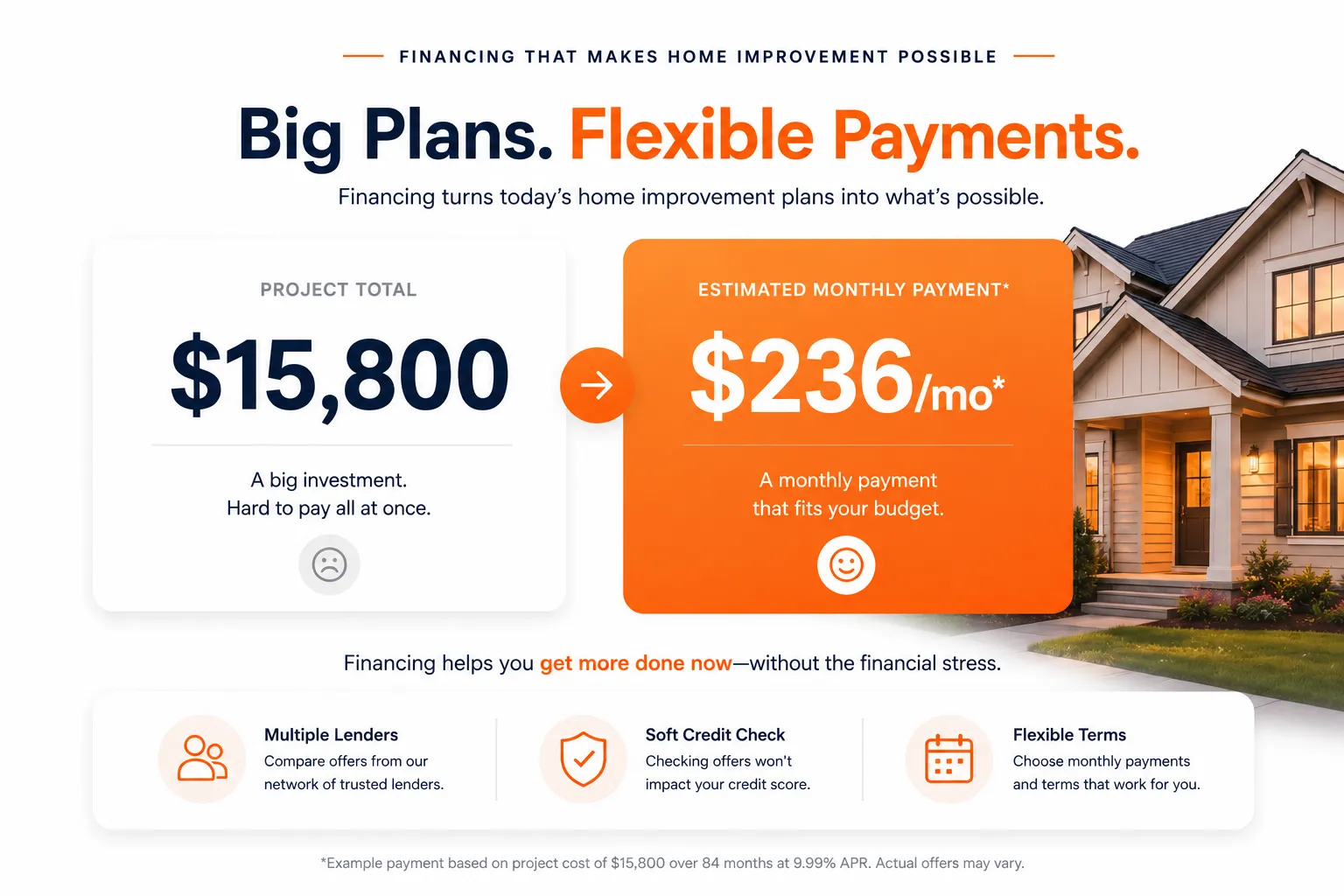
Risk-Free Prequalification
Checking offers won’t impact your credit.
It’s common for homeowners to delay applying because they’re worried about their credit score. With a soft credit check, you can review available financing options without any impact to your credit score.2