
Participating Lender Network





How to Finance Interior Painting Projects (2026 Guide)
Interior painting runs about $2 to $6 per square foot, which puts a single room around $300 to $1,200 and a whole-house repaint between roughly $3,500 and $10,000, and the biggest thing moving that number is labor, not paint. Painters’ time makes up 70% to 85% of the bill, so prep work, ceiling height, trim, and wall repairs drive the price far more than the color you pick. A room or two is usually an out-of-pocket expense you can cover with savings or a 0% intro card, while a full-house repaint is the scale where a personal loan or a home equity line of credit (HELOC) starts to make sense. Knowing your real scope, and how much prep the walls need, is what tells you whether this is a cash job or one worth financing.
Key Takeaways
- Scope of the project sets the price: a single room runs about $300 to $1,200, and a whole-house interior repaint $3,500 to $10,000, depending on size and prep.
- Labor is 70% to 85% of the bill, so what raises your price is prep, high ceilings, trim and doors, and wall repairs, not the paint itself.
- Two coats are standard for a durable, even finish, and a dramatic color change or dark-over-light can add a coat and cost.
- DIY saves roughly $700 to $1,800 in labor on a typical job, but prep is where most of the quality lives, so rushed prep shows within a year.
- Paint grade matters more than it looks: premium paint lasts 7 to 10 years versus 3 to 5 for budget lines, and often covers in fewer coats.
How Much Does Interior Painting Cost?
The total comes down to how much you are painting and how much prep the walls need before a brush touches them. Here is how the common scopes compare, from a single room to a full interior.
Costs also run higher in expensive metro areas and in homes with tall or vaulted ceilings, heavy trim, or walls that need repair before painting.
What Drives the Price of an Interior Paint Job?
Because paint is a small share of the total, the things that raise your quote are almost all labor. When you compare bids, these are the drivers to look at:
- Prep and wall repair: patching, sanding, and caulking are the unglamorous work that most of the quality depends on, and drywall repairs can add a few hundred dollars per room.
- Ceiling height and access: tall, vaulted, or stairwell walls need ladders or scaffolding, which is among the most labor-intensive interior work there is.
- Trim, doors, and ceilings: adding these to a walls-only job raises the per-square-foot rate meaningfully, since they are slow, detailed cutting-in work.
- Number of coats: two coats are standard, and a dramatic color change, dark-over-light, or covering stains can require a tinted primer plus an extra coat.
- Detail rooms: kitchens and bathrooms cost more per square foot than bedrooms because of cutting around cabinets, tile, and fixtures.
Should You Paint It Yourself or Hire a Pro?
Painting is one of the more DIY-friendly home projects, which makes the choice a real one. Doing it yourself saves roughly $700 to $1,800 in labor on a typical job, and a careful painter who preps well and applies two full coats of quality paint can get durable results. The honest trade-offs:
- DIY fits small, simple scopes: a bedroom or office in good condition is a manageable weekend project, and a motivated DIYer can do one to two rooms a weekend.
- Prep is where DIY jobs fail: most of a finish’s quality comes from patching, sanding, and caulking, and a rushed job without proper prep can show wear within a year.
- Big scopes favor a pro: a whole house is 60 to 100 hours of work, while a crew of two or three finishes it in a few days with sharper lines on trim and ceilings.
- Buy good paint either way: premium paint lasts 7 to 10 years versus 3 to 5 for budget lines and often covers in fewer coats, so it is worth the money regardless of who applies it.
How Can You Save on Interior Painting?
A paint job has more negotiable room than most remodels. The moves that trim the bill most:
- Do the prep yourself: move furniture, fill small holes, and remove switch plates and hardware before the crew arrives to cut billed hours.
- Bundle rooms into one visit: painting several rooms in a single job usually earns a better rate than doing them one at a time.
- Go single-color where you can: one wall color throughout lets a crew work in a continuous run and can save meaningfully over a room-by-room palette.
- Book in the off-season: interior work is weather-independent, so late fall through winter often brings better pricing.
- Skip ceilings and trim where they are fine: repainting only the walls in rooms whose ceilings and trim still look good keeps the scope down.
- Buy quality paint on sale: major brands discount around holiday weekends, and better paint means fewer coats and longer life.
How Do You Finance Interior Painting?
Most single-room jobs are small enough to pay for outright, so financing mainly comes into play for a whole-house repaint or painting done as part of a larger remodel. The common paths, by scale:
- Savings or a 0% intro APR credit card: best for a room or two you can repay inside the promotional window. Any balance left when the promo ends converts to a high variable rate, so clear it in time.
- Unsecured personal loan: best for a whole-house repaint. It funds quickly, puts no lien on your home, and carries a fixed rate with predictable payments, though some lenders charge an upfront origination fee taken from your proceeds. Generally wants good credit or better for the best terms.
- Home equity loan or HELOC: worth considering when painting is one piece of a larger remodel, since it usually carries a lower relative rate. The catch is that it places a lien on your home and requires equity, an appraisal, and closing costs, which is a lot of process for a paint-only job.
- Contractor financing: some painting companies offer promotional plans through a third-party lender. Compare the total against an outside loan, and confirm whether a “no interest” offer is a true 0% or deferred interest.
How Do You Qualify for Interior Painting Financing?
Qualifying is quick for a job this size, and because painting is often the affordable end of home improvement, the goal is to match the loan to the scope rather than overborrow. A short path:
- Get an itemized quote by room and surface: since labor and prep drive the price, a quote that breaks out walls, ceilings, trim, and repairs tells you the real total to finance.
- Check your credit and prequalify with a soft pull: compare real offers without affecting your score, and weigh them on total repayment rather than the monthly figure.
- Match the tool to the size: reach for a card you can clear or a small personal loan for a partial repaint, and save home equity borrowing for when painting rides along with a bigger project.
The Bottom Line
How you pay for interior painting depends mostly on how much you are doing. A single room or a quick refresh is usually affordable enough for savings or a 0% intro card you clear inside the promotional window. A whole-house repaint fits a personal loan that funds fast without touching your equity. Borrowing against your home makes sense mainly when painting is one line in a larger remodel, since a lien and closing costs are a lot of process for paint alone.
Before you borrow, get an itemized quote by room and surface so you can see how much of the price is prep and labor, and decide honestly whether the smaller rooms are a weekend you can handle yourself. Spend for quality paint regardless of who applies it, match the financing to the scope, and compare any loan offer on the total you will repay rather than the monthly figure.
The information provided by Pasha Funding is for educational and informational purposes only and should not be considered financial, legal, or tax advice. Every homeowner’s financial situation is different, and the financing options discussed may not be suitable for everyone. Before choosing a financing solution, carefully review the lender’s terms and consider consulting a qualified financial professional if needed.
Pasha Funding is a financing marketplace that connects homeowners with financing options offered by participating lending partners. We do not make loans, determine credit eligibility, or guarantee approval or specific loan terms. Pasha Funding is not a direct lender. We may receive compensation from participating lending partners when users submit an application or obtain a loan through our platform. This compensation may affect how and where financing options appear, but it does not influence our editorial evaluations.
Financing offers, rates, terms, and availability are determined solely by participating lenders and may change without notice. Our editorial content is created independently to help consumers better understand home improvement financing. While we strive to keep information accurate and current, financing products, lender requirements, rates, and offers may change over time. Any opinions expressed are those of the author and have not been reviewed, approved, or endorsed by our lending partners.


Frequently Asked Questions
how it works
3 Simple steps to
finance your project.
Getting started only takes a minute. Complete one simple application to compare available financing offers from over 18+ lenders, choose the option that fits your budget, and move forward with your home improvement project.
Interior Painting Financing Calculator
1. Enter Your Desired Loan Amount
Your Estimate
Monthly Payment
-
This calculator provides estimates for illustrative purposes only and does not constitute an offer of credit or a commitment to lend. Final APRs, loan amounts, and terms depend on credit approval, income verification, and lender underwriting criteria. Minimum and maximum rates/terms vary by state.
Powered by: Pasha Funding
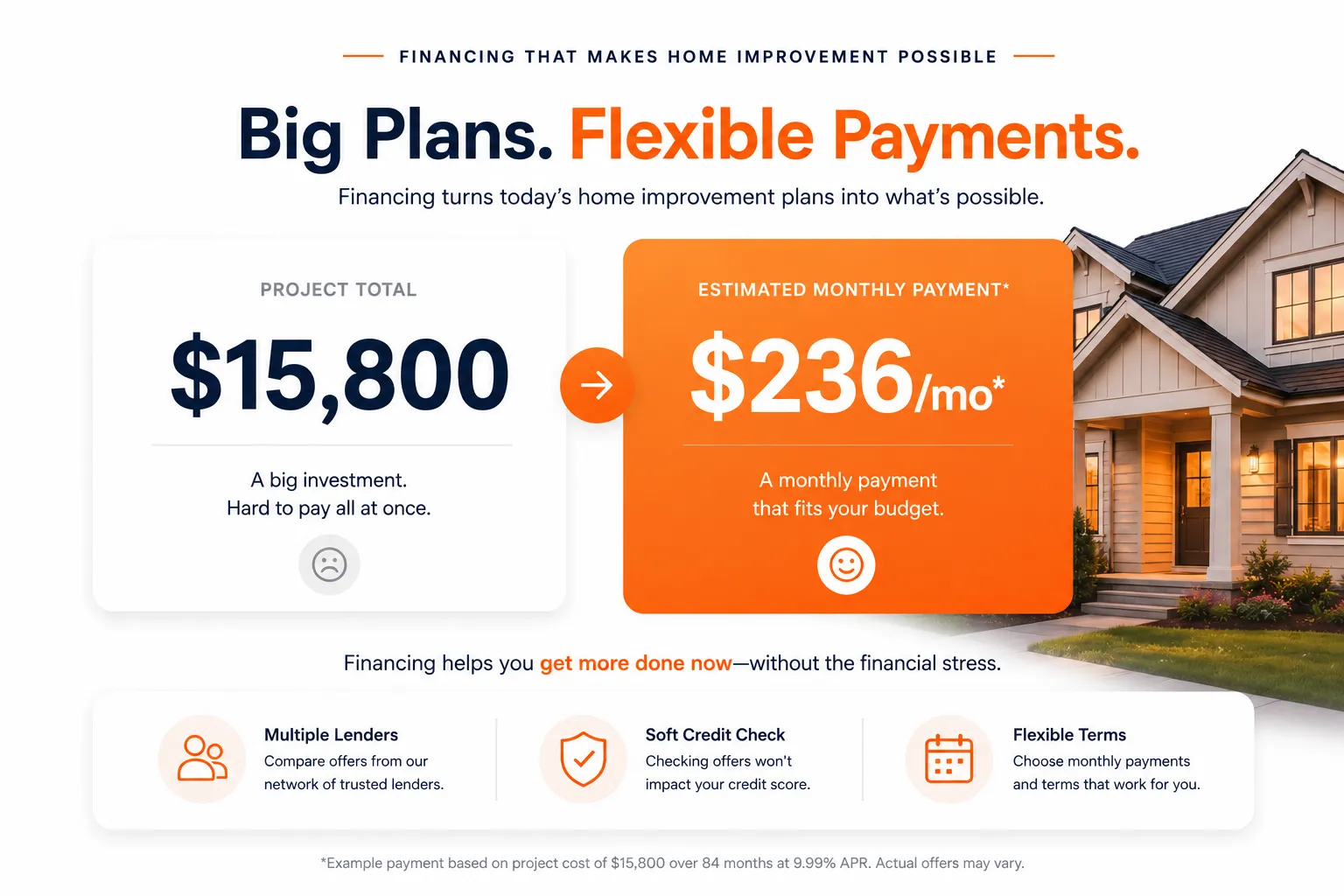
Risk-Free Prequalification
Checking offers won’t impact your credit.
It’s common for homeowners to delay applying because they’re worried about their credit score. With a soft credit check, you can review available financing options without any impact to your credit score.2