Participating Lender Network





HVAC Financing: How to Pay for a New System
You can finance an HVAC system with a personal loan, contractor or manufacturer financing, a credit card, a home equity loan or HELOC, or a government-backed energy program. With a full replacement typically running $5,000 to $11,000, most homeowners spread the cost rather than pay upfront. Which option is right depends less on the loan itself and more on your situation: whether your system just failed or you are planning ahead, and whether you have home equity to draw on. This guide sorts the options by exactly those two questions.
Key Takeaways
- Your timeline decides your best option: emergencies call for speed, planned replacements let you chase a lower rate.
- A full HVAC replacement typically costs $5,000 to $11,000, rising to $7,000 to $16,000 with new ductwork.
- For a system that already failed, a personal loan funds in one to five business days, needs no equity, and keeps your home off the table.
- For a planned upgrade, a home equity loan or HELOC usually costs less but takes two to six weeks to close.
- Compare contractor financing against at least one outside offer, and confirm whether it is true 0% or deferred interest before signing.
- Confirm a replacement is actually needed, get two or three itemized bids, and compare offers on total cost, not the monthly payment.
Emergency vs. Planned HVAC Replacement: Which Financing Fits?
Your best financing option depends first on your timeline. An HVAC system that has already failed and a system you are choosing to upgrade lead to completely different answers, so start here before comparing any loan.
If your heat or air conditioning is out right now, speed outranks cost. You need funds in days, which rules out slower options like a home equity loan and points toward a personal loan or contractor financing, even though they may cost a little more.
If your system still runs but is aging, you have room to plan. You can save toward part of the cost, wait out the two to six weeks a home equity loan takes to close, and shop rebates, all of which lower what you ultimately pay.
The rest of this guide follows that split: a fast-funding path for emergencies, and a lower-cost path for planned upgrades. But first, one question can save you the whole expense.
Should You Repair or Replace Your HVAC System?
Before you finance a replacement, confirm the system is actually worth replacing. A single repair is almost always cheaper than a new system, so the real question is whether you are about to throw good money after bad.
One common guideline is the “5,000 rule”: multiply the repair cost by the age of the unit in years. If the result tops $5,000, replacement usually makes more sense. A $400 repair on a 15-year-old furnace comes to $6,000 and points to replacing; the same repair on a 5-year-old unit comes to $2,000 and points to fixing it.
Replacement also wins when the system uses a discontinued refrigerant, breaks down repeatedly, or is driving visibly higher energy bills. If none of those apply and the unit is relatively young, financing a repair on a credit card you pay off quickly may be all you need, and you can skip the rest of this guide.
How Fast Each Option Funds
Typical time from application to money in hand.
Bars show relative funding speed. Actual timing varies by lender and application.
How to Finance an Emergency HVAC Replacement
When you need heat or cooling back within days, the best options are the ones that fund fastest: a personal loan, contractor financing, or a credit card. All three skip the appraisal and weeks-long timeline that home equity borrowing requires.
HVAC Personal Loans
A personal loan is an unsecured lump sum you repay on a fixed schedule. It funds in as little as one to five business days, needs no home equity, and records no lien against your property, so a missed payment cannot put your house at risk.
Because the money usually goes to you rather than the contractor, you keep control: you can pay whichever installer you choose and negotiate as a cash buyer. Terms typically run three to seven years at a fixed rate.
💡 Pro tip
Even in an emergency, prequalify with two or three lenders in the same week. Multiple inquiries for the same loan type generally count as one for FICO scoring, so comparing offers costs you nothing extra.
Contractor and Manufacturer Financing
Many HVAC companies can approve financing on the spot, often through a manufacturer program or lending partner, sometimes funding same-day. That convenience is real, but the terms come from a party that profits from a bigger sale, so it needs a close read (see the section below on evaluating it).
Credit Cards and 0% Offers
A credit card makes sense for a repair or a partial cost you can repay quickly, especially on a true 0% introductory offer that runs six to 18 months. For a full system in the thousands, it is rarely the cheapest path, since any balance left when the promotional window closes moves to the standard rate.
Best HVAC Financing for a Planned Replacement
If your system still runs, the goal shifts from speed to cost, and the cheapest options open up. With time on your side, you can secure a lower rate or avoid borrowing altogether.
Home Equity Loans and HELOCs
A home equity loan or HELOC borrows against your home’s value and generally carries the lowest rate of any financing here. The trade-off is time: an appraisal and title work push funding to two to six weeks, which only works when you are not in a rush.
Most lenders cap borrowing at 80% to 85% of your home’s value, counting your first mortgage. That is your CLTV, or combined loan-to-value. You also pay 2% to 5% in closing costs, and your home secures the debt, so weigh that against the rate savings on a large system.
Paying Cash
Paying cash costs nothing to borrow and is the cheapest route for a replacement you can schedule. If your unit is aging but functional, replacing it proactively lets you save up rather than borrow. Keep some reserve, though, since draining savings on HVAC can leave you exposed to the next surprise.
Government and Utility Programs
Some states, utilities, and federal programs offer low-cost loans, rebates, or on-bill financing for high-efficiency equipment like heat pumps. Note that the federal Section 25C tax credit for efficient HVAC ended for equipment placed in service after December 31, 2025, so state and utility rebates are now the main savings path. See the section below on cutting what you finance before you settle on a loan amount.
How to Finance HVAC With Bad Credit
You can finance HVAC with poor credit, but this is where the market gets most expensive, so read every offer closely. A failing system does not wait for a good credit score, and several paths exist for lower-credit borrowers.
Credit unions and community banks are often the most flexible traditional lenders, and many run member loans aimed at essentials like HVAC. Marketplace personal loans let you prequalify with a soft credit pull, so you can see real offers without denting your score.
Be most careful with no-credit-check and lease-to-own plans. They approve almost anyone, but the total you repay can climb well above the system’s actual price. Treat these as a genuine last resort.
💡 Pro tip
On any no-credit-check or lease-to-own offer, multiply the monthly payment by the number of payments. If that total runs far above the cash price of the system, keep shopping before you sign.
How to Reduce the Amount You Finance
Lowering the amount you borrow starts with a simple move: total your rebates and incentives before you settle on a loan amount, not after. The less you finance, the less interest you pay over the life of the loan.
Utility rebates for high-efficiency systems commonly run several hundred to over a thousand dollars, and manufacturers like Carrier and Trane add seasonal rebates on top. Combined, incentives can knock several thousand dollars off a heat pump. The U.S. Department of Energy’s Home Upgrades page and the DSIRE incentive database are good starting points, and you can search “[your state] HVAC rebates” for local programs. Confirm which rebates must be applied for before installation, since some cannot be claimed after the fact.
A partial down payment helps too. Putting a tax refund, a year-end bonus, or part of your emergency fund toward the system shrinks the balance you carry and the interest on it. Even a modest down payment can meaningfully lower the total cost of a multi-year loan.
How Much Does an HVAC Replacement Cost?
A full HVAC replacement typically costs $5,000 to $11,000 for a change-out, and $7,000 to $16,000 when new ductwork is involved. The final number depends on system type, home size, efficiency rating, and duct condition.
What an HVAC Replacement Costs
Typical installed price range by project scope.
Bar length reflects the top of each range. Actual cost varies by system type, home size, and efficiency. Figures from Angi and HomeGuide.
How to Qualify for HVAC Financing
Qualifying comes down to three things a lender checks: your credit, your income relative to your debts, and, for a secured loan, your home equity. A few steps before you apply can improve both your approval odds and the rate you are offered.
-
Check your credit and fix quick errors.
Pull your credit reports and dispute any mistakes, since a single correction can move your score. If you have a little time, pay down card balances, because credit utilization, the share of your available credit you are using, affects your score faster than almost anything else. Avoid opening new accounts until your loan closes.
-
Know your debt-to-income ratio.
Lenders compare your monthly debt payments to your gross monthly income, and most want that debt-to-income ratio at or below 43%. Add up your existing obligations plus the estimated new payment; if the total pushes past that line, paying down a small balance first can tip an approval in your favor.
-
Gather your documents.
Most lenders ask for proof of identity, recent pay stubs or tax returns, and bank statements. Having these ready lets you move fast, which matters when a failed system cannot wait. For a home equity loan or HELOC, expect an appraisal and title work on top.
-
Prequalify with a soft credit pull.
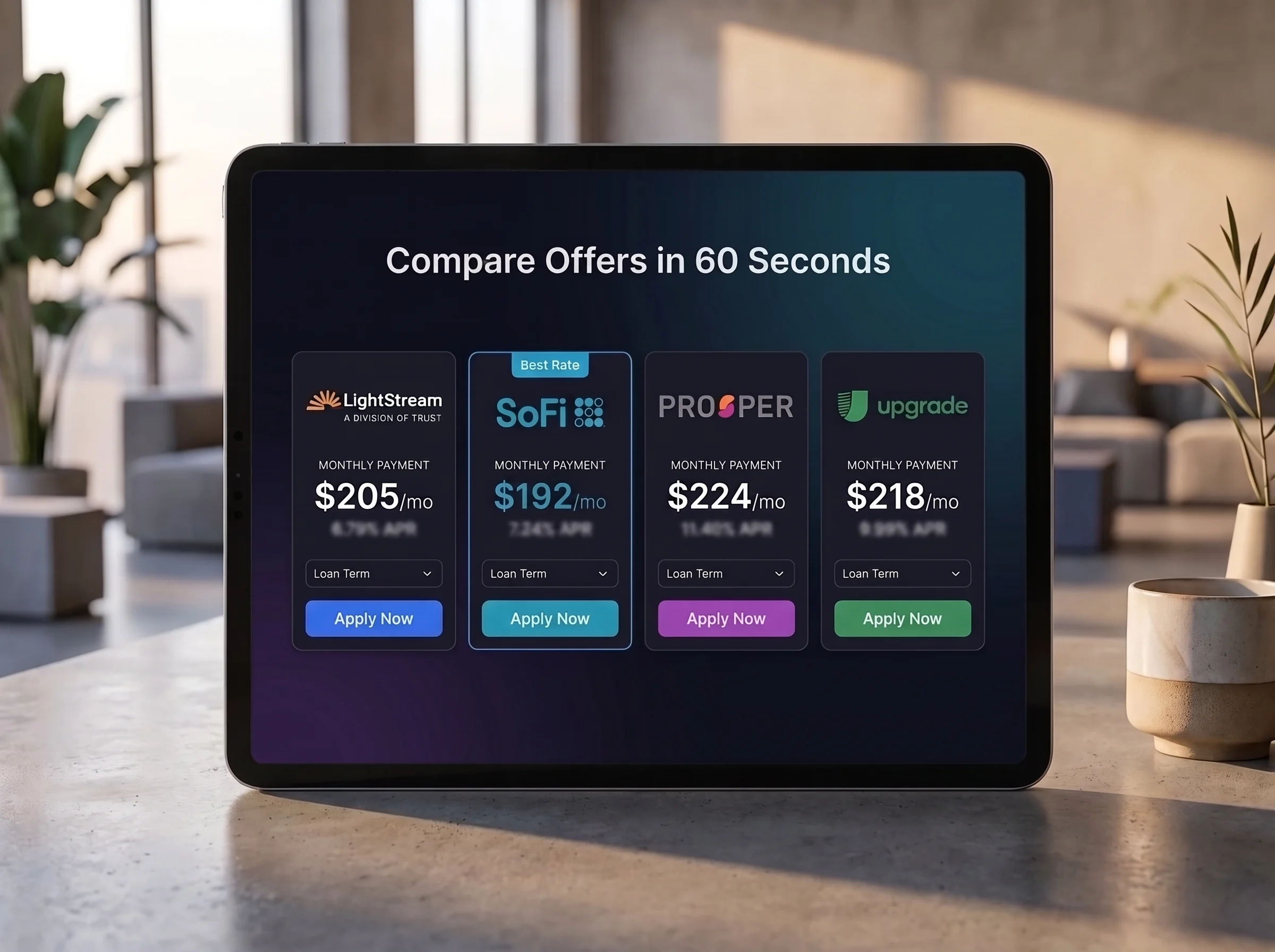
Many lenders and marketplaces let you see your real rate with a soft credit pull that does not affect your score. Prequalify with two or three, compare the offers on total cost, and only then submit a full application, which triggers a hard credit check.
Here are the baseline thresholds lenders look for:
| Qualification Metric | Personal Loans (Unsecured) | Home Equity (Secured) |
|---|---|---|
| Minimum credit score | 580 to 640, fair credit accepted | 620 to 680+ |
| Home equity needed | None | 15% to 20% |
| Funding speed | 1 to 5 days | 2 to 6 weeks |
Thresholds reflect published underwriting standards. Because an unsecured loan skips the equity and appraisal steps, it stays available to homeowners who could not qualify for, or could not wait on, a home equity loan.
Is Contractor HVAC Financing Worth It?
Take contractor financing only after you have compared it against at least one outside offer, because convenience often hides a higher cost. Most HVAC buyers are offered a payment plan on the spot, and it is easy to accept it simply because it is in front of you at a stressful moment.
The most important thing to check is whether the plan is a true 0% offer or a deferred interest plan. With deferred interest, missing the payoff deadline by even a small balance triggers interest charged back to the original purchase date, which can erase the savings entirely.
Contractor financing can genuinely be the best deal, especially when a manufacturer subsidizes a promotional rate. The only way to know is to hold it next to an independent quote.
💡 Pro tip
Ask the installer two questions before signing: “Is this true 0% or deferred interest?” and “What is the total of all payments?” Then prequalify with one outside lender and compare that total. Five minutes can save you hundreds.
The Bottom Line
With HVAC, your timeline decides your best option. If the system has failed and you need it running now, a personal loan or a carefully compared contractor plan gets you there fast without risking your home. If you are planning ahead and have equity, a home equity loan or HELOC will usually cost less, and paying cash costs least of all. Whatever the timeline, confirm a replacement is truly needed, get two or three itemized bids, and compare at least three financing offers on the total you will repay, not the monthly payment.
Offers are available from banks, credit unions, and online lending marketplaces, including Pasha Funding, which connects homeowners with multiple lenders through one application so you can review what you qualify for.
Explore related resources from Pasha Funding:
- HVAC Financing Options
- Mini Split Financing
- Gas Furnace Financing
- Heat Pump Financing
- Central AC Financing
The information provided by Pasha Funding is for educational and informational purposes only and should not be considered financial, legal, or tax advice. Every homeowner’s financial situation is different, and the financing options discussed may not be suitable for everyone. Before choosing a financing solution, carefully review the lender’s terms and consider consulting a qualified financial professional if needed.
Pasha Funding is a financing marketplace that connects homeowners with financing options offered by participating lending partners. We do not make loans, determine credit eligibility, or guarantee approval or specific loan terms. Pasha Funding is not a direct lender. We may receive compensation from participating lending partners when users submit an application or obtain a loan through our platform. This compensation may affect how and where financing options appear, but it does not influence our editorial evaluations.
Financing offers, rates, terms, and availability are determined solely by participating lenders and may change without notice. Our editorial content is created independently to help consumers better understand home improvement financing. While we strive to keep information accurate and current, financing products, lender requirements, rates, and offers may change over time. Any opinions expressed are those of the author and have not been reviewed, approved, or endorsed by our lending partners.


Frequently Asked Questions
In this guide
- Emergency vs. Planned HVAC Replacement: Which Financing Fits?
- Should You Repair or Replace Your HVAC System?
- How to Finance an Emergency HVAC Replacement
- Best HVAC Financing for a Planned Replacement
- How to Finance HVAC With Bad Credit
- How to Reduce the Amount You Finance
- How Much Does an HVAC Replacement Cost?
- How to Qualify for HVAC Financing
- Is Contractor HVAC Financing Worth It?
- The Bottom Line
how it works
3 Simple steps to
finance your project.
Getting started only takes a minute. Complete one simple application to compare available financing offers from over 18+ lenders, choose the option that fits your budget, and move forward with your home improvement project.
HVAC Financing Calculator
1. Enter Your Desired Loan Amount
Your Estimate
Monthly Payment
-
This calculator provides estimates for illustrative purposes only and does not constitute an offer of credit or a commitment to lend. Final APRs, loan amounts, and terms depend on credit approval, income verification, and lender underwriting criteria. Minimum and maximum rates/terms vary by state.
Powered by: Pasha Funding
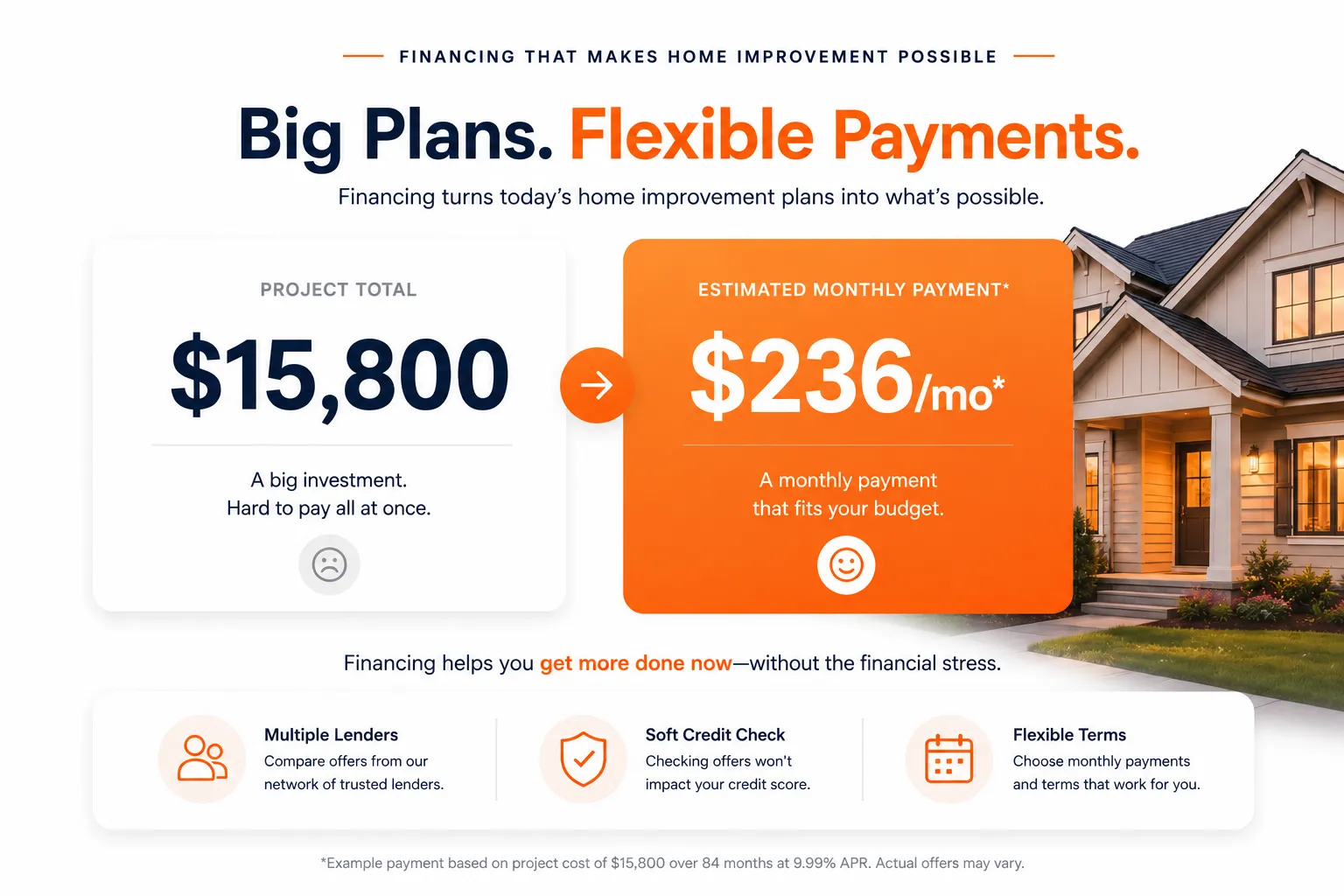
Risk-Free Prequalification
Checking offers won’t impact your credit.
It’s common for homeowners to delay applying because they’re worried about their credit score. With a soft credit check, you can review available financing options without any impact to your credit score.2