Participating Lender Network





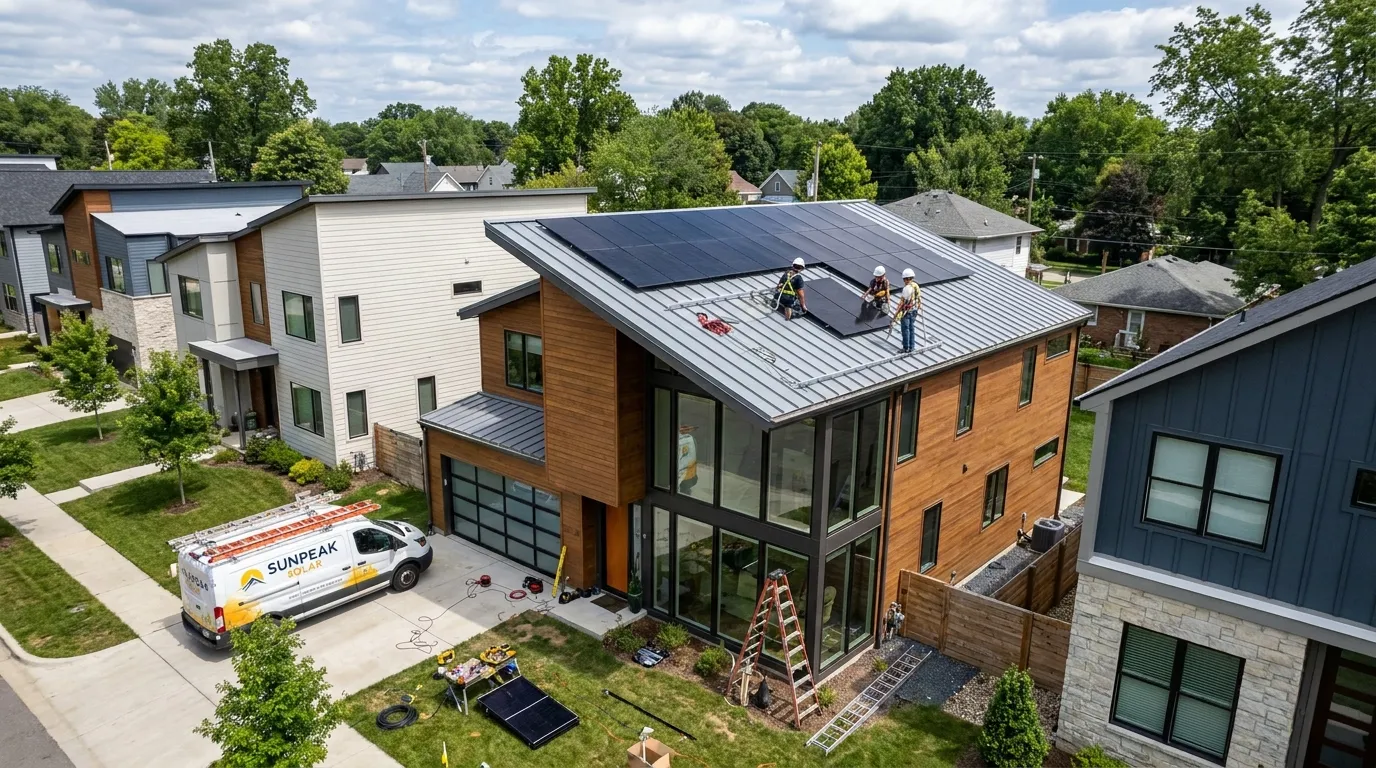
Solar Financing Services for Businesses & Contractors
Advertising Disclosure
Financing for Solar Installation Contractors: How to Offer Payment Options
A homeowner may understand the long-term value of solar and still hesitate at the project price. Even a well-designed system can feel out of reach when the customer compares the full installation cost with the money available in their bank account.
Financing for solar installation contractors helps close that gap. Instead of asking every homeowner to pay the entire price upfront, you can connect qualified customers with lenders that offer structured monthly payment options.
This does not mean you should turn every sales conversation into a discussion about loans. It means you should explain the project price, available payment methods, financing costs, and lender terms clearly enough for the homeowner to make an informed decision.
Why financing matters in the solar installation sales process
Solar remains a major market despite recent pressure
The solar market continues to create work for installers, but contractors cannot depend on demand alone. The Solar Energy Industries Association’s 2025 market review reported that the United States installed about 43.2 gigawatts of solar capacity during 2025, down 14% from 2024.
Residential contractors faced a particularly uneven market. High borrowing costs, changing policies, local utility rules, and customer uncertainty caused many homeowners to delay projects even when they remained interested in solar.
The long-term labor outlook remains strong. The U.S. Bureau of Labor Statistics projects employment for solar photovoltaic installers to grow 42% from 2024 through 2034, compared with 3% across all occupations.
For contractors, these figures point to a practical reality. There is still demand, but your sales process must help homeowners understand both the project and the payment.
The full price can stop an otherwise qualified customer
A homeowner may agree that the roof receives enough sunlight, the utility bill supports the investment, and the equipment fits the property. The conversation can still stall when you present a five-figure cash price.
Some contractors respond by immediately quoting the lowest possible monthly payment. That approach can create distrust when the customer later learns about a longer term, a higher financed price, lender fees, or qualification requirements.
A better approach starts with the complete project price. You can then show the payment methods available through your contractor financing program, including any cash, loan, promotional, or other eligible options.
- Present the complete scope and cash price first.
- Explain that financing is provided by participating lenders.
- Let the homeowner review actual offers before discussing final payments.
- Separate estimated energy savings from required loan payments.
How solar contractor financing works
The contractor introduces financing without becoming the lender
Under a typical point-of-sale financing arrangement, you introduce the homeowner to a financing platform or participating lender. The homeowner completes an application, and the lender reviews the information under its own credit and underwriting requirements.
You do not make the approval decision or collect the homeowner’s monthly loan payments. Your role is to present the project accurately, provide access to the application, complete the installation, and submit the documents required for funding.
The exact process varies by provider, but most solar financing transactions follow a similar path:
- You inspect the property and develop the proposed solar system.
- You present the project scope, cash price, warranties, and expected timeline.
- The homeowner uses a secure application to check available financing.
- A participating lender reviews the application and presents eligible terms.
- The homeowner chooses whether to accept an available offer.
- You complete lender documentation and install the approved project.
- The lender releases funds after its conditions are satisfied.
- The homeowner makes future payments to the lender.
Do not order equipment or begin work based only on a prequalification message. Confirm that the lender has approved the transaction and that all required funding conditions have been met.
Prequalification and final approval are different
Some providers let homeowners check potential offers through a soft credit inquiry, which generally does not affect the consumer’s credit score. A hard credit inquiry may occur later if the homeowner selects an offer and continues with the lender.
Prequalification is not a promise of funding. The lender may still need to verify identity, income, property information, banking details, project documents, or other application data.
How to build financing into your solar sales process
Introduce payment choices before price becomes an objection
Financing works best when it appears as a normal payment method, not a rescue attempt at the end of a sales call. Mention early that customers may be able to compare payment options after reviewing the proposed system and project price.
This approach shortens the distance between technical interest and a financial decision. It also prevents the homeowner from assuming that cash or a high-limit credit card is the only way to proceed.
Your proposal can include a simple payment section that links to your home improvement financing options. Keep estimated payments clearly labeled and avoid presenting a promotional example as an offer available to every applicant.
Set rules for sales claims and tax-credit discussions
Solar tax incentives can affect a homeowner’s calculations, but your sales team should never present a tax credit as an automatic cash rebate. Eligibility depends on current law and the homeowner’s individual tax situation.
The CFPB’s solar financing guidance explains that installers and lenders usually do not know enough about a consumer’s tax position to promise a specific tax benefit. The homeowner may also wait until filing a tax return before receiving any available benefit.
Common mistake
Do not subtract an estimated tax credit from the project price and describe the result as the customer’s guaranteed net cost. Show the contract price separately and advise the homeowner to confirm tax eligibility with a qualified professional.
Sales representatives should also avoid guaranteeing utility savings, property-value increases, approval results, or system production. Use documented assumptions and provide the homeowner with the information behind each estimate.
How financing affects contractor cash flow and operations
Funding rules matter as much as approval rates
A financing program may generate plenty of applications and still create operational problems. Before enrolling, determine exactly when the lender pays you and what documents it requires.
Some providers release funds after installation and customer confirmation. Others may use milestone or staged funding for eligible projects. Inspection results, permits, utility approvals, signed completion certificates, equipment records, and change orders can all affect timing.
Ask each potential provider these questions:
- When does the contractor become eligible for payment?
- Does the provider offer staged funding?
- Which documents must you submit?
- How are change orders handled?
- What happens if installation is delayed?
- Can funds be reversed after disbursement?
- Who handles customer payment questions?
Map those requirements into your project-management process before offering the program. Your sales, permitting, installation, accounting, and customer-service teams should know who owns each step.
Track financing as an operating process
Do not judge a program only by its approval rate. Track how financing affects completed sales, project size, cancellation rates, funding time, gross margin, and customer complaints.
You should also record why applicants do not move forward. A customer may receive an offer but reject it because of the rate, payment, loan term, financed amount, or documentation request.
That information helps you improve how your team explains financing without pressuring customers. It can also show when you need a broader multiple-lender financing network or a different mix of payment options.
Choosing a financing partner for your solar business
Look beyond the application screen
A fast application matters, but it is only one part of the relationship. A dependable financing partner should provide clear terms, responsive support, secure technology, predictable funding procedures, and training your team can understand.
Review the provider’s customer disclosures and complaint process. Ask who answers questions when a homeowner disputes a payment, wants to pay early, changes the project, or believes the loan terms differ from the sales presentation.
The best fit is not always the lender advertising the lowest sample payment. Choose a program your employees can explain accurately and your operations team can manage consistently.
Use a practical review checklist
- Available loan amounts match your usual project sizes.
- Terms work for the credit profiles your company commonly sees.
- Fees and financed-price differences are clearly disclosed.
- The application works on mobile devices.
- Funding requirements are documented before enrollment.
- The provider offers accessible contractor and customer support.
- Your company retains enough margin after applicable fees.
- Marketing and sales language meets legal requirements.
Review the program with legal and financial professionals before rollout. Financing rules, tax incentives, licensing requirements, and consumer-protection obligations may differ by state and product.
Frequently asked questions about financing for solar installation contractors
Can a solar contractor offer financing without becoming a lender?
Yes. Contractors commonly connect homeowners with independent lenders or financing platforms. The participating lender reviews the application, makes the credit decision, issues the loan, and collects the homeowner’s scheduled payments.
Does checking solar financing affect the homeowner’s credit score?
It depends on the provider and stage of the application. Some providers use a soft credit inquiry to show possible options, while a hard inquiry may occur when the homeowner selects an offer and proceeds with the lender.
What credit score is needed for solar financing?
There is no single minimum score across all lenders. Approval can depend on credit history, income, debt, loan amount, state, project details, and the lender’s current underwriting standards.
How quickly does a solar contractor receive payment?
Funding timing depends on the lender’s agreement and completion requirements. The contractor may need to provide signed contracts, permits, inspection records, installation evidence, customer confirmation, or other documents before funds are released.
Are solar loans always better than paying cash?
No. Cash avoids borrowing costs, but it uses more of the homeowner’s available money at once. Financing spreads the cost over time, though interest, fees, and longer repayment periods may increase the total amount paid.
Can a contractor advertise a monthly solar payment?
A contractor may provide an accurate, properly disclosed example, but should not suggest that every customer will receive the same terms. The example should state the assumed loan amount, rate, term, required qualifications, and other material conditions.
Build a financing process customers can understand
Financing for solar installation contractors should make a complex purchase easier to evaluate, not harder to understand. Start with an accurate project scope and cash price, then give the homeowner a clear way to compare available lender terms.
Train your team to separate estimates from guarantees, prequalification from final approval, and tax assumptions from confirmed benefits. Behind the scenes, document every funding requirement so approved projects move from contract to installation without avoidable delays.
When customers understand what they are buying, what they will owe, and who will handle the loan, they can make a more confident decision. That protects the homeowner while helping your company build a more consistent sales and installation process.
Offer monthly payment options To Your Customers
Pasha Funding is designed for solar installers and other home improvement contractors that want to offer customers financing for projects ranging from smaller upgrades to larger installations. Available loan amounts, terms, and applicant eligibility depend on the participating provider and lender requirements.
Qualified homeowners may be able to spread the project cost through fixed monthly payments instead of paying the full price upfront. This can make larger solar installations easier to manage while helping customers preserve more of their available cash.
Your business may receive payment after the homeowner accepts an available offer and satisfies the lender’s funding requirements. The lender then handles the homeowner’s scheduled loan payments, allowing you to focus on completing the project rather than collecting monthly installments.
You can introduce financing to new customers and reconnect with qualified past leads who delayed because of the upfront price. Apply to become a Pasha Funding partner to learn how the financing process works.
More contractor financing solutions by project type:
- Accessory Dwelling Unit Contractor Financing
- Artificial Grass & Turf Financing for Contractors
- Bathroom Remodel Contractor Financing
- Custom Closet & Storage Financing for Customers
- Concrete Contractor Financing
- Decks & Patio Financing for Contractors
- Contractor Financing for Electric Services
- Contract Financing for Flooring Contractors
- Gutter Contractor Financing Options
- Garage Door Contractor Financing
- HVAC Financing Solutions for Contractors
- Insulation Contractor Financing for Customers
- Contractor Financing for Landscaping Businesses
- Kitchen Remodel Contractor Financing
- Masonry Contractor Financing
- Financing Options for Plumbing Contractors
- Contractor Financing for Painters
- Roofing Contractor Financing
- Solar Contractor Financing
- Swimming Pool Contractor Financing
- Siding & Exterior Contractor Financing
- Fencing Contractor Financing Options
- Windows & Doors Contractor Financing
- Window Blinds & Shades Financing for Customers
FAQs
In this guide
- Financing for Solar Installation Contractors: How to Offer Payment Options
- Why financing matters in the solar installation sales process
- How solar contractor financing works
- How to build financing into your solar sales process
- How financing affects contractor cash flow and operations
- Choosing a financing partner for your solar business
- Frequently asked questions about financing for solar installation contractors
- Build a financing process customers can understand
- Offer monthly payment options To Your Customers

For illustrative purposes only
How Contractor Financing Works
3 steps from estimate
to funded.
Offering financing is simple. Homeowners compare offers from third-party lenders using one simple application, while the lender handles underwriting, funding, servicing, and payment collection.
Why Contractors Partner With Us
A smarter way to offer
customer financing.
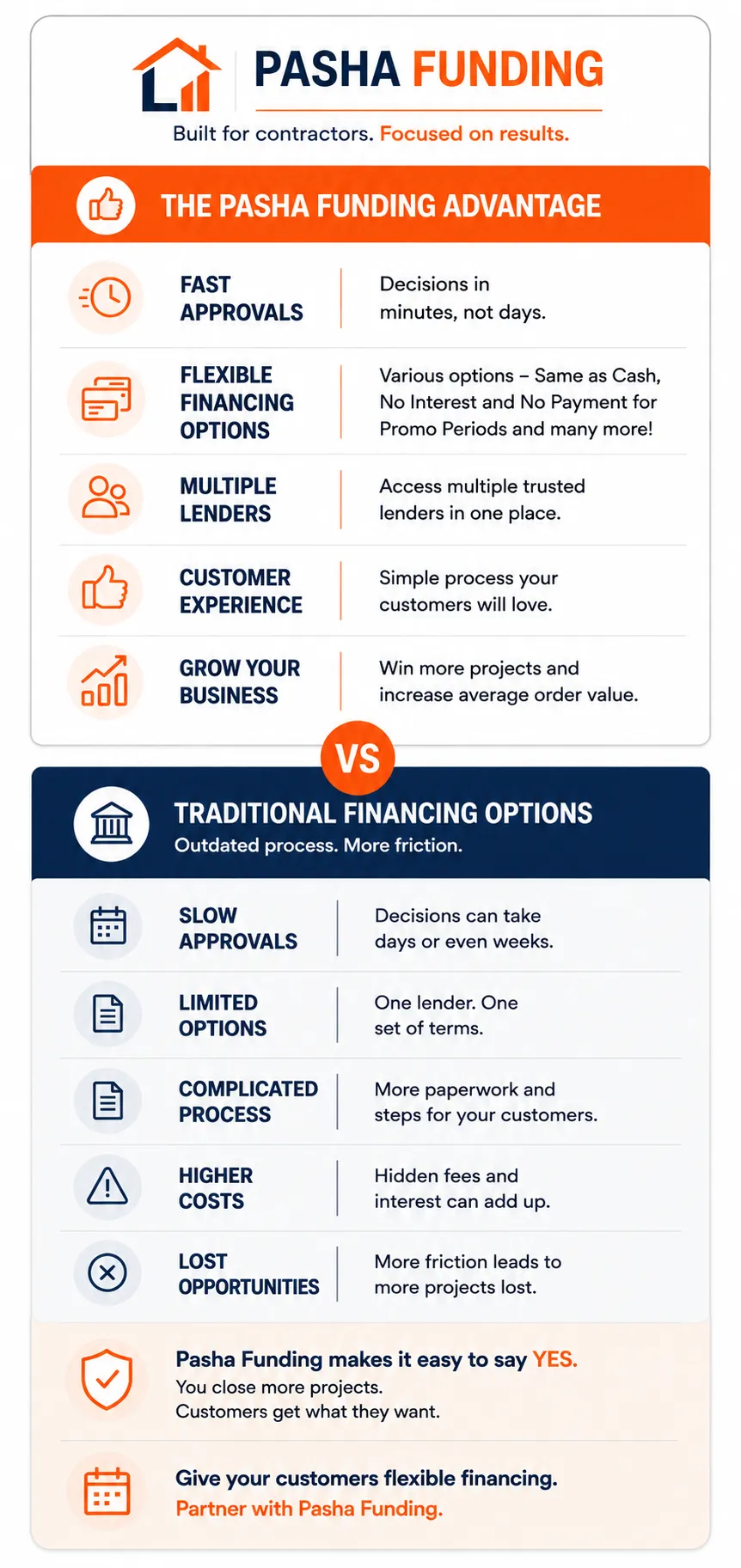
A Smarter Way to Offer Financing
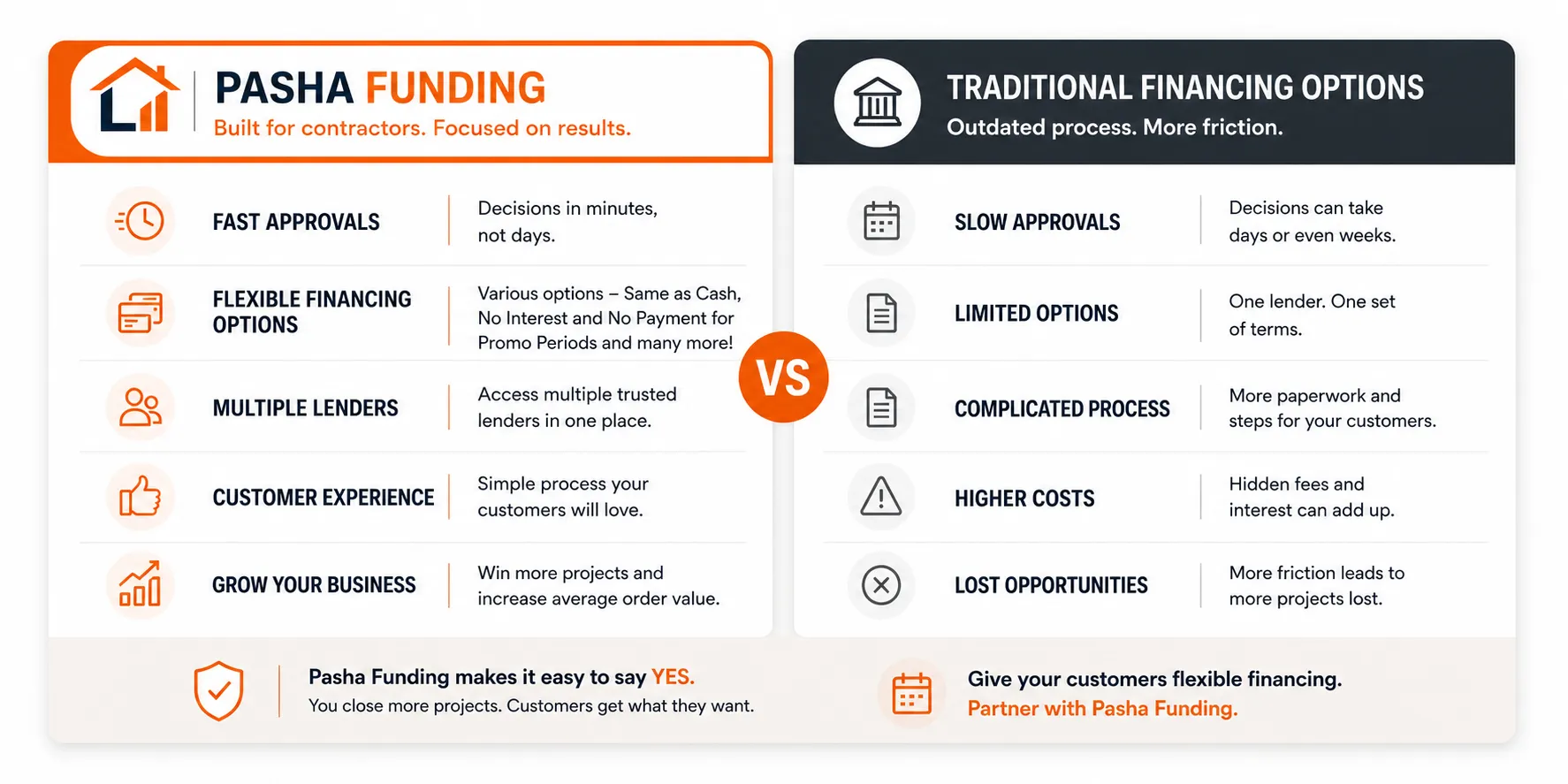
Pasha Funding vs.
traditional programs
Find Home Improvement Contractor Financing for Customers Near You
- Atlanta Contractor Financing
- Austin Contractor Financing
- Boston Contractor Financing
- Charlotte Contractor Financing
- Chicago Contractor Financing
- Cleveland Contractor Financing
- Columbus Contractor Financing
- Connecticut Contractor Financing
- Dallas Contractor Financing
- Denver Contractor Financing
- Detroit Contractor Financing
- Fort Worth Contractor Financing
- Houston Contractor Financing
- Indianapolis Contractor Financing
- Jacksonville Contractor Financing
- Los Angeles Contractor Financing
- Miami Contractor Financing
- Nashville Contractor Financing
- New York City Contractor Financing
- Orlando Contractor Financing
- Philadelphia Contractor Financing
- Phoenix Contractor Financing
- Portland Contractor Financing
- Providence Contractor Financing
- Raleigh Contractor Financing
- Salt Lake City Contractor Financing
- San Antonio Contractor Financing
- San Diego Contractor Financing
- San Jose Contractor Financing
- Seattle Contractor Financing
- St. Paul Contractor Financing
- Tampa Contractor Financing
- Washington Contractor Financing