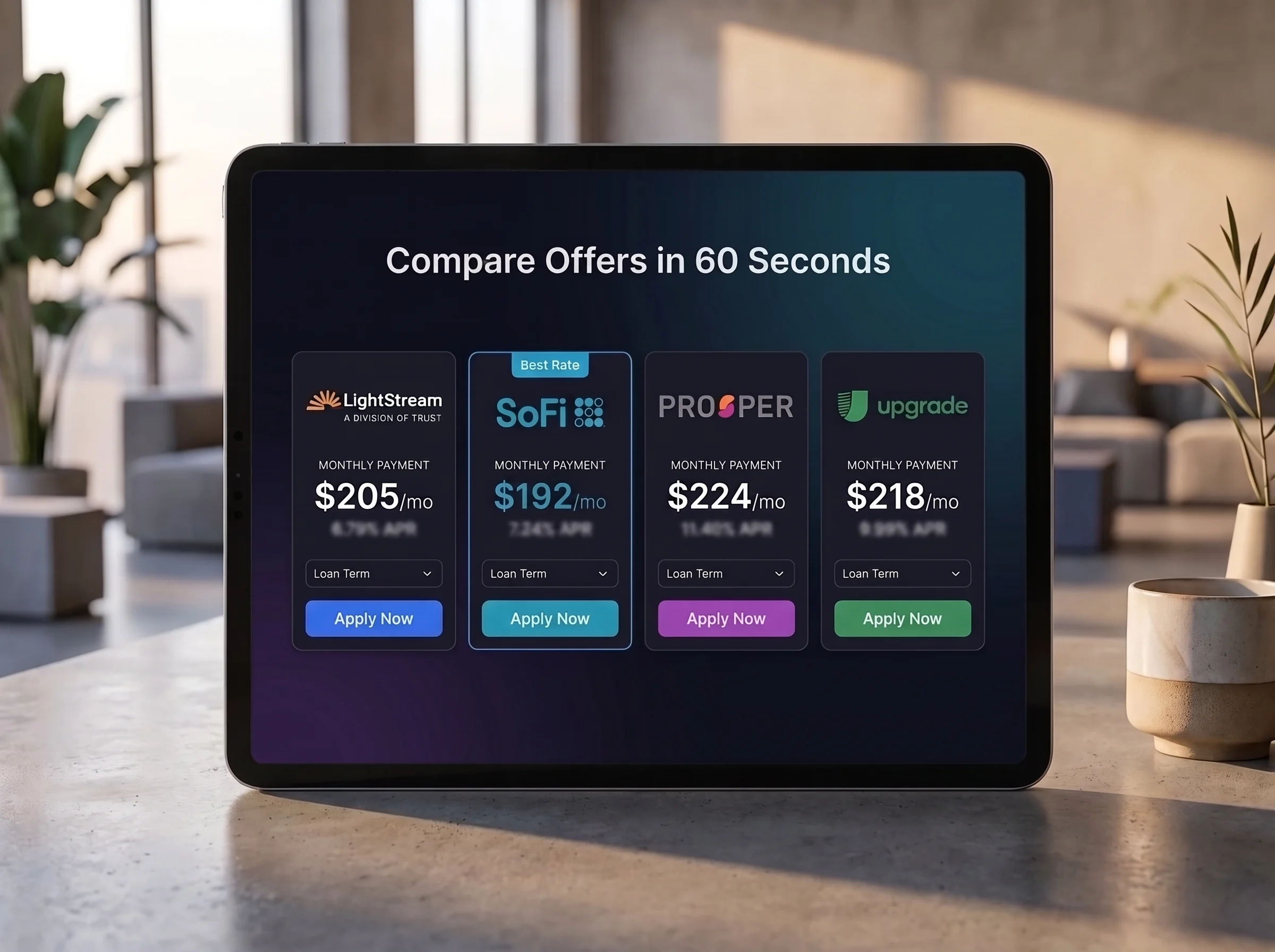
Participating Lender Network





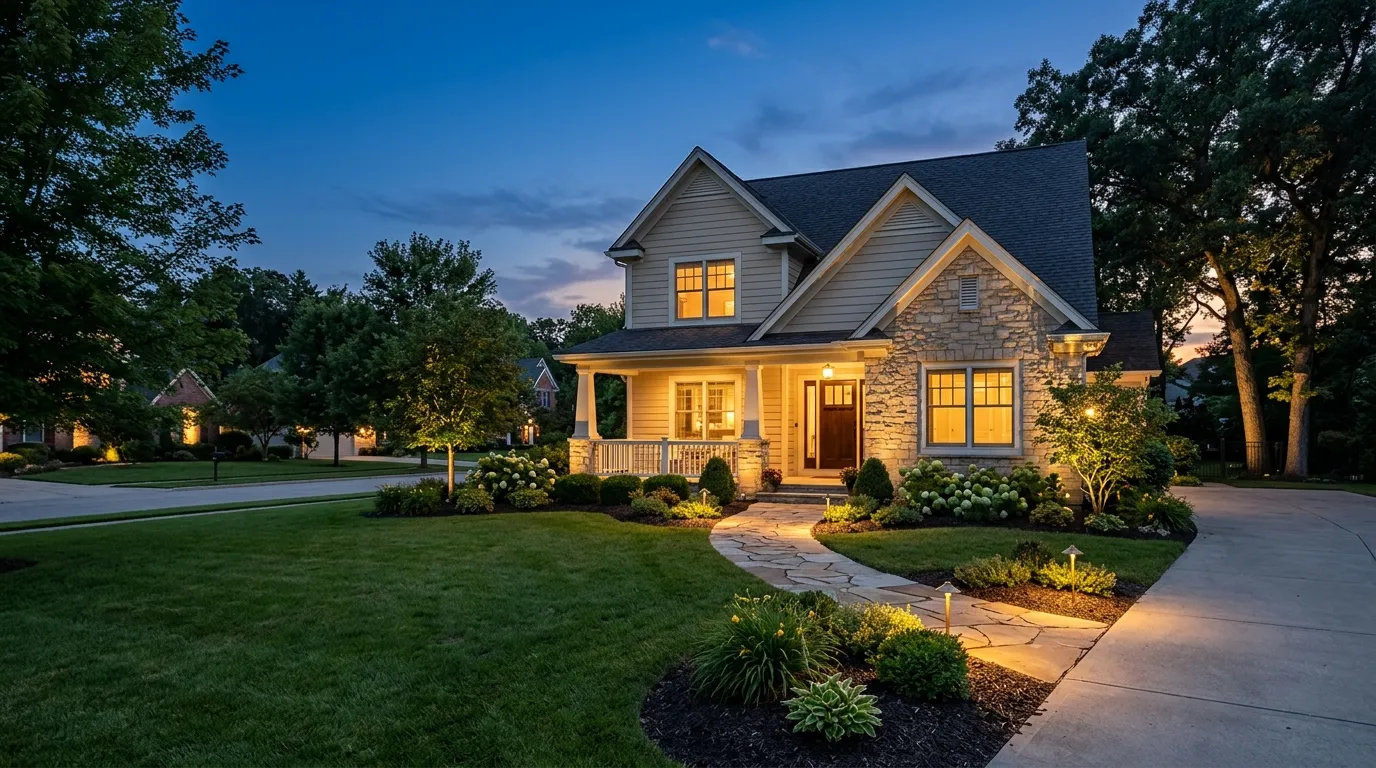
How to Finance an Outdoor Lighting Project
Outdoor lighting is one of the few home projects where the honest first question is whether you need financing at all. A set of solar path lights or a plug-in string of café bulbs can cost under $200 and go in over a weekend, while a professionally installed low-voltage system with a transformer, buried cable, and a dozen brass fixtures can run $4,000 to $12,000. The gap between those two is not just money: it is whether you are doing it yourself or hiring a pro, and that decision drives both the cost and how you should pay. Small DIY jobs rarely call for a loan, while a large professional system is where a personal loan, or folding the lighting into a bigger landscaping project, makes sense.
Key Takeaways
- Outdoor lighting spans a huge range: under $200 for a DIY solar kit to $6,000 to $12,000 for a large professional system.
- The biggest factor is DIY versus professional: solar and low-voltage kits need no electrician, while a full system is a real installed project.
- A basic professional low-voltage system of about 10 fixtures typically runs $2,000 to $4,000.
- For a small install, a 0% credit card or cash is often simpler than a loan; a personal loan fits a large system.
- 120-volt line-voltage lighting requires a licensed electrician and often a permit, while 12-volt low-voltage does not.
- Bundling lighting into a larger landscaping or hardscape project can spread the cost and earn a discount.
What Does Outdoor Lighting Cost?
Pricing splits sharply between do-it-yourself fixtures and professionally installed systems. DIY solar and low-voltage kits can cost under $200, while professional installation runs about $100 to $300 per fixture, putting a full system anywhere from $2,000 to $12,000. Here is how the tiers compare.
Outdoor Lighting Costs
Typical total project cost by approach.
Bar length reflects the top of each range. Figures from Angi and LawnStarter.
The fixture count and quality drive the total. Professional landscape lighting projects commonly run $2,000 to $4,500, averaging around $3,250, while a 20-fixture system with commercial-grade brass fixtures and a custom design can reach $6,000 to $12,000. Solar and battery fixtures cost $10 to $150 each and need no wiring, while professionally installed low-voltage fixtures run about $100 to $300 apiece including labor and the share of the transformer and cable. Specialty work costs more: uplighting a large tree or lighting a pool runs several hundred dollars per fixture. Prices vary by region and by how much trenching your yard needs, so treat these as planning ranges and get a quote for a specific design.
Should You DIY or Hire a Pro for Outdoor Lighting?
This is the decision that shapes the whole project, including whether financing even enters the picture. Solar, plug-in, and low-voltage kits are affordable and safe to install yourself, while a professional low-voltage or line-voltage system is a larger investment that is where borrowing starts to make sense.
At the simplest level, solar path lights and plug-in string lights need no wiring and no electrician, and a kit often costs less than a nice dinner out, so most people simply buy them outright. The next step up is a professionally installed 12-volt low-voltage system: a transformer steps your home’s 120-volt power down to a safe 12 volts, cable is buried to each fixture, and a designer places the lights for effect. This is where costs climb into the thousands and where a personal loan or bundling into a larger project becomes reasonable. At the top sits 120-volt line-voltage work, security floodlights, pool lights, or lighting on a new circuit, which must be installed by a licensed electrician and often needs a permit. The practical takeaway: the lower two tiers rarely justify a loan, while a full professional system is a genuine home-improvement project you might finance like any other.
How Do You Finance Outdoor Lighting?
Because most outdoor lighting projects are modest, the financing question is often about whether to borrow at all, and if so, how simply. Here is how the main options compare.
Cash or a 0% Credit Card
For a DIY kit or a small professional install, paying cash or using a credit card with a 0% introductory period is usually the simplest route, letting you clear the balance before any interest applies. For a project of a few hundred to a couple thousand dollars, this often beats taking out a loan.
Personal Loans
For a large professional system running several thousand dollars, a personal loan provides a fixed amount quickly, with no lien on your home and no need for equity. It suits a full low-voltage design or line-voltage work, and its fixed term makes the payments predictable. The rate is higher than a home-secured loan, so it fits mid-sized projects.
Bundling Into a Larger Project
Lighting is often one piece of a bigger outdoor plan. If you are financing landscaping, a patio, or a pergola, adding the lighting to that project, and that loan, is usually cheaper than financing it separately. A HELOC or home equity loan for a whole backyard overhaul can absorb the lighting easily.
Contractor Financing
Some landscape lighting companies offer financing at the point of sale. It is convenient, but the terms come from a lending partner, so compare it against a personal loan or a card before signing.
Do You Need an Electrician or Permit for Outdoor Lighting?
It depends entirely on the voltage. Low-voltage 12-volt lighting is DIY-friendly and usually needs no permit, while 120-volt line-voltage work requires a licensed electrician and often a permit.
Because a low-voltage system runs on 12 volts stepped down by a transformer that simply plugs into an existing outdoor outlet, it carries little shock risk and generally falls outside permit requirements, which is why these systems are popular with do-it-yourselfers. The picture changes with line-voltage work: adding a new 120-volt circuit, hardwiring security floodlights, or installing pool lighting involves your home’s full electrical current, which is a genuine safety hazard and must be done by a licensed electrician and inspected under permit. Two other cautions apply to any in-ground work. Call 811 for a free utility locate before digging or trenching, so you do not hit a buried gas, water, or electric line. And if you install a low-voltage system yourself, size the transformer above your total fixture load, undersizing it is the most common do-it-yourself mistake and shortens the system’s life.
Does Outdoor Lighting Add Home Value and Improve Security?
For most homeowners, yes, on more than one front, though not as a pure investment. Outdoor lighting improves curb appeal and safety, can deter intruders, and with LED or solar fixtures costs little to run.
On value, quality landscape lighting consistently ranks among the exterior upgrades that boost curb appeal and a home’s marketability, though like most improvements it rarely returns its full cost in resale dollars, so it is best treated as something you enjoy that also helps a future sale. On security, well-placed lighting around entries, pathways, and dark corners is a recognized deterrent: the Insurance Information Institute lists exterior lighting among basic home-security measures, and motion-activated fixtures add protection where you want it. On running cost, switching to LED bulbs, which use far less energy and last far longer than halogen, keeps the electric bill low, and solar fixtures cost nothing to run at all. Those ongoing savings are modest but real, and they make lighting cheaper to own than its purchase price suggests.
How Do You Qualify for Outdoor Lighting Financing?
For a small project, qualifying is rarely the issue, since a card or cash covers it. For a larger professional system, lenders look at your credit and your income against your debts, and a little preparation helps. Start by getting an itemized quote for the full design, including the transformer, cable, fixtures, and any line-voltage work, so you finance the complete job rather than an estimate. Then review your credit report for errors and total your monthly debts, since most lenders want your total debt, including any new payment, at or below about 43% of your gross income. Finally, decide whether to finance the lighting on its own or fold it into a larger outdoor project, then prequalify with a soft credit check to compare offers without affecting your score.
| Financing | Best For | Typical Project Size |
|---|---|---|
| Cash or 0% card | DIY kits and small installs | Under $2,000 |
| Personal loan | Full professional systems | $2,000-$12,000 |
| Bundle / HELOC | Part of a larger backyard project | Varies with the whole job |
Think about financing in proportion to the project. A basic lighting kit may not require a separate loan, while a professionally designed whole-yard system could make financing more practical.
The Bottom Line
The best way to pay for outdoor lighting depends on the size of the project and whether you are hiring a pro. For a DIY solar or low-voltage kit, cash or a 0% credit card you can pay off quickly is usually the simplest choice, and often no financing is needed at all. For a full professional low-voltage or line-voltage system running into the thousands, a personal loan provides fixed, predictable payments without touching your home equity. And if the lighting is part of a larger landscaping or hardscape project, folding it into that financing is typically cheaper than a separate loan.
Before you borrow, get an itemized quote for the complete system, and decide honestly whether the project is small enough to pay for outright. If you do finance it, compare offers on the total amount you’ll repay, not just the monthly payment.
The information provided by Pasha Funding is for educational and informational purposes only and should not be considered financial, legal, or tax advice. Every homeowner’s financial situation is different, and the financing options discussed may not be suitable for everyone. Before choosing a financing solution, carefully review the lender’s terms and consider consulting a qualified financial professional if needed.
Pasha Funding is a financing marketplace that connects homeowners with financing options offered by participating lending partners. We do not make loans, determine credit eligibility, or guarantee approval or specific loan terms. Pasha Funding is not a direct lender. We may receive compensation from participating lending partners when users submit an application or obtain a loan through our platform. This compensation may affect how and where financing options appear, but it does not influence our editorial evaluations.
Financing offers, rates, terms, and availability are determined solely by participating lenders and may change without notice. Our editorial content is created independently to help consumers better understand home improvement financing. While we strive to keep information accurate and current, financing products, lender requirements, rates, and offers may change over time. Any opinions expressed are those of the author and have not been reviewed, approved, or endorsed by our lending partners.


FAQ
In this guide
- What Does Outdoor Lighting Cost?
- Should You DIY or Hire a Pro for Outdoor Lighting?
- How Do You Finance Outdoor Lighting?
- Do You Need an Electrician or Permit for Outdoor Lighting?
- Does Outdoor Lighting Add Home Value and Improve Security?
- How Do You Qualify for Outdoor Lighting Financing?
- The Bottom Line
FAQ
how it works
3 Simple steps to
finance your project.
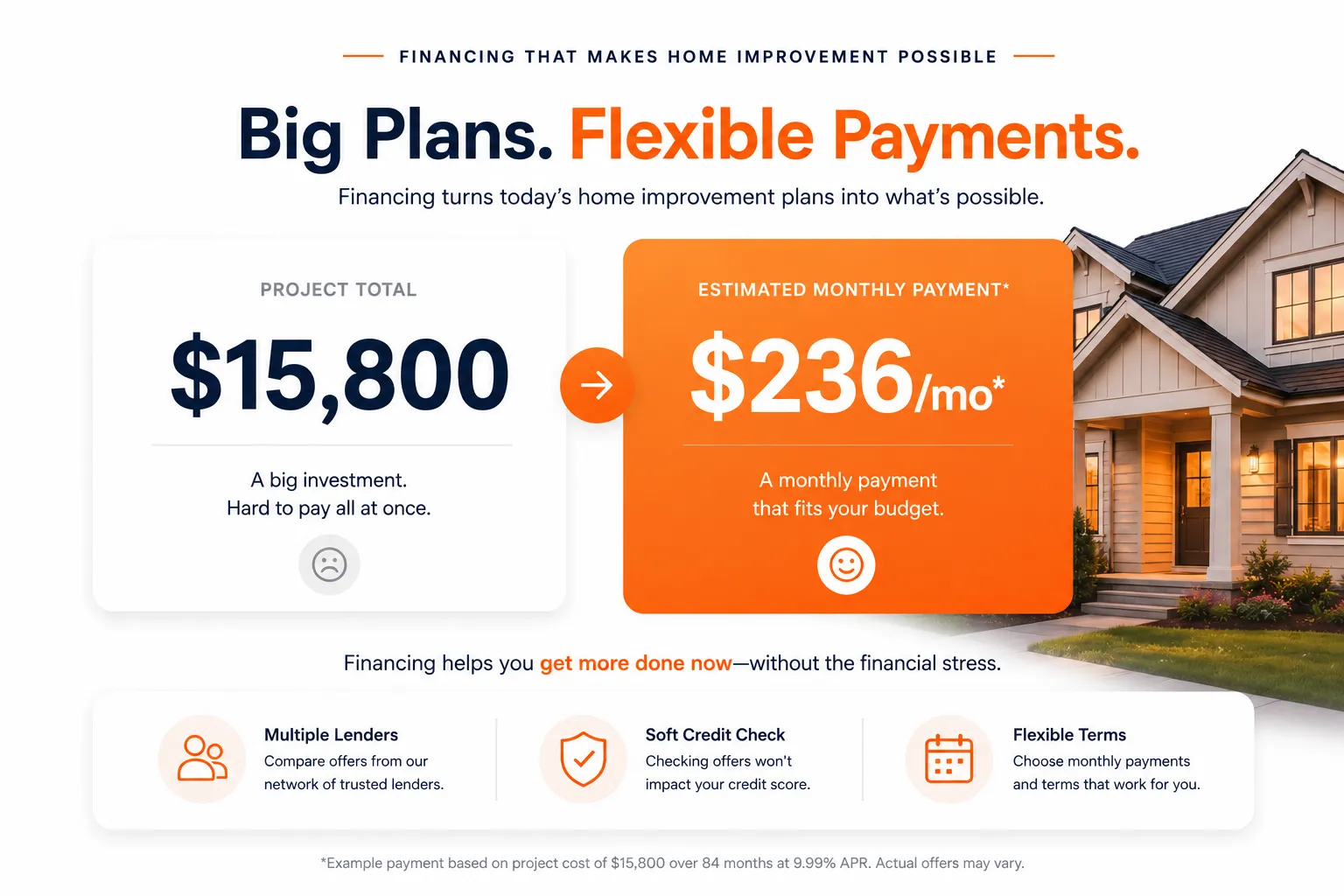
Getting started only takes a minute. Complete one simple application to compare available financing offers from over 18+ lenders, choose the option that fits your budget, and move forward with your home improvement project.
Outdoor lighting Financing Calculator
1. Enter Your Desired Loan Amount
Your Estimate
Monthly Payment
-
This calculator provides estimates for illustrative purposes only and does not constitute an offer of credit or a commitment to lend. Final APRs, loan amounts, and terms depend on credit approval, income verification, and lender underwriting criteria. Minimum and maximum rates/terms vary by state.
Powered by: Pasha Funding
Risk-Free Prequalification
Checking offers won’t impact your credit.
It’s common for homeowners to delay applying because they’re worried about their credit score. With a soft credit check, you can review available financing options without any impact to your credit score.2