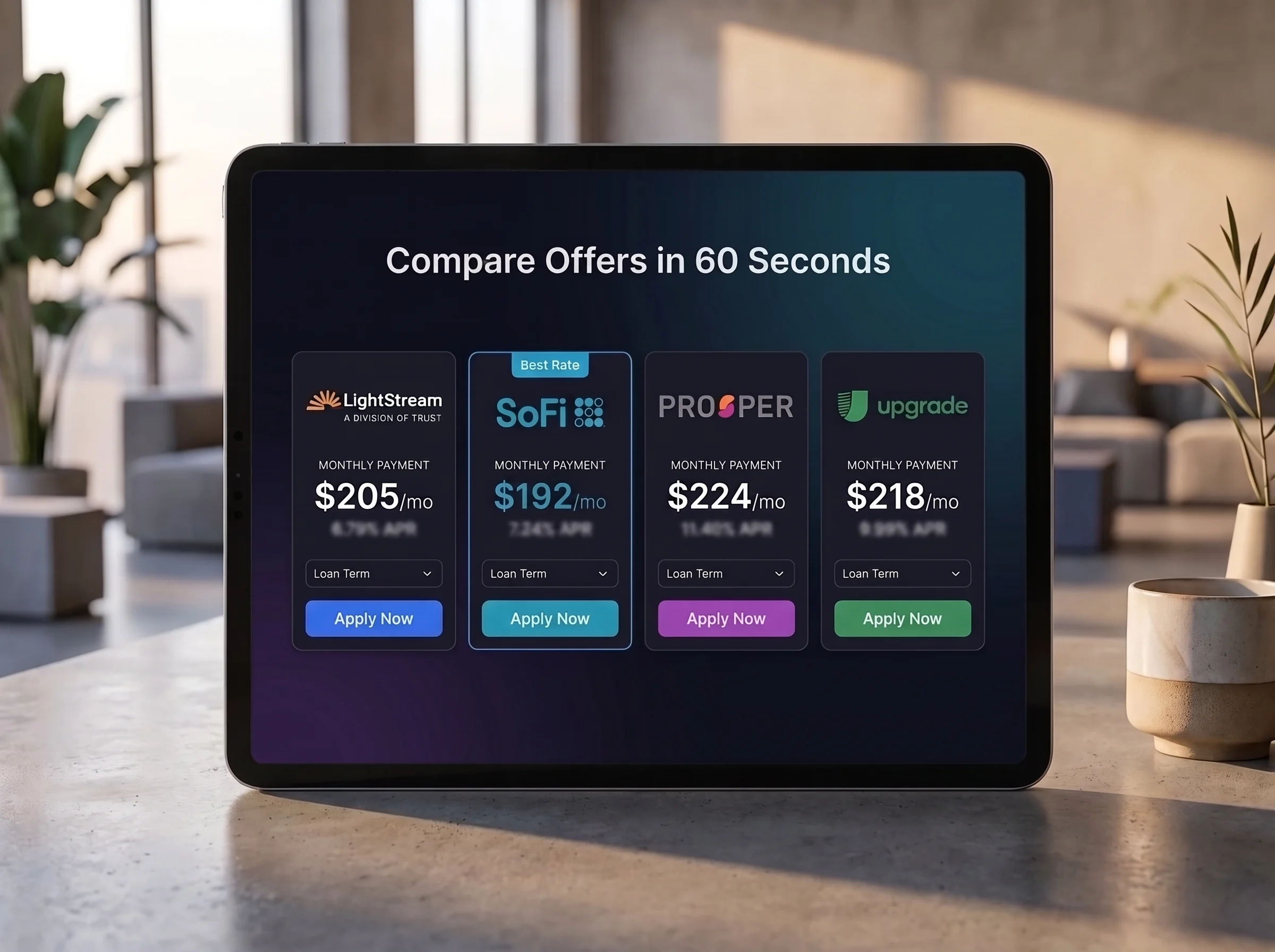
Participating Lender Network





How to Finance a Pole Barn
You can pay for a pole barn several ways: a personal loan, a home equity loan or HELOC, an agricultural loan through Farm Credit, a construction loan, or builder financing. Which one fits depends most on the barn’s purpose, whether it is residential, agricultural, or commercial, along with its size and whether you own home equity or a qualifying farm operation. Most projects run $20,000 to $80,000, and the right fit really depends on your situation, which is what the rest of this guide walks through.
Key Takeaways
- Most pole barns cost $20,000 to $80,000, with a 30×40 workshop averaging around $25,000 to $40,000 fully built.
- A personal loan funds quickly, in as little as one to three days, with no collateral, and works for most pole barns under $100,000.
- Farm Credit and agricultural lenders offer some of the cheapest money, sometimes 0% down, but only for qualifying agricultural buildings.
- Many banks will not write a traditional construction loan for a pole barn, because it is classified as an outbuilding rather than a primary residence.
- Your barn’s purpose, residential, agricultural, or commercial, changes which financing you can use.
- Get an itemized builder quote first, including slab, electrical, and site prep, then compare offers on total cost.
How Much Does a Pole Barn Cost?
A finished pole barn usually runs $20,000 to $80,000. The kit itself is only part of it, around $15 to $35 per square foot, and the number climbs once concrete, site prep, and finishes are added on top.
What a Pole Barn Costs by Project
Typical fully built cost range by size and use.
Bar length reflects the top of each range. Figures from HomeGuide and PoleBarnCosts.
Size sets the baseline, but several line items decide where you land in that range: the concrete slab, electrical and plumbing, grading and site prep, insulation, doors and windows, and permits. This is why a bare kit price can mislead. Lenders want the fully built total, so an itemized quote should come before any loan application.
Options for Financing a Pole Barn
The right financing depends on what the building is for and how much it costs. Several kinds of lenders compete for these projects, from unsecured personal loans to agricultural and home-equity options, and the best fit shifts with your purpose, budget, and credit.
Personal Loans
Because most pole barns fall under the $100,000 mark, an unsecured personal loan is a practical fit for many of them. It requires no collateral, records no lien, and deposits the money into your account, so you pay the builder on your own schedule. Approval and funding can take just one to three business days, with terms usually running two to seven years at a fixed rate. The main trade-off is cost: unsecured borrowing is priced higher than a home-equity option, so on a large project where you have equity to tap, a HELOC is worth comparing.
💡 Best for
Kits and mid-size barns under $100,000, buyers without home equity, and anyone who wants funding quickly and paid directly to them.
Home Equity Loans and HELOCs
If you own a home with significant equity, a home equity loan or HELOC generally carries the lowest rate for a large pole barn. A HELOC’s draw flexibility works well for phased construction, letting you pull funds as materials and milestones come due.
The trade-offs are the usual ones for secured borrowing: you need equity, you pay closing costs, funding takes two to four weeks, and your home is the collateral. Most lenders cap combined borrowing at 80% to 85% of your home’s value, counting your first mortgage, which is your CLTV, or combined loan-to-value.
Farm Credit and Agricultural Lenders
If your pole barn is for agricultural use, storing farm equipment, housing livestock, or supporting a working operation, Farm Credit lenders like Compeer Financial and Farm Credit Services offer some of the cheapest money available. Some programs feature 0% down and no payment until the building is complete.
The catch is eligibility: these programs are for agricultural-purpose buildings on qualifying farm operations, not a hobby workshop or a residential garage. If your project is genuinely agricultural, it is worth a conversation with an ag lender before anything else.
Construction Loans
A construction loan releases funds in stages as the build hits milestones, which suits large projects. Be aware of a common obstacle: many banks will not write a traditional construction loan for a pole barn, because it is classified as an outbuilding rather than a primary residence. Where they are available, they require detailed plans, a fixed builder quote, and often a larger down payment.
Builder and Retailer Financing
Many pole barn companies and kit retailers offer financing through lending partners, and home-improvement retailers such as Menards provide project financing on materials. These can be convenient, but the terms come from a party that profits from the sale, and some require a 10% to 30% down payment, so compare against an outside lender before committing.
Will Your Pole Barn’s Use Affect Loan Eligibility?
A pole barn’s purpose is one of the biggest factors in which financing you can use. Lenders treat residential, agricultural, and commercial buildings differently, so pinning down your category early narrows the field fast.
A residential pole barn, a workshop, garage, or storage building on your home property, is usually financed with a personal loan or, if you have equity, a home equity product. A traditional construction loan is often unavailable because the building is not a primary residence.
An agricultural pole barn on a working farm opens the door to Farm Credit and USDA farm programs, which offer the lowest rates but require a qualifying operation. A commercial pole barn for a rural business may qualify for USDA Business and Industry loans or conventional commercial financing. Matching the barn to the right lender category is the single most useful step before you apply.
Can You Get a USDA Loan for a Pole Barn?
Sometimes, but it depends entirely on how the building is used, and a plain storage or hobby barn usually does not qualify. USDA is not one program but several, so the answer varies by purpose.
For an agricultural building, the USDA Farm Service Agency makes direct and guaranteed farm loans to family-size farmers and ranchers, and those funds can be used to construct buildings or make farm improvements. For a rural business building, USDA Business and Industry guaranteed loans may apply. For a home you will live in, USDA Single-Family Housing construction loans are designed for primary residences in eligible rural areas, which is the route to look at if the pole barn is actually a house you plan to occupy.
A couple of points often get muddled. USDA’s REAP program comes up a lot, but it funds renewable energy and energy-efficiency improvements rather than new construction, so it will not pay for the barn itself. And a personal workshop or storage building that is neither a residence nor part of a farm or rural business generally will not qualify for any USDA program at all, which is often where an unsecured loan becomes the practical route.
Can You Finance a Pole Barn With Bad Credit?
Yes, you can finance a pole barn with bad credit, though your options narrow and the cost rises. A low score limits which lenders will approve you rather than ruling out financing entirely.
Credit unions and community banks are often the most flexible traditional lenders, and marketplace personal loans let you prequalify with a soft credit pull, so you can see real offers without denting your score further. A larger down payment can also improve your approval odds and your rate, since it lowers the lender’s risk.
Be cautious with no-credit-check and rent-to-own building offers. They approve easily but the total you repay can climb well above the barn’s cash price, so treat them as a last resort and compare the total of all payments against paying cash.
💡 Pro tip
Prequalify with two or three lenders within a short shopping window. Multiple inquiries for the same loan type generally count as a single inquiry for FICO scoring, so comparing offers does not stack damage on your score.
How to Qualify for Pole Barn Financing
Qualifying mostly comes down to three things: your credit, your debt-to-income ratio, and a clear itemized project quote. A little preparation before you apply improves both your odds and the rate you are offered.
- Get an itemized builder quote first.
Lenders prefer a detailed scope and fixed price over a rough estimate, and a formal quote strengthens your application. Include the full project, slab, electrical, insulation, site prep, and permits are all fundable expenses, not just the building kit.
- Check your credit and debt-to-income ratio.
Pull your credit report, dispute errors, and pay down card balances, since utilization moves your score quickly. Most lenders want total monthly debt, including the projected barn payment, at or below 43% of gross monthly income.
- Prequalify with two or three lenders.
Use soft-pull prequalification to compare real offers without affecting your score, then compare on total cost over the full term. Ask about down payment requirements, which run 10% to 30% on some products and zero on others.
Here are the baseline thresholds lenders look for:
| Qualification Metric | Personal Loans (Unsecured) | Home Equity / Ag (Secured) |
|---|---|---|
| Minimum credit score | 580 to 640, fair credit accepted | 620 to 680+ |
| Down payment | None | 0% to 30%, varies by product |
| Funding speed | 1 to 3 days | 2 to 4 weeks |
These are typical benchmarks rather than hard cutoffs, and every lender sets its own bar. The main thing to notice is that an unsecured loan asks for no collateral or equity, so it stays open to buyers who cannot clear the secured or agricultural requirements, even if it will not always be the cheapest.
What Pole Barn Owners Wish They Knew
One theme comes up again and again in owner communities like the TractorByNet building forums: the quoted building package is rarely the final number. Owners repeatedly warn that slab, electrical, site prep, and overhead doors push the real cost well past the kit price, which is exactly what lenders want captured in your quote.
A second, money-saving pattern shows up too. Several owners found that general contractors tend to overbuild a barn as if it were a house and quote accordingly, while a builder who does only pole barns came in dramatically lower, in one thread, a roughly $30,000 quote dropped to around $15,500 from a barn specialist. The practical takeaway for financing is to get two or three quotes from dedicated pole-barn builders and borrow against the complete, itemized total, not the sticker price of the kit.
The Bottom Line
There’s no single best way to finance a pole barn, since the right choice depends mostly on what the building is for. A personal loan could be a good fit if your barn is residential and under $100,000, or if you’d rather not tie the loan to your home, while a HELOC could cost less if you have equity and don’t mind using your house as collateral. If the barn supports a working farm, Farm Credit or USDA programs could beat both on rate for those who qualify.
Whichever way you lean, get an itemized builder quote first and compare offers on the total you’ll repay, not the monthly payment. Before you commit, nail down the scope of your barn and get an itemized quote from a builder who specializes in pole buildings. From there, prequalify with a few lenders, compare your offers on total cost, and pick the one that fits your budget and timeline.
The information provided by Pasha Funding is for educational and informational purposes only and should not be considered financial, legal, or tax advice. Every homeowner’s financial situation is different, and the financing options discussed may not be suitable for everyone. Before choosing a financing solution, carefully review the lender’s terms and consider consulting a qualified financial professional if needed.
Pasha Funding is a financing marketplace that connects homeowners with financing options offered by participating lending partners. We do not make loans, determine credit eligibility, or guarantee approval or specific loan terms. Pasha Funding is not a direct lender. We may receive compensation from participating lending partners when users submit an application or obtain a loan through our platform. This compensation may affect how and where financing options appear, but it does not influence our editorial evaluations.
Financing offers, rates, terms, and availability are determined solely by participating lenders and may change without notice. Our editorial content is created independently to help consumers better understand home improvement financing. While we strive to keep information accurate and current, financing products, lender requirements, rates, and offers may change over time. Any opinions expressed are those of the author and have not been reviewed, approved, or endorsed by our lending partners.
See also:


Frequently Asked Questions
In this guide
how it works
3 Simple steps to
finance your project.
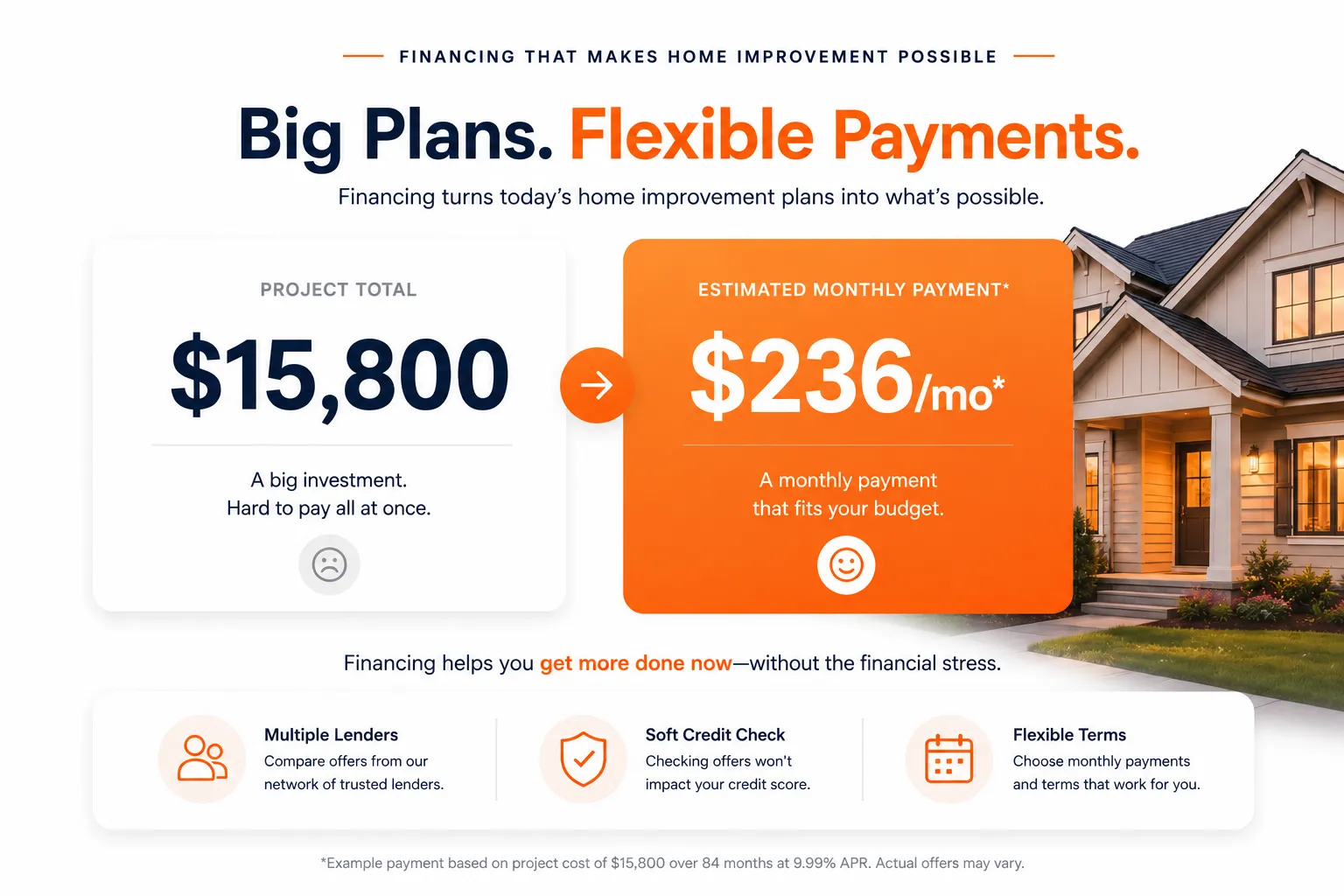
Getting started only takes a minute. Complete one simple application to compare available financing offers from over 18+ lenders, choose the option that fits your budget, and move forward with your home improvement project.
ADU Personal Loan Calculator
1. Enter Your Desired Loan Amount
Your Estimate
Monthly Payment
-
This calculator provides estimates for illustrative purposes only and does not constitute an offer of credit or a commitment to lend. Final APRs, loan amounts, and terms depend on credit approval, income verification, and lender underwriting criteria. Minimum and maximum rates/terms vary by state.
Powered by: Pasha Funding
Risk-Free Prequalification
Checking offers won’t impact your credit.
It’s common for homeowners to delay applying because they’re worried about their credit score. With a soft credit check, you can review available financing options without any impact to your credit score.2