

Participating Lender Network





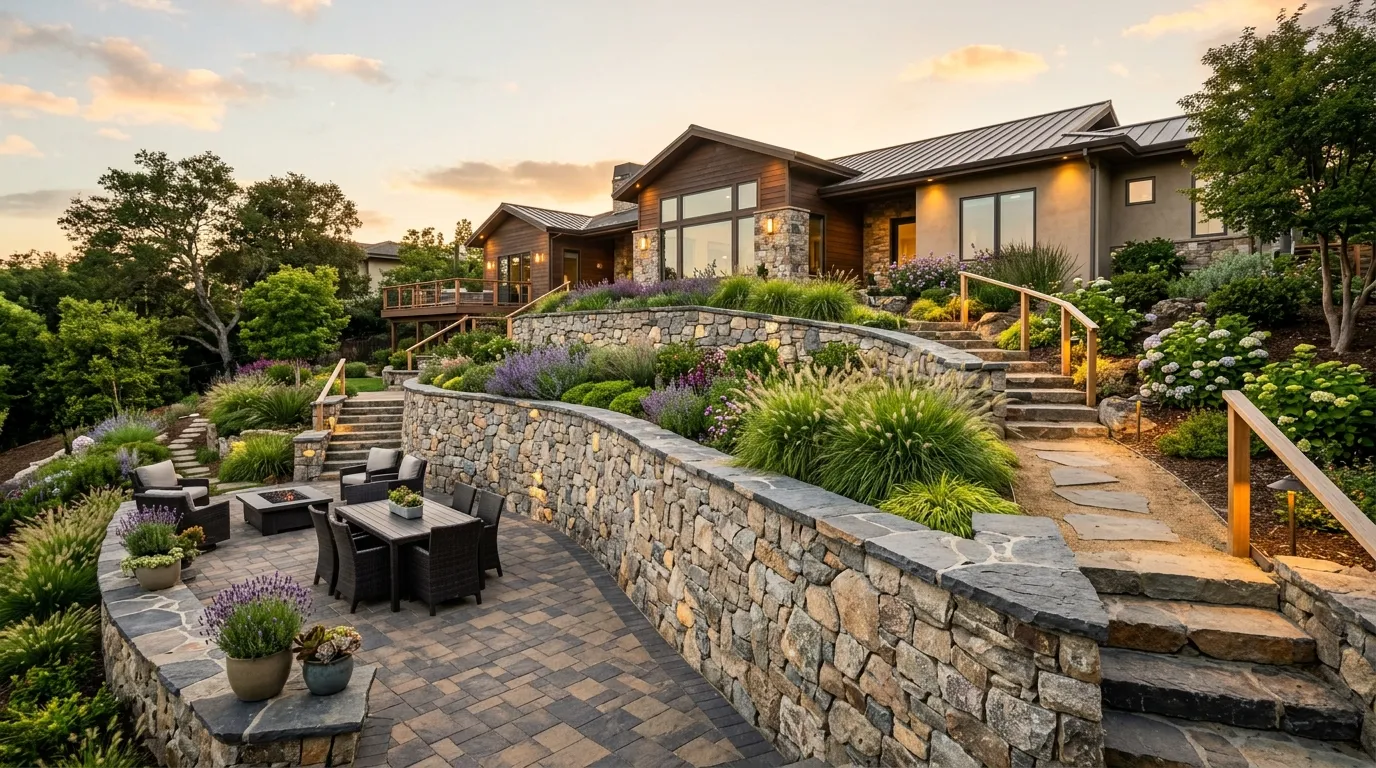
How to Pay for a Retaining Wall Project
A retaining wall runs anywhere from about $2,300 for a short timber garden wall to $18,000 or more for a tall engineered stone wall, with a typical 50-foot, 3-foot wall landing around $3,000 to $9,000. The price turns on two things above all: the material and the height. Height matters most, because a wall over four feet becomes an engineered structure that needs a permit, reinforcement, and drainage design, which changes both the cost and how urgently you should build. A small decorative wall is a project you can plan at your pace, while a wall holding back a failing slope is closer to a repair you cannot put off. Most homeowners pay with a personal loan for speed, a home equity loan or HELOC for a large wall, or a credit card for a small one.
Key Takeaways
- A typical residential retaining wall costs $3,000 to $9,000, while a tall engineered wall can exceed $18,000.
- Height is the biggest cost driver: soil pressure rises sharply with height, and walls over four feet require engineering and permits.
- A wall solving erosion, slope, or drainage problems is a need worth financing promptly, while a decorative garden wall can wait.
- Poor drainage is the number one cause of wall failure, so it is the last place to cut costs.
- A personal loan funds a wall fast with no equity, while a large wall may cost less on a home equity loan or HELOC.
- Building a cheap wall that fails often costs more to redo than doing it right the first time.
What Does a Retaining Wall Cost?
Material sets the base rate, and height multiplies it. Installed costs run about $15 to $80 per square foot of wall face, from budget timber to premium natural stone. Here is how the common materials compare for a standard wall.
What a Typical Retaining Wall Costs by Material
Installed cost range for a 50-foot, 3-foot-tall wall, drainage included.
Bar length reflects the top of each range. Figures from HomeGuide and Angi.
Height drives the total more than length, because the soil pressure a wall must hold grows quickly as it gets taller, so a six-foot wall costs far more per foot than a three-foot one. Several other factors push the number up: proper drainage behind the wall is sometimes quoted separately and can add $300 to $2,500, tearing out a failed wall runs $10 to $30 per linear foot, and a steep slope, rocky or clay soil, or a driveway or pool bearing on the wall all raise labor. Timber is cheapest but lasts only 10 to 20 years, while block, concrete, and stone can last 50 years or more with good drainage. Prices also vary sharply by region, so treat these as starting ranges and get a quote for your site.
Is Your Retaining Wall Structural or Decorative? Why It Matters for Cost and Financing
Whether your retaining wall is a necessity or a landscaping upgrade should shape both your budget and your financing plan. A wall built to control erosion, stabilize a slope, or protect a foundation serves a structural purpose, while a shorter decorative wall is primarily a landscape feature. In many areas, the four-foot mark is where engineering and permit requirements often begin to change.
Below about four feet, and without a driveway or structure bearing on it, a retaining wall is usually a landscaping feature. Many are short garden walls that add terracing or seating, do not require engineering, and in segmental block form are even reasonable to build yourself. These are landscaping projects you can plan, save for, and build over time.
Above four feet, or under a heavy load, the wall becomes an engineered structure. Soil exerts real force on it, so most jurisdictions require a permit and a structural engineer to design the footing, reinforcement, and drainage. Skimping here is how walls fail, and the most common failure is water: hydrostatic pressure building up behind a wall with poor drainage pushes it over, which is why gravel backfill, a drain pipe, and weep holes are not optional on a working wall.
That difference should drive your financing. A wall already leaning, cracking, or letting a slope wash out is a need, and the cost only rises as the problem worsens, so financing it promptly, much as you would a foundation repair, is usually the right call. A wall built cheaply and incorrectly often has to be torn out and rebuilt, which costs more than doing it right once. A decorative garden wall, by contrast, is a want you can save for or build in stages.
How Do You Finance a Retaining Wall?
The right financing depends on whether the wall is urgent, how large it is, and whether you have equity. Here is how the main options compare.
Personal Loans
A personal loan delivers a fixed amount in a few days, with no lien on your home and no appraisal, which makes it a strong fit when a failing wall needs attention quickly. It works for any material or contractor, and while the rate is higher than a home-secured loan, the speed matters for an urgent structural repair. Terms generally run two to seven years.
Home Equity Loans and HELOCs
For a large or engineered wall running into five figures, borrowing against your equity usually carries the lowest rate. A HELOC can also fund a wall built as part of a larger yard project in stages. The trade-offs are closing costs, a few weeks to fund, and your home as collateral, which suits a big wall more than a small one.
FHA Title I Loans
For a structural wall protecting your property, an FHA Title I home improvement loan is worth a look, since it is designed for improvements, sets no federal minimum credit score, and can suit borrowers with weaker credit. It is one of the more accessible options for necessary structural work.
Contractor Financing, Cards, and Cash
Landscapers often offer financing at the point of sale, convenient but with terms set by a lender, so compare it against an outside loan. A small decorative wall can go on a 0% introductory card and be cleared before interest applies, and paying cash avoids financing costs on a project you can cover.
Do You Need a Permit or Engineer for a Retaining Wall?
Frequently, and the trigger is usually height or load. Most jurisdictions require a permit for walls over three or four feet, and a wall that tall, or one holding a surcharge load, needs a structural engineer to design it.
The four-foot line is the common threshold, measured from the bottom of the footing, though some areas require a permit for walls as short as three feet. A wall supporting a surcharge, a driveway, parking pad, pool, or building above it, usually needs engineering regardless of height, because the extra load changes the forces involved. The engineer specifies the footing, reinforcement, and, critically, the drainage system that keeps water from building up behind the wall. Walls near property lines, easements, or utilities can carry added rules, and any digging calls for a free 811 utility locate first.
If you belong to an HOA, its approval runs separately from the city’s. Confirm the permit and engineering scope with your local building department before you budget, since unpermitted structural work can bring stop-work orders, forced removal, and problems when you sell, and fold the permit and engineering fees into the amount you finance.
Are Retaining Walls Tax Deductible or Covered by Insurance?
Rarely deductible in the year you pay, and covered by insurance only for certain causes. A retaining wall is generally a personal improvement rather than a deductible expense, and your policy covers it under “other structures” for sudden events, not gradual failure.
On taxes, under IRS Publication 936, interest on a home equity loan is deductible only when the funds substantially improve the home securing the loan, and a permanent structural wall may meet that test while routine landscaping does not. Personal-loan interest is never deductible. Even without a deduction, the cost of a permanent wall can add to your home’s cost basis and reduce capital gains tax when you sell, so keep your receipts, and confirm your situation with a tax professional. On insurance, a retaining wall falls under “other structures” coverage, typically capped near 10% of your dwelling limit and covered on an open-perils basis: damage from a sudden event like a vehicle impact or a fallen tree is generally covered, while a wall that fails from soil pressure, poor drainage, settling, or age is considered wear and is not. That exclusion is another reason to build the wall correctly, since its failure is on you.
How Do You Qualify for Retaining Wall Financing?
Lenders look at your credit, your income against your debts, and, for a home-secured loan, your equity. For a structural wall, a little groundwork about the wall itself comes first. Here is the order that works well:
- Confirm the scope and get it in writing. For a wall over four feet or one holding a load, get an engineer’s assessment and a bid that includes drainage, footings, and permits, so you finance the real, complete job rather than a bare wall.
- Check your credit and debt load. Review your credit report for errors and total your monthly debts, since most lenders want your total debt, including the new payment, at or below about 43% of your gross income.
- Match the loan to the wall, then prequalify. For a small decorative wall, compare personal loans or a 0% card; for a large or urgent structural wall, compare personal loans, home equity, and FHA Title I. Prequalify with a soft credit check and judge offers on total cost.
| Financing Path | Best For | Funding Speed |
|---|---|---|
| Personal loan | Urgent structural walls, no equity | 1 to 5 days |
| Home equity / HELOC | Large or engineered walls | 2 to 6 weeks |
| FHA Title I | Structural work, weaker credit | 1 to 3 weeks |
Choose financing based on the scope of the project. A personal loan is often a good fit for a smaller decorative retaining wall, while a larger engineered wall may qualify for lower borrowing costs through a home equity loan or HELOC. FHA Title I financing may also be an option for homeowners with limited equity or less-established credit.
The Bottom Line
The best financing option depends on the wall’s cost, whether it is urgent, and whether you have home equity. Personal loans are a common choice for a structural wall that needs attention quickly, because they fund in days and don’t require equity. Home equity loans and HELOCs may offer lower rates for a large engineered wall, an FHA Title I loan can help with necessary structural work if your credit is weaker, and a 0% credit card can cover a small decorative wall if you repay the balance before the promotional period ends. Contractor financing is worth considering too, but compare it with outside offers first.
Before you borrow, decide whether the wall is a structural need or a decorative want, since that sets both the urgency and the budget, and for anything over four feet, get an engineer’s assessment and a bid that includes drainage. Whatever you choose, compare offers based on the total amount you’ll repay, not just the monthly payment.
The information provided by Pasha Funding is for educational and informational purposes only and should not be considered financial, legal, or tax advice. Every homeowner’s financial situation is different, and the financing options discussed may not be suitable for everyone. Before choosing a financing solution, carefully review the lender’s terms and consider consulting a qualified financial professional if needed.
Pasha Funding is a financing marketplace that connects homeowners with financing options offered by participating lending partners. We do not make loans, determine credit eligibility, or guarantee approval or specific loan terms. Pasha Funding is not a direct lender. We may receive compensation from participating lending partners when users submit an application or obtain a loan through our platform. This compensation may affect how and where financing options appear, but it does not influence our editorial evaluations.
Financing offers, rates, terms, and availability are determined solely by participating lenders and may change without notice. Our editorial content is created independently to help consumers better understand home improvement financing. While we strive to keep information accurate and current, financing products, lender requirements, rates, and offers may change over time. Any opinions expressed are those of the author and have not been reviewed, approved, or endorsed by our lending partners.


Frequently Asked Questions
In this guide
- How Much Does an Outdoor Kitchen Cost?
- What the “Average” Price Leaves Out: Appliances and Utility Hookups
- How Do You Finance an Outdoor Kitchen?
- Do You Need a Permit for an Outdoor Kitchen?
- Does Homeowners Insurance Cover an Outdoor Kitchen?
- How Do You Qualify for Outdoor Kitchen Financing?
- The Bottom Line
how it works
3 Simple steps to
finance your project.
Getting started only takes a minute. Complete one simple application to compare available financing offers from over 18+ lenders, choose the option that fits your budget, and move forward with your home improvement project.
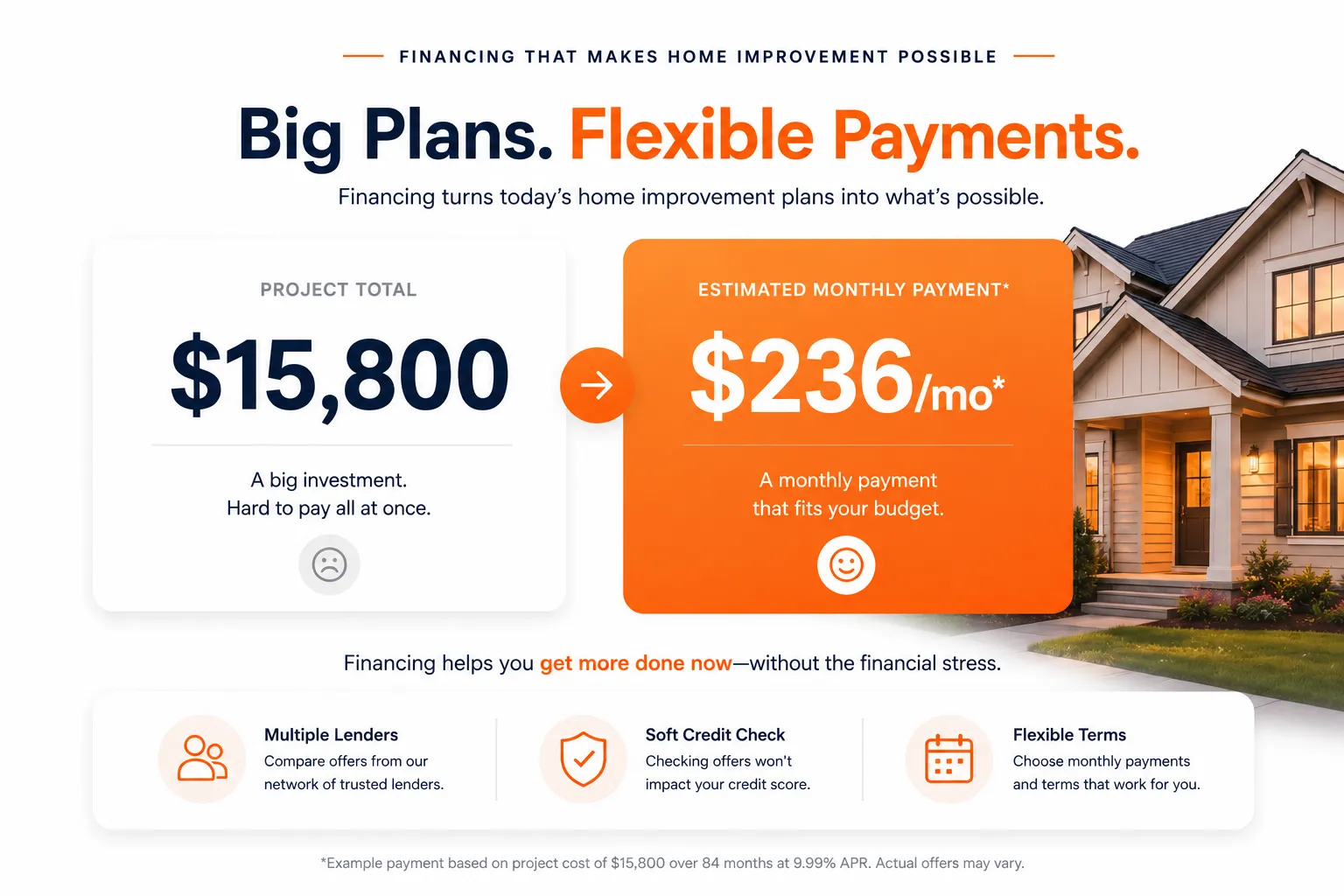
Retaining Wall Financing Calculator
1. Enter Your Desired Loan Amount
Your Estimate
Monthly Payment
-
This calculator provides estimates for illustrative purposes only and does not constitute an offer of credit or a commitment to lend. Final APRs, loan amounts, and terms depend on credit approval, income verification, and lender underwriting criteria. Minimum and maximum rates/terms vary by state.
Powered by: Pasha Funding
Risk-Free Prequalification
Checking offers won’t impact your credit.
It’s common for homeowners to delay applying because they’re worried about their credit score. With a soft credit check, you can review available financing options without any impact to your credit score.2