Participating Lender Network





Siding Financing: How to Pay For New Siding Installation
New siding can fix problems that go well beyond appearance. It helps keep moisture out, replaces deteriorating exterior walls, cuts down on maintenance, and gives an older home new life. But for many homeowners, the biggest challenge isn’t choosing the siding – it’s paying for the project.
House siding generally costs about $4 to $13 per square foot installed, according to HomeGuide. That puts the average price for a 2,500-square-foot house between roughly $10,000 and $32,500. Premium materials, structural repairs, difficult access, or detailed trim work can push the bill much higher.
That price explains why siding financing is common. What deserves more attention is how the financing changes the real cost of the project.
A $20,000 siding job isn’t necessarily a $20,000 purchase once interest, lender fees, contractor markups, and a long repayment period enter the picture. The cheapest project estimate may not produce the lowest total cost, and the smallest monthly payment can sometimes be the most expensive option.
Here’s what you should look for when comparing financing options, so you can focus on the project instead of worrying about how to pay for it.
Understand the Full Project Price, Not Just the Monthly Payment
Some siding sales presentations begin with a payment:
“Your new exterior could cost only $219 a month.”
That number is almost meaningless without the loan amount, annual percentage rate, repayment period, fees, and total of all payments.
Before discussing financing, ask the contractor for a cash price and a detailed written estimate. The estimate should explain what you’re paying for, including:
- Siding materials and labor
- Removal and disposal of the existing siding
- House wrap or another weather-resistant barrier
- Insulation, if included
- Window and door trim
- Soffits and fascia
- Permits
- Sheathing or structural repairs
- Painting or finishing
- Pricing for possible change orders
This gives you a clean starting point. You can then compare the contractor’s financed price with loan offers from banks, credit unions, online lenders, or financing marketplaces.
The Federal Trade Commission recommends getting multiple written estimates, checking contractor licenses and insurance, and being cautious when a contractor pressures you to use a particular financing company.
One question is especially useful:
“Is the project price the same if I pay cash or use my own lender?”
A contractor may pay a fee to participate in a promotional financing program. That fee isn’t always shown as a separate charge. It may be reflected in the project price instead.
That doesn’t automatically make contractor financing a bad deal. It does mean you should compare both the construction price and the loan terms.
How Much Does New Siding Cost?
Siding material selection has a major effect on the amount you may need to borrow.
Typical installed price ranges include:
- Vinyl siding: About $4 to $12 per square foot. Homeowners often choose it because it has a lower starting price and requires limited maintenance.
- Board-and-batten siding: About $5 to $13 per square foot. It creates a vertical look that works well on modern farmhouse and contemporary homes.
- Cedar siding: About $6 to $16 per square foot. It provides a natural finish but usually requires more upkeep.
- Steel siding: About $7 to $16 per square foot. It resists impact, insects, and harsh weather but may cost more than basic vinyl.
- Composite siding: About $10 to $25 per square foot. It can imitate wood while requiring less maintenance.
- Cultured stone veneer: About $10 to $35 per square foot. It is often used on entryways, foundations, and accent walls rather than the entire house.
- Natural stone siding: About $15 to $45 per square foot. It can last for decades, but the material and installation costs are high.
These are broad national ranges from HomeGuide. Local labor rates, contractor availability, home design, demolition requirements, and material shipping costs can all change the final price.
Vinyl siding on an average home may cost roughly $8,400 to $25,200, while composite siding can reach $21,000 to more than $50,000.
Unexpected Siding Replacement Costs Homeowners Should Know About
The original estimate may change once the contractor exposes the walls beneath the existing siding.
Common discoveries include:
- Rotted plywood
- Mold or moisture damage
- Missing or damaged house wrap
- Termite or insect damage
- Improper window flashing
- Soft or rotted framing around windows
- Outdated electrical attachments
- Code-related repairs
- Structural movement or cracks
- Poorly installed previous siding
This matters when borrowing. Financing exactly the original estimate leaves no room for a legitimate change order.
Borrowing only the amount on the original estimate may leave you short if unexpected repairs increase the final cost.
Ask the contractor how often similar homes uncover hidden damage and how change orders are handled. The contract should state that additional work requires your written approval before the contractor proceeds.
Where possible, keep a separate cash reserve for unexpected repairs rather than automatically increasing the loan amount.
Compare the Best Siding Financing Options
Choosing the right siding financing comes down to your financial situation. Factors like your credit score, home equity, project timeline, and repayment goals will help determine which option offers the best value.
Contractor Financing
Contractor financing usually means the siding company connects you with a third-party lender. The contractor does not normally make the credit decision or collect your monthly payments.
The appeal is convenience. You may be able to apply during the estimate, check possible offers online, and arrange funding without visiting a bank.
Contractor financing is often a good fit for homeowners who want:
- A fast application
- Unsecured financing
- Fixed monthly payments
- A loan arranged as part of the project
Before signing, ask:
- Is the interest rate fixed or variable?
- Is the offer truly interest-free?
- Does interest begin accumulating immediately?
- Is there an origination fee?
- Is there a prepayment penalty?
- Is the project price higher because financing is being used?
- When does the contractor receive the money?
- What happens if the work is delayed or disputed?
Personal Loans
A personal loan is usually unsecured, which means your home is not pledged as collateral. You receive a lump sum and repay it through scheduled monthly payments.
This can work well when:
- You have good or excellent credit
- The project has a firm contract price
- The contractor requires a deposit
- You need funding quickly
- You don’t want to borrow against your home
- You expect to repay the loan within several years
The main trade-off is the interest rate. Because the lender cannot place a lien on your house as security, the rate may be higher than the rate on a home equity product.
Compare the annual percentage rate rather than the interest rate alone. The APR reflects the interest rate plus certain lender charges, making it more useful when comparing offers.
Also check whether the lender deducts an origination fee from the loan proceeds. A borrower approved for $25,000 might receive less than $25,000 after the fee is removed.
Home Equity Loans
A home equity loan provides a lump sum secured by your house. It typically has a fixed rate, fixed term, and predictable monthly payment.
It may be a good fit when:
- You have substantial equity
- The project cost is known
- You qualify for a competitive rate
- You plan to remain in the home
- Closing costs are reasonable
- You are comfortable securing the debt with your property
Rates may be lower than those on unsecured loans, but the loan can involve an appraisal, recording fees, title charges, and other closing costs.
Your home is also at risk if you cannot repay.
A lower interest rate does not automatically make a home equity loan cheaper. On a smaller siding project, closing costs may cancel out much of the interest savings.
Home Equity Lines of Credit
A home equity line of credit, or HELOC, works more like a revolving credit account. You can borrow as expenses arise rather than receiving the full amount upfront.
That flexibility can help when the final siding cost is uncertain because of possible sheathing, framing, or moisture repairs.
A HELOC may work well when:
- The project will be completed in phases
- The final cost is uncertain
- You want to borrow only what you need
- You expect to repay the balance quickly
- You have enough home equity
Many HELOCs have variable rates. Your payment may rise after the siding project is finished if market rates increase.
A HELOC also leaves the credit line available after construction. That can be useful, but it may tempt homeowners to borrow for unrelated expenses.
Cash-Out Refinancing
A cash-out refinance replaces your current mortgage with a larger loan and gives you part of the difference in cash.
This may make sense when siding is one part of a larger refinancing or renovation plan. It is often a poor choice when used only to pay for an exterior project.
You are not merely borrowing the cost of the siding. You are replacing the interest rate and repayment schedule on your entire mortgage balance.
A cash-out refinance may be especially expensive when:
- Your existing mortgage has a low rate
- You are several years into repayment
- Closing costs are high
- The siding project is relatively small
- The new loan restarts a 15- or 30-year repayment period
The monthly payment may look manageable, but the long-term cost can be far greater than using a separate siding loan.
FHA Title I Property Improvement Loans
The U.S. Department of Housing and Urban Development supports Title I loans for qualifying property improvements.
These loans are issued by approved private lenders, not directly by HUD. Rates are negotiated with the lender and are generally fixed.
Loans above $7,500 usually must be secured by the property. HUD states that Title I loans do not allow prepayment penalties.
Title I financing may help homeowners who need property improvements but do not want to refinance their primary mortgage. Availability can be limited because not every lender participates.
FHA 203(k) Renovation Loans
An FHA 203(k) loan can combine the cost of purchasing or refinancing a home with the cost of eligible renovations.
HUD specifically lists the repair or installation of siding, roofing, gutters, and downspouts as eligible work under its FHA 203(k) program.
This option may make sense when:
- You are buying a home that needs siding
- You are already planning to refinance
- The siding is part of a larger renovation
- The property needs repairs before it meets lending standards
A 203(k) loan involves more paperwork than a personal loan. Contractors, estimates, inspections, draw schedules, and lender approval all become part of the process.
It is not usually the best choice for a homeowner who wants a fast, stand-alone siding loan.
Fannie Mae Renovation Mortgages
Fannie Mae offers renovation mortgage programs that may include exterior improvements.
Its HomeStyle mortgage option can finance renovation costs as part of a purchase or refinance. Fannie Mae has also introduced HomeStyle Refresh, which allows eligible borrowers to finance certain improvements based on the home’s completed value.
These products may work for major renovations or home purchases. They typically require more documentation and lender oversight than an unsecured loan.
Credit Cards
Credit cards can be useful for a small siding repair, material deposit, or short-term expense that you can repay quickly.
They are risky for full siding replacement because standard credit card rates are often much higher than personal loan or home equity rates.
A credit card may make sense when:
- The balance will be paid during a true 0% introductory period
- The project amount is small
- You have a clear payoff plan
- The contractor does not charge an excessive card-processing fee
It is usually a poor choice when you expect to carry the balance for several years.
How Lenders Evaluate Your Siding Financing Application
Homeowners often assume that reaching a certain credit score guarantees approval or a particular rate. It doesn’t.
Lenders may consider:
- Credit score
- Credit history
- Income
- Employment stability
- Existing monthly obligations
- Requested loan amount
- Repayment term
- Home equity
- Property value
- Recent credit applications
- Whether the loan is secured
- The lender’s internal risk rules
Debt-to-income ratio is especially important. It compares your recurring monthly debt payments with your gross monthly income.
A homeowner with a strong credit score but high mortgage, auto, student loan, and credit card payments may receive a smaller loan or a higher rate than expected.
Loan length matters too. A lender may make the payment appear affordable by extending the term. That can help with monthly cash flow while sharply increasing the amount of interest paid.
Why the Lowest Monthly Payment Can Cost the Most
Consider a homeowner borrowing $25,000 at a fixed 9% rate.
For illustrative purposes, the results would look like this:
- Five-year term: The payment would be about $519 per month. The homeowner would repay roughly $31,140 in total.
- Ten-year term: The payment would fall to about $317 per month. Total repayment would rise to roughly $38,040.
- Fifteen-year term: The payment would drop to about $254 per month. Total repayment would reach roughly $45,720.
The 15-year loan cuts the monthly payment by about half compared with the five-year loan. It also costs roughly $14,500 more in total.
That is why the monthly payment should never be the only comparison point.
Ask every lender for:
- The amount borrowed
- The APR
- The monthly payment
- The number of payments
- The origination fee
- The prepayment rules
- The total of all scheduled payments
- The amount actually delivered to you or the contractor
A longer term can be reasonable when a shorter payment would strain your budget. Just recognize what you are paying for that flexibility.
“No Interest” May Actually Mean Deferred Interest
Promotional siding financing can be useful when you understand the contract and can pay the balance before the promotion ends.
The wording matters.
True 0% financing means no interest is charged during the stated repayment term.
Deferred-interest financing means interest may accumulate from the purchase date. If the full balance is not paid before the promotional deadline, the lender may add the accumulated interest to the account.
Even a small remaining balance can trigger that charge.
Do not assume the required minimum payment will eliminate the balance before the promotional period ends. In some programs, it will not.
A safer approach is to:
- Divide the full balance by the number of months in the promotion
- Set a payoff deadline several months early
- Pay more than the required minimum
- Check statements for the exact promotional expiration date
- Confirm how payments are applied if you have other balances
- Request written confirmation when the account is paid off
The Consumer Financial Protection Bureau explains that deferred-interest plans can charge interest back to the original purchase date if the balance is not fully paid within the promotional period.
How Insurance Claims Can Affect Your Siding Financing
Storm-damaged siding creates a different financing problem.
Do not sign a loan based on what a salesperson says your insurer “should” cover. Get the insurer’s written estimate and understand your deductible, exclusions, depreciation, and payment schedule.
Some insurance policies pay replacement cost. Others initially pay actual cash value, which reflects depreciation.
With replacement-cost coverage, the insurer may pay the depreciated amount first and release recoverable depreciation only after the work is completed and documented.
That timing can create a temporary funding gap.
Before borrowing, ask:
- When is the contractor’s deposit due?
- Are progress payments required?
- Will the contractor wait for insurance funds?
- Who receives the insurance check?
- Does your mortgage servicer need to endorse the payment?
- What documents are needed to recover depreciation?
- What happens if the insurer approves only part of the contractor’s scope?
- Who pays for code upgrades that are not covered?
Avoid financing the entire contract price before you know the insurer’s confirmed contribution.
Also be cautious when a contractor offers to “cover” or “waive” your deductible. Insurance laws vary by state, and deductible-related arrangements can create legal and claim problems.
Are Siding Loans Tax Deductible?
New siding is not automatically tax-deductible.
Interest on a personal loan or credit card used for siding is generally treated as personal interest and is usually not deductible.
Interest on a home equity loan or HELOC may qualify as home mortgage interest when the borrowed money is used to buy, build, or substantially improve the home securing the loan. The deduction is subject to mortgage debt limits, itemization rules, and other requirements.
The Internal Revenue Service explains that the tax treatment depends on how the borrowed money is used.
That does not mean every siding project qualifies.
Keep:
- The signed construction contract
- Contractor invoices
- Proof of payment
- Loan documents
- Bank statements showing how funds were used
- Permits
- Before-and-after photographs
- Warranty documents
Siding replacement may also increase the home’s tax basis if it qualifies as a capital improvement. An increased basis may reduce taxable gain when the property is eventually sold.
That is different from receiving an immediate income tax deduction.
Tax rules depend on the property, loan structure, use of the home, and current law. A tax professional can determine how the rules apply to your project.
When Financing New Siding Makes Sense
Borrowing can be reasonable when the siding is failing and delay could lead to more expensive damage.
Financing may make sense when:
- The siding is allowing water into the wall system
- Sheathing or framing is already deteriorating
- Storm damage needs to be repaired quickly
- The payment fits comfortably within your budget
- You have stable income
- Paying cash would drain your emergency savings
- You have compared several contractor estimates
- You have reviewed multiple financing offers
- You understand the total repayment cost
- You expect to stay in the home long enough to benefit from the work
The strongest financial reason to replace siding is usually protection rather than appearance.
Borrowing to correct leaks, rot, or storm damage may prevent harm to insulation, framing, drywall, windows, and interior finishes.
Borrowing for a cosmetic color change deserves a stricter test, especially if the loan has a high rate or long term.
Is It Better to Repair or Replace Your Siding?
It depends. Full replacement is not always necessary.
A localized repair may be enough when damage is limited and matching materials are available.
Consider delaying or reducing the project when:
- The siding is still protecting the home
- The work is mostly cosmetic
- Available financing carries an unaffordable rate
- You expect to sell soon
- The new payment would weaken your emergency budget
- You are relying on overtime, commissions, or bonuses to make the payments
- A salesperson is pressuring you to sign immediately
- The contractor will not provide a detailed scope
- You have not inspected the walls for moisture or structural damage
You may be able to reduce the cost by:
- Repairing one elevation
- Replacing only the most damaged area
- Removing decorative stone accents
- Choosing a more affordable siding material
- Simplifying trim details
- Postponing soffit or fascia work that is not urgent
- Completing the project in phases
Do not remove flashing, drainage layers, moisture barriers, or required structural repairs merely to protect the cosmetic budget.
A Step-by-Step Guide to Financing Your Siding Project
- Identify the actual problem. Determine whether the siding is leaking, rotting, storm-damaged, loose, faded, or simply dated.
- Get at least three written estimates. Compare the materials, preparation, moisture protection, trim, disposal, warranties, and repair allowances.
- Request the cash price. This separates the construction decision from the financing decision.
- Check the contractor. Verify licensing, insurance, complaint history, references, permits, and the legal business name.
- Review insurance coverage. Do this before borrowing when the damage may be storm-related.
- Set a maximum budget. Include a reasonable reserve for hidden wall repairs.
- Compare several financing sources. Review contractor financing, banks, credit unions, online lenders, and home equity products where appropriate.
- Compare total repayment. Look beyond the monthly payment.
- Read the construction contract and loan agreement separately. They are different legal obligations.
- Confirm cancellation rights. Certain home-solicitation contracts and home-secured credit transactions may include cancellation periods, but the rules depend on the transaction and state law.
- Avoid paying the entire project cost upfront. Use a written payment schedule tied to clear stages of work.
- Keep every document. Save estimates, contracts, loan disclosures, permits, invoices, inspection records, insurance letters, payment receipts, and warranties.
Compare Siding Financing Offers Through Pasha Funding
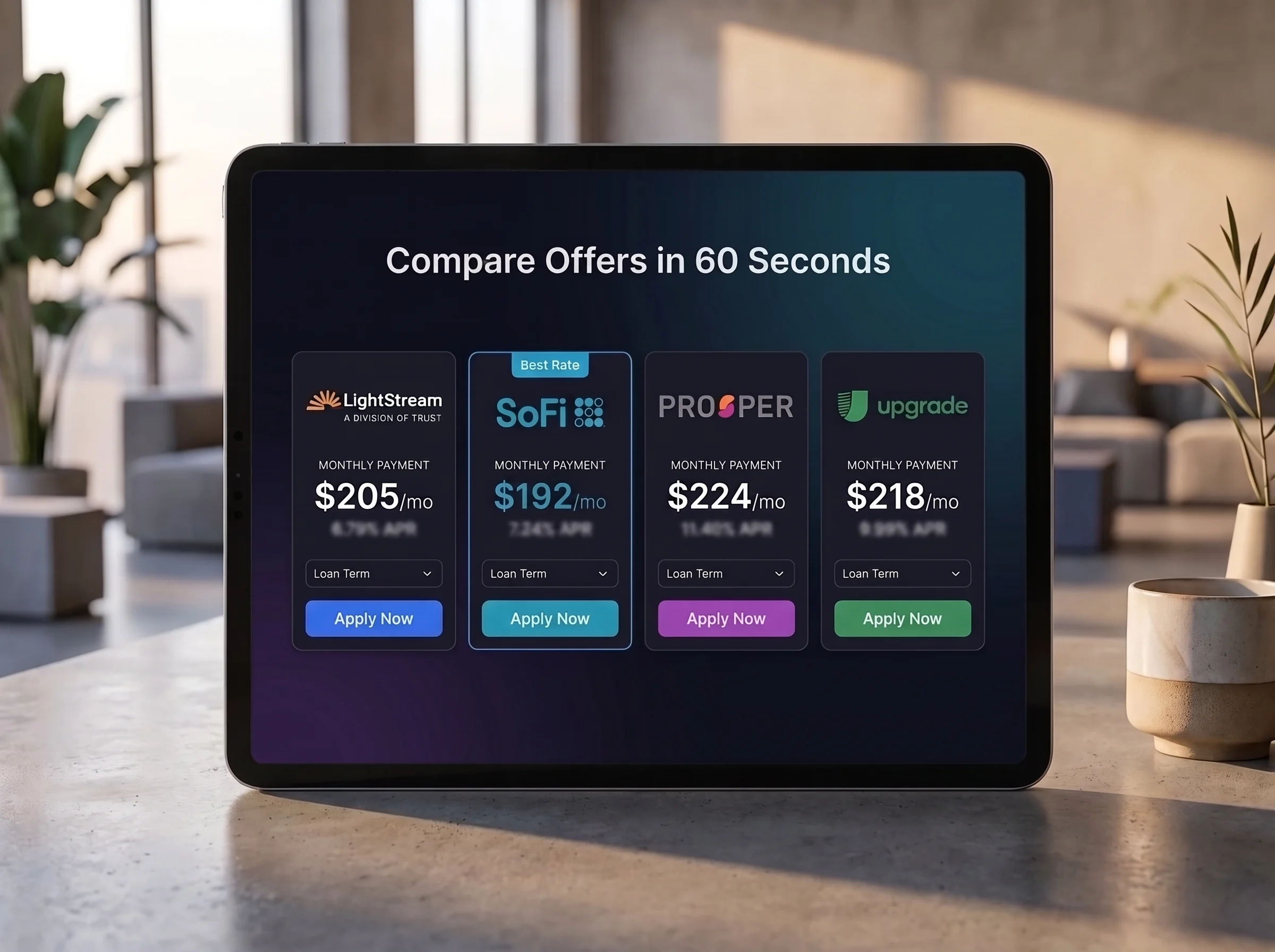
Pasha Funding helps homeowners check siding financing options through a network of third-party lending partners. You can complete one online request, review any offers available to you, and compare rates, monthly payments, and repayment terms before choosing a loan.
The information provided by Pasha Funding is for educational and informational purposes only and should not be considered financial, legal, or tax advice. Every homeowner’s financial situation is different, and the financing options discussed may not be suitable for everyone. Before choosing a financing solution, carefully review the lender’s terms and consider consulting a qualified financial professional if needed.
Pasha Funding is a financing marketplace that connects homeowners with financing options offered by participating lending partners. We do not make loans, determine credit eligibility, or guarantee approval or specific loan terms. Pasha Funding is not a direct lender. We may receive compensation from participating lending partners when users submit an application or obtain a loan through our platform. This compensation may affect how and where financing options appear, but it does not influence our editorial evaluations.
Financing offers, rates, terms, and availability are determined solely by participating lenders and may change without notice. Our editorial content is created independently to help consumers better understand home improvement financing. While we strive to keep information accurate and current, financing products, lender requirements, rates, and offers may change over time. Any opinions expressed are those of the author and have not been reviewed, approved, or endorsed by our lending partners.


FAQs
In this guide
- Siding Financing: How to Pay For New Siding Installation
- Understand the Full Project Price, Not Just the Monthly Payment
- How Much Does New Siding Cost?
- Unexpected Siding Replacement Costs Homeowners Should Know About
- Compare the Best Siding Financing Options
- How Lenders Evaluate Your Siding Financing Application
- Why the Lowest Monthly Payment Can Cost the Most
- “No Interest” May Actually Mean Deferred Interest
- How Insurance Claims Can Affect Your Siding Financing
- Are Siding Loans Tax Deductible?
- When Financing New Siding Makes Sense
- Is It Better to Repair or Replace Your Siding?
- A Step-by-Step Guide to Financing Your Siding Project
- Compare Siding Financing Offers Through Pasha Funding
- Siding Financing Calculator
- $270
how it works
3 Simple steps to
finance your project.
Getting started only takes a minute. Complete one simple application to compare available financing offers from over 18+ lenders, choose the option that fits your budget, and move forward with your home improvement project.
Siding Financing Calculator
1. Enter Your Desired Loan Amount
Your Estimate
Monthly Payment
-
This calculator provides estimates for illustrative purposes only and does not constitute an offer of credit or a commitment to lend. Final APRs, loan amounts, and terms depend on credit approval, income verification, and lender underwriting criteria. Minimum and maximum rates/terms vary by state.
Powered by: Pasha Funding
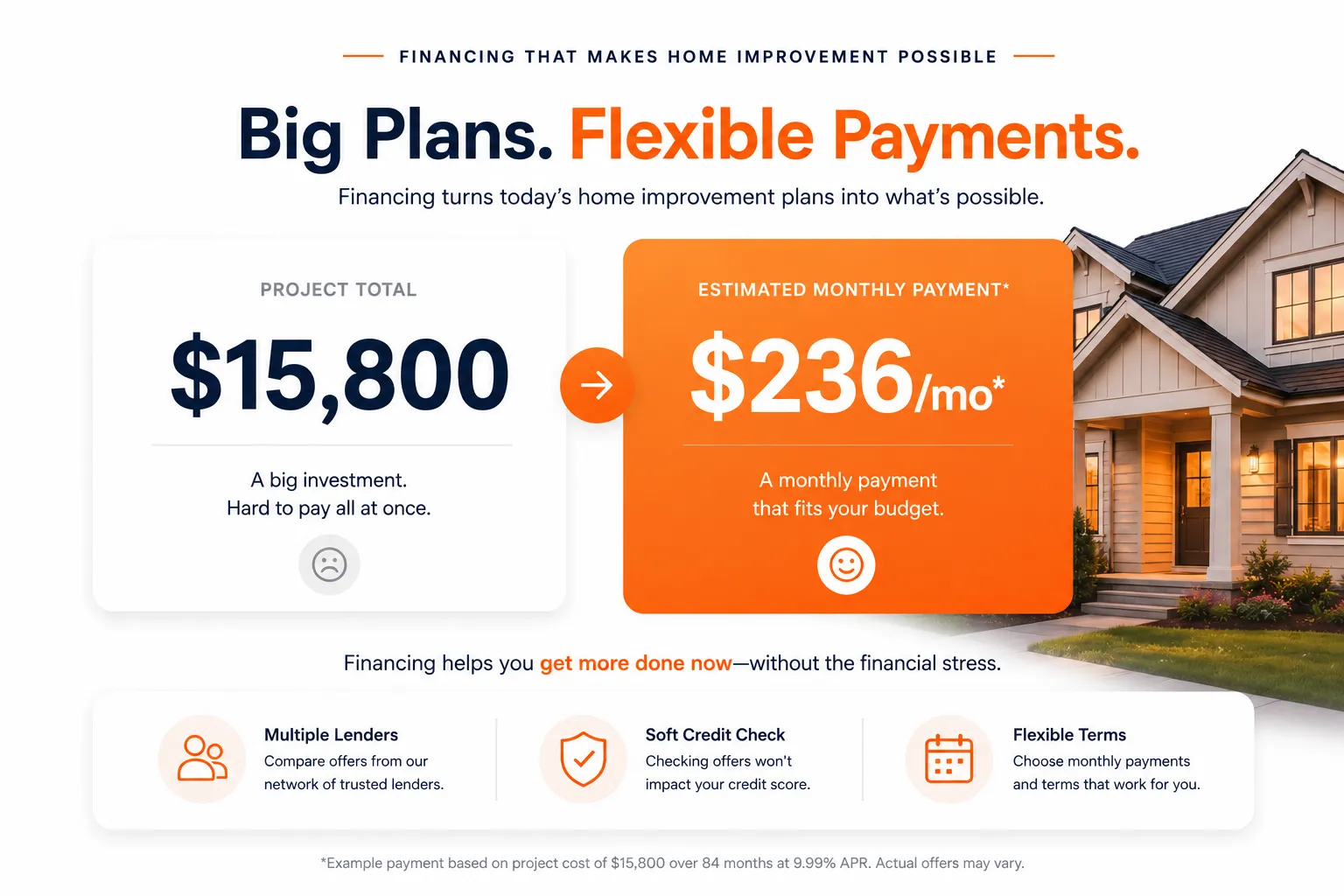
Risk-Free Prequalification
Checking offers won’t impact your credit.
It’s common for homeowners to delay applying because they’re worried about their credit score. With a soft credit check, you can review available financing options without any impact to your credit score.2