Participating Lender Network





home automation financing & loan options
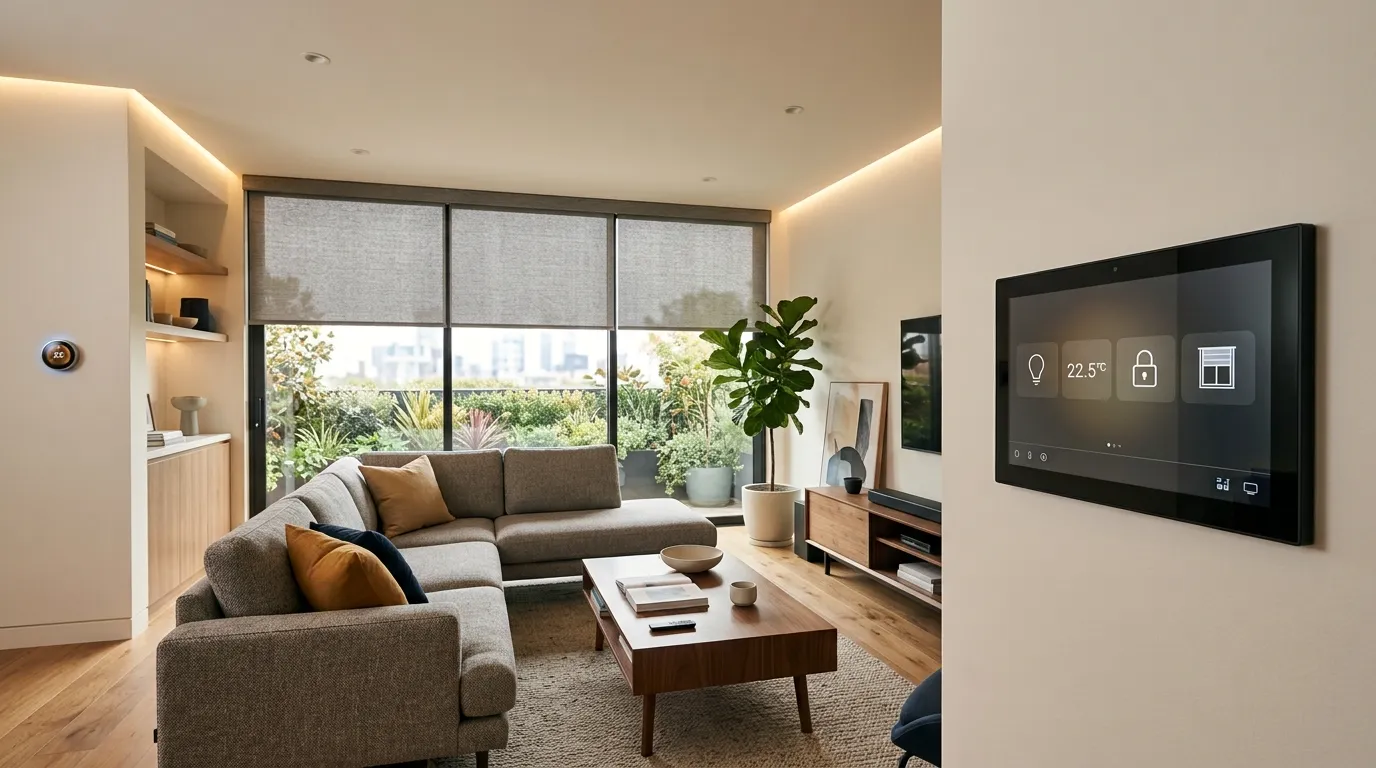
Home automation ranges from a few hundred dollars for a handful of smart devices you set up yourself to $150,000 or more for a professionally installed whole-home system, and the gap comes down to one choice: a do-it-yourself ecosystem or a dealer-installed platform. A DIY setup built on Google, Alexa, or SmartThings covers lights, locks, and a thermostat for a small, pay-as-you-go cost. A professional system from Control4, Savant, or Crestron ties lighting, entertainment, climate, security, and shades into one controlled experience, and it runs from the low five figures into six. Because the DIY end is small enough to buy outright while a professional install is a major project, the type you choose decides how you pay: devices often go on a card, and a whole-home system is commonly financed with a personal loan, a home improvement loan, or home equity. Knowing where your project sits on that range is the first step to financing it well.
Key Takeaways
- DIY smart-home setups (Google, Alexa, SmartThings) cost a few hundred to a few thousand dollars for devices you install yourself.
- Professional systems run from the low five figures up: Control4 roughly $15,000 to $50,000, Savant $25,000 to $80,000, and Crestron $40,000 to $150,000+.
- The integrator matters more than the brand: system scope, network design, and programming labor drive the total far more than the logo on the box.
- You can phase it: automating main living areas first delivers most of the daily experience at a fraction of whole-home cost.
- A card or personal loan suits a DIY project, while a home improvement loan or home equity fits a professionally installed whole-home system.
DIY vs. Professional Home Automation: Which Do You Need?
This is the decision that sets your budget, because the two approaches are worlds apart in cost and capability. A DIY ecosystem is a set of off-the-shelf devices you buy and connect yourself through an app. A professional system is designed, wired, programmed, and supported by a certified integrator, tying everything into one interface.
- DIY ecosystems (Google Home, Amazon Alexa, Samsung SmartThings): the budget path, from a few hundred to a few thousand dollars. You add smart bulbs, plugs, locks, cameras, and a thermostat over time and control them by app or voice. Easy to start, easy to expand, no installer needed. Some devices even offset their cost: an ENERGY STAR certified smart thermostat saves the average home about 8% on heating and cooling, and many utilities offer rebates on one.
- Professional platforms (Control4, Savant, Crestron): whole-home integration installed by a dealer, from the low five figures up. These tie lighting, AV, climate, shades, and security into one system with touch panels, keypads, and app control, and only reach their full potential when everything is planned together.
A DIY setup is right for renters, smaller budgets, and homeowners who want to dabble; a professional system is for whole-home control, custom scenes, and a seamless experience across many connected systems.
Control4 vs. Savant vs. Crestron: Which Smart Home System Is Right for You?
The three most common home automation platforms overlap heavily, and the right one depends on your home’s size, your budget, and how custom you want the experience. Here is how they line up.
| Platform | Typical cost | Best for | Character |
|---|---|---|---|
| Control4 | $15k–$50k | Most homes; the value pick | Broad device support, big dealer network |
| Savant | $25k–$80k | Luxury AV and energy integration | Polished interface, Apple-friendly |
| Crestron | $40k–$150k+ | Large estates, full customization | Most powerful, most bespoke, priciest |
Cost ranges based on installed-system benchmarks from HomeAdvisor. Actual pricing varies by home size, scope, and integrator.
Control4 is the practical sweet spot for most homeowners, with the widest compatibility and dealer network. Savant leans into premium media and energy management. Crestron sits at the top for limitless customization on large or high-end homes. All three are dealer-installed only, so none can be bought for DIY setup.
Pros and cons of home automation systems
With professional automation, the company that designs and programs your system affects the result more than the logo on the equipment. The same platform can deliver a flawless experience or a frustrating one depending on the integrator’s skill with network design, device programming, and planning. Weigh the tradeoffs of going professional before you sign:
Pros:
- One seamless system: a good integrator ties lighting, AV, climate, shades, and security into a single interface with custom scenes that a DIY setup struggles to match.
- Designed and supported: the system is planned for your home, professionally installed, and backed by someone to call when something breaks.
- Reliability at scale: professional network design handles dozens of connected devices more dependably than a patchwork of consumer apps.
Cons:
- Programming is a real cost: custom programming often runs 10% to 15% of the total, and it is what makes scenes and automations actually work the way you want.
- Dealer dependence: on dealer-installed platforms, most changes require the integrator, so you can’t freely adjust the system yourself the way you can with DIY gear.
- Availability affects price: platforms with fewer certified local techs cost more to install and support, while a brand with a deep local dealer network keeps labor competitive.
How Do You Finance Home Automation?
Because home automation spans such a wide range, the right financing depends on the size of the project. How the common paths compare:
- Savings or a credit card: the simplest route for DIY devices in the hundreds to low thousands, especially with a rewards card you pay off each month.
- Unsecured personal or home improvement loan: the common choice for a professional whole-home install. It funds fast, places no lien on your home, and carries a fixed rate with predictable payments, though some lenders charge an origination fee. Good credit or better earns the best terms.
- Home equity loan or HELOC: worth considering for a large Savant or Crestron system if you want the lowest relative rate, since your home secures it. The trade-off is real: these are secured loans that use your house as collateral, so an appraisal and closing costs apply, and falling behind on payments can put your home at risk of foreclosure in a way an unsecured personal loan does not. That risk can outweigh the rate savings on a smaller project.
- Dealer or manufacturer financing: many integrators offer financing at the point of sale through a lending partner. Compare it against an outside loan, and check whether a promotional offer is a true 0% or deferred interest.
How Do You Qualify for Home Automation Financing?
What it takes to get approved depends on what you’re spending. Putting a few hundred dollars of smart bulbs and a thermostat on a credit card asks nothing beyond an account you already have. A five- or six-figure Control4 or Crestron system is a different matter: a lender underwrites it like any major home-improvement loan, and it helps to know what they’re looking at before you apply.
What Do Lenders Look for on a Home Improvement Loan?
Whether you go with a personal loan, a home improvement loan, or a home equity product, a lender is weighing four things:
- Your credit score and history set your rate and whether you’re approved at all. Good credit or better gets you the lowest rates; fair credit still qualifies with most personal-loan lenders, just at a higher cost.
- Your debt-to-income ratio, your monthly debt payments against your gross income, tells the lender whether you can take on another payment. Most want to see it below the 36% to 43% range, and a new loan can’t push you past that ceiling.
- Your income and employment confirm you can carry the payment. Have recent pay stubs and W-2s ready, or a year or two of tax returns if you’re self-employed.
- Your home equity matters only if you’re borrowing against the house. Lenders usually cap combined borrowing around 80% of the home’s value and will appraise it to confirm.
How to Apply for Home Automation Financing, Step by Step
1. Get an itemized proposal. Ask your integrator to break the bid into hardware, installation, and programming. A rough device estimate leaves out the labor that makes up much of a professional job, and this fuller number is what you borrow against.
2. Check your own credit first. Look at your score and report and fix any errors before a lender sees them. If your score sits just below the next tier, a few weeks of paying down balances is often the fastest way to a better rate.
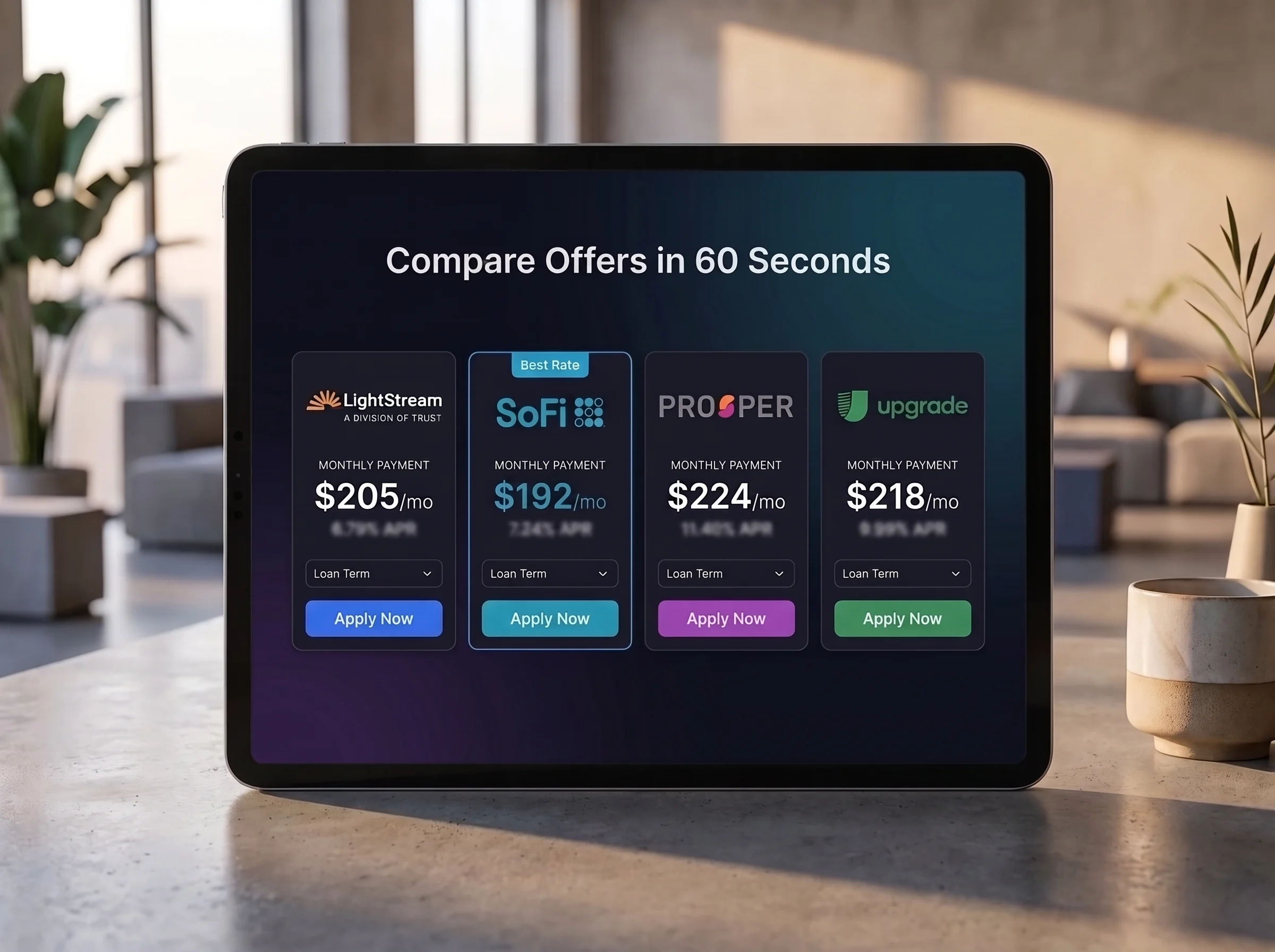
3. Prequalify with a few lenders. Most personal-loan lenders, and many dealer programs, show you real rates through a soft credit check that leaves your score untouched. Line up two or three so you can compare offers directly.
4. Compare on total cost, not the monthly payment. A smaller monthly figure is often just a longer term that costs more overall. Weigh the rate, any origination fee, the term, and the total you’ll repay, and check whether a dealer’s 0% deal is a real promotion or deferred interest.
5. Submit one full application. Once you’ve picked the loan that fits the project, apply. This is where the lender runs a hard credit check and, for a home equity loan or HELOC, orders the appraisal and starts closing.
A smaller project on a personal loan tends to move fast, often approved the same day and funded within a few business days. A home equity loan or HELOC takes longer, usually a few weeks, because of the appraisal and closing, so give yourself that runway before you want the crew to start.
The Bottom Line
How you pay for home automation comes down to whether you are adding a few smart devices or wiring a whole-home system. A DIY ecosystem is affordable enough for savings or a card you can clear quickly. A professional Control4, Savant, or Crestron install is where financing makes sense, and a personal or home improvement loan is a common fit because it funds fast and adds no lien, while home equity offers the lowest relative rate on a large system at the cost of a lien on your home. A dealer program can be competitive if the promotional terms are clear.
Before you borrow, get an itemized proposal covering hardware, installation, and programming rather than a rough estimate, and consider phasing the work, main living areas first, to spread the cost. Choose your integrator as carefully as your platform, and compare any loan offer on the total you will repay rather than the monthly figure.
The information provided by Pasha Funding is for educational and informational purposes only and should not be considered financial, legal, or tax advice. Every homeowner’s financial situation is different, and the financing options discussed may not be suitable for everyone. Before choosing a financing solution, carefully review the lender’s terms and consider consulting a qualified financial professional if needed.
Pasha Funding is a financing marketplace that connects homeowners with financing options offered by participating lending partners. We do not make loans, determine credit eligibility, or guarantee approval or specific loan terms. Pasha Funding is not a direct lender. We may receive compensation from participating lending partners when users submit an application or obtain a loan through our platform. This compensation may affect how and where financing options appear, but it does not influence our editorial evaluations.
Financing offers, rates, terms, and availability are determined solely by participating lenders and may change without notice. Our editorial content is created independently to help consumers better understand home improvement financing. While we strive to keep information accurate and current, financing products, lender requirements, rates, and offers may change over time. Any opinions expressed are those of the author and have not been reviewed, approved, or endorsed by our lending partners.


Frequently Asked Questions
how it works
3 Simple steps to
finance your project.
Getting started only takes a minute. Complete one simple application to compare available financing offers from over 18+ lenders, choose the option that fits your budget, and move forward with your home improvement project.
Home automation Financing Calculator
1. Enter Your Desired Loan Amount
Your Estimate
Monthly Payment
-
This calculator provides estimates for illustrative purposes only and does not constitute an offer of credit or a commitment to lend. Final APRs, loan amounts, and terms depend on credit approval, income verification, and lender underwriting criteria. Minimum and maximum rates/terms vary by state.
Powered by: Pasha Funding
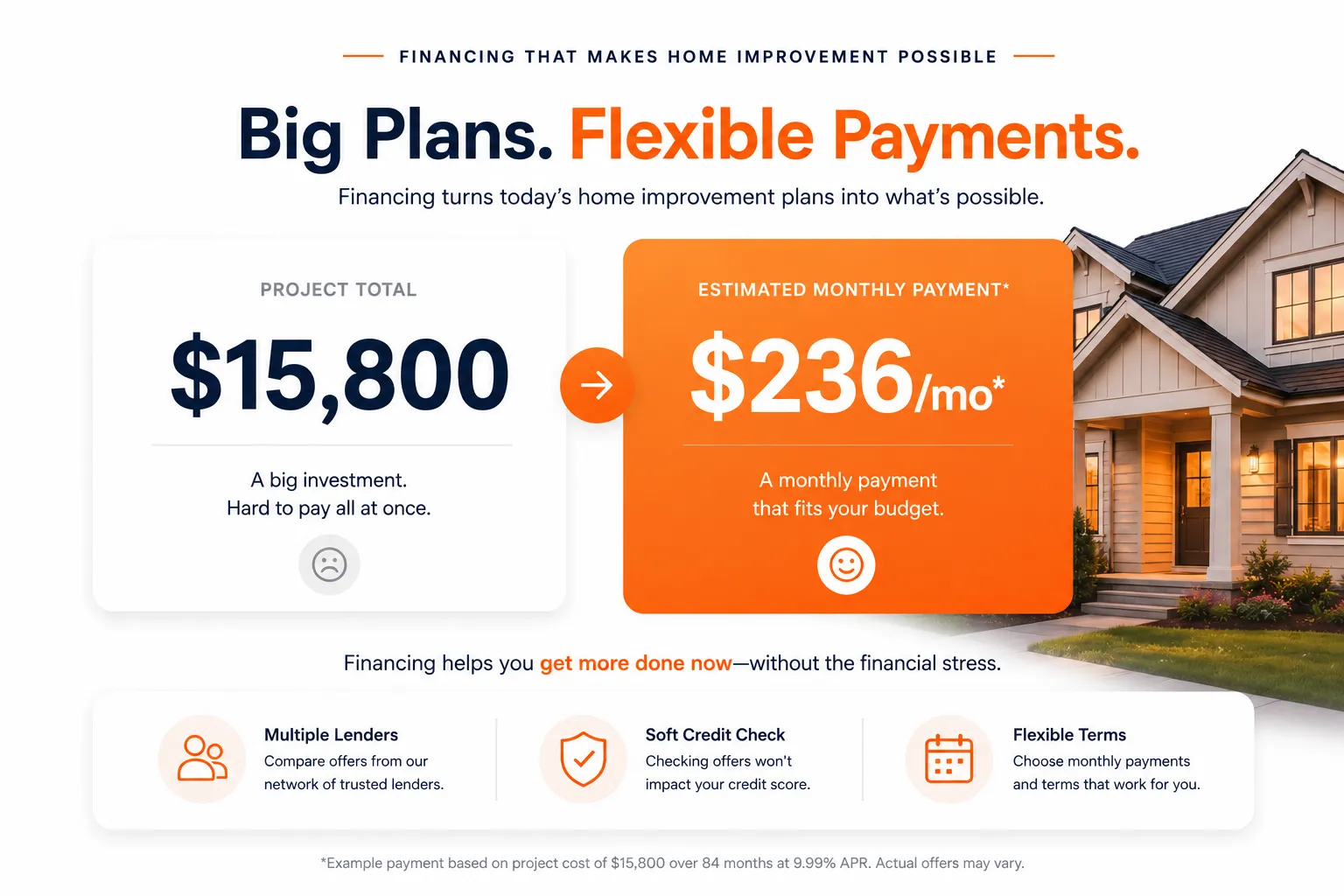
Risk-Free Prequalification
Checking offers won’t impact your credit.
It’s common for homeowners to delay applying because they’re worried about their credit score. With a soft credit check, you can review available financing options without any impact to your credit score.2