Participating Lender Network





How to Finance a Bathroom Remodel
Bathroom remodeling can improve comfort, functionality, and even your home’s value, but it also represents one of the larger investments many homeowners make. Whether you’re replacing outdated fixtures, converting a tub into a walk-in shower, or completing a full renovation, choosing the right financing option can make the project more manageable without delaying needed work.
Several financing options are available, including personal loans, home equity loans, HELOCs, contractor financing, and credit cards. Each has different qualification requirements, repayment terms, costs, and risks. The best choice depends on your budget, available home equity, and how quickly you need the funds.
This guide explains how bathroom remodel financing works, compares the most common borrowing options, outlines qualification requirements, and provides practical tips to help you finance your project with confidence.
Key takeaways
- Most homeowners spend between $6,600 and $18,000 on a bathroom remodel, though custom layouts or high-end finishes can easily push costs over $80,000.
- Personal loans offer quick funding without tapping into your home’s value or risking your property, though you’ll typically pay higher interest rates.
- Home equity loans and HELOCs generally offer the lowest rates, but they require 15% to 20% equity and use your home as collateral.
- Compare options using the APR and total loan cost, which factor in hidden lender fees that low monthly payments can disguise.
- Set aside a 10% to 20% contingency buffer for unexpected issues like hidden water damage, mold, or outdated wiring found during demolition.
How much does a bathroom remodel cost?
The amount you need to finance starts with an accurate project budget. Most bathroom remodels cost between $6,600 and $18,000, while upscale renovations with custom finishes, premium fixtures, or layout changes can exceed $80,000. The majority of the bathroom remodeling projects fall into one of three general budget ranges. Your final cost will depend on the bathroom size, material selections, local labor rates, and whether plumbing, electrical, or layout changes are required.
- Basic refresh: $8,500 to $11,000: Best for updating the appearance of an existing bathroom without changing the layout. The project may include paint, lighting, a new vanity, replacement fixtures, and updated hardware. Most basic refreshes take approximately 2 to 3 weeks.
- Midrange remodel: $14,500 to $19,000: A practical choice when replacing most finishes while keeping the current layout. The project may include new flooring, a vanity, fixtures, lighting, and other cosmetic upgrades. Most midrange remodels take approximately 4 to 6 weeks.
- High-end remodel: $27,500 to $36,000: Designed for a more complete transformation using custom features and premium materials. The project may include custom cabinetry, upgraded finishes, layout changes, and more extensive plumbing or electrical work. Most high-end remodels take approximately 8 to 12 weeks.
Regardless of your budget, it’s wise to plan for unexpected expenses. Once walls or flooring are removed, contractors sometimes discover hidden plumbing issues, water damage, mold, or outdated electrical wiring. Setting aside an additional 10% to 20% of your project budget can help prevent financing shortfalls later.
Should you finance a bathroom remodel or pay cash?
If you’ve already saved enough to comfortably cover the project while maintaining an emergency fund, paying cash avoids interest charges altogether. This is often the most cost-effective approach for smaller cosmetic updates that aren’t time-sensitive.
Financing may make more sense when the remodel addresses problems that shouldn’t wait, such as water damage, leaking plumbing, deteriorating flooring, or accessibility improvements. Delaying necessary repairs can increase overall project costs as damage spreads.
Many homeowners also choose a hybrid approach by paying part of the project from savings and financing the remaining balance. This reduces the amount borrowed while preserving cash for emergencies and other household expenses.
What are the best ways to finance a bathroom remodel?
The right financing option depends on whether your project has a fixed price, whether expenses will occur in stages, how much home equity you’ve built, and how quickly you need funding.
| Financing option | May work best for | Main drawback |
|---|---|---|
| Personal loan | Projects with a defined budget and fast funding needs | Higher borrowing costs than secured loans |
| Home equity loan | Larger remodels with a fixed project cost | Your home secures the loan |
| HELOC | Projects completed in multiple phases | Variable interest rates may increase payments |
| Contractor financing | Convenient financing arranged during the sales process | Always compare offers before accepting |
| Credit card | Small purchases repaid quickly | High interest after promotional periods expire |
| Cash | Projects you can comfortably pay for upfront | May delay renovations while you save |
Rather than focusing only on the advertised interest rate, compare each option using the annual percentage rate (APR). APR includes both interest and certain lender fees, making it a more accurate way to compare the true cost of borrowing.
Next, we’ll take a closer look at how each financing option works, who it may be best suited for, and the advantages and disadvantages homeowners should consider before making a decision.
Personal loans
A personal loan is one of the most popular ways to finance a bathroom remodel because it doesn’t require home equity or use your home as collateral. Once approved, you receive the loan as a lump sum and repay it through fixed monthly payments over a set repayment term.
Many homeowners choose personal loans for bathroom remodels because funding is often available within a few days, making them well suited for planned renovations as well as unexpected repairs.
Pros
- No home equity required.
- Your home isn’t used as collateral.
- Fixed interest rates and predictable monthly payments.
- No appraisal or lengthy home equity closing process.
- Funding is often available within days.
Cons
- Interest rates are generally higher than home-secured loans.
- Monthly payments may be higher because repayment terms are typically shorter.
- Some lenders charge origination fees.
💡 Best for
Homeowners with little or no home equity, emergency bathroom repairs, or projects with a defined budget that require fast funding.
Home equity loans
A home equity loan allows you to borrow against the equity you’ve built in your home. Unlike a personal loan, the loan is secured by your property, which typically allows lenders to offer lower interest rates and longer repayment terms.
You receive the entire loan amount upfront and repay it through fixed monthly payments, making this option a good fit for remodels with a clearly defined budget.
Pros
- Generally lower interest rates than unsecured loans.
- Fixed monthly payments.
- Long repayment terms can reduce monthly payments.
- Suitable for larger remodeling projects.
Cons
- Requires sufficient home equity.
- Your home serves as collateral.
- Closing costs may apply.
- Approval typically takes longer than a personal loan.
💡 Best for
Homeowners with at least 15% to 20% equity who have a fixed project budget and want predictable monthly payments.
HELOCs (home equity lines of credit)
A home equity line of credit (HELOC) works differently than a home equity loan. Instead of receiving one lump sum, you’re approved for a credit line that you can draw from as expenses arise.
This flexibility makes a HELOC useful for bathroom remodels completed in phases or projects where the final cost may change during construction.
Pros
- Borrow only what you need.
- Flexible access to funds throughout the project.
- Lower interest rates than many unsecured loans.
- Interest is charged only on the amount borrowed.
Cons
- Variable interest rates can increase monthly payments.
- Requires sufficient home equity.
- Your home secures the credit line.
- Some lenders may reduce or freeze available credit under certain circumstances.
💡 Best for
Homeowners completing larger or phased remodeling projects where expenses occur over time.
Contractor financing
Many remodeling contractors offer financing through third-party lending partners. Instead of finding financing on your own, you complete an application during the sales process and review available loan offers if you’re approved.
Contractor financing can simplify the borrowing process, but convenience shouldn’t replace comparison shopping. According to consumer guidelines from the Federal Trade Commission (FTC), homeowners should always compare financing terms from outside lenders before agreeing to home improvement financing arranged by a contractor.
Pay close attention to promotional financing offers. Some plans advertised as “no interest if paid in full” use deferred interest rather than true 0% financing. If the balance isn’t paid before the promotional period ends, interest may be charged retroactively from the original purchase date.
💡 Best for
Homeowners who want a simple financing process integrated into their contractor’s estimate while still comparing offers before making a final decision.
Credit cards
Credit cards may be appropriate for smaller bathroom updates, replacement fixtures, or projects that can be repaid within a promotional 0% introductory period. They provide immediate access to funds and don’t require additional loan applications if you already have available credit.
However, carrying a balance after the promotional period expires can become expensive because credit card interest rates are typically much higher than personal loans or home equity financing.
Pros
- Immediate access to available credit.
- Potential 0% introductory financing offers.
- No home equity required.
Cons
- High interest rates after promotional periods expire.
- Not ideal for larger remodeling projects.
- High balances can increase your credit utilization ratio.
💡 Best for
Small bathroom projects or purchases that can be repaid before promotional financing expires.
Which bathroom remodel financing option is right for you?
The right financing option depends on your project budget, available home equity, and how quickly you need funds. Comparing your options can help you make a more informed decision.
| Financing Option | Consider This Option If You… |
|---|---|
| Personal Loan | Need fixed, fast funding without putting your home up as collateral for a mid-sized remodel. |
| Home Equity Loan | Have substantial home equity, want lower fixed interest rates, and know the exact fixed cost of a major overhaul. |
| HELOC | Are tackling a phased or unpredictable bathroom renovation and need a flexible, revolving credit line. |
| Contractor Financing | Want seamless, one-stop point-of-sale approval with promotional zero-interest or low-monthly payment terms directly from your installer. |
| Credit Card | Are doing a small refresh (fixtures, vanity, paint) and can clear the balance before high APRs kick in. |
| Cash | Have sufficient liquid savings to cover the total bill upfront without paying a penny in interest or finance fees. |
No financing option is the right choice for every homeowner. Compare offers based on APR, repayment terms, fees, total borrowing costs, and monthly payments before making your decision.
What do you need to qualify for bathroom remodel financing?
Qualification requirements vary depending on the financing option you choose. Personal loans focus primarily on your credit history, income, and debt-to-income (DTI) ratio, while home equity loans and HELOCs also require sufficient equity in your home.
Although every lender has its own underwriting guidelines, here is a breakdown of what most homeowners can expect:
Personal loans
- Credit score: Some lenders consider fair credit applicants
- Home equity: Not required
- Debt-to-income (DTI): Income must support the new payment
- Collateral: None
Home equity loans & HELOCs
- Credit score: Typically 620+ (higher scores yield better terms)
- Home equity: Usually at least 15% to 20% required
- Debt-to-income (DTI): Income and available equity are both evaluated
- Collateral: Your home secures the loan
What do bathroom remodel loan rates look like?
Bathroom remodel loan rates vary based on the financing option you choose and your financial profile. Factors such as your credit score, income, debt-to-income ratio, loan amount, and repayment term all influence the rate you may receive.
Rather than focusing only on the advertised interest rate, compare lenders using the annual percentage rate (APR). APR includes both interest and certain lender fees, making it one of the best ways to compare the total cost of borrowing.
How to improve your chances of approval for a bathroom remodel loan
A little preparation before applying can improve both your approval odds and the financing offers you receive.
1. Review your credit
Check your credit reports for errors at AnnualCreditReport.com and pay down revolving credit card balances when possible. Even modest improvements to your credit profile may help you qualify for better loan terms.
2. Calculate your budget
Determine how much you can comfortably afford each month before choosing a loan amount. Remember to include all existing debt payments when estimating your monthly budget.
3. Compare multiple financing offers
Don’t accept the first financing offer you receive. Compare APR, repayment terms, fees, monthly payments, and total borrowing costs from multiple lenders before making your decision.
Common costs and fees to consider
Interest rates are only one part of the total borrowing cost. Depending on the financing option you choose, additional fees may affect the overall cost of your bathroom remodel loan.
| Financing option | Common costs |
|---|---|
| Personal loan | Origination fee (if applicable) |
| Home equity loan | Closing costs and appraisal fees |
| HELOC | Closing costs, possible annual fees, variable interest |
| Credit card | Interest charges after promotional periods end |
| Contractor financing | Varies by lender and promotional financing terms |
When comparing financing offers, look beyond the monthly payment. A lower payment may simply result from a longer repayment term, which can increase the total interest paid over the life of the loan.
Will a bathroom remodel increase your home’s value?
A bathroom remodel can improve your home’s comfort, functionality, and market appeal, but it rarely returns 100% of its cost. Value recovery depends heavily on project scope, materials, and local market trends. According to Remodeling Magazine’s Cost vs. Value Report, return on investment generally decreases as project luxury increases:
- Midrange remodel (~80% ROI): Updates fixtures, vanity, and flooring within the existing layout for maximum cost recovery.
- Universal design / accessibility (~61% ROI): Adds walk-in showers, grab bars, and wider doorways for safety and resale appeal.
- Upscale remodel (~45% ROI): Features custom cabinetry and luxury finishes, prioritizing personal comfort over direct financial return.
While resale value matters, personal benefits, such as updated style, improved functionality, and fixing hidden issues – often outweigh the direct financial return for most homeowners.
The bottom line
The best way to finance a bathroom remodel depends on your project budget, available home equity, how quickly you need the funds, and the monthly payment that fits your budget. A personal loan may make sense if you need funding quickly, while a home equity loan or HELOC may be worth considering if you have sufficient equity and are financing a larger project. For smaller updates, paying cash or using a promotional credit card may help you avoid borrowing costs if you can repay the balance before interest begins.
In general, here’s how each financing option aligns with different remodeling scenarios:
- Little or no home equity: A personal loan can provide fast funding without using your home as collateral.
- Large remodel with a fixed budget: A home equity loan offers a lump sum with predictable monthly payments.
- Project completed in phases: A HELOC lets you borrow as expenses arise.
- Small cosmetic update: Cash or a 0% introductory APR credit card may be sufficient if you can pay it off during the promotional period.
- Simple financing through your contractor: Contractor financing lets you compare available monthly payment options during the sales process, but it’s still worth comparing offers before accepting one.
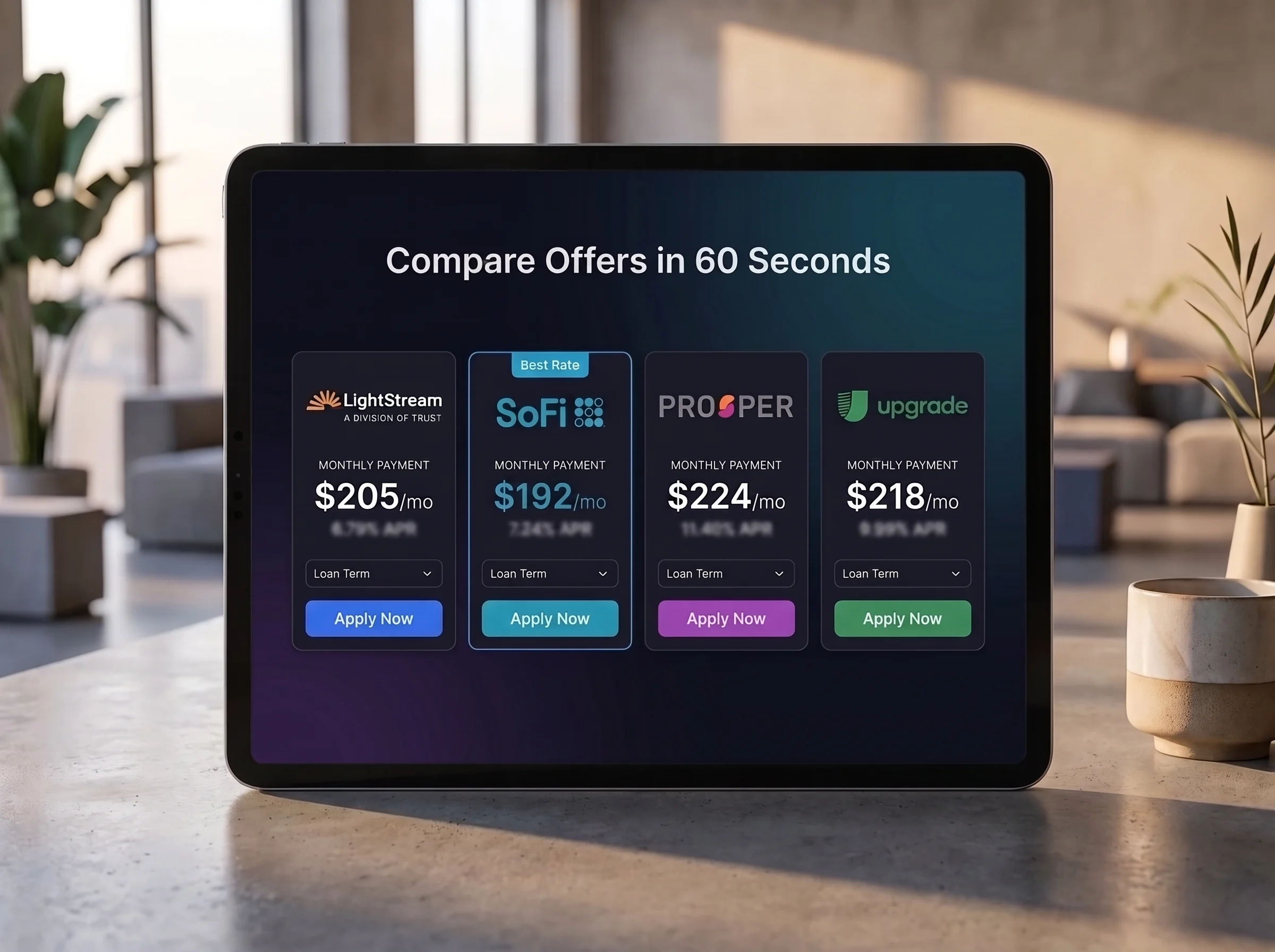
Before choosing any financing option, compare annual percentage rates (APR), repayment terms, fees, total borrowing costs, and monthly payments rather than focusing on the interest rate alone. Whether you compare lenders on your own or use a marketplace like Pasha Funding to review available offers from participating lending partners, taking the time to shop around can help you find financing that fits both your remodeling plans and your long-term budget.
The information provided by Pasha Funding is for educational and informational purposes only and should not be considered financial, legal, or tax advice. Every homeowner’s financial situation is different, and the financing options discussed may not be suitable for everyone. Before choosing a financing solution, carefully review the lender’s terms and consider consulting a qualified financial professional if needed.
Pasha Funding is a financing marketplace that connects homeowners with financing options offered by participating lending partners. We do not make loans, determine credit eligibility, or guarantee approval or specific loan terms. Pasha Funding is not a direct lender. We may receive compensation from participating lending partners when users submit an application or obtain a loan through our platform. This compensation may affect how and where financing options appear, but it does not influence our editorial evaluations.
Financing offers, rates, terms, and availability are determined solely by participating lenders and may change without notice. Our editorial content is created independently to help consumers better understand home improvement financing. While we strive to keep information accurate and current, financing products, lender requirements, rates, and offers may change over time. Any opinions expressed are those of the author and have not been reviewed, approved, or endorsed by our lending partners.


Frequently Asked Questions
In this guide
- How much does a bathroom remodel cost?
- Should you finance a bathroom remodel or pay cash?
- What are the best ways to finance a bathroom remodel?
- Which bathroom remodel financing option is right for you?
- What do you need to qualify for bathroom remodel financing?
- What do bathroom remodel loan rates look like?
- How to improve your chances of approval for a bathroom remodel loan
- Common costs and fees to consider
- Will a bathroom remodel increase your home’s value?
- The bottom line
how it works
3 Simple steps to
finance your project.
Getting started only takes a minute. Complete one simple application to compare available financing offers from over 18+ lenders, choose the option that fits your budget, and move forward with your home improvement project.
Bathroom Remodel Financing Calculator
1. Enter Your Desired Loan Amount
Your Estimate
Monthly Payment
-
This calculator provides estimates for illustrative purposes only and does not constitute an offer of credit or a commitment to lend. Final APRs, loan amounts, and terms depend on credit approval, income verification, and lender underwriting criteria. Minimum and maximum rates/terms vary by state.
Powered by: Pasha Funding
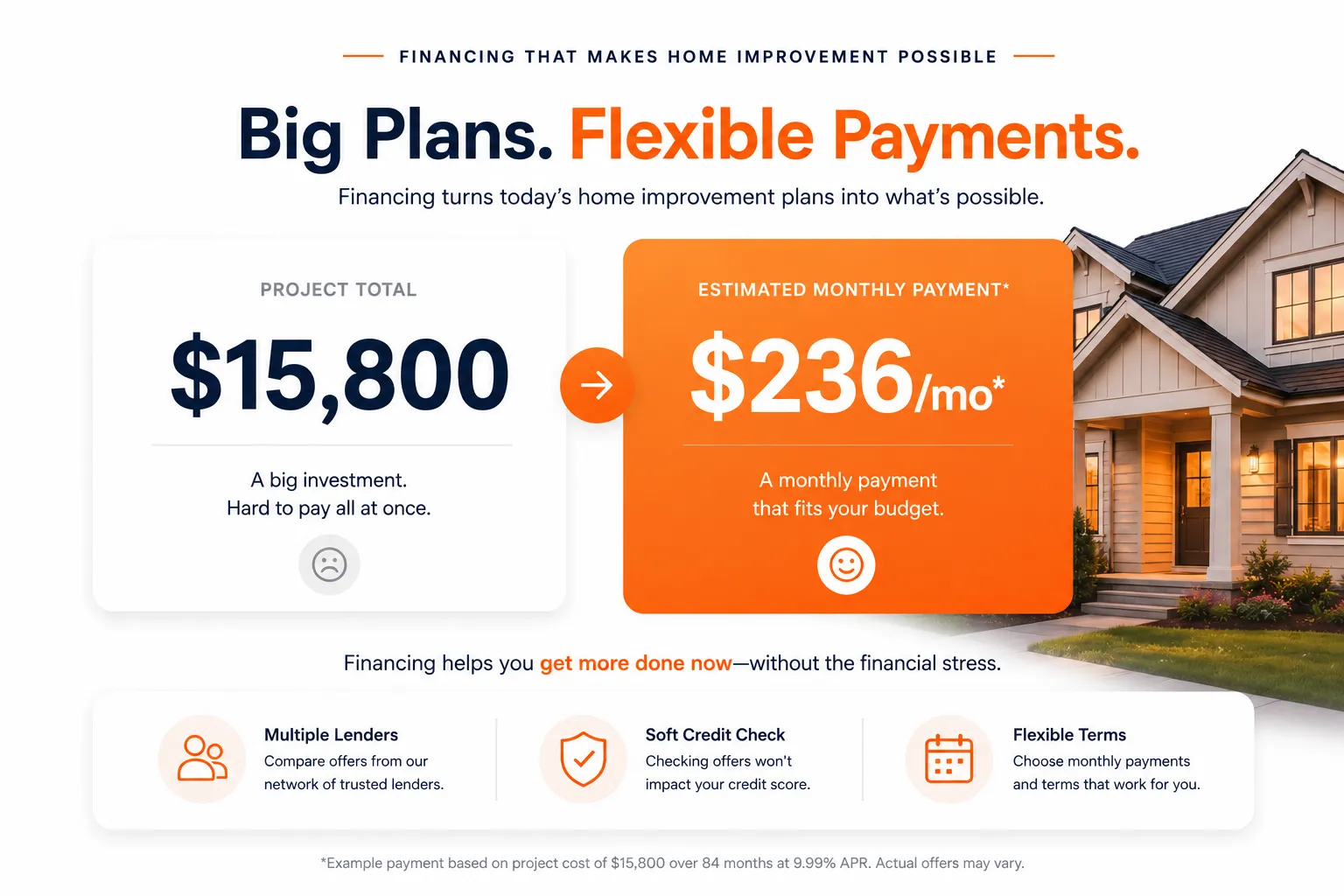
Risk-Free Prequalification
Checking offers won’t impact your credit.
It’s common for homeowners to delay applying because they’re worried about their credit score. With a soft credit check, you can review available financing options without any impact to your credit score.2