Swimming Pool Financing

Finance your new swimming pool with flexible monthly payments and competitive loan options.

See your personalized rates in just minutes without affecting your credit score. 3

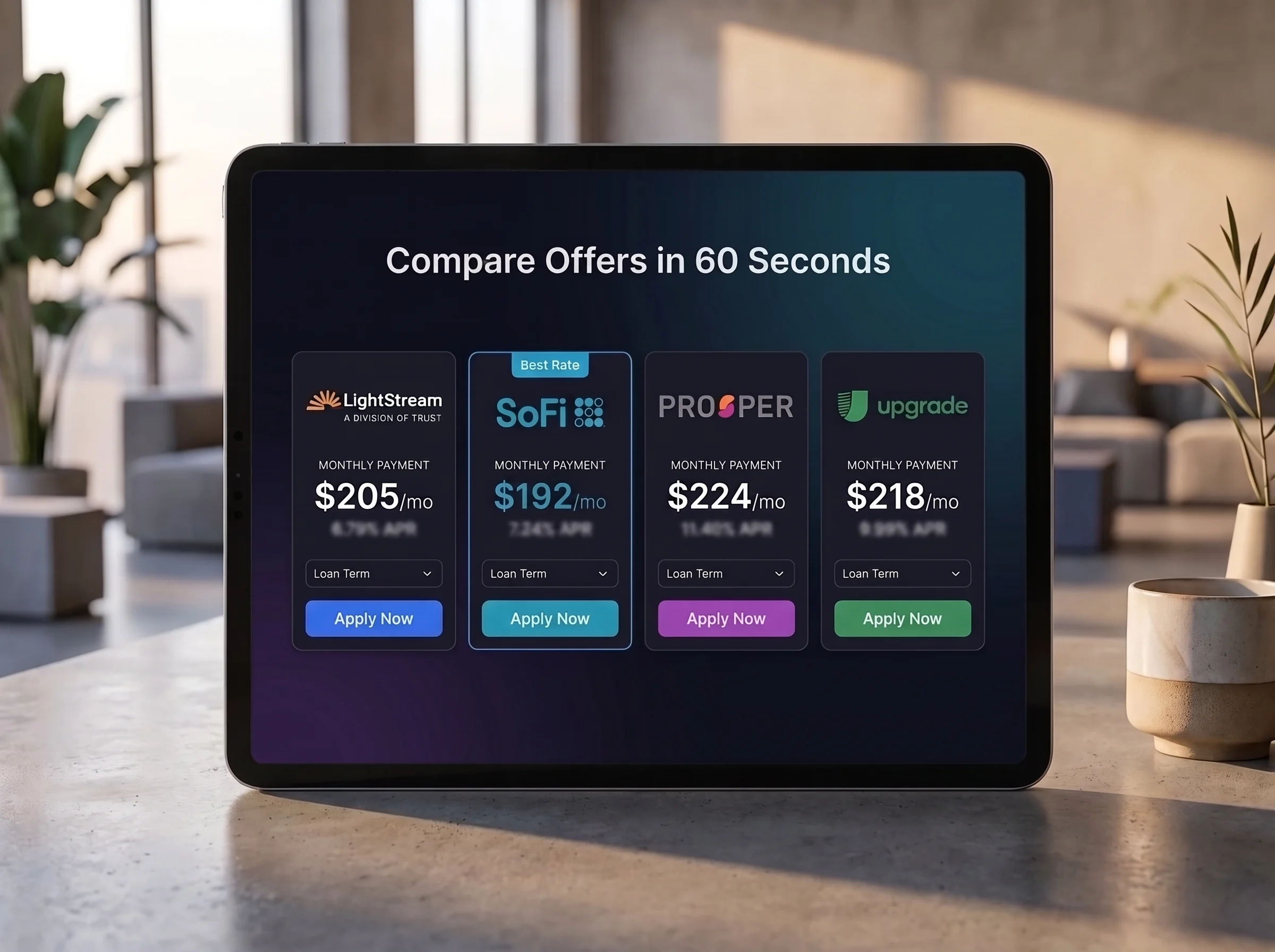
Participating Lender Network

Best Egg Home Improvement Financing
Prosper Home Improvement Financing
LightStream Home Improvement Financing
Upgrade Home Improvement Financing
Upstart Home Improvement Financing
Plumbing Financing Options

Swimming Pool Loan Options

Advertising Disclosure

Swimming Pool Financing and Pool Loan Options Explained

A swimming pool can completely change how you use your backyard, but it’s also one of the largest home improvement projects many homeowners will pay for. Since few households have enough cash to cover the full cost upfront, financing is often part of the planning process from day one.

Choosing a loan involves more than comparing interest rates. You’ll want to understand what’s included in the contractor’s estimate, when payments are due, when interest begins, whether the loan requires your home as collateral, and the total cost of the project after construction is complete.

A lower monthly payment doesn’t always mean you’ll pay less overall, and the fastest approval isn’t always the right choice. Comparing your financing options before signing can help you make a more informed decision.

How Much Does a Swimming Pool Really Cost?

The pool builder’s base price is only the starting point.

According to Angi’s swimming pool statistics, an in-ground pool can cost tens of thousands of dollars, with custom concrete construction, extensive decking and complicated excavation pushing the final price substantially higher. Costs vary by pool size, material, location, soil conditions and local labor rates.

Above-ground pools generally cost less, but the total can still rise once you add a deck, electrical work, landscaping and a code-compliant barrier.

Your estimate may include the pool shell and equipment while leaving out several expenses required to finish the backyard.

Those expenses may include:

  • Excavation and disposal of excess soil
  • Rock removal or groundwater management
  • Concrete, fiberglass or vinyl construction upgrades
  • Electrical and plumbing work
  • Gas lines for a pool heater
  • An upgraded electrical panel
  • Saltwater equipment
  • Automation systems
  • Lighting
  • Decking and coping
  • Fencing and safety gates
  • Retaining walls
  • Drainage improvements
  • Permits and engineering
  • Landscaping repairs
  • Irrigation relocation
  • Screened enclosures
  • Outdoor kitchens or pergolas

Some expenses may appear in the contract as allowances rather than guaranteed prices. Others may be excluded because a separate contractor will perform the work.

This leads to one of the most important rules of pool financing: Do not base your loan amount only on the advertised pool price.

Ask for an itemized proposal showing what is included, what is excluded and which costs can change after excavation begins. Then create a budget for the entire finished project.

Avoid Underestimating Your Pool Project Budget

For illustrative purposes, suppose a builder quotes $58,000 for the pool and basic equipment. That figure may sound like the project price, but the completed backyard could require:

  • $9,000 for decking and drainage
  • $5,000 for fencing and safety equipment
  • $4,000 for landscaping repairs
  • $2,000 for permits and engineering
  • $7,000 as a construction contingency

The more realistic project budget would likely be around $85,000.

Your numbers may look different, but the budgeting method is what matters. A homeowner who borrows exactly enough to cover the original pool contract may have no affordable way to pay for unexpected soil problems, electrical upgrades or required safety improvements.

A contingency does not need to become part of the loan automatically. You could keep part of it in savings or use a financing option that allows you to draw money only when needed. The point is to identify the risk before construction starts.

Swimming Pool Financing Options

Homeowners generally choose among unsecured pool loans, home equity loans, home equity lines of credit and financing offered through the pool contractor.

Cash-out refinancing and promotional credit programs may also be available. Each option shifts the risk in a different direction.

An unsecured loan may cost more but does not place a lien on your house. Home equity financing may offer a lower rate, but your property secures the debt. Contractor financing may be convenient, but convenience does not prove that it offers the lowest rate or best terms.

Unsecured Personal Pool Loans

A pool loan is usually an unsecured personal loan marketed for swimming pool construction.

Because the lender does not use your home as collateral, approval depends heavily on your credit history, income, existing debts and requested loan amount. Many unsecured pool loans have fixed interest rates and fixed monthly payments.

Funding may also be faster than with a home equity product because an appraisal and mortgage closing may not be required.

An unsecured pool loan may be a reasonable choice when:

  • You have stable income and good credit.
  • You do not want to borrow against your home.
  • You need funding relatively quickly.
  • You prefer a fixed monthly payment.
  • The lender does not charge a prepayment penalty.
  • The payment fits your budget without depending on overtime or future refinancing.

The main disadvantage is cost. Unsecured loans may carry higher rates than home equity financing, especially for borrowers with average credit, high existing debt or a large loan request.

Some specialty lenders offer pool loans with long repayment terms. That can produce a more manageable monthly payment, but it may also keep you paying interest for 15 or 20 years.

A long term is not automatically a bad choice. It becomes risky when it is the only reason the payment appears affordable.

Home Equity Loans

A home equity loan allows you to borrow a lump sum using your home equity as collateral. If you already have a mortgage, the home equity loan generally becomes an additional mortgage payment.

Home equity loans commonly have fixed rates and fixed monthly payments. They may offer lower rates than unsecured loans because the lender has a claim against the property if you default.

That lower rate comes with a more serious consequence: failing to repay the debt can put your home at risk.

A home equity loan may work well when:

  • The pool contract has a firm price.
  • You want one lump-sum disbursement.
  • You have substantial home equity.
  • You prefer a fixed payment.
  • The interest savings justify the fees and closing process.
  • You expect to remain in the home for several years.

Before applying, ask about:

  • Appraisal fees
  • Origination charges
  • Title fees
  • Recording costs
  • Minimum loan amounts
  • Combined loan-to-value limits
  • Early-closure fees
  • Prepayment penalties
  • The time required to close

Do not compare the interest rate alone. Compare the annual percentage rate, closing costs, monthly payment and total repayment.

Home Equity Lines of Credit

A home equity line of credit, or HELOC, works more like a reusable credit line secured by your home.

A home equity loan provides a specific amount to the borrower, while a HELOC lets the borrower draw against an approved credit limit.

This structure can fit pool construction because builders often request progress payments at different stages. Instead of borrowing the entire amount on the first day, you may be able to draw money as excavation, steel installation, plumbing, concrete and decking are completed.

That may reduce the amount of interest charged during construction.

The trade-off is that many HELOCs have variable rates. Your payment could increase even if you do not borrow another dollar.

Before selecting a HELOC, ask:

  • Is the starting rate promotional?
  • When does the promotional period end?
  • Which financial index controls future rate changes?
  • How often can the rate change?
  • Is there a maximum rate?
  • Are payments interest-only during the draw period?
  • When does principal repayment begin?
  • Is there an annual fee?
  • Is there a fee for closing the account early?
  • Is interest charged only on the amount drawn?

A HELOC may be useful when project costs are uncertain or payments will be spread across several months. It may be less suitable for homeowners who need complete payment certainty.

Contractor and Pool Builder Financing

Many pool contractors offer financing during the in-home consultation or design process.

The application may be completed online, and the loan program may already be structured around the builder’s payment schedule. That convenience can make contractor financing attractive, especially when a homeowner wants to move forward quickly.

But it should still be compared with independent offers.

The Federal Trade Commission’s home improvement guidance advises consumers not to accept contractor financing without shopping around and comparing the loan terms. The FTC also recommends understanding the full agreement and confirming that the payment is affordable.

Builder-arranged financing may involve:

  • An unsecured installment loan
  • A third-party home improvement loan
  • A promotional interest program
  • A deferred-interest plan
  • A lender that pays the contractor in construction draws
  • A secured loan tied to the property
  • A loan containing borrower or contractor fees

Ask whether the contractor pays a dealer fee to offer the program. A loan can appear to have an attractive rate while the contractor absorbs a financing charge that may be reflected in the project price.

Request two written figures when possible:

  • The total price using the contractor’s financing
  • The total price when paying through your own lender or another source

The prices may be identical. If they are not, you need to know before comparing loans.

Cash-Out Refinancing

A cash-out refinance replaces your existing mortgage with a larger one and gives you the difference in cash.

This option may provide a fixed rate and a long repayment period. It also spreads the pool cost across the new mortgage.

The problem is that you are not refinancing only the pool. You are replacing the interest rate and terms on your entire mortgage balance.

Suppose you have a $250,000 mortgage with a low fixed rate and want $75,000 for a pool. A cash-out refinance could move the full $325,000 balance to a higher current rate. The added interest on the original mortgage debt may outweigh any benefit from financing the pool over a longer term.

Cash-out refinancing may also involve:

  • Appraisal costs
  • Origination fees
  • Title charges
  • Recording fees
  • Mortgage insurance
  • A new amortization schedule
  • A longer debt payoff date

Be sure to compare the total cost of the new mortgage with the cost of leaving your first mortgage alone and using a separate loan.

Why the Lowest Monthly Payment May Cost More

A long repayment term can make an expensive pool appear affordable.

For example purposes, suppose you borrow $65,000.

  • At 8% APR over 15 years, the payment would be approximately $621 per month. If the loan remained outstanding for the full term, you would pay approximately $46,800 in interest.
  • At 12% APR over seven years, the payment would be approximately $1,147 per month. The total interest would be approximately $31,400.

The 15-year loan offers the lower rate and lower payment. It still costs roughly $15,400 more in total interest because the debt remains outstanding much longer.

That does not mean everyone should choose the shortest term available. A payment that is too high can create its own financial problems.

Instead, compare these points for every offer:

  • Monthly payment
  • Annual percentage rate
  • Loan term
  • Total of all payments
  • Total estimated interest
  • Origination fees
  • Closing costs
  • Variable-rate provisions
  • Prepayment penalties
  • Collateral requirements
  • How quickly the principal balance declines

A useful test is to ask whether you would still choose the pool after seeing the total of all payments rather than only the monthly amount.

How Lenders Decide Whether to Approve a Pool Loan

Your credit score matters, but it is only one part of the application.

Lenders may also review:

  • Gross monthly income
  • Employment history
  • Debt-to-income ratio
  • Mortgage or rent payment
  • Credit card balances
  • Credit utilization
  • Recent late payments
  • Collections or bankruptcies
  • Requested loan amount
  • Requested repayment term
  • Joint applicant information
  • Available home equity for secured financing

A homeowner with excellent credit can still be declined for a large loan if existing mortgage, auto, student loan and credit card payments already consume too much income.

The requested loan size also matters. Qualifying for a $25,000 personal loan does not mean the same lender will approve $100,000 for a custom pool.

Apply early enough for the financing result to influence the design. One of the most common mistakes is creating a project at the top of the budget before checking realistic loan terms.

By that point, homeowners may feel emotionally committed to a specific design. That makes it harder to reduce the scope when the approved payment is higher than expected.

Soft Credit Checks and Formal Applications

Many lending platforms can show estimated offers after a soft credit inquiry. A soft inquiry generally does not affect your credit score.

A lender may conduct a hard credit inquiry when you select an offer and complete the formal application. The lender may also verify employment, income, identity and bank information before making a final decision.

Prequalification is not the same as approval.

Your estimated terms may change if:

  • The income information cannot be verified.
  • Your credit changes before closing.
  • The requested amount changes.
  • The lender finds debts not included in the initial application.
  • A co-borrower does not qualify.
  • Required documents are not submitted.
  • The contractor or project does not meet program requirements.

Read the lender’s disclosure to determine when a hard inquiry may occur and whether checking initial offers affects your credit.

Review Your Homeowners Insurance Before Pool Construction

A pool increases both property and liability risk.

The Insurance Information Institute’s pool insurance guidance recommends that homeowners review their liability coverage before installation. It suggests considering at least $300,000 to $500,000 in liability protection, depending on the homeowner’s assets.

Your insurer may require:

  • A code-compliant fence
  • Self-closing and self-latching gates
  • Door alarms
  • Pool alarms
  • A locking ladder for an above-ground pool
  • Safety covers
  • Restrictions on slides or diving boards
  • Proof of permits
  • A final inspection

You may also need an umbrella liability policy.

Contact the insurer before signing the pool contract. You do not want to finalize a design and financing agreement only to learn that the insurer will not cover a feature or requires an expensive safety modification.

Keep the final contract, permits, photographs and receipts. The insurer may need documentation to update the property’s replacement-cost estimate.

Will a Pool Increase Your Property Taxes?

A permanently installed in-ground pool may increase your home’s assessed value, which could increase the property tax bill.

The result depends on local assessment rules, the pool’s value, available exemptions and the timing of reassessment. Some jurisdictions may discover the improvement through the permit process.

Before construction, contact your local property assessor and ask:

  • Whether a pool is considered a taxable improvement
  • How the added value is calculated
  • When the new assessment would begin
  • Whether decks, enclosures or outdoor kitchens are assessed separately
  • Whether any exemptions affect the increase

A projected tax increase should be included in your annual ownership budget.

Can Pool Loan Interest Be Tax-Deductible?

Interest on an unsecured personal loan is generally personal interest and normally is not deductible.

Interest on a home equity loan or HELOC may be deductible when the loan is secured by the home and the money is used to buy, build or substantially improve that same property, subject to federal limits and other requirements.

The IRS rules for the home mortgage interest deduction state that interest on a home equity loan or line of credit may qualify only when the borrowed money is used to buy, build or substantially improve the home securing the debt.

A permanently installed in-ground pool may qualify as a substantial improvement under some circumstances. That does not guarantee that all interest will be deductible.

The borrower must still satisfy other mortgage-interest rules, itemize deductions and remain within applicable debt limits.

Be sure to keep records of:

  • Loan documents
  • Contractor agreements
  • Invoices
  • Proof of payment
  • Bank records
  • Permit documents
  • Records showing how every loan dollar was used

Consult a tax professional before assuming that a deduction applies.

A narrower medical-expense rule may apply when a pool is installed primarily for prescribed medical care. That rule is fact-specific, and any deductible capital expense may be reduced by the increase in the home’s value. A doctor recommending swimming for general health does not automatically turn a recreational pool into a deductible medical expense.

Will a Pool Add Enough Value to Repay the Loan?

A swimming pool should usually be treated as a lifestyle purchase, not as a guaranteed investment.

Its effect on resale value depends on:

  • Climate
  • Neighborhood expectations
  • Lot size
  • Pool condition
  • Safety features
  • Design quality
  • Maintenance requirements
  • Buyer preferences

A pool may be more attractive in parts of Florida, Arizona, Texas or Southern California, where year-round use is possible and buyers may expect one. In colder regions, it may appeal to fewer buyers.

Even when a pool increases the home’s value, the increase may be far less than the installation cost.

For example, an $80,000 pool that adds $30,000 to the home’s market value has still created a substantial financial gap. That does not mean the project was a mistake if your family uses and enjoys it. It means the decision should not be justified by an uncertain promise of full resale recovery.

Ask a local appraiser or experienced real estate agent how comparable homes with pools sell in your specific neighborhood.

When Financing a Pool May Be a Bad Idea

Consider delaying the project when:

  • You do not have a separate emergency fund.
  • You are carrying high-interest credit card debt.
  • The loan requires an extremely long term to fit your budget.
  • Your income is unstable.
  • You expect to move within a few years.
  • The project would consume most of your available home equity.
  • The contractor is pressuring you to sign immediately.
  • The design and engineering work are incomplete.
  • You do not have a written estimate for fencing and landscaping.
  • You are depending on future refinancing.
  • The loan contains deferred interest you may not repay before the deadline.
  • You have not budgeted for maintenance, utilities and insurance.

Unlike an emergency roof replacement or failed heating system, a new swimming pool is usually optional. That gives you the ability to wait.

Delaying the project may give you time to pay down debt, improve your credit, save a larger down payment and reduce the amount you need to borrow.

How to Compare Swimming Pool Financing Offers

1. Define the Entire Project

Include the pool, decking, fencing, electrical work, drainage, permits, landscaping and safety equipment.

2. Obtain Several Contractor Proposals

Compare equipment specifications, warranties, allowances, exclusions and payment schedules. A lower bid may exclude work included in a higher bid.

3. Check the Contractor

Verify licensing, insurance, complaint history and references. Confirm that the license belongs to the company and individual performing the work.

4. Contact Your Insurer

Ask about liability limits, fencing requirements, policy restrictions and any expected premium increase.

5. Establish a Maximum Ownership Cost

Include the loan payment, maintenance, utilities, insurance and estimated property taxes.

6. Compare Several Financing Sources

Review unsecured loans, credit unions, home equity products, contractor programs and financing marketplaces.

7. Compare Total Repayment

Look beyond the monthly payment. Review APR, fees, repayment term, total interest and collateral requirements.

8. Match Payments to Construction

Understand when the contractor will be paid and how completed work will be verified.

9. Keep a Contingency

Do not spend every available dollar on design upgrades. Unexpected site and construction expenses are common.

10. Read the Loan and Construction Agreements Separately

The pool contract and loan agreement create different legal obligations. A dispute with the contractor does not necessarily suspend your responsibility to repay the lender.

Frequently Asked Questions About Swimming Pool Financing

What Credit Score Is Needed for Swimming Pool Financing?

There is no single minimum credit score required by every lender. Approval depends on the lender, loan amount, income, debt-to-income ratio, credit history and whether the loan is secured.

A higher score generally improves your chance of receiving a lower rate, but it does not guarantee approval. A borrower with strong credit may still be declined if existing monthly debts are too high.

Can I Get Swimming Pool Financing With Bad Credit?

Some lenders consider applicants with fair or damaged credit. The available rate, loan amount and repayment term may be less favorable.

Before accepting a high-cost loan, consider whether reducing credit card balances, adding a qualified co-borrower, increasing your cash contribution or choosing a smaller pool would produce a safer result.

Are There Pool Loans With No Credit Check?

Legitimate lenders generally evaluate creditworthiness before approving a substantial pool loan.

“No credit check” advertising may refer to an initial soft credit inquiry rather than final approval without a credit review. Ask whether checking initial offers affects your score and when a hard inquiry may occur.

How Long Can Swimming Pool Financing Last?

Pool loan terms vary by lender and financing type. Some unsecured loans last only a few years, while specialty pool programs may offer terms of 15 or 20 years.

Longer terms reduce the required payment but usually increase total interest. Compare the total of all payments before choosing a term.

Can Decking, Fencing and Landscaping Be Included?

Often, yes. Eligibility depends on the lender and how the project is structured.

Confirm whether the loan can cover work completed by separate contractors. Some programs pay only the primary pool builder, which can make it harder to finance fencing, landscaping or an outdoor kitchen through the same loan.

Is a HELOC Better Than an Unsecured Pool Loan?

A HELOC may offer a lower starting rate and allow you to borrow in stages. An unsecured loan may offer a fixed payment without placing a lien on your home.

The right option depends on your equity, credit profile, project schedule, tolerance for variable rates and expected repayment timeline.

Should I Finance Through the Pool Contractor?

Contractor financing may be convenient, but it should not be accepted without comparison.

Review independent offers and compare the APR, repayment term, fees, prepayment rules, funding process and total project price.

Can I Pay a Pool Loan Off Early?

Many lenders allow early repayment, but policies vary. Review the agreement for a prepayment penalty, early-closure fee or minimum finance charge.

A loan with no prepayment penalty can give you the flexibility to choose a manageable required payment while paying additional principal when your budget allows.

When Do Pool Loan Payments Begin?

Some loans require payments shortly after funding, even if the pool is still under construction. Other programs release funds in stages.

Ask when interest begins, when the first payment is due and whether interest is charged on the full approved amount or only the money already disbursed.

Compare Swimming Pool Financing Offers With Pasha Funding

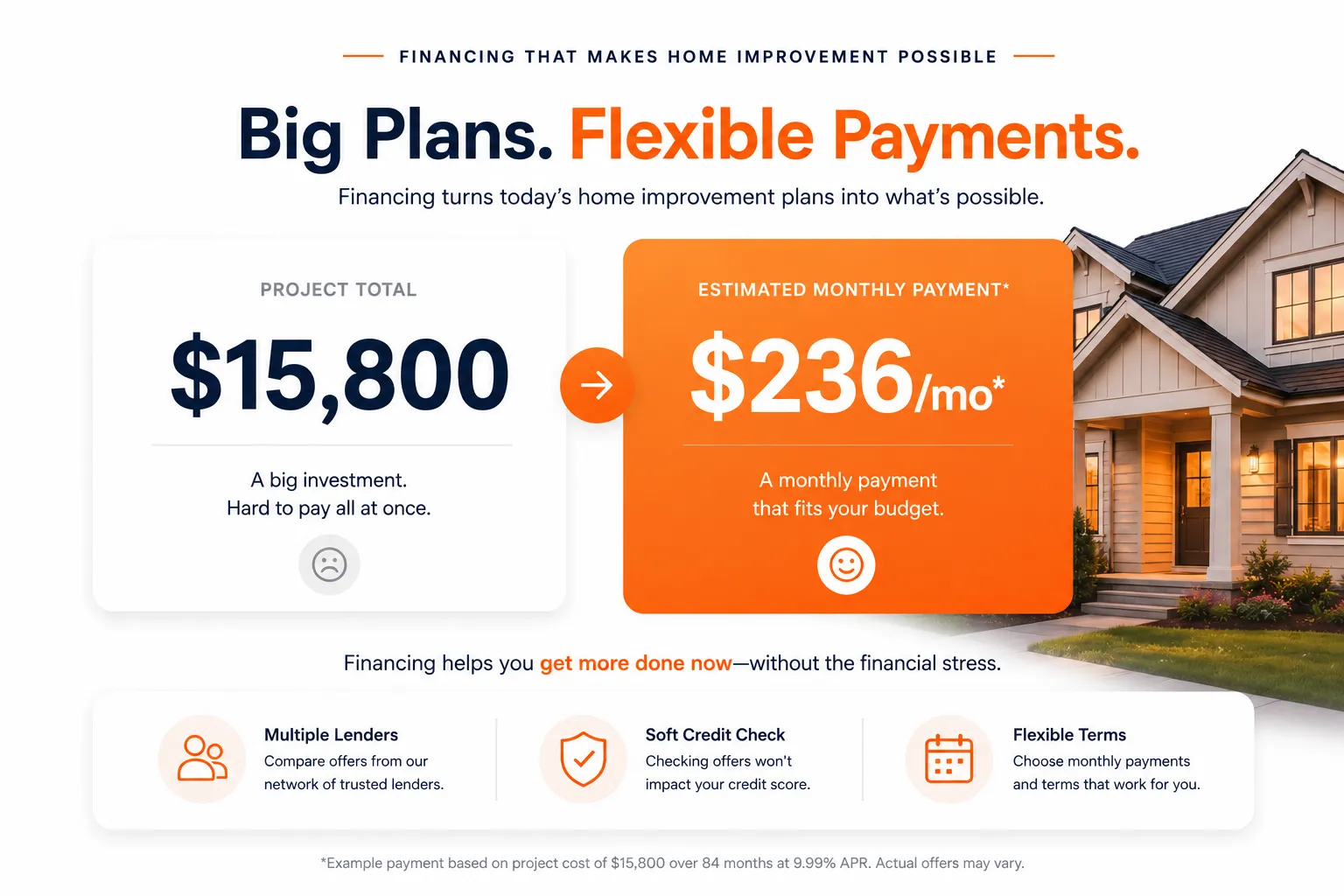
Before accepting the first financing option presented by a pool contractor, compare offers from multiple lenders. Interest rates, repayment terms, approved amounts and monthly payments can differ substantially, even for the same homeowner and project.

Pasha Funding allows qualified homeowners to complete one application and compare swimming pool financing offers from a network of lending partners. The application takes just a few minutes, and checking available offers begin with a soft credit inquiry that does not affect your credit score.

Comparing multiple lenders in one place can help you look for competitive rates, review fixed monthly payments and choose a repayment term that fits your pool project and household budget.

Ready to Finance Your Home Improvement Project?

Pavel Khaykin Avatar

Pavel Khaykin

Founder & CEO Financing Expert & Residential Real Estate Consultant

Pavel Khaykin is the Founder and CEO of Pasha Funding and an experienced real estate investor. Specializing in home improvement financing, he creates actionable, educational content designed to help both contractors scale their businesses and homeowners fund their dream projects.

Areas of Expertise: Home Improvement Financing, Contractor Financing Programs, Point-of-Sale Lending, Residential Project Funding, Contractor Business Growth
Fact Checked & Editorial Guidelines
Reviewed by: Pasha Funding Team

Share This Resource

FAQs

There is no universal minimum credit score for swimming pool financing. Many lenders look for credit scores between 630 and 660, while the most competitive rates are typically available to borrowers with excellent credit (720+). Some lenders also offer financing options for borrowers with fair credit, with minimum score requirements that may start around 550 to 620. Approval ultimately depends on the lender’s underwriting criteria, loan amount, income, debt-to-income ratio, credit history, and other financial factors.

Yes, it may be possible to qualify for swimming pool financing with bad credit. Many lenders evaluate more than just your credit score and may also consider your income, employment history, and debt-to-income ratio. Borrowers with lower credit scores may receive higher interest rates, lower loan amounts, or shorter repayment terms.

Most legitimate swimming pool financing requires some form of credit review. Rather than skipping a credit check altogether, many lenders let you prequalify with a soft credit inquiry that won’t affect your credit score. During prequalification, lenders may also consider factors such as your income, employment, and debt-to-income ratio to assess eligibility. Be cautious of companies advertising “no credit check” or “guaranteed approval,” as these offers may carry significantly higher costs or unfavorable loan terms.

Many lenders allow early repayment, but policies vary. Review the agreement for a prepayment penalty, early-closure fee or minimum finance charge.

Swimming pool financing terms typically range from 5 to 20 years, although some loan programs, including certain home equity loans and HELOCs, may offer repayment terms of up to 30 years. The right term depends on your budget, the type of financing you choose, and how quickly you want to repay the loan.

Home Improvement Financing Solutions

Apply for Swimming Pool Financing in Minutes

Financing for Home Improvement & Remodeling Projects
  • Check Your Options: Complete one simple application to see personalized loan offers from participating lenders — with no impact to your credit score to check offers.3
  • Compare & Choose: Review rates, terms, and monthly payment options, then select the financing offer that best fits your budget.

  • Complete Your Project: Once approved, use your funds for your home improvement project

  • Repay Your Lender Over Time with predictable monthly payments that fit your budget.

Home Improvement Financing Options

Interior Remodeling
  • Whole-Home Remodeling Financing

  • Bathroom Remodeling Financing

  • Home Addition Project Financing

  • Basement Finishing Financing

  • Garage Conversion Financing

  • Residential Flooring Financing

  • Kitchen Cabinet Project Financing

  • Major Appliance Financing

  • Home Insulation Financing

Repairs & Upgrades
  • Foundation Repair Financing

  • Basement Waterproofing Financing

  • Electrical System Financing

  • Tankless Water Heater Financing

  • Concrete & Masonry Financing

Outdoor Living
  • Luxury Hot Tub Financing

  • Landscaping Financing

  • Driveway Financing

  • Residential Fence Financing

  • Custom Deck Financing

  • Patio Installation Financing

  • Outdoor Kitchen Financing

  • Sunroom Addition Financing

  • Pergola & Hardscape Financing

  • Retaining Wall Financing

Specialty & ADUs
  • ADU Financing

  • Barndominium Financing

  • Guest House Building Financing

  • Tiny Home Project Financing

  • Modular Home Financing

  • Manufactured Home Financing

  • Duplex Renovation Financing

  • Post Frame Building Financing

  • Pole Barn Construction Financing

  • Shipping Container Financing

  • In-Law Suite Financing