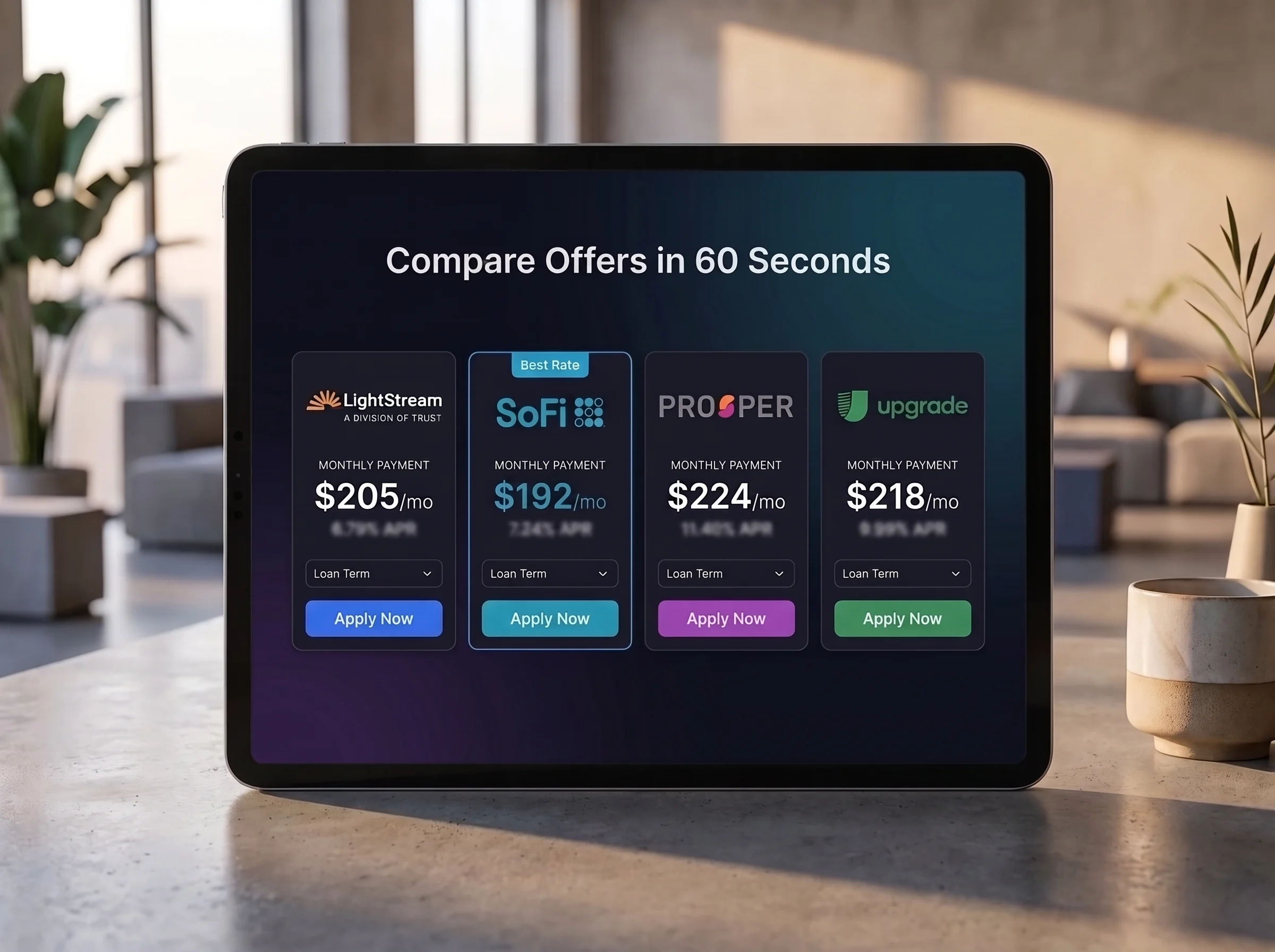
Participating Lender Network





A Homeowner’s Guide to Window Replacement Financing
Replacing windows can cost anywhere from a few hundred dollars for one to more than $20,000 for a whole house, so how you pay depends a lot on the size of the job. You can finance new windows with a personal loan, dealer or contractor financing, a home equity loan or HELOC, or a 0% credit card for smaller jobs. With installed windows running $300 to $1,500 each, the right option comes down to how many you are replacing and whether you have home equity.
Key Takeaways
- Installed windows cost $300 to $1,500 each, so a whole-home replacement often runs $7,500 to $22,500 or more.
- A personal loan fits mid-size projects well: it funds in days, needs no equity, and keeps your home free of a lien.
- A home equity loan or HELOC usually carries the lowest rate, which matters most on a whole-house replacement.
- Dealer financing often advertises 0%, but confirm whether it is true 0% or deferred interest before signing.
- The federal energy tax credit for windows ended after December 31, 2025, so state, utility, and weatherization programs are now the main savings path.
- New windows return roughly 60% to 70% of their cost at resale and can lower energy bills, which softens the real cost over time.
How Much Does Window Replacement Cost?
Windows are priced per unit, and installed cost runs $300 to $1,500 each depending on the material, style, and size. Because the total scales with the number of windows, the scope of your project matters more than any single factor.
What Window Replacement Costs by Scope
Typical installed cost range by project size.
Bar length reflects the top of each range. Figures from BuildFolio and HomeGuide.
Material is the main driver: vinyl is the most affordable, while wood, fiberglass, and specialty shapes cost more. Larger or custom sizes can add 30% to 50%, and the condition of the existing frame matters, since rot or structural repair adds labor. Ask for a written, itemized quote covering the windows and the full installation before you decide how much to finance.
How Do You Finance Window Replacement?
Because window projects range so widely in cost, several financing options genuinely compete, and the best one depends on the size of the job and your credit. Here is how the main paths compare.
Personal Loans
A personal loan is an unsecured lump sum you repay at a fixed rate. It funds in as little as one to five business days, needs no home equity, and records no lien against your property. For a mid-size project, replacing several windows rather than the whole house, it is often the most practical option: the money reaches your account quickly, you can use any installer, and the payment is fixed. Terms usually run two to seven years. Because it is unsecured, the rate is higher than a home-equity option, so on a whole-home replacement where you have equity, compare a HELOC.
Dealer and Contractor Financing
Most window companies offer financing at the point of sale, frequently with a promotional 0% period. It is convenient and tied directly to your project, but the terms come from a party that profits from the sale, and the “0%” is sometimes deferred interest. The section below covers how to tell the difference and when it is worth taking.
Home Equity Loans and HELOCs
For a whole-home replacement, a home equity loan or HELOC usually carries the lowest rate, which can save real money on a five-figure project. The trade-offs are closing costs, a longer funding timeline, and your home as collateral. Most lenders cap combined borrowing at 80% to 85% of your home’s value, counting your first mortgage, which is your CLTV, or combined loan-to-value.
0% Credit Cards
For one or two windows, a credit card with a true 0% introductory offer can be the cheapest route, since you pay no interest if you clear the balance before the promotional window closes. For a large project in the thousands, any balance left after the window moves to the standard rate, so a card fits smaller amounts you can repay quickly.
Cash
Paying cash avoids interest entirely and is the cheapest route for a project you can save toward. Many homeowners phase the work, replacing the worst windows first and paying cash, then doing the rest later, which lowers how much they need to finance at once.
What Is the Best Way to Finance Windows by Project Size?
Because window costs scale with the number of units, matching the financing to the scope is the clearest way to choose. The size of the job usually points to the right option.
For a small job of one or two windows, generally under about $5,000, a true 0% credit card is often cheapest if you can repay it in the promotional window. For a mid-size project of several windows in the $5,000 to $15,000 range, a personal loan usually fits best: it funds fast, needs no equity, and skips closing costs. For a whole-home replacement above $15,000, a home equity loan or HELOC tends to cost less if you have equity, since the lower rate outweighs the closing costs on a larger balance.
Are There Tax Credits or Rebates for New Windows?
The federal tax credit for windows is no longer available, but state, utility, and assistance programs still are. This is an area where a lot of online information is out of date, so it is worth being precise.
Under the One Big Beautiful Bill Act, the Energy Efficient Home Improvement Credit (Section 25C) ended for property placed in service after December 31, 2025. That credit previously offered up to $600 a year for qualifying windows, so many older guides still mention it, but it does not apply to windows installed in 2026. A project finished on or before December 31, 2025 can still be claimed on that year’s return.
For 2026, the savings come from other sources. Many states and utilities offer rebates for ENERGY STAR certified windows, and income-qualified homeowners may get help through the federal Weatherization Assistance Program, LIHEAP, or USDA rural repair programs, which can cover or subsidize replacement. Totaling any of these before you borrow lowers the amount you finance.
Is Dealer Financing Worth It for Windows?
Dealer financing can be a good deal, especially a genuine 0% promotion, but compare it against an outside offer before signing, because the plan presented in your living room is not always the cheapest available.
The key thing to confirm is whether a promotional plan is true 0% interest or a deferred interest plan. With true 0%, you pay no interest as long as you make the payments. With deferred interest, missing the payoff deadline by even a small balance triggers interest charged back to the original purchase date, which can erase the savings. Ask two questions before signing: is this true 0% or deferred interest, and what is the total of all payments if I keep it the full term? Then hold that against a personal loan or a home equity offer.
Can You Finance Windows With Bad Credit?
Yes, financing window replacement with less-than-perfect credit is possible, though your options narrow and the cost rises. A low score limits which lenders will approve you rather than ruling out financing entirely.
Credit unions and community banks are often the most flexible traditional lenders, and marketplace personal loans let you prequalify with a soft credit pull, so you can compare real offers without denting your score. Dealer financing may also approve lower scores, though sometimes on deferred-interest terms to watch closely. If your income qualifies, the weatherization and assistance programs mentioned above can also reduce or cover the cost, which is worth checking before taking on a higher-rate loan.
How Do You Qualify for Window Financing?
Qualifying comes down to your credit, your income relative to your debts, and a clear project quote. A little preparation improves both your odds and your rate.
- Get an itemized, written quote.
Have the installer price the windows and the full installation, including any frame repair, so you borrow the right amount once. A written scope also strengthens your application and lets you compare bids fairly.
- Check your credit and debt-to-income ratio.
Pull your credit report, dispute errors, and pay down card balances, since utilization moves your score quickly. Most lenders want total monthly debt, including the new payment, at or below 43% of gross monthly income.
- Prequalify with two or three lenders.
Use soft-pull prequalification to compare real offers without affecting your score, then hold those against any dealer promotion. Compare on total cost over the full term, and check for origination fees and prepayment penalties.
| Qualification Metric | Personal Loans (Unsecured) | Home Equity (Secured) |
|---|---|---|
| Minimum credit score | 580 to 640, fair credit accepted | 620 to 680+ |
| Home equity needed | None | 15% to 20% |
| Funding speed | 1 to 5 days | 2 to 6 weeks |
These are typical benchmarks rather than firm cutoffs, and each lender sets its own bar. An unsecured loan skips the equity and appraisal steps, so it stays open to homeowners who cannot meet a secured loan’s requirements, though it will not always be the cheapest.
The Bottom Line
There is no single best way to finance window replacement, since it depends on how many windows you are doing and your situation. A 0% credit card could be cheapest for one or two windows if you repay it in the promo window, while a personal loan could be the best fit for a mid-size project where you want to shop as a cash buyer. A home equity loan or HELOC could cost less on a whole-home replacement if you have equity to draw on. Whatever you choose, remember the federal window tax credit no longer applies in 2026, so lean on state, utility, and weatherization programs, and be careful with dealer “0%” offers that are really deferred interest.
Before you commit, get an itemized written quote and check which state, utility, or assistance programs you qualify for, then prequalify with a few lenders and compare offers on the total you will repay rather than the monthly payment.
The information provided by Pasha Funding is for educational and informational purposes only and should not be considered financial, legal, or tax advice. Every homeowner’s financial situation is different, and the financing options discussed may not be suitable for everyone. Before choosing a financing solution, carefully review the lender’s terms and consider consulting a qualified financial professional if needed.
Pasha Funding is a financing marketplace that connects homeowners with financing options offered by participating lending partners. We do not make loans, determine credit eligibility, or guarantee approval or specific loan terms. Pasha Funding is not a direct lender. We may receive compensation from participating lending partners when users submit an application or obtain a loan through our platform. This compensation may affect how and where financing options appear, but it does not influence our editorial evaluations.
Financing offers, rates, terms, and availability are determined solely by participating lenders and may change without notice. Our editorial content is created independently to help consumers better understand home improvement financing. While we strive to keep information accurate and current, financing products, lender requirements, rates, and offers may change over time. Any opinions expressed are those of the author and have not been reviewed, approved, or endorsed by our lending partners.
Explore related resources from Pasha Funding:
- Window Replacement Financing Options
- Hurricane-Impact Window Financing
- Vinyl Window Financing
- Custom Window Financing


FAQs
how it works
3 Simple steps to
finance your project.
Getting started only takes a minute. Complete one simple application to compare available financing offers from over 18+ lenders, choose the option that fits your budget, and move forward with your home improvement project.
Window Replacement Financing Calculator
1. Enter Your Desired Loan Amount
Your Estimate
Monthly Payment
-
This calculator provides estimates for illustrative purposes only and does not constitute an offer of credit or a commitment to lend. Final APRs, loan amounts, and terms depend on credit approval, income verification, and lender underwriting criteria. Minimum and maximum rates/terms vary by state.
Powered by: Pasha Funding
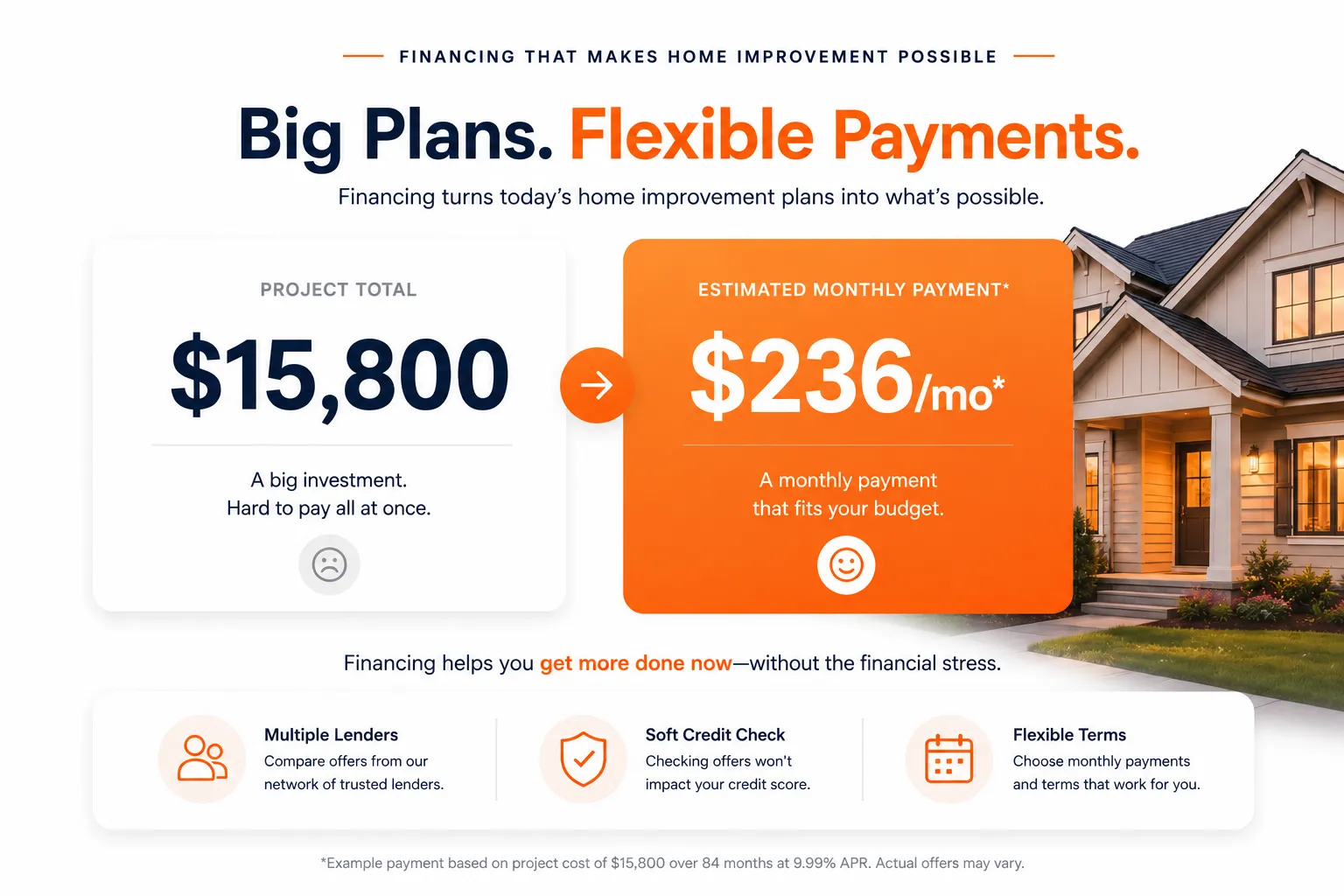
Risk-Free Prequalification
Checking offers won’t impact your credit.
It’s common for homeowners to delay applying because they’re worried about their credit score. With a soft credit check, you can review available financing options without any impact to your credit score.2