
Participating Lender Network





How to Finance a Pergola or Hardscape Installation
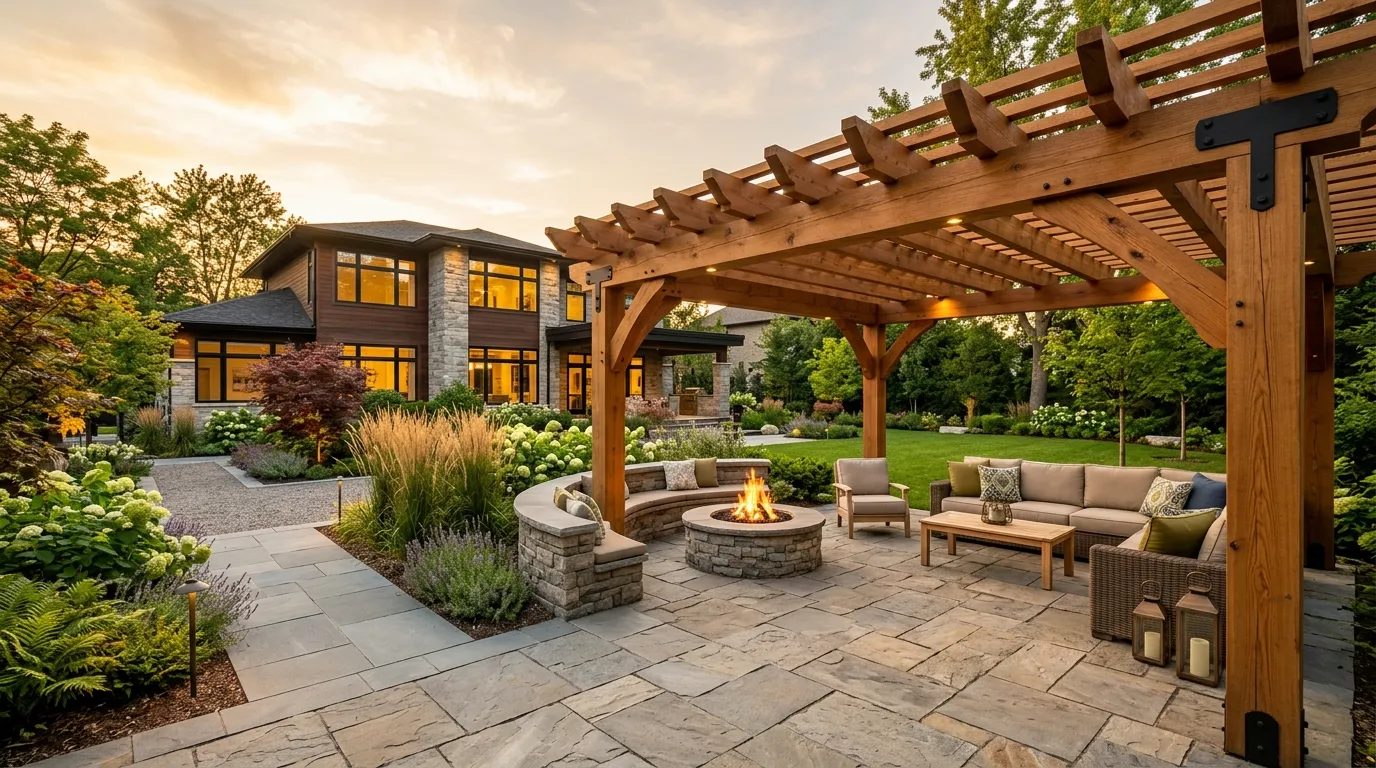
A pergola and the hardscape around it usually run from about $3,000 for a simple kit on an existing patio to $40,000 or more for a full outdoor-living project with a custom pergola, paver patio, and retaining walls. The final number depends less on the pergola itself than on everything under and around it: the patio base, footings, site work, and any walls or fire feature it ties into. Because these projects are often built as a package, how you pay tends to track the total scope. A single pergola or small patio fits a personal loan or a credit card, while a larger backyard build is where a home equity loan or HELOC starts to make sense.
Key Takeaways
- A pergola typically costs $3,000 to $6,000 for a standard 10×10, while a full hardscape project can reach $25,000 to $40,000+.
- The online pergola price is not the project price: the base, footings, and site work often cost as much as the structure.
- Outdoor-living projects are usually built as a package, so financing the whole plan and building in phases beats paying piecemeal.
- A personal loan fits a single pergola or small patio, while a large multi-element yard suits a home equity loan or HELOC.
- Retaining walls over four feet, and most permanent structures, require permits, and buried lines mean calling 811 before digging.
- Hardscape is generally a want rather than a need, so sequence it by what you will use most and keep the payment comfortable.
What Do Pergolas and Hardscape Cost?
Pergola pricing is driven mostly by material and whether it is a kit or custom-built. Most pergola materials run $10 to $50 per square foot, with aluminum and vinyl cheapest and hardwood and fiberglass at the top. Here is how the common materials compare for a standard 10×10.
What a 10×10 Pergola Costs by Material
Typical installed cost range for a standard freestanding pergola.
Bar length reflects the top of each range. Figures from HomeGuide and Angi.
A pergola rarely stands alone. It usually sits on a patio, and the surrounding hardscape carries its own costs: a paver patio runs about $18 to $45 per square foot installed, a retaining wall $60 to $120 per linear foot, and a fire pit anywhere from a few hundred dollars for a kit to several thousand for custom stone. A prefab pergola kit costs 30% to 50% less than a custom build and can go up in a weekend, while a custom cedar or attached pergola with footings and electrical prep runs higher. Prices vary by region and by how much excavation, drainage, and base work your yard needs, so treat these as starting ranges and get a quote for your specific plan.
Don’t Budget Only for the Pergola: Plan for the Full Outdoor Living Project
This is where outdoor budgets go wrong, and it is easy to avoid. The price you see on a pergola online covers the structure, not the patio base, footings, site prep, and permits that turn it into a finished installation, and those can cost as much as the pergola itself.
A kit advertised at $3,000 can become a $7,000 project once you add a concrete slab or paver base, excavation, anchoring, staining, and permit handling. The same is true across hardscape: the visible material is a fraction of the excavation, gravel, drainage, and compaction underneath. So borrow for the finished project, not the sticker. There is a second reason to think in whole projects rather than pieces. Most backyards come together as a package, a patio, a pergola over it, maybe a retaining wall or a fire pit, and financing that master plan in one loan usually costs less than taking out separate financing for each element as you go, which stacks up fees and interest and can leave you with a half-finished yard. If the full plan is more than you want to borrow at once, a cleaner approach is to design the whole thing, then build in phases, running conduit and base work for later elements during the first phase so you are not tearing up finished work later.
How Do You Finance Pergolas and Hardscape?
The right financing depends on the size of the project and whether you have equity. Here is how the main options compare.
Personal Loans
A personal loan gives you a fixed sum in a few days, with no lien on your home and the freedom to hire any landscaper. That fits a single pergola or a modest patio well, since these projects are usually too large for a card but too small to borrow against your house. Rates are higher than a home-secured loan, and terms typically run two to seven years.
Home Equity Loans and HELOCs
For a large backyard build combining a patio, pergola, and walls, borrowing against your equity usually brings the lowest rate. A HELOC also lets you draw in stages, which fits a project built in phases. The trade-offs are closing costs, a few weeks to fund, and your home as collateral, which makes more sense for a big multi-element project than a small one.
Contractor and Landscaper Financing
Many landscaping and hardscape companies offer financing at the point of sale, sometimes with a promotional zero-interest window. It is convenient and keeps the project with one company, but the terms come from a lender, and a deferred-interest offer can be costly if you miss the payoff date, so compare it against an outside loan first.
Credit Cards and Cash
A small pergola kit or a single hardscape element can go on a 0% introductory card and be cleared before interest applies. Paying cash for a project you can cover avoids financing costs, which fits a purchase that is a want rather than a necessity.
Do You Need a Permit for a Pergola or Hardscape?
Often, and it depends on the element. Permanent structures and taller retaining walls usually require a permit, and any buried utility line means calling 811 before you dig.
Pergola permit rules vary: a freestanding kit below a certain size may not need one, while an attached pergola or a larger structure typically does, since it connects to the house or requires footings. Retaining walls are the strictest piece, most jurisdictions require a permit and engineering for walls over four feet, because a failed wall is a safety and property risk. Pouring a concrete slab or setting footings generally needs a permit, while loose materials like gravel or dry-laid pavers often do not. Any digging calls for a free 811 utility locate first, to avoid hitting gas, electric, or water lines. Setback rules govern how close a structure can sit to property lines, and if you belong to an HOA, its design approval runs separately from the city’s. Confirm the full permit scope with your local building department before you finalize a budget, since fees can range from about $60 to $2,000, and fold them into the amount you finance.
Are Pergolas and Hardscape Tax Deductible or a Good Investment?
Usually not deductible in the year you pay, and the resale return is real but partial. Hardscape and a pergola are generally personal improvements rather than deductible expenses, though they can add to your home’s cost basis and may qualify home equity interest for a deduction.
Under IRS Publication 936, interest on a home equity loan or HELOC is deductible only when the funds substantially improve the home securing the loan, meaning work that adds value or adapts the home to new uses. A permanent patio or attached structure can meet that test, while routine landscaping generally does not, and personal-loan interest is never deductible. Even when the interest is not deductible, the cost of a permanent improvement can add to your home’s cost basis, which may reduce capital gains tax when you sell, so keep your receipts. Tax situations vary, so confirm with a tax professional. On resale, outdoor-living features are popular with buyers, but be skeptical of contractor claims of returns above 100%. A well-built project can recover a meaningful share of its cost and make a home easier to sell, but it rarely pays for itself, so build it for the use you will get rather than as an investment.
Does Homeowners Insurance Cover a Pergola or Hardscape?
In many cases, yes, depending on the cause of the damage. A pergola and hardscape fall under the “other structures” part of a standard HO-3 policy, which covers any cause of loss except those it excludes.
Your pergola, patio, and walls sit under Coverage B, other structures, typically insured up to about 10% of your dwelling limit. Because that coverage is open-perils, a pergola knocked down by a windstorm or a fallen tree, or hardscape damaged by a covered event, is generally covered, minus your deductible. What is excluded is gradual damage: rot, cracking, settling, and wear are considered maintenance and are not covered, so a pergola that fails from age or a patio that cracks over time is yours to repair. Since a pergola is exposed to wind and, in some regions, snow load, it is worth confirming your coverage limit once it is built, and telling your insurer, since the addition raises your home’s value. If a covered event causes the damage, document it before filing.
How Do You Qualify for Outdoor Project Financing?
Lenders look at your credit, your income against your debts, and, for a home-secured loan, your equity. A little planning first improves both your odds and your rate. Here is the order that works well:
- Price and sequence the whole plan. Get an itemized bid covering the pergola, patio base, footings, site work, and permits, not just the structure, and decide whether to build all at once or in phases, so you finance the real total.
- Check your credit and debt load. Review your credit report for errors and total your monthly debts, since most lenders want your total debt, including the new payment, at or below about 43% of your gross income.
- Match the loan to the scope, then prequalify. For a single pergola or small patio, compare personal loans; for a large multi-element yard, compare home equity options. Prequalify with a soft credit check and judge offers on total cost over the full term.
| Financing Path | Best For | Funding Speed |
|---|---|---|
| Personal loan | A pergola or single hardscape element | 1 to 5 days |
| Home equity / HELOC | Large multi-element backyard builds | 2 to 6 weeks |
| 0% credit card | Small kits or single features | Immediate |
The right financing depends on the size of your project. A pergola or patio often fits a personal loan, while a complete backyard transformation may be better suited to home equity financing.
The Bottom Line
The best financing option depends on your project’s cost, your credit, and whether you have home equity. Personal loans are a common choice for a single pergola or a modest patio because they fund quickly and don’t require equity. Home equity loans and HELOCs may offer lower rates for a large backyard build combining several elements, and the interest may be tax deductible when the work substantially improves the home. A 0% introductory credit card can work for a small kit if you repay the balance before the promotional period ends, and contractor financing is worth considering, but compare it with outside offers first.
Before you borrow, price the finished project rather than the pergola sticker, including the base, footings, and permits, and decide whether to build all at once or design now and build in phases. Whatever you choose, compare offers based on the total amount you’ll repay, not just the monthly payment.
The information provided by Pasha Funding is for educational and informational purposes only and should not be considered financial, legal, or tax advice. Every homeowner’s financial situation is different, and the financing options discussed may not be suitable for everyone. Before choosing a financing solution, carefully review the lender’s terms and consider consulting a qualified financial professional if needed.
Pasha Funding is a financing marketplace that connects homeowners with financing options offered by participating lending partners. We do not make loans, determine credit eligibility, or guarantee approval or specific loan terms. Pasha Funding is not a direct lender. We may receive compensation from participating lending partners when users submit an application or obtain a loan through our platform. This compensation may affect how and where financing options appear, but it does not influence our editorial evaluations.
Financing offers, rates, terms, and availability are determined solely by participating lenders and may change without notice. Our editorial content is created independently to help consumers better understand home improvement financing. While we strive to keep information accurate and current, financing products, lender requirements, rates, and offers may change over time. Any opinions expressed are those of the author and have not been reviewed, approved, or endorsed by our lending partners.
Explore related resources


Frequently Asked Questions
In this guide
- What Do Pergolas and Hardscape Cost?
- Don’t Budget Only for the Pergola: Plan for the Full Outdoor Living Project
- How Do You Finance Pergolas and Hardscape?
- Do You Need a Permit for a Pergola or Hardscape?
- Are Pergolas and Hardscape Tax Deductible or a Good Investment?
- Does Homeowners Insurance Cover a Pergola or Hardscape?
- How Do You Qualify for Outdoor Project Financing?
- The Bottom Line
how it works
3 Simple steps to
finance your project.
Getting started only takes a minute. Complete one simple application to compare available financing offers from over 18+ lenders, choose the option that fits your budget, and move forward with your home improvement project.
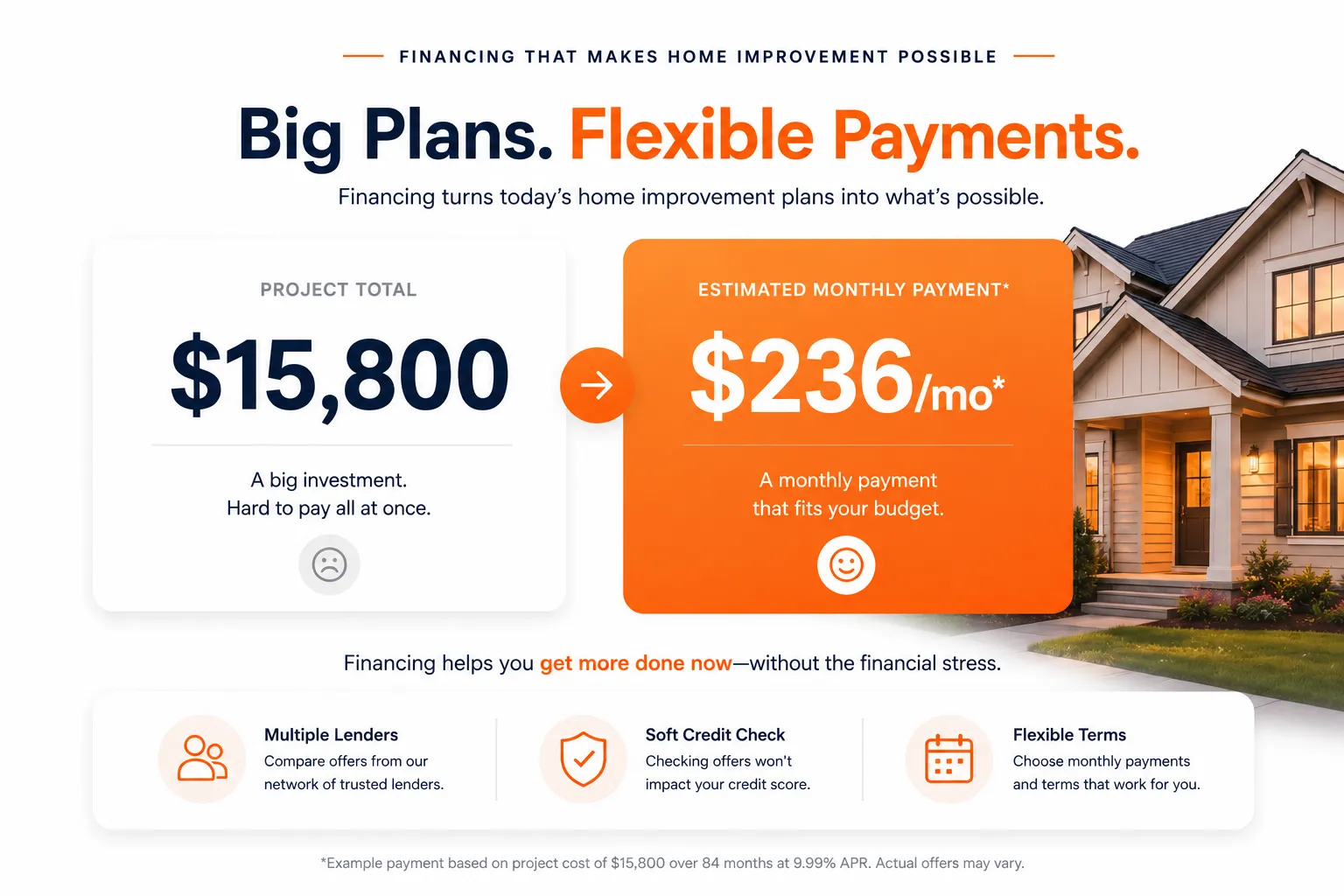
Pergola & Hardscape Financing Calculator
1. Enter Your Desired Loan Amount
Your Estimate
Monthly Payment
-
This calculator provides estimates for illustrative purposes only and does not constitute an offer of credit or a commitment to lend. Final APRs, loan amounts, and terms depend on credit approval, income verification, and lender underwriting criteria. Minimum and maximum rates/terms vary by state.
Powered by: Pasha Funding
Risk-Free Prequalification
Checking offers won’t impact your credit.
It’s common for homeowners to delay applying because they’re worried about their credit score. With a soft credit check, you can review available financing options without any impact to your credit score.2