Participating Lender Network





How to Finance a Modular Home
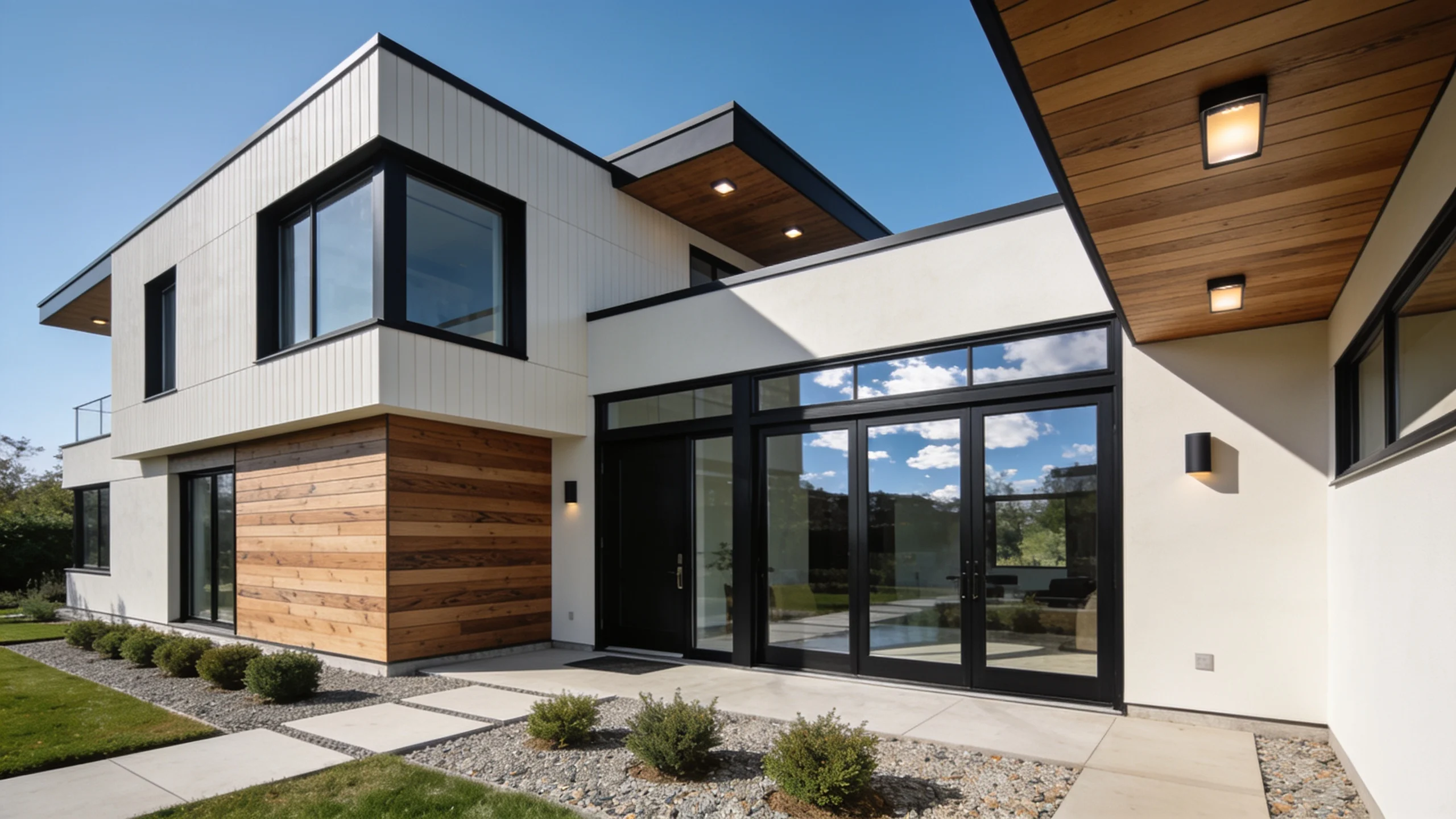
Here is the fact that saves modular home buyers the most money: a finished modular home on a permanent foundation is real property, so it finances exactly like a regular site-built house. You can buy one with a conventional mortgage, an FHA, VA, or USDA loan, or a construction-to-permanent loan if you are building, at the same rates a stick-built home would get. With modular homes averaging around $180,000 to $360,000 before land, the bigger risk is not the rate but being wrongly steered toward manufactured-home financing.
Key Takeaways
- A modular home on a permanent foundation is real property and qualifies for the same mortgages as a site-built house.
- This is different from a manufactured home, which is often personal property and can be stuck with higher-rate chattel loans.
- Modular homes average roughly $180,000 to $360,000 before land, or about $80 to $160 per square foot installed.
- If you are building rather than buying an existing one, you likely need a construction loan that converts to a mortgage.
- An FHA loan allows 3.5% down with a 580 credit score, making modular ownership accessible with modest savings.
- A finished modular home appraises on the same comparables as nearby site-built homes, so it holds value the same way.
How Much Does a Modular Home Cost?
Modular homes run about $80 to $160 per square foot, which works out to roughly $180,000 to $360,000 for a typical home, averaging near $240,000, before the cost of land. They are usually more affordable than comparable site-built homes and go up faster, often four to nine months.
What a Modular Home Costs by Size
Typical installed cost before land.
Bar length reflects the top of each range. Figures from Rocket Mortgage and Angi.
The base price is only part of the total. Land, site preparation, the foundation, delivery of the modules, utility connections, permits, and finishing work such as a garage, deck, or basement all add to the bill. When you compare a modular quote to a site-built price, make sure both include these items, since a low per-square-foot figure often excludes them.
Modular vs. Manufactured Homes: Why the Difference Matters for Financing
This is the distinction that decides how you finance the home, and getting it wrong can cost thousands. The two are often confused, but lenders treat them very differently.
A modular home is built in sections at a factory, then assembled on a permanent foundation and inspected to the same local and state building codes, typically the International Residential Code, as any site-built house. In the eyes of your lender, insurer, and county assessor, it is real property, so it qualifies for standard mortgages at standard rates. A manufactured home is built to a federal HUD code on a permanent steel chassis and may be classified as personal property, which can limit financing to a chattel loan, often at a noticeably higher rate.
That rate gap is the whole point. The difference between a mortgage rate and a chattel-loan rate can be several percentage points, which adds up to thousands of dollars a year on a six-figure balance. So if a lender or salesperson starts describing your modular home as a manufactured or mobile home, correct the record, because the classification, not the factory construction, is what drives your rate.
The Fact Most Buyers Miss
Here is the part that rarely gets said plainly: once a modular home is finished on its foundation, an appraiser evaluates it using the same market comparables as the site-built houses around it, and applies the same FHA appraisal criteria, with none of the special HUD foundation inspections or certification labels that manufactured homes require. In practice, that means a modular home is not just financed like a regular house, it holds its value like one too, without the resale discount that often follows manufactured homes. For buyers worried that “factory-built” means “worth less,” this is the reassuring reality.
How Do You Finance a Modular Home?
Because a finished modular home is real property, your options are the same mortgages available for any house. The best fit depends on your credit, down payment, and whether you are buying an existing home or building one.
Conventional Loans
A conventional mortgage is the most common choice for a modular home. It typically wants a credit score around 620 or higher and a down payment from 3% to 20%, with the best rates going to stronger credit and larger down payments. For an existing modular home already on its foundation, the process is identical to buying any resale house.
FHA Loans
An FHA loan is the accessible path: it allows 3.5% down with a credit score of 580, or 10% down for scores between 500 and 579. The home must be on a permanent foundation, be your primary residence, and sit on land you own. FHA charges mortgage insurance, which adds to the monthly payment, but the low down payment opens the door for buyers with modest savings.
VA Loans
For eligible veterans and service members, a VA loan can finance a modular home with no down payment and no mortgage insurance, provided the home is on a permanent foundation and meets the program’s standards. It is often the lowest-cost option for those who qualify.
USDA Loans
In eligible rural areas, a USDA loan offers no-down-payment financing for low- and moderate-income buyers, and can cover both the home and the land. The property must be in a qualifying area and meet the program’s requirements.
Construction-to-Permanent Loans
If you are having the modular home built rather than buying an existing one, a construction-to-permanent loan funds the build in stages, then converts to a standard mortgage when the home is complete. This is covered in more detail below.
Personal Loans
A personal loan is not a primary way to buy a modular home, since the amounts usually exceed unsecured limits and a mortgage is far cheaper. It can occasionally help at the edges, for a very small unit that cannot get a mortgage, or to cover a gap such as site prep, but for the home itself, a mortgage is the right tool.
Do You Need a Construction Loan for a Modular Home?
It depends on whether you are buying or building, and this trips up more buyers than any other part of the process. If you are purchasing an existing modular home already on its foundation, you do not need a construction loan; it is a standard mortgage. If you are having one built, you usually do.
A construction-to-permanent loan pays the manufacturer and contractors in phases during the build, then converts to a regular mortgage once the home is finished and inspected. These loans often require a larger down payment, commonly 20% to 25%, and more documentation than a standard purchase mortgage. One practical wrinkle worth knowing: not every lender handles the construction phase. Some large mortgage lenders will only finance a modular home once it is complete and on its foundation, so if you are building, confirm early that your lender does construction-to-permanent loans, or line up a lender who does.
Can You Finance a Modular Home With Bad Credit?
Yes, financing a modular home with less-than-perfect credit is possible, and because it is treated as a standard home purchase, the same credit-friendly programs apply. A low score narrows your options and raises your rate rather than ruling out ownership.
The FHA program is the most common route for weaker credit, allowing a 580 score with 3.5% down, or a score as low as 500 with 10% down, though individual lenders often set their own floor higher, around 620 to 640. Credit unions and community banks can be more flexible than large lenders, and if one lender declines you, another with different standards may not, so it is worth applying in more than one place. Improving your score and saving a larger down payment before you apply will widen your options and lower your rate.
How Do You Qualify for Modular Home Financing?
Qualifying works like any mortgage: lenders weigh your credit, your income against your debts, your down payment, and the property itself. A few steps improve your odds and your rate.
- Confirm the home is classified as real property.
Make sure the modular home will be, or already is, on a permanent foundation with land you own, so it qualifies for a standard mortgage rather than higher-rate personal-property financing. This single step protects your rate.
- Check your credit and debt-to-income ratio.
Pull your credit report, dispute errors, and pay down card balances, since utilization moves your score quickly. Most lenders want total monthly debt, including the new payment, at or below 43% of gross monthly income.
- Get preapproved with more than one lender.
Compare mortgage offers, and if you are building, confirm each lender handles construction-to-permanent loans. Compare on total cost, including rate, mortgage insurance, and closing costs, not just the monthly payment.
| Qualification Metric | Conventional Loan | FHA Loan |
|---|---|---|
| Minimum credit score | 620+ | 580 (or 500 with 10% down) |
| Down payment | 3% to 20% | 3.5% to 10% |
| Mortgage insurance | If under 20% down | Required |
These are typical benchmarks rather than firm cutoffs, and each lender sets its own bar. The key point is that these are ordinary mortgage requirements, the same ones a site-built home would face, which is exactly the advantage of a modular home’s real-property status.
The Bottom Line
There is no single best way to finance a modular home, since it depends on your credit, your down payment, and whether you are buying or building. A conventional loan could be the natural fit if you have solid credit, while an FHA loan could open the door with 3.5% down and a 580 score. A VA or USDA loan could beat both with no down payment for those who qualify, and a construction-to-permanent loan is the route if you are building from scratch. The most important thing is to make sure the home is treated as the real property it is, so you get a mortgage rate rather than a personal-property rate.
Before you commit, confirm the home will be on a permanent foundation and classified as real estate, get an itemized quote that includes land and site costs, then get preapproved with a couple of lenders and compare on total cost rather than the monthly payment.
The information provided by Pasha Funding is for educational and informational purposes only and should not be considered financial, legal, or tax advice. Every homeowner’s financial situation is different, and the financing options discussed may not be suitable for everyone. Before choosing a financing solution, carefully review the lender’s terms and consider consulting a qualified financial professional if needed.
Pasha Funding is a financing marketplace that connects homeowners with financing options offered by participating lending partners. We do not make loans, determine credit eligibility, or guarantee approval or specific loan terms. Pasha Funding is not a direct lender. We may receive compensation from participating lending partners when users submit an application or obtain a loan through our platform. This compensation may affect how and where financing options appear, but it does not influence our editorial evaluations.
Financing offers, rates, terms, and availability are determined solely by participating lenders and may change without notice. Our editorial content is created independently to help consumers better understand home improvement financing. While we strive to keep information accurate and current, financing products, lender requirements, rates, and offers may change over time. Any opinions expressed are those of the author and have not been reviewed, approved, or endorsed by our lending partners.


Frequently Asked Questions
In this guide
how it works
3 Simple steps to
finance your project.
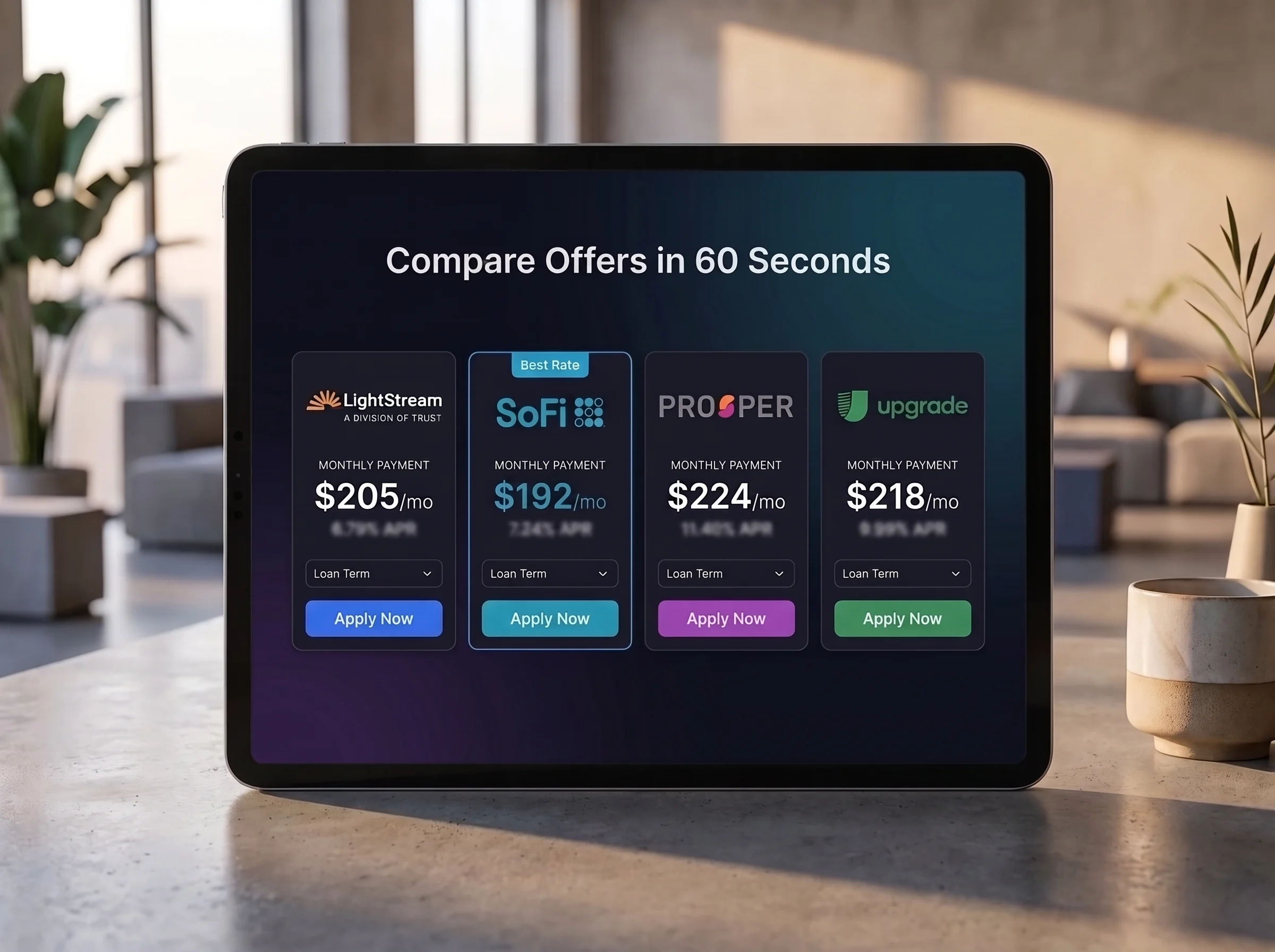
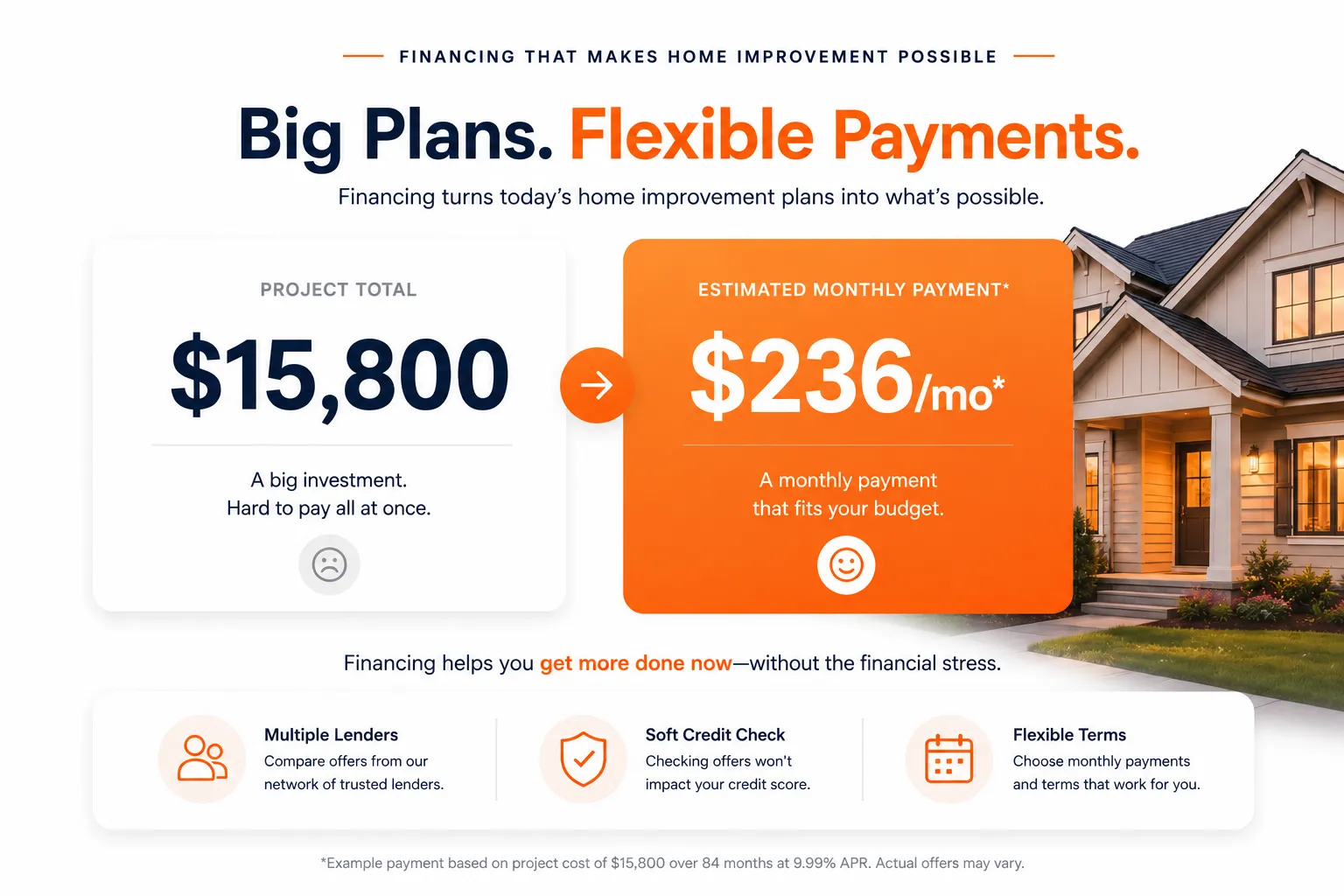
Getting started only takes a minute. Complete one simple application to compare available financing offers from over 18+ lenders, choose the option that fits your budget, and move forward with your home improvement project.
Modular Home Financing Calculator
1. Enter Your Desired Loan Amount
Your Estimate
Monthly Payment
-
This calculator provides estimates for illustrative purposes only and does not constitute an offer of credit or a commitment to lend. Final APRs, loan amounts, and terms depend on credit approval, income verification, and lender underwriting criteria. Minimum and maximum rates/terms vary by state.
Powered by: Pasha Funding
Risk-Free Prequalification
Checking offers won’t impact your credit.
It’s common for homeowners to delay applying because they’re worried about their credit score. With a soft credit check, you can review available financing options without any impact to your credit score.2