Participating Lender Network






How to Finance Appliances With Any Credit
When an appliance breaks or a kitchen needs updating, the cost often lands with little warning, so many people spread it over time. You can finance appliances with store financing or a 0% credit card, a buy-now-pay-later plan, a personal loan, or a lease-to-own agreement. With most single appliances running $500 to $3,000, the right choice depends heavily on your credit, since the easiest-to-qualify-for options are also usually the most expensive.
Key Takeaways
- A single appliance usually costs $500 to $3,000, and a full kitchen suite can run $3,000 to $8,000 or more.
- The cheapest options, a 0% store card or personal loan, generally require good credit.
- Lease-to-own and rent-to-own approve almost anyone but can cost two to three times the appliance’s cash price.
- “No credit check” and “no credit needed” are not the same thing, and true “guaranteed approval” essentially does not exist.
- Buy-now-pay-later plans sit in the middle: easier to qualify for than a loan, cheaper than lease-to-own.
- If the purchase can wait, shopping a holiday sale lowers both the price and whatever you finance.
How Much Do New Appliances Cost?
Most individual appliances fall between $500 and $3,000, though high-end models run higher. Because the amounts are smaller than most home projects, the financing question is less about the size of the loan and more about which options your credit qualifies you for.
What Appliances Cost
Typical price range by appliance.
Bar length reflects the top of each range. Figures from HomeGuide and Fixr.
Delivery, haul-away of the old unit, and installation (especially for a dishwasher or a gas range) can add a little to the total, so ask whether those are included in the price you are financing.
How Can You Finance Appliances?
Appliance financing options range from nearly free to very expensive, and the difference usually comes down to your credit. Here they are, roughly from lowest cost to highest.
Store Financing and 0% Cards
Retailers like Home Depot, Lowe’s, and Best Buy offer store cards and promotional financing, often 0% for 6 to 24 months on appliance purchases. Used well, a true 0% offer is one of the cheapest ways to pay over time. Watch for deferred interest, though: if the plan is deferred interest rather than true 0%, a balance left at the end triggers interest charged back to the purchase date. Ask which type it is before you sign.
Buy Now, Pay Later (BNPL)
BNPL plans split a purchase into installments, sometimes four interest-free payments, sometimes a longer monthly plan. Many use a soft credit check, so they are easier to qualify for than a personal loan and far cheaper than lease-to-own. They work best for a single appliance you can repay on schedule.
Personal Loans
A personal loan is an unsecured lump sum you repay at a fixed rate. It funds in days, needs no collateral, and lets you buy from any store as a cash shopper. For a full kitchen suite it can be a strong, predictable option. The catch is that it generally requires fair-to-good credit, so it is not the answer for everyone, but for those who qualify it usually costs far less than lease-to-own.
Lease-to-Own and Rent-to-Own
Lease-to-own plans approve almost anyone, with little or no credit check, which is why they dominate results for appliance financing. The trade-off is cost: while these plans do not charge “interest,” their leasing fees can bring the total you pay to two to three times the appliance’s cash price. They are covered in more detail below, since they deserve a careful look.
Cash
Paying cash costs nothing extra and is the cheapest route for an appliance you can afford outright or save toward. Since prices drop sharply around major holiday sales, even waiting a few weeks for a sale can beat financing.
Can You Finance Appliances With No Credit Check?
Yes, no-credit-check appliance financing exists, but it almost always means a lease-to-own or rent-to-own agreement, which is the most expensive way to pay. Understanding the terms matters more here than with any other option.
First, watch the wording. “No credit check” and “no credit needed” are not the same thing. No credit check means your credit is genuinely not pulled. No credit needed means it may be checked, but your score is not the deciding factor. Some plans advertised one way actually work the other, so read closely and ask directly which applies.
Second, understand what you are getting. No-credit-check plans are accessible precisely because they are structured as leases rather than loans, and the leasing fees make them costly. If your credit is thin or damaged and you have no other option for an essential appliance, they can bridge a gap, but it is worth checking whether a soft-pull BNPL plan or a credit-union loan would approve you first, since either would likely cost far less.
How Does Rent-to-Own Appliance Financing Work?
With a rent-to-own or lease-to-own plan, you make weekly or monthly payments to use the appliance, and once you complete the full schedule, you own it. Approval is fast and requires little or no credit, and many plans let you return the item or buy it out early.
The reason to be careful is the total cost. These plans do not charge interest in the traditional sense, but they add leasing fees that can push the final amount to well above the retail price, sometimes two to three times what the appliance would cost in cash. An early buyout usually lowers that total, so if you do use one, paying it off as fast as possible is the single best way to limit the cost.
💡 Pro tip
Before signing a lease-to-own agreement, find the appliance’s cash price, then add up the total of all scheduled payments. Seeing the two numbers side by side shows exactly what the convenience is costing you, and often makes an early buyout or a different option look much better.
What Is the Best Way to Finance Appliances With Bad Credit?
If your credit is less than perfect, you still have options beyond the most expensive lease-to-own plans, and it is worth trying the cheaper ones first. The best approach is usually to work down the list from lowest cost to highest.
Start with a soft-pull BNPL plan, which many people with fair or limited credit can qualify for, and which often costs little or nothing if repaid on schedule. Next, check a credit union or community bank, which tend to be more flexible than big lenders and may offer a small personal loan for an appliance. A store card can work if you qualify and the promotion is true 0%. Only after those come up short is a lease-to-own plan worth considering, and even then, comparing the total cost against the cash price first is essential. Prequalifying through a marketplace with a soft credit pull lets you see real offers without further denting your score.
Is “Guaranteed Approval” Appliance Financing Real?
Not really. “Guaranteed approval” is largely a marketing phrase, and even the lease-to-own lenders that advertise easy approval state in their own terms that not everyone is approved. Treat any promise of guaranteed financing with healthy skepticism.
What is true is that some options have very high approval rates because they do not rely on your credit score, mainly lease-to-own plans. That accessibility is real, but it is not the same as a guarantee, and it comes at the high cost described above. If a lender promises approval no matter what and pressures you to sign quickly, that is a reason to slow down and compare, not to hurry.
How Do You Qualify for Appliance Financing?
What you need depends on the option. The cheapest paths ask the most of your credit; the easiest to qualify for cost the most. A little preparation helps you land the best one you can.
- Check your credit first.
Knowing your score tells you which options are realistic. Good credit opens 0% store cards and personal loans; fair or limited credit points toward BNPL; poor credit may leave lease-to-own, though it is worth confirming before assuming.
- Compare the total cost, not the weekly payment.
Small weekly or monthly figures can hide a high total, especially on lease-to-own. Multiply the payment by the number of payments and compare that to the cash price before you commit.
- Prequalify where you can.
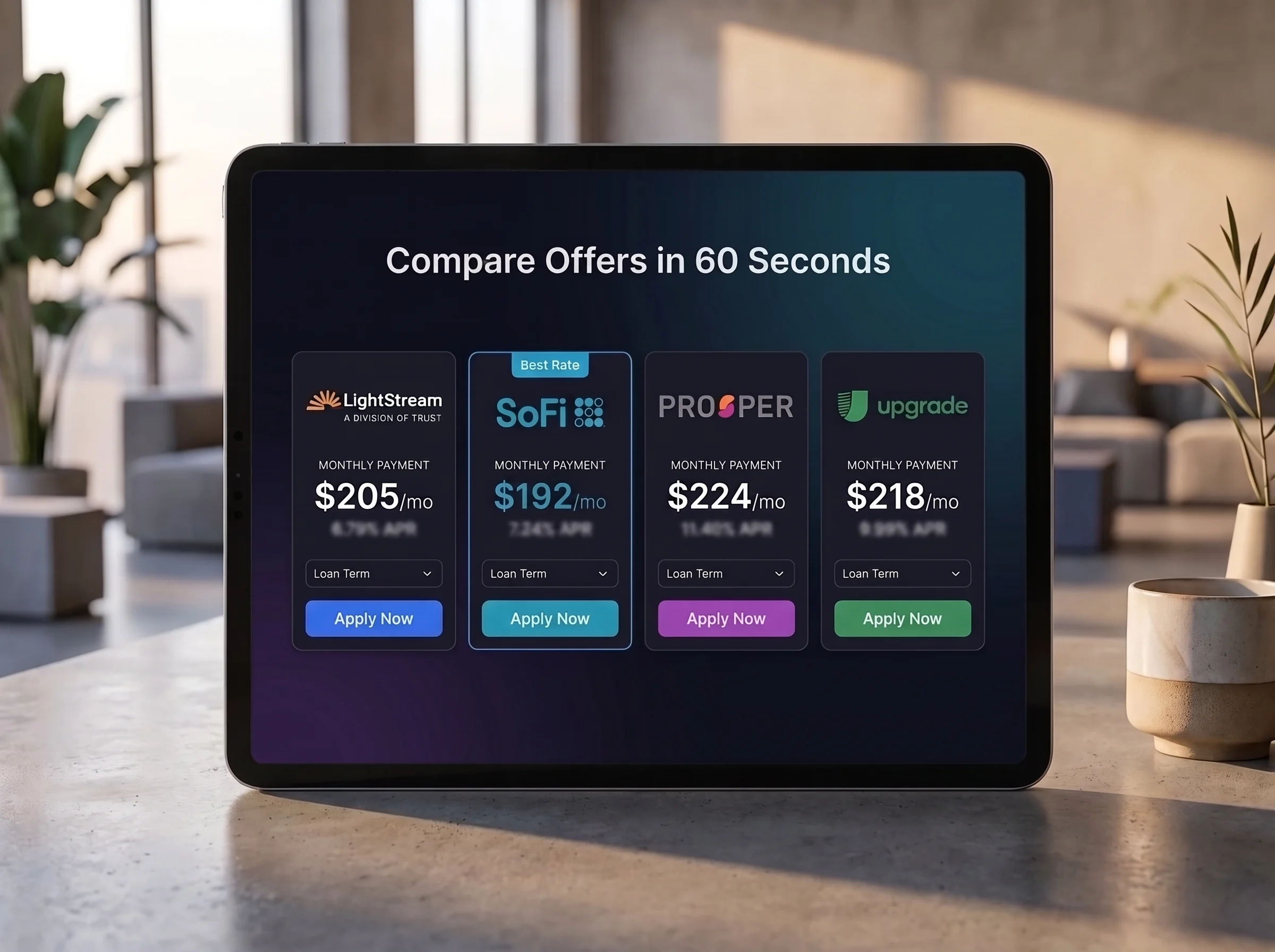
Many lenders and BNPL providers offer soft-pull prequalification that shows your real terms without affecting your score. Use it to compare offers, and check for fees on any plan.
| Option | Credit Needed | Relative Cost |
|---|---|---|
| 0% store card / personal loan | Fair to good | Lowest |
| Buy now, pay later | Limited to fair, soft check | Low to moderate |
| Lease-to-own / rent-to-own | Little or none | Highest |
These are general patterns rather than firm rules, and each provider sets its own terms. The trade-off is consistent, though: the easier an option is to qualify for, the more it usually costs, which is why it pays to try the cheaper routes first.
The Bottom Line
There is no single best way to finance appliances, since it depends mostly on your credit and how quickly you need the item. A 0% store card or a personal loan could be cheapest if your credit qualifies, while a soft-pull buy-now-pay-later plan could be the best middle ground for fair or limited credit. Lease-to-own could be a last resort if nothing else approves you, but only after you compare its total cost against the cash price.
Whatever the route, the easiest financing to get is usually the most expensive, so it pays to try the lower-cost options first.
Before you commit, find the appliance’s cash price, check whether a holiday sale is coming, and compare any plan on the total you will repay rather than the weekly or monthly payment.
The information provided by Pasha Funding is for educational and informational purposes only and should not be considered financial, legal, or tax advice. Every homeowner’s financial situation is different, and the financing options discussed may not be suitable for everyone. Before choosing a financing solution, carefully review the lender’s terms and consider consulting a qualified financial professional if needed.
Pasha Funding is a financing marketplace that connects homeowners with financing options offered by participating lending partners. We do not make loans, determine credit eligibility, or guarantee approval or specific loan terms. Pasha Funding is not a direct lender. We may receive compensation from participating lending partners when users submit an application or obtain a loan through our platform. This compensation may affect how and where financing options appear, but it does not influence our editorial evaluations.
Financing offers, rates, terms, and availability are determined solely by participating lenders and may change without notice. Our editorial content is created independently to help consumers better understand home improvement financing. While we strive to keep information accurate and current, financing products, lender requirements, rates, and offers may change over time. Any opinions expressed are those of the author and have not been reviewed, approved, or endorsed by our lending partners.


Frequently Asked Questions
In this guide
- How Much Do New Appliances Cost?
- How Can You Finance Appliances?
- Can You Finance Appliances With No Credit Check?
- How Does Rent-to-Own Appliance Financing Work?
- What Is the Best Way to Finance Appliances With Bad Credit?
- Is “Guaranteed Approval” Appliance Financing Real?
- How Do You Qualify for Appliance Financing?
- The Bottom Line
how it works
3 Simple steps to
finance your project.
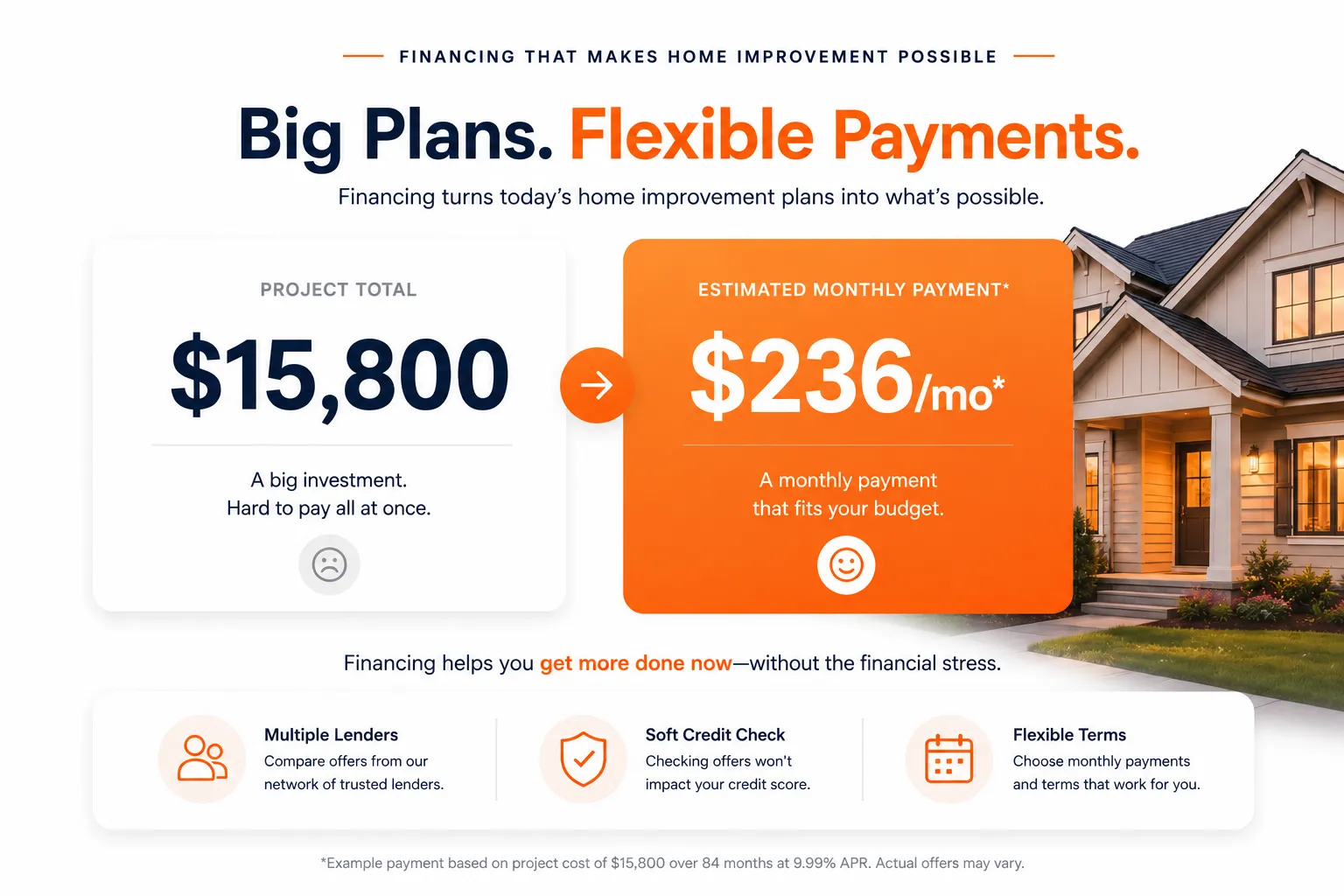
Getting started only takes a minute. Complete one simple application to compare available financing offers from over 18+ lenders, choose the option that fits your budget, and move forward with your home improvement project.
Appliance Financing Calculator
1. Enter Your Desired Loan Amount
Your Estimate
Monthly Payment
-
This calculator provides estimates for illustrative purposes only and does not constitute an offer of credit or a commitment to lend. Final APRs, loan amounts, and terms depend on credit approval, income verification, and lender underwriting criteria. Minimum and maximum rates/terms vary by state.
Powered by: Pasha Funding
Risk-Free Prequalification
Checking offers won’t impact your credit.
It’s common for homeowners to delay applying because they’re worried about their credit score. With a soft credit check, you can review available financing options without any impact to your credit score.2