

Participating Lender Network






How to Finance a Basement Remodel
A basement remodel is one of the larger home projects most people take on, and few have that much cash on hand, so financing is common. You can pay for one with a personal loan, a home equity loan or HELOC, a cash-out refinance, an FHA 203(k) or after-renovation-value loan, or a 0% credit card for smaller jobs. With most projects running $15,000 to $75,000, the right choice comes down to the size of the job and whether you have home equity.
Key Takeaways
- Finishing a basement averages around $32,000, while a full remodel of finished space runs $25,000 to $75,000 or more.
- A personal loan fits smaller projects and homeowners without equity: it funds in days, needs no appraisal, and puts no lien on your home.
- Home equity loans and HELOCs usually carry the lowest rate, which matters most on a large remodel, but they use your home as collateral.
- Budget for hidden costs: permits, egress windows, foundation repair, and moisture control can add 20% to 25% to the project.
- Remember you pay two costs, the remodel itself and the loan, so comparing offers on total cost matters as much as picking the design.
- Get an itemized contractor quote before borrowing, so you finance the real number once rather than twice.
How Much Does a Basement Remodel Cost?
Basement projects fall into two buckets, and the difference matters for budgeting. Finishing an unfinished basement, turning bare concrete and exposed beams into livable space, averages about $32,000 and ranges from $15,000 to $75,000. A remodel of an already-finished basement, with layout or structural changes, tends to start higher, around $25,000 and up.
What a Basement Project Costs by Scope
Typical all-in cost range by project type.
Bar length reflects the top of each range. Figures from LendingTree and Point.
The costs that catch people off guard are the ones behind the walls. Permits and inspections, foundation repair if there are cracks, and moisture or mold control can each add meaningfully to the bill. Adding a bedroom brings another requirement: under IRC Section R310, every basement sleeping room needs a compliant emergency escape and rescue opening, typically an egress window, which is both a safety rule and a common inspection sticking point. A common rule of thumb is to budget 20% to 25% above your expected cost for these surprises, and to have your contractor check the foundation and for moisture before finalizing the quote.
On the return side, a finished basement adds usable living space but does not fully pay for itself. Industry figures put the resale return at roughly 70% of cost on a national average, according to the remodeling impact data tracked by the National Association of Realtors, with building to code, especially a legal bedroom, tending to return more than an unpermitted finish.
How Do You Finance a Basement Remodel?
Because basement projects span a wide cost range, several financing options genuinely compete, and the best one depends on the size of the job and your equity. Here is how the main paths compare.
Personal Loans
A personal loan is an unsecured lump sum you repay at a fixed rate. It funds in as little as one to five business days, needs no home equity, and records no lien against your property. It fits smaller and mid-size basement projects well, generally those under about $25,000, and it is the natural choice for homeowners who have not built much equity yet. The trade-off is that unsecured borrowing costs more than a home-secured loan, so on a large remodel with equity available, a home equity option will usually cost less.
Home Equity Loans and HELOCs
If you have equity, a home equity loan or HELOC typically carries the lowest rate of any option, which is why it is the common choice for larger basement remodels. A home equity loan gives a fixed lump sum; a HELOC works like a credit line you draw from as the project unfolds, which suits a job with uncertain or phased costs. Both use your home as collateral, involve closing costs, and take longer to fund. Most lenders cap combined borrowing at 80% to 85% of your home’s value, counting your first mortgage, which is your CLTV, or combined loan-to-value.
Cash-Out Refinance
A cash-out refinance replaces your mortgage with a larger one and gives you the difference to fund the remodel. It can make sense if you can improve your mortgage rate at the same time, but rarely if it means giving up a low existing rate on your whole balance.
After-Renovation-Value and FHA 203(k) Loans
Some lenders offer loans based on your home’s projected value after the remodel, letting you borrow more than your current equity allows, useful for a large project when you have limited equity today. The FHA 203(k) loan similarly rolls renovation costs into a government-backed mortgage with a low down payment. Both involve more paperwork and contractor requirements, so they suit substantial remodels rather than modest finishes.
0% Credit Cards
For a small basement project or a single phase under about $10,000, a card with a true 0% introductory offer can be interest-free if you repay it before the window closes. For a full remodel in the tens of thousands, a card is rarely the cheapest route once the promotional period ends.
Cash
Paying cash avoids interest entirely and is the cheapest route for a project you can save toward. Many homeowners combine approaches, saving for part of the remodel and financing the rest, which lowers the amount they borrow.
What Is the Best Way to Finance a Basement Remodel by Project Size?
Because basement costs vary so widely, matching the financing to the scope is the clearest way to choose. The size of the project usually points to the right option.
For a smaller project under about $25,000, a basic finish or a single-room conversion, a personal loan often fits best: it funds fast, needs no equity, and skips closing costs. For a large remodel above $25,000, especially a full finish or a structural remodel, a home equity loan or HELOC usually costs less if you have the equity, and the closing costs are easier to justify on a bigger balance. If you lack equity but the project is large, an after-renovation-value or FHA 203(k) loan can bridge the gap by borrowing against the finished value.
Should You Use Home Equity or a Personal Loan for a Basement?
The honest answer comes down to a trade-off between cost and risk. A home equity loan or HELOC almost always carries a lower rate, because it is secured by your home, so on a large remodel it usually costs less over the life of the loan.
A personal loan costs more in interest, but it comes with real advantages: it funds in days rather than weeks, needs no appraisal or equity, and does not put your home on the line. That makes it the better fit for smaller projects, for homeowners without much equity, and for anyone who would rather not risk the house on a discretionary upgrade. The practical rule many people use: choose home equity when the project is large and you have equity to spare, and a personal loan when the project is smaller, speed matters, or you want to keep your home out of it.
Can You Finance a Basement Remodel With Bad Credit?
Yes, financing a basement remodel with less-than-perfect credit is possible, though your options narrow and the cost rises. A low score limits which lenders will approve you rather than ruling out financing entirely.
Credit unions and community banks are often the most flexible traditional lenders, and marketplace personal loans let you prequalify with a soft credit pull, so you can compare real offers without denting your score. A home equity product may still be within reach even with weaker credit, since the loan is secured by your home, though the rate will reflect the added risk. Because a remodel is a large, discretionary project, it is also worth weighing whether waiting to improve your credit, and your rate, might save a meaningful amount.
How Do You Qualify for Basement Remodel Financing?
Qualifying comes down to your credit, your income relative to your debts, and, for a secured loan, your home equity. A few steps before you apply improve both your odds and your rate.
- Get an itemized contractor quote first.
Have the contractor price the full scope, including permits, egress, and any foundation or moisture work, so you borrow the right amount once. Add a 20% to 25% buffer for the surprises basements are known for.
- Check your credit and debt-to-income ratio.
Pull your credit report, dispute errors, and pay down card balances, since utilization moves your score quickly. Most lenders want total monthly debt, including the new payment, at or below 43% of gross monthly income.
- Prequalify with two or three lenders.
Use soft-pull prequalification to compare real offers without affecting your score, then compare on total cost over the full term rather than the monthly figure. Check for origination fees, closing costs, and prepayment penalties.
| Qualification Metric | Personal Loans (Unsecured) | Home Equity (Secured) |
|---|---|---|
| Minimum credit score | 580 to 640, fair credit accepted | 620 to 680+ |
| Home equity needed | None | 15% to 20% |
| Funding speed | 1 to 5 days | 2 to 6 weeks |
These are typical benchmarks rather than firm cutoffs, and each lender sets its own bar. An unsecured loan skips the equity and appraisal steps, so it stays open to homeowners who cannot meet a secured loan’s requirements, though it will not always be the cheapest.
The Bottom Line
There is no single best way to finance a basement remodel, since it depends on the size of the project and your equity. A personal loan could be a good fit for a smaller finish or if you would rather not use your home as collateral, while a home equity loan or HELOC could cost less on a large remodel if you have equity to draw on. For a bigger project with limited equity, an after-renovation-value or FHA 203(k) loan could bridge the gap. Whatever you choose, remember you are paying for both the remodel and the loan, so compare offers on total cost.
Before you commit, get an itemized contractor quote that includes permits and likely surprises, add a buffer for the hidden costs basements are known for, then prequalify with a few lenders and compare on the total you will repay rather than the monthly payment.
Explore related resources
The information provided by Pasha Funding is for educational and informational purposes only and should not be considered financial, legal, or tax advice. Every homeowner’s financial situation is different, and the financing options discussed may not be suitable for everyone. Before choosing a financing solution, carefully review the lender’s terms and consider consulting a qualified financial professional if needed.
Pasha Funding is a financing marketplace that connects homeowners with financing options offered by participating lending partners. We do not make loans, determine credit eligibility, or guarantee approval or specific loan terms. Pasha Funding is not a direct lender. We may receive compensation from participating lending partners when users submit an application or obtain a loan through our platform. This compensation may affect how and where financing options appear, but it does not influence our editorial evaluations.
Financing offers, rates, terms, and availability are determined solely by participating lenders and may change without notice. Our editorial content is created independently to help consumers better understand home improvement financing. While we strive to keep information accurate and current, financing products, lender requirements, rates, and offers may change over time. Any opinions expressed are those of the author and have not been reviewed, approved, or endorsed by our lending partners.


Frequently Asked Questions
In this guide
- How Much Does a Basement Remodel Cost?
- How Do You Finance a Basement Remodel?
- What Is the Best Way to Finance a Basement Remodel by Project Size?
- Should You Use Home Equity or a Personal Loan for a Basement?
- Can You Finance a Basement Remodel With Bad Credit?
- How Do You Qualify for Basement Remodel Financing?
- The Bottom Line
how it works
3 Simple steps to
finance your project.
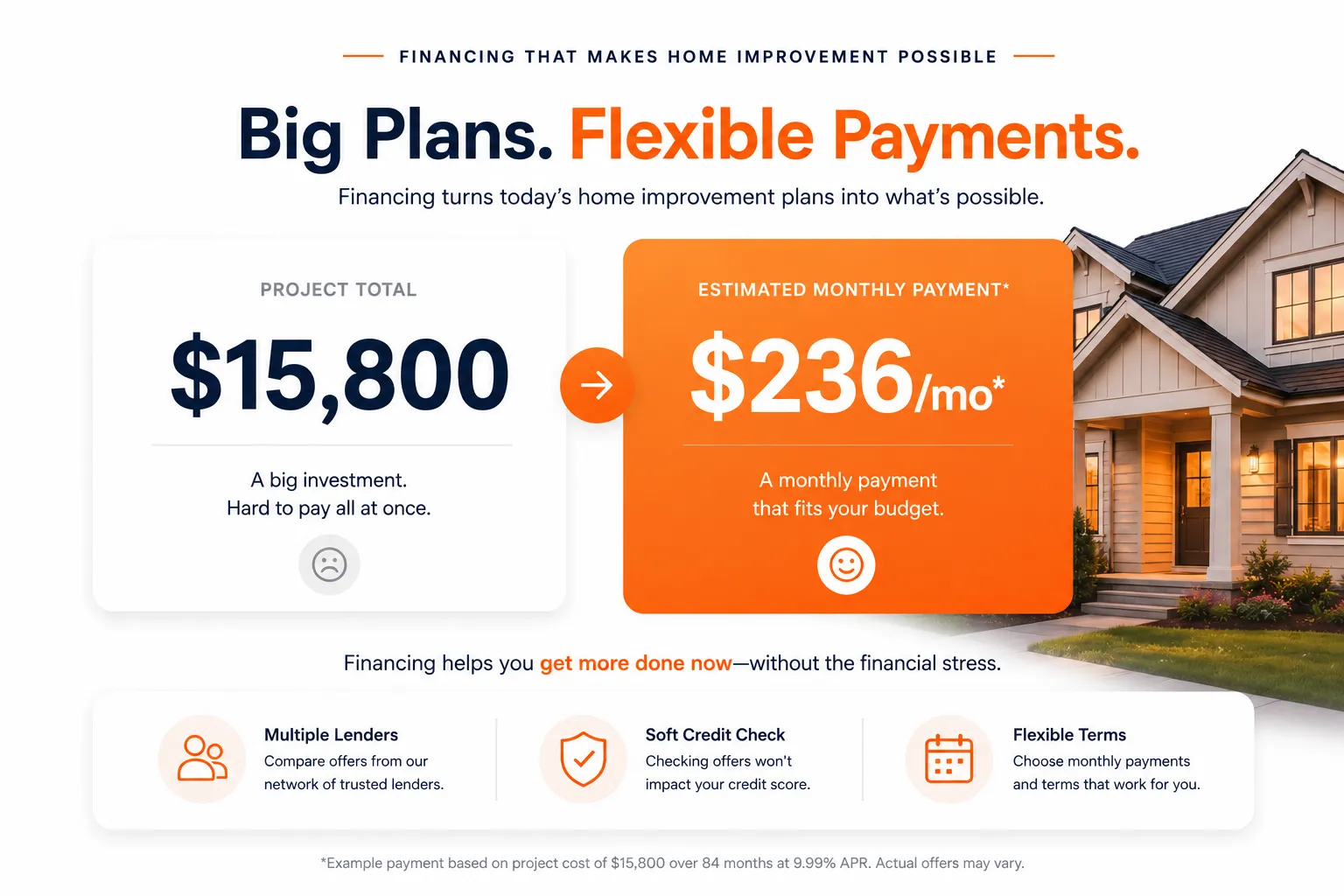
Getting started only takes a minute. Complete one simple application to compare available financing offers from over 18+ lenders, choose the option that fits your budget, and move forward with your home improvement project.
Basement Remodel Financing Calculator
1. Enter Your Desired Loan Amount
Your Estimate
Monthly Payment
-
This calculator provides estimates for illustrative purposes only and does not constitute an offer of credit or a commitment to lend. Final APRs, loan amounts, and terms depend on credit approval, income verification, and lender underwriting criteria. Minimum and maximum rates/terms vary by state.
Powered by: Pasha Funding
Risk-Free Prequalification
Checking offers won’t impact your credit.
It’s common for homeowners to delay applying because they’re worried about their credit score. With a soft credit check, you can review available financing options without any impact to your credit score.2