Participating Lender Network





A Homeowner’s Guide to Solar Panel Financing
Solar panels are a large upfront purchase, and how you pay for them affects your savings for decades, so the financing choice matters as much as the system itself. You can pay for solar with cash, a solar loan, a personal loan, a home equity loan or HELOC, or a third-party lease or power purchase agreement (PPA). With a typical home system costing $19,000 to $29,000 before incentives, the right choice depends on whether you want to own the system and how the recent federal tax-credit change affects your situation.
Key Takeaways
- A typical home solar system costs $19,000 to $29,000 before incentives, depending on size and whether you add battery storage.
- The federal residential solar tax credit ended for systems installed after December 31, 2025, which changed the math for buyers.
- Owning the system (cash or loan) still delivers the highest long-term savings and adds home value.
- Leases and PPAs require $0 down and let a company claim the remaining commercial credit, but you do not own the system or gain the full savings.
- Watch for solar loan “dealer fees” of 15% to 25% baked into the financed amount to buy down the interest rate.
- State and utility incentives still exist and can meaningfully lower the cost regardless of how you pay.
How Much Do Solar Panels Cost?
A typical 6 to 8 kilowatt home system runs $19,000 to $29,000 before any incentives, with larger systems and battery storage pushing the total higher. The size you need depends on your electricity usage, roof, and how much of your bill you want to offset.
What a Solar System Costs by Size
Typical cost before incentives.
Bar length reflects the top of each range. Figures from EnergySage and NREL.
Battery storage is the biggest add-on, often $10,000 to $20,000 on its own, and it is worth pricing separately since it is not required for a grid-tied system. Beyond hardware, your real cost depends heavily on state and utility incentives, which vary widely by location.
How Did the 2026 Tax Credit Change Affect Solar Financing?
The biggest recent shift in solar economics is the end of the federal residential tax credit. Under the One Big Beautiful Bill Act, the Residential Clean Energy Credit (Section 25D) ended for systems whose installation is completed after December 31, 2025. A homeowner who buys solar with cash or a loan in 2026 can no longer claim the 30% credit that was worth roughly $6,000 to $8,000 on a typical system.
This matters because much of the information online still assumes that credit applies. It does not for new 2026 residential purchases, so treat any savings estimate that includes a 30% federal credit for a homeowner-owned system with caution.
One important nuance remains. The separate commercial tax credit (Section 48E) still exists for business-owned systems, and because a leasing company owns a leased or PPA system, it can claim that credit and pass some of the benefit to you through lower payments. That is why leases and PPAs became relatively more competitive in 2026: they are now the main way a homeowner can indirectly benefit from a federal credit. State and utility incentives are unaffected and still apply regardless of how you pay.
How Do You Finance Solar Panels?
Solar financing splits into two camps: options where you own the system, and options where a third party owns it. Ownership drives both your savings and your responsibilities, so it is the first thing to weigh.
Cash
Paying cash delivers the highest long-term savings, since you own the system outright, keep all the electricity value, and add to your home’s value with no interest cost. The downside is the large upfront outlay, which is why most homeowners finance.
Solar Loans
A solar loan is a loan designed for panels, often offered through the installer, with $0-down options and terms up to 20 to 25 years. You own the system and get the same savings as a cash buyer, minus interest. The one thing to scrutinize is the dealer fee, covered below, which can quietly inflate what you borrow.
Personal Loans
A personal loan funds fast, needs no home equity, and lets you own the system without a lien on your house. It is a reasonable fit if you lack equity or want a simple, quick option, but its rate is usually higher than a solar loan or home equity option, so compare before assuming it is cheapest.
Home Equity Loans and HELOCs
For homeowners with equity, a home equity loan or HELOC often carries the lowest rate of any financing, which can make it the cheapest way to own a system. The trade-offs are closing costs, a longer funding timeline, and your home as collateral. Most lenders cap combined borrowing at 80% to 85% of your home’s value, which is your CLTV, or combined loan-to-value.
Solar Leases
With a lease, a company owns the panels on your roof and you pay a fixed monthly fee, usually with $0 down. It is simple and maintenance-free, and the company claims the commercial tax credit. The catch is that you do not own the system, your long-term savings are lower than owning, and a lease can complicate selling your home. Watch for an annual “escalator” that raises your payment each year.
Power Purchase Agreements (PPAs)
A PPA is similar to a lease, but instead of a fixed fee you pay per kilowatt-hour of electricity the system produces, usually at a rate below your utility’s. Like a lease, you do not own the system and savings are lower than ownership, and the same escalator and home-sale considerations apply.
Solar Loan vs. Lease vs. PPA: Which Is Best?
The honest answer comes down to whether you value maximum savings or zero upfront cost and simplicity. Owning through a loan almost always delivers greater long-term savings than a lease or PPA, because you keep the full value of the electricity the system produces and you build home equity rather than paying a third party.
A lease or PPA makes the most sense in specific cases: if you cannot qualify for a loan, if you want a truly hands-off, maintenance-included arrangement, or if the third party’s access to the commercial tax credit meaningfully lowers your payments. The trade-off is real, though. You do not own the system, your savings are smaller over 25 years, and a leased system can complicate a future home sale, since the buyer has to assume the agreement. If you do consider a lease or PPA, negotiate a low or zero annual escalator and read the buyout terms before signing.
What Are Solar Loan “Dealer Fees”?
A dealer fee is an amount, often 15% to 25% of the system price, that a solar lender bakes into your loan in exchange for a low advertised interest rate. It is one of the least understood parts of solar financing, and it can cost you thousands.
Here is how it works: a $30,000 system financed with a 20% dealer fee becomes roughly a $36,000 loan. The low or 0% rate looks attractive, but you are paying interest on the inflated balance, so the “cheap” rate is not actually cheap. The fee simply moves the cost from the interest rate into the principal. Before signing any solar loan, ask two questions: what is the total amount financed, and what is the cash price if I pay without this loan? Comparing those two numbers reveals the real cost of the financing, and sometimes a plain personal loan or home equity loan on the true cash price comes out cheaper.
Can You Finance Solar With Bad Credit?
Yes, financing solar with less-than-perfect credit is possible, though your options narrow and the cost rises. A low score limits which lenders will approve you rather than ruling out solar entirely.
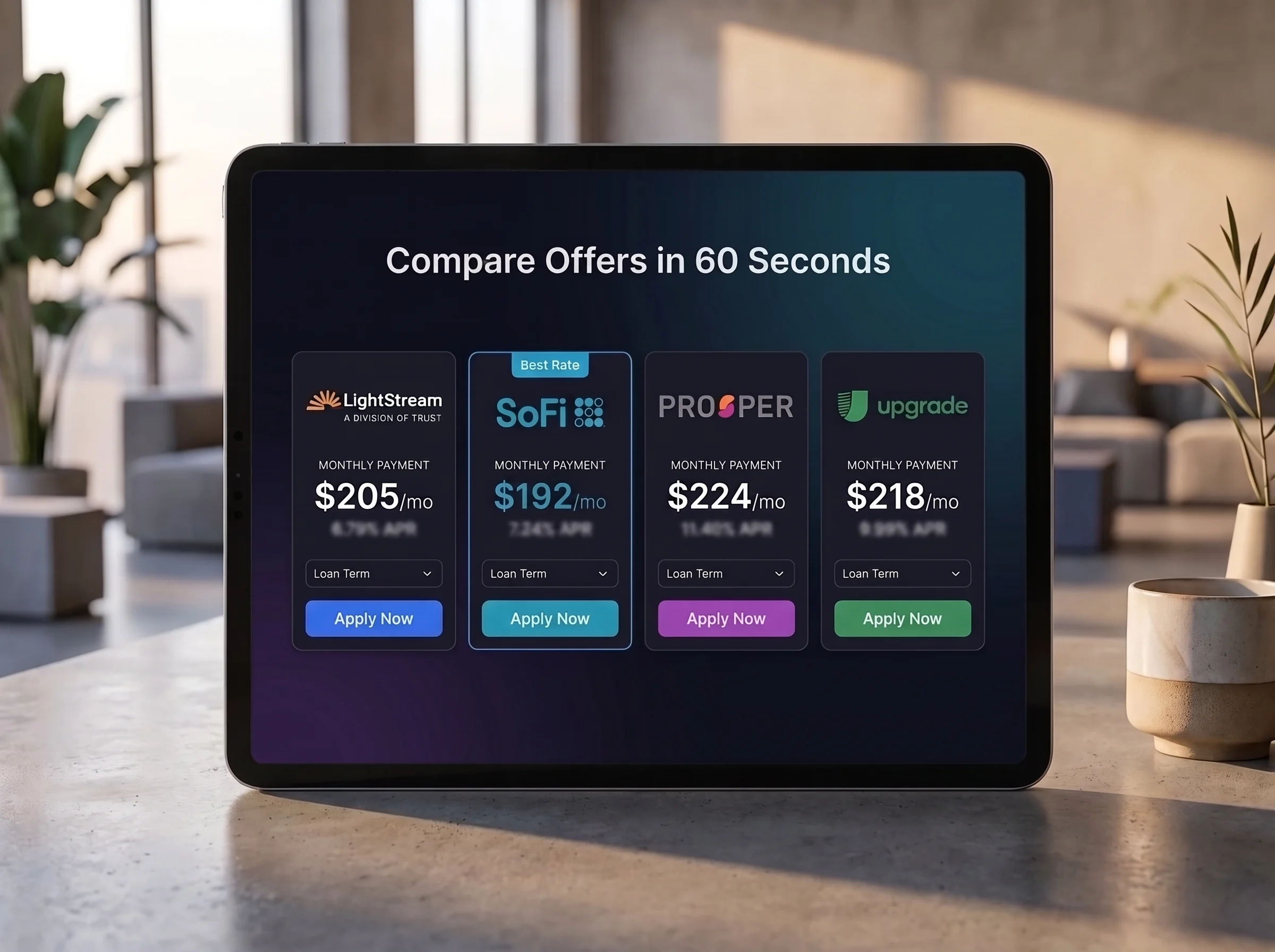
Credit unions and community banks are often the most flexible traditional lenders, and marketplace personal loans let you prequalify with a soft credit pull, so you can compare real offers without denting your score. A lease or PPA is worth knowing about here too: because the provider owns the system and qualification is based on different factors, these can be an option for homeowners who cannot qualify for a loan, though at the cost of the lower savings that come with not owning. Whatever the route, comparing the total cost against your projected energy savings is the key check.
How Do You Qualify for Solar Financing?
Qualifying for a solar loan comes down to your credit, your income relative to your debts, and, for a secured option, your home equity. A few steps improve your odds and your rate.
- Get an itemized quote and the true cash price.
Ask the installer for the cash price and the financed amount separately, so you can spot any dealer fee. Include the cost of any battery and confirm which state or utility incentives you qualify for, since those lower what you need to borrow.
- Check your credit and debt-to-income ratio.
Pull your credit report, dispute errors, and pay down card balances, since utilization moves your score quickly. Most lenders want total monthly debt, including the new payment, at or below 43% of gross monthly income.
- Prequalify with more than one lender.
Compare a solar loan against a home equity option and a personal loan using soft-pull prequalification where available. Compare on total cost over the full term, not the monthly payment or the headline rate.
| Qualification Metric | Loan (Own the System) | Lease / PPA (Third-Party Owned) |
|---|---|---|
| Typical credit score | 640 to 700+ | Often more flexible |
| Upfront cost | $0 down options available | $0 down |
| You own the system | Yes | No |
These are general patterns rather than firm rules. The core trade-off holds throughout: owning the system asks more of your credit and finances but returns more over time, while a lease or PPA is easier to enter but delivers less of the long-term savings.
The Bottom Line
There is no single best way to finance solar, since it depends on your finances and how long you plan to stay in your home. Owning the system through a home equity loan or a solar loan could deliver the most savings if you have good credit, and a home equity option often carries the lowest rate. A personal loan could be a reasonable choice if you lack equity and want to own without a lien. A lease or PPA could make sense if you cannot qualify for a loan or want a hands-off arrangement, as long as you accept the lower long-term savings. Whatever the route, remember the federal residential credit no longer applies to 2026 purchases, so build your estimate on the real numbers and lean on the state and utility incentives that remain.
Before you commit, get the true cash price alongside any financed amount to spot dealer fees, confirm your state and utility incentives, then compare offers on the total you will repay against your projected energy savings.
The information provided by Pasha Funding is for educational and informational purposes only and should not be considered financial, legal, or tax advice. Every homeowner’s financial situation is different, and the financing options discussed may not be suitable for everyone. Before choosing a financing solution, carefully review the lender’s terms and consider consulting a qualified financial professional if needed.
Pasha Funding is a financing marketplace that connects homeowners with financing options offered by participating lending partners. We do not make loans, determine credit eligibility, or guarantee approval or specific loan terms. Pasha Funding is not a direct lender. We may receive compensation from participating lending partners when users submit an application or obtain a loan through our platform. This compensation may affect how and where financing options appear, but it does not influence our editorial evaluations.
Financing offers, rates, terms, and availability are determined solely by participating lenders and may change without notice. Our editorial content is created independently to help consumers better understand home improvement financing. While we strive to keep information accurate and current, financing products, lender requirements, rates, and offers may change over time. Any opinions expressed are those of the author and have not been reviewed, approved, or endorsed by our lending partners.
Explore related resources from Pasha Funding:


Frequently Asked Questions
In this guide
Solar Panel Financing Calculator
1. Enter Your Desired Loan Amount
Your Estimate
Monthly Payment
-
This calculator provides estimates for illustrative purposes only and does not constitute an offer of credit or a commitment to lend. Final APRs, loan amounts, and terms depend on credit approval, income verification, and lender underwriting criteria. Minimum and maximum rates/terms vary by state.
Powered by: Pasha Funding
how it works
3 Simple steps to
finance your project.
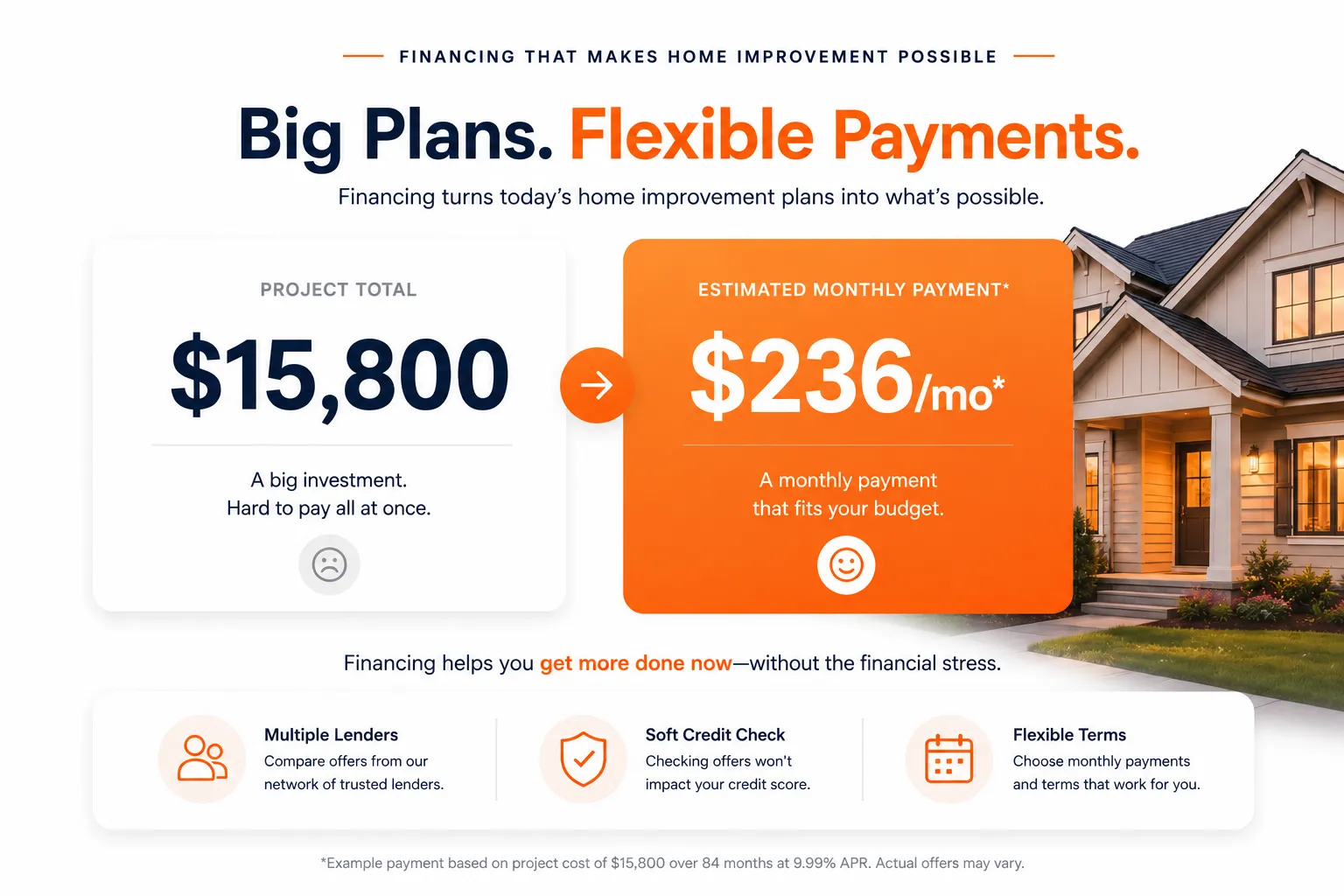
Getting started only takes a minute. Complete one simple application to compare available financing offers from over 18+ lenders, choose the option that fits your budget, and move forward with your home improvement project.
Risk-Free Prequalification
Checking offers won’t impact your credit.
It’s common for homeowners to delay applying because they’re worried about their credit score. With a soft credit check, you can review available financing options without any impact to your credit score.2