

Participating Lender Network





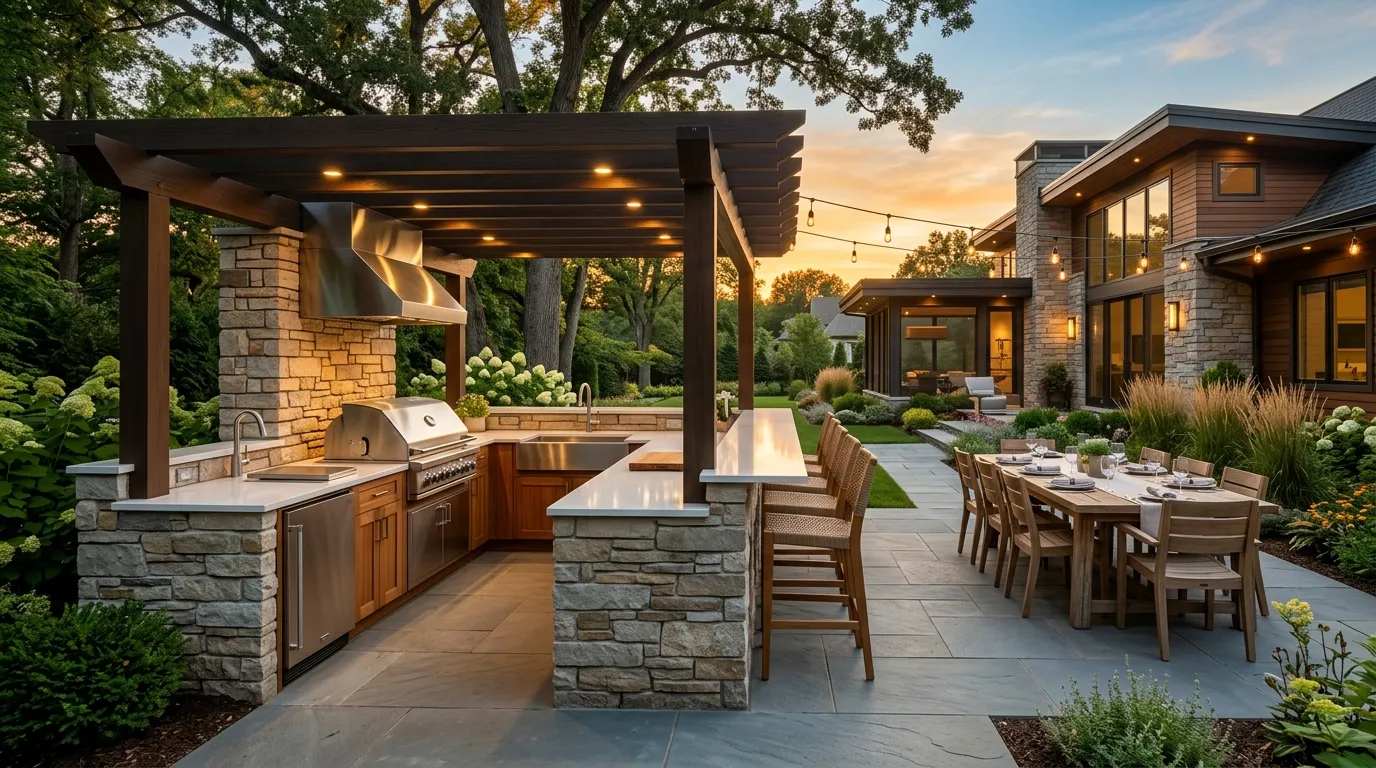
How to Finance an Outdoor Kitchen
An outdoor kitchen runs anywhere from about $5,000 for a basic grill island to $75,000 or more for a fully custom built-in, with the national average landing near $13,000. The catch is that the headline number usually covers only the island and its labor, not the appliances or the gas, electrical, and water hookups that turn a stone box into a working kitchen. Because an outdoor kitchen is an upgrade rather than a necessity, and the price range is so wide, how you pay depends mostly on the size of the build: smaller modular setups fit a personal loan or a credit card, while large custom kitchens are where a home equity loan or HELOC starts to make sense.
Key Takeaways
- Outdoor kitchens range widely: about $2,000 to $8,000 for a basic grill island and $35,000 to $75,000+ for a custom built-in.
- The advertised average often excludes appliances and utility hookups, which can add thousands to the real number.
- Siting the kitchen near the house rather than mid-yard cuts gas, electrical, and plumbing costs sharply.
- A personal loan fits most mid-range projects, while large custom builds may cost less on a home equity loan or HELOC.
- A permanent gas or electrical hookup requires permits and licensed trades, and grills need clearance from the house.
- Because this is a want rather than a need, the real question is whether the monthly payment fits your budget.
How Much Does an Outdoor Kitchen Cost?
Cost tracks closely with the build path, from a simple bolt-together island to a fully custom masonry kitchen. Most projects fall between about $2,000 and $75,000, with the average well-equipped setup around $13,000. Here is how the common tiers compare.
What an Outdoor Kitchen Costs by Build Type
Typical installed cost range by project tier.
Bar length reflects the top of each range. Figures from HomeGuide and LawnLove.
The build path also decides how much of the work you can do yourself. A modular kit that bolts together can look custom for 40% to 60% less than masonry, and doing the assembly yourself can save another 20% to 40%, though gas and electrical connections still need a licensed pro. Custom masonry costs the most and takes weeks rather than days. Prices vary by region and by how much site prep your patio needs, so treat these as starting ranges and get a quote for your specific plan.
How Do You Finance an Outdoor Kitchen?
Because the cost range is so wide, the right financing depends on the size of your build and whether you have equity. Here is how the main options compare.
Personal Loans
A personal loan gives you a fixed amount in a few days, with no lien on your home and the freedom to buy from any supplier or hire any builder. That suits a mid-range modular or prefab kitchen, which is usually too large for a card but not big enough to borrow against your home. Rates are higher than a home-secured loan, and terms generally run two to seven years.
Home Equity Loans and HELOCs
For a large custom kitchen running well into five figures, borrowing against your equity typically brings the lowest rate. A HELOC also lets you draw in stages, which fits a project you plan to build in phases. The trade-offs are closing costs, a few weeks to fund, and your home as collateral.
Contractor Financing
Many outdoor-kitchen builders offer financing at the point of sale, sometimes with a promotional zero-interest window. It is convenient, but the terms come from a lender the builder works with, and a deferred-interest offer can be costly if you miss the payoff date, so compare it against an outside loan first.
Credit Cards and Cash
A small grill island or a modular kit can go on a 0% introductory card and be paid off before interest applies. Paying cash for a project you can cover avoids financing costs altogether, which fits a purchase that is a want rather than a necessity.
Do You Need a Permit for an Outdoor Kitchen?
Usually, once utilities are involved, and the requirements are about safety. A permanent gas or electrical connection almost always requires a permit and a licensed tradesperson, and grills must sit a safe distance from the house and other combustibles.
A portable grill on an existing patio generally needs no permit, but a built-in kitchen changes that. Tapping your home’s gas supply requires a gas permit, and the work must be done by a licensed plumber or gas fitter and pressure-tested, because an improperly installed gas line is a fire and explosion risk. Adding outlets or hardwired lighting triggers an electrical permit, a sink adds plumbing, and a roof or footings can require a building permit. Under the fuel gas and residential provisions published by the International Code Council, grills and fire features must keep clearance from combustible structures, commonly at least ten feet, and covered cooking areas need ventilation. Setback rules also govern how close a permanent structure can sit to property lines. If you belong to an HOA, its design approval runs separately from the city’s. Confirm the permit scope with your local building department before you finalize a budget, since fees run from about $100 to $1,500, and skipping permits can bring stop-work orders, removal, and problems with a future insurance claim.
Does Homeowners Insurance Cover an Outdoor Kitchen?
Often, but not always to the full value, so check your limits before you rely on the coverage. A built-in outdoor kitchen is generally covered under your policy, but standard limits may not fully cover high-end appliances without an added endorsement.
An attached outdoor kitchen usually falls under your dwelling coverage, while a detached one is treated as an “other structure,” typically capped near 10% of your dwelling limit. Because the standard policy is open-perils for these, damage from a covered event like fire, theft, or a storm is generally covered, minus your deductible, while wear and neglect are not. The gap to watch is value: a custom kitchen with a premium grill, refrigerator, and stone counters can exceed standard other-structures limits, so ask your insurer whether you need to raise that limit or add a rider. Grill fires are a real risk, the Insurance Information Institute notes thousands of residential grill fires each year, mostly from gas grills, so tell your insurer once the kitchen is built and confirm it is covered before you rely on it.
How Do You Qualify for Outdoor Kitchen Financing?
Lenders look at your credit, your income against your debts, and, for a home-secured loan, your equity. A little preparation improves both your odds and your rate. Here is the order that works well:
- Price the whole kitchen, not just the island. Get an itemized bid that includes appliances and the gas, electrical, and water hookups, plus permits, so you finance the finished project rather than borrowing again later.
- Check your credit and debt load. Review your credit report for errors and total your monthly debts, since most lenders want your total debt, including the new payment, at or below about 43% of your gross income.
- Prequalify and compare. Use a soft credit check to compare offers from a few lenders without affecting your score, then weigh any contractor financing against them on total cost over the full term rather than the monthly payment.
| Financing Path | Best For | Funding Speed |
|---|---|---|
| Personal loan | Mid-range modular or prefab builds | 1 to 5 days |
| Home equity / HELOC | Large custom kitchens | 2 to 6 weeks |
| 0% credit card | Small islands or modular kits | Immediate |
Match the financing to the build: a modular kitchen usually fits a personal loan or a card, while a large custom installation is where home equity can lower the rate. Whatever you choose, compare offers on the total you will repay.
The Bottom Line
The best financing option depends on your project’s cost, your credit, and whether you have home equity. Personal loans are a common choice for mid-range outdoor kitchens because they fund quickly and don’t require equity. Home equity loans and HELOCs may offer lower rates for large custom builds, while a 0% introductory credit card can work for a small grill island if you repay the balance before the promotional period ends. Contractor financing can also be worth considering, but compare it with outside offers before deciding. Because an outdoor kitchen is a want rather than a necessity, the real test is whether the monthly payment fits comfortably alongside your other expenses.
Before you borrow, price the finished kitchen rather than the island alone, including appliances, utility hookups, and permits, and consider siting it near the house to cut connection costs. Whatever you choose, compare offers based on the total amount you’ll repay, not just the monthly payment.
The information provided by Pasha Funding is for educational and informational purposes only and should not be considered financial, legal, or tax advice. Every homeowner’s financial situation is different, and the financing options discussed may not be suitable for everyone. Before choosing a financing solution, carefully review the lender’s terms and consider consulting a qualified financial professional if needed.
Pasha Funding is a financing marketplace that connects homeowners with financing options offered by participating lending partners. We do not make loans, determine credit eligibility, or guarantee approval or specific loan terms. Pasha Funding is not a direct lender. We may receive compensation from participating lending partners when users submit an application or obtain a loan through our platform. This compensation may affect how and where financing options appear, but it does not influence our editorial evaluations.
Financing offers, rates, terms, and availability are determined solely by participating lenders and may change without notice. Our editorial content is created independently to help consumers better understand home improvement financing. While we strive to keep information accurate and current, financing products, lender requirements, rates, and offers may change over time. Any opinions expressed are those of the author and have not been reviewed, approved, or endorsed by our lending partners.
Explore related resources


Frequently Asked Questions
In this guide
- How Much Does an Outdoor Kitchen Cost?
- What the “Average” Price Leaves Out: Appliances and Utility Hookups
- How Do You Finance an Outdoor Kitchen?
- Do You Need a Permit for an Outdoor Kitchen?
- Does Homeowners Insurance Cover an Outdoor Kitchen?
- How Do You Qualify for Outdoor Kitchen Financing?
- The Bottom Line
how it works
3 Simple steps to
finance your project.
Getting started only takes a minute. Complete one simple application to compare available financing offers from over 18+ lenders, choose the option that fits your budget, and move forward with your home improvement project.
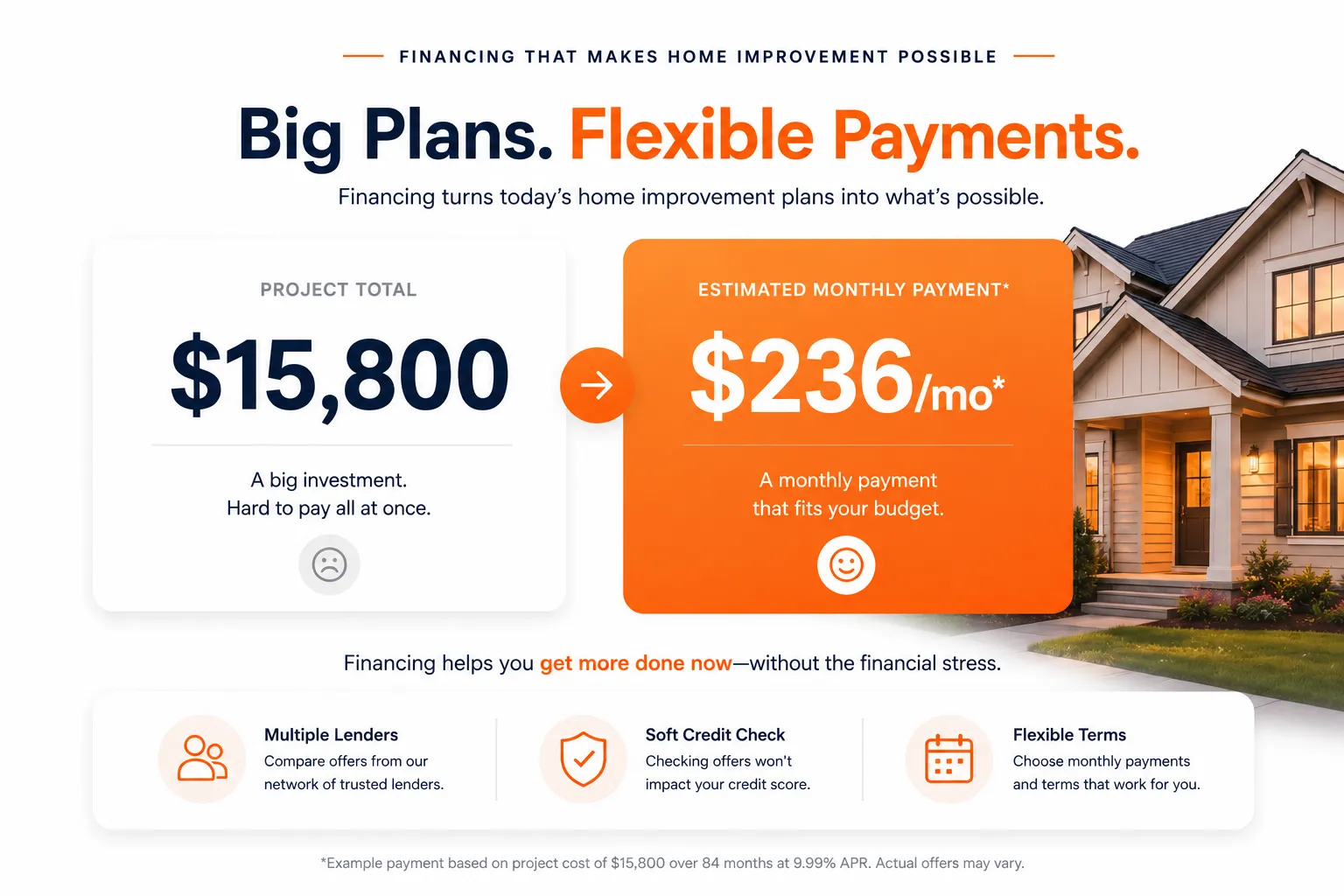
Outdoor Kitchen Financing Calculator
1. Enter Your Desired Loan Amount
Your Estimate
Monthly Payment
-
This calculator provides estimates for illustrative purposes only and does not constitute an offer of credit or a commitment to lend. Final APRs, loan amounts, and terms depend on credit approval, income verification, and lender underwriting criteria. Minimum and maximum rates/terms vary by state.
Powered by: Pasha Funding
Risk-Free Prequalification
Checking offers won’t impact your credit.
It’s common for homeowners to delay applying because they’re worried about their credit score. With a soft credit check, you can review available financing options without any impact to your credit score.2