

Participating Lender Network





How to Finance a Whole-House Repipe
If your home was built between the late 1970s and mid-1990s, the gray plastic polybutylene pipe in its walls can be nearly impossible to insure today and prone to sudden failure, which is why many homeowners end up repiping whether they planned to or not. A whole-house repipe costs about $4,000 to $15,000, and most people pay for it with a personal loan for a fast, unsecured option, a home equity loan or HELOC for a lower rate on a larger copper job, or an FHA Title I loan if they have little equity. The pipe material is what sets the urgency: sound copper or modern PEX may last decades, while polybutylene, galvanized steel, or lead all call for a full replacement. Because a failing system threatens both the home and its insurance coverage, repiping is often a repair to finance promptly rather than an upgrade to plan around.
Key Takeaways
- Your existing pipe material usually decides whether a repipe is urgent: polybutylene, galvanized steel, and lead all warrant full replacement.
- Polybutylene is the pressing case: many insurers now refuse to cover or renew homes that still have it.
- A whole-house repipe costs $4,000 to $15,000, with PEX at the lower end and copper often roughly double.
- The drywall repair to close up the walls afterward is a real line item that many quotes leave out.
- Standard homeowners insurance does not cover the repipe itself, only sudden water damage from a burst pipe, not the pipe replacement.
- Because a failing system threatens both your home and your coverage, it is usually a repair to finance promptly.
What Does a Whole-House Repipe Cost?
The two biggest cost factors are the pipe material you choose and the size and layout of your home. Most whole-house repipes cost $4,000 to $15,000, with PEX at the low end and copper often near double. Here is how the common materials compare.
What a Whole-House Repipe Costs by Material
Typical installed cost range for a standard home.
Bar length reflects the top of each range. Figures from HomeGuide and Angi.
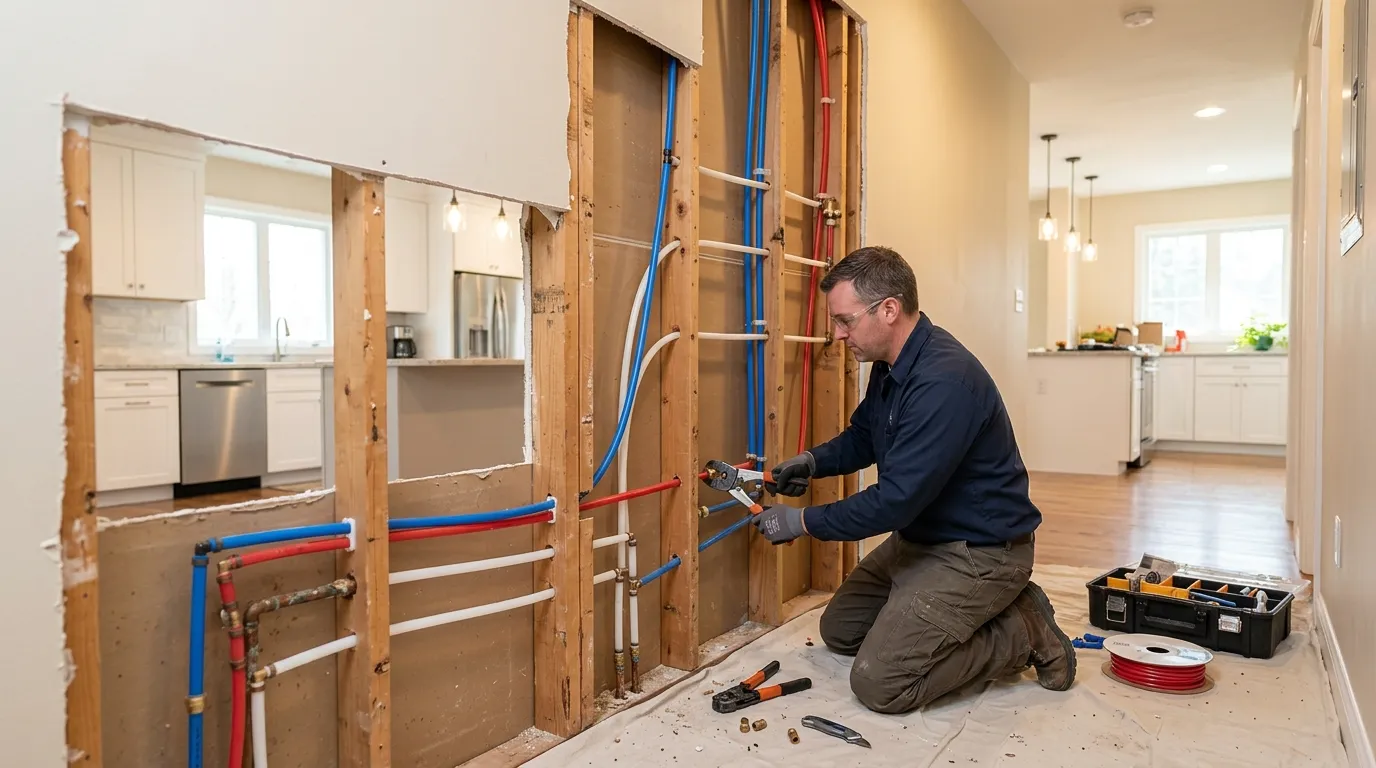
By area, PEX runs about $3.50 to $7 per square foot installed, while copper runs $8 to $14, which is why a 1,500-square-foot home lands near $5,500 to $11,000 in PEX but $12,000 to $22,000 in copper. The number of bathrooms and fixtures, the number of stories, and whether the pipes run through an accessible crawlspace or a concrete slab all move the price. The cost people most often forget is the drywall repair: reaching pipes means opening walls and ceilings, and patching, texturing, and painting them afterward can add a meaningful sum, so ask whether a bid includes wall restoration or leaves it to you. Prices vary by region and by how accessible your plumbing is, so get at least three itemized bids.
How Do You Know If You Need to Repipe Your House?
Before you price anything, find out what is in your walls, because the material tells you whether this is urgent or optional. Polybutylene, galvanized steel, and lead pipes all warrant a full repipe, while sound copper or PEX usually does not.
Look at the exposed lines near your water heater or under a sink. Gray flexible plastic is polybutylene, installed between the late 1970s and mid-1990s, and it degrades from the inside on contact with treated water, failing without warning. Rigid silver pipe with surface rust is galvanized steel, common before the 1970s, which corrodes internally, chokes water pressure, and is well past its lifespan. Dull gray pipe that scratches to a shiny finish may be lead, used before the 1930s, which is a health hazard the EPA warns about and recommends replacing. Any of these three signals a whole-house repipe rather than a spot repair, since the material itself is failing everywhere at once. Orange or blue flexible tubing is PEX and rigid copper are modern materials, and if yours are in good condition with no recurring leaks, you likely do not need to repipe yet.
PEX vs. Copper: Which Is Better for a Repipe?
Once you know you need a repipe, the material choice sets both the price and the character of the job. PEX costs 40% to 60% less than copper, installs faster, and resists freezing and corrosion, while copper offers longer proven life and a resale edge at a premium price.
PEX, a flexible plastic tubing, has become the default for most repipes: it needs fewer fittings, snakes through walls with less demolition, installs in two to five days, and expands rather than bursting in a freeze. It is the strongest value for most homeowners, especially when replacing polybutylene or galvanized pipe on a budget. Copper costs roughly double, but it has a decades-long track record, is favored in some historic districts and by certain codes, and can add more to an appraisal because buyers and appraisers universally recognize its longevity. CPVC sits in between on price. If you plan to stay in the home long-term or want the resale prestige, copper is defensible; for most repipes driven by a failing material and a real budget, PEX delivers the better balance of cost and durability.
| Pipe Material | Cost per Sq Ft | Lifespan | Best For |
|---|---|---|---|
| PEX | $3.50-$7 | 50+ years | Best value; most budget-driven repipes |
| CPVC | $4-$8.50 | 40-75 years | A lower-cost rigid alternative to copper |
| Copper | $8-$14 | 50-70 years | Long-term owners; resale and appraisal value |
Installed cost per square foot from HomeGuide; material lifespans are industry-standard estimates.
PEX wins on upfront cost and speed, copper on track record and resale, and CPVC sits in the middle as a rigid budget option. The right pick usually comes down to how long you plan to stay in the home.
How Do You Finance a Whole-House Repipe?
Because a failing system often needs prompt attention, speed and cost both matter. Here is how the main options compare.
Personal Loans
A personal loan delivers a fixed amount in a few days with no lien on your home and no appraisal, which suits an urgent repipe, a polybutylene system leaking or an insurer demanding replacement. It works with any plumber, and while the rate is higher than a home-secured loan, the speed is valuable when the job cannot wait. Terms usually run two to seven years.
Home Equity Loans and HELOCs
For a larger repipe, particularly a copper job, borrowing against your equity typically carries the lowest rate. A home equity loan gives you a lump sum, while a HELOC lets you spread the cost, which can make the difference between PEX and copper more manageable over a long draw period. The trade-offs are closing costs and a few weeks to fund.
FHA Title I Loans
An FHA Title I home improvement loan can finance a repipe up to $25,000 without requiring home equity, and it sets no federal minimum credit score, which makes it a reachable option for a necessary repair when you have little equity to draw on.
Contractor Payment Plans
Many plumbing and repipe companies offer payment plans, sometimes spreading the balance over several months or a few years. This can help in an emergency, but the terms come from a lender, so compare them against an outside loan before agreeing.
How Do You Qualify for Repipe Financing?
Lenders weigh your credit, your income against your debts, and, for a home-secured loan, your equity, but a repipe adds one step the generic checklist misses. Getting the scope right first keeps you from financing the wrong number.
- Pin down the pipe material and full scope. Confirm what you have and whether it is a whole-house job, then get at least three itemized bids that state the pipe material, the fixture count, and whether drywall repair is included, so the amount you finance covers the real job, walls and all.
- Check your credit and debt load. Review your credit report for errors and total your monthly debts, since most lenders want your total debt, including the new payment, at or below about 43% of your gross income.
- Prequalify and compare. Prequalify with a soft credit check that does not affect your score, and judge offers on the total amount you’ll repay over the full term, not just the monthly payment.
Does Homeowners Insurance Cover Repiping?
Generally not the repipe itself, and this is where the pipe material matters again. A standard homeowners policy treats repiping as maintenance and excludes it, though it may cover the water damage a sudden burst pipe causes, just not the pipe replacement.
Under a standard homeowners policy, sudden and accidental water damage from a burst pipe is usually covered, meaning the ruined floors, drywall, and belongings, but the worn-out pipe that caused it is not, since replacing aging plumbing is considered the homeowner’s responsibility. Polybutylene raises a further problem: because these pipes fail so often, many insurers now exclude coverage for polybutylene-related damage, decline to renew policies on homes that have it, or raise premiums sharply, which is a strong reason to replace it proactively rather than wait. Repiping to a modern material can lower that risk and, in some cases, your premium. If a covered burst causes damage, document the cause before filing, since how the failure happened determines whether the water-damage claim is approved.
Do You Need a Permit to Repipe a House?
Yes, in nearly all cases. A whole-house repipe requires a plumbing permit, a licensed plumber, and an inspection, because the work affects your home’s potable water system.
Local codes require a permit and at least one inspection for repiping, since faulty connections can cause leaks, contamination, or water-pressure problems, so a contractor who suggests skipping the permit is a warning sign. The permit also creates a record that the work was done to code, which matters at resale and can reassure a future buyer or insurer. Because the job involves opening walls, confirm upfront whether the bid includes patching and painting or leaves the drywall to you, and get at least three itemized quotes that state the pipe material, the number of fixtures, whether wall repair is included, and who pulls the permit. Building the permit and any drywall work into your budget keeps the financed amount accurate.
The Bottom Line
The best way to finance a repipe depends on how urgent it is, the material you choose, and whether you have home equity. For an urgent failure or an insurer demanding you replace polybutylene, a personal loan funds in days without touching your equity. For a larger copper repipe, a home equity loan or HELOC usually offers the lowest market rate and lets you spread the cost, and an FHA Title I loan can help when you lack equity. Contractor payment plans can bridge an emergency, but compare their terms first.
Before you borrow, identify your pipe material so you know whether the job is urgent, then get at least three itemized bids that spell out the material, the fixtures, and whether drywall repair is included. If your home still has polybutylene, check your insurance standing, since staying insurable may matter as much as the plumbing itself. Then compare offers on the total amount you’ll repay, not just the monthly payment.
The information provided by Pasha Funding is for educational and informational purposes only and should not be considered financial, legal, or tax advice. Every homeowner’s financial situation is different, and the financing options discussed may not be suitable for everyone. Before choosing a financing solution, carefully review the lender’s terms and consider consulting a qualified financial professional if needed.
Pasha Funding is a financing marketplace that connects homeowners with financing options offered by participating lending partners. We do not make loans, determine credit eligibility, or guarantee approval or specific loan terms. Pasha Funding is not a direct lender. We may receive compensation from participating lending partners when users submit an application or obtain a loan through our platform. This compensation may affect how and where financing options appear, but it does not influence our editorial evaluations.
Financing offers, rates, terms, and availability are determined solely by participating lenders and may change without notice. Our editorial content is created independently to help consumers better understand home improvement financing. While we strive to keep information accurate and current, financing products, lender requirements, rates, and offers may change over time. Any opinions expressed are those of the author and have not been reviewed, approved, or endorsed by our lending partners.
Explore related resources
- Plumbing Financing Options
- Sewer Line Replacement Financing
- Gas Fireplace Financing
- Septic System Financing
- Tankless Water Heater Financing
- Water Heater Financing
- Water Filtration System Financing
- Water Softener Financing
- Whole House Repipe Financing
- Water Well Financing
- Water Main Line Replacement Financing


FAQ
In this guide
- What Does a Whole-House Repipe Cost?
- How Do You Know If You Need to Repipe Your House?
- PEX vs. Copper: Which Is Better for a Repipe?
- How Do You Finance a Whole-House Repipe?
- How Do You Qualify for Repipe Financing?
- Does Homeowners Insurance Cover Repiping?
- Do You Need a Permit to Repipe a House?
- The Bottom Line
Whole House Repiping Financing Calculator
1. Enter Your Desired Loan Amount
Your Estimate
Monthly Payment
-
This calculator provides estimates for illustrative purposes only and does not constitute an offer of credit or a commitment to lend. Final APRs, loan amounts, and terms depend on credit approval, income verification, and lender underwriting criteria. Minimum and maximum rates/terms vary by state.
Powered by: Pasha Funding

how it works
3 Simple steps to
finance your project.
Getting started only takes a minute. Complete one simple application to compare available financing offers from over 18+ lenders, choose the option that fits your budget, and move forward with your home improvement project.
Risk-Free Prequalification
Checking offers won’t impact your credit.
It’s common for homeowners to delay applying because they’re worried about their credit score. With a soft credit check, you can review available financing options without any impact to your credit score.2