

Participating Lender Network





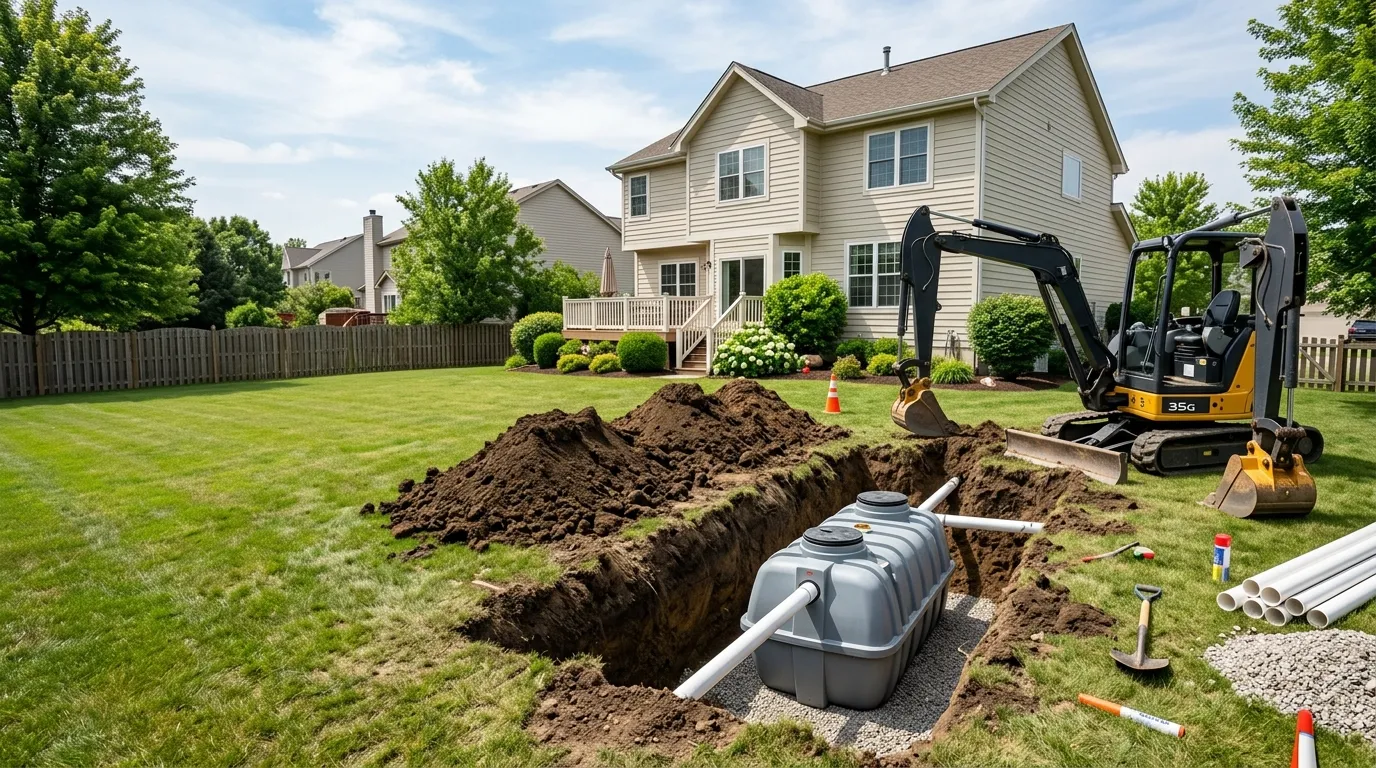
Septic System Financing: How to Pay for Repairs and Replacement
When a septic system fails, the first question is not how to pay for it but what actually needs fixing, because the answer swings the cost from a few hundred dollars to more than $20,000. A pumping or a minor tank repair is inexpensive, while replacing a failed drainfield, the part that filters wastewater into the soil, is one of the largest, most urgent home repairs a homeowner can face, and standard insurance rarely covers it. Because a failing system is a health and property emergency rather than a project you can put off, most homeowners finance it with a personal loan for speed, a home equity loan for a large replacement, or, for those who qualify, a low-interest government program.
Key Takeaways
- A failed drainfield is the costly scenario: replacement runs $5,000 to $20,000, and engineered systems reach $30,000 or more.
- Whether you need a repair or a full replacement is decided by an inspection, not by symptoms, so get one before you borrow.
- Standard homeowners insurance rarely covers septic failure from wear or age, so it is usually an out-of-pocket cost.
- Because a failing system is a health hazard, it is a need to finance promptly, much like a foundation repair.
- Rural and lower-income homeowners may qualify for USDA loans at 1% and, for seniors, grants, before turning to market-rate financing.
- Replacing only the failed part, often the drainfield while the tank is sound, can save several thousand dollars.
What Does Septic Repair or Replacement Cost?
Cost depends almost entirely on how much of the system has failed. A pump-out or minor repair costs a few hundred to a few thousand dollars, a drainfield replacement runs $5,000 to $20,000, and a full engineered system can reach $30,000 or more. Here is how the common scenarios compare.
What Septic Work Costs by Scope
Typical cost range by the extent of the work.
Bar length reflects the top of each range. Figures from HomeGuide and Angi.
A routine pump-out runs $300 to $700, and a tank repair $600 to $3,000, small enough that most people pay out of pocket. Replacement is where the numbers climb: a conventional drainfield runs $5,000 to $15,000, while a mound or aerobic system required by poor soil runs $15,000 to $30,000 or more. On top of the build, budget for a permit, a soil percolation test, and inspections, which together add hundreds to a few thousand dollars. Prices vary widely by soil conditions, system type, and region, and installer bids on the same job can differ by 30% to 60%, so get at least three written quotes from licensed septic companies.
What Determines Whether a Septic System Can Be Repaired or Needs Replacement?
This is the question that determines your budget, and you cannot answer it by looking at the symptoms. Slow drains, odors, or a wet spot in the yard tell you something is wrong, but only a professional inspection can tell you whether you need a minor repair or a full replacement.
A licensed inspector uses camera scoping, dye testing, and a soil evaluation to find out whether the tank, the drainfield, or both have failed, and whether the drainfield has merely clogged or has permanently lost its ability to absorb water. That distinction is the difference between a repair costing a few thousand dollars and a replacement costing five figures, so paying for a proper diagnosis before you borrow is money well spent. If a full replacement is needed, one factor outside your control sets the price: the soil. A new percolation test on the replacement area determines what kind of system the ground can support, and if the soil drains poorly, code may require an engineered mound or aerobic system that costs far more than a conventional field. In other words, your soil, not your budget, often decides the final number, which is why an early inspection helps you plan realistically.
How Do You Finance a Septic System?
Because a failing system usually needs attention quickly, speed and cost both matter. Here is how the main options compare.
Personal Loans
A personal loan delivers a fixed amount in a few days, with no lien on your home and no appraisal, which makes it a strong fit for an urgent septic failure. It works for any installer, and while the rate is higher than a home-secured loan, the speed matters when a system has failed and the health department is involved. Terms usually run two to seven years.
Home Equity Loans and HELOCs
For a large drainfield or full-system replacement, borrowing against your equity typically carries the lowest rate. A home equity loan gives you a lump sum, while a HELOC lets you draw as the work progresses. The trade-offs are closing costs and a few weeks to fund, which can be a drawback in a true emergency but are worth it for a big, planned replacement.
FHA Title I Loans
An FHA Title I home improvement loan can finance septic work up to $25,000 without requiring home equity, and it sets no federal minimum credit score, which makes it one of the more accessible options for a necessary repair when you do not have equity to draw on.
Contractor Payment Plans
Many septic companies offer payment plans, sometimes starting the work with a deposit and spreading the balance over 6 to 12 months. This can help in an emergency, but compare the terms against an outside loan, since contractor financing rates vary widely.
Can You Get Help Paying for a Septic System?
Yes, and this is the step many homeowners miss. Rural and lower-income homeowners often qualify for government loans and grants at rates far below any market loan, so check your eligibility before you borrow.
The USDA Section 504 Home Repair program offers loans of up to $40,000 at a fixed 1% interest rate to very-low-income homeowners in eligible rural areas for repairs that remove a health or safety hazard, which a failing septic system qualifies as. Homeowners age 62 and older who cannot repay a loan may be eligible for a grant of up to $10,000, and the two can be combined for as much as $50,000 in assistance. Beyond USDA, many states and counties run revolving loan funds or health-department programs that offer low-interest financing for septic repairs, particularly when the failing system poses a documented environmental risk. The EPA maintains guidance on septic systems and points homeowners toward state and local resources. Because these programs can take time to process, start the application early if your system has failed.
Do You Need a Permit for Septic Work, and Does Insurance Cover It?
Yes to the permit, and usually no to the insurance. Replacing a septic system requires a permit, a soil test, and a licensed installer, and standard homeowners insurance rarely covers failure from wear or age.
Septic replacement is not a do-it-yourself job. Local health departments require a permit for any replacement, along with a percolation test to confirm the soil can handle the new system, and the work must be done by a licensed installer, since a poorly built system can contaminate groundwater. The permit and design review can take one to six weeks before excavation even begins, so factor that into an urgent timeline. On insurance, a standard homeowners policy generally excludes damage from wear, age, and gradual deterioration, which is what causes most septic failures, so a worn-out drainfield is almost always your expense. A sudden, accidental event, such as a vehicle collapsing the tank, may be covered, but routine failure is not, which is the main reason septic replacement so often has to be financed.
How Do You Qualify for Septic Financing?
Lenders look at your credit, your income against your debts, and, for a home-secured loan, your equity. For a septic project, the diagnosis comes first. Here is the order that works well:
- Get the inspection and written bids first. Have a licensed inspector confirm whether you need a repair or a replacement, then get at least three written quotes, so you finance the actual job rather than a guess.
- Check assistance eligibility before a market loan. Contact USDA Rural Development and your county health department to see whether you qualify for a low-interest loan or grant, since those beat any bank rate.
- Check your credit, then prequalify. Review your credit report and total your monthly debts, aiming for a total debt load at or below about 43% of your gross income, then prequalify with a soft credit check to compare offers.
| Financing Path | Best For | Funding Speed |
|---|---|---|
| Personal loan | Urgent repairs and replacements | 1 to 5 days |
| Home equity / HELOC | Large or engineered replacements | 2 to 6 weeks |
| USDA / assistance program | Eligible rural or lower-income owners | Several weeks |
The more urgent the failure, the more a fast personal loan makes sense, but if you have time and qualify, a USDA or county program will almost always cost less.
The Bottom Line
The best way to finance septic work depends on how much has failed, how urgent it is, and whether you qualify for assistance. For an urgent failure, a personal loan funds in days without touching your home equity. For a large planned replacement, a home equity loan or HELOC usually offers the lowest market rate, and an FHA Title I loan can help when you lack equity. Above all, rural and lower-income homeowners should check USDA and county health-department programs first, since a 1% loan or a grant can save many thousands of dollars over a bank loan.
Before you borrow, get a professional inspection to confirm whether you need a repair or a full replacement, and gather at least three written bids, since the right diagnosis can be the difference between a few thousand dollars and thirty thousand. Then compare offers on the total amount you’ll repay, not just the monthly payment, and start any assistance application early, since the approvals take time.
The information provided by Pasha Funding is for educational and informational purposes only and should not be considered financial, legal, or tax advice. Every homeowner’s financial situation is different, and the financing options discussed may not be suitable for everyone. Before choosing a financing solution, carefully review the lender’s terms and consider consulting a qualified financial professional if needed.
Pasha Funding is a financing marketplace that connects homeowners with financing options offered by participating lending partners. We do not make loans, determine credit eligibility, or guarantee approval or specific loan terms. Pasha Funding is not a direct lender. We may receive compensation from participating lending partners when users submit an application or obtain a loan through our platform. This compensation may affect how and where financing options appear, but it does not influence our editorial evaluations.
Financing offers, rates, terms, and availability are determined solely by participating lenders and may change without notice. Our editorial content is created independently to help consumers better understand home improvement financing. While we strive to keep information accurate and current, financing products, lender requirements, rates, and offers may change over time. Any opinions expressed are those of the author and have not been reviewed, approved, or endorsed by our lending partners.
Explore related resources
- Plumbing Financing Options
- Sewer Line Replacement Financing
- Gas Fireplace Financing
- Septic System Financing
- Tankless Water Heater Financing
- Water Heater Financing
- Water Filtration System Financing
- Water Softener Financing
- Whole House Repipe Financing
- Water Well Financing
- Water Main Line Replacement Financing


FAQ
In this guide
- What Does Septic Repair or Replacement Cost?
- What Determines Whether a Septic System Can Be Repaired or Needs Replacement?
- How Do You Finance a Septic System?
- Can You Get Help Paying for a Septic System?
- Do You Need a Permit for Septic Work, and Does Insurance Cover It?
- How Do You Qualify for Septic Financing?
- The Bottom Line
Septic System Financing Calculator
1. Enter Your Desired Loan Amount
Your Estimate
Monthly Payment
-
This calculator provides estimates for illustrative purposes only and does not constitute an offer of credit or a commitment to lend. Final APRs, loan amounts, and terms depend on credit approval, income verification, and lender underwriting criteria. Minimum and maximum rates/terms vary by state.
Powered by: Pasha Funding

how it works
3 Simple steps to
finance your project.
Getting started only takes a minute. Complete one simple application to compare available financing offers from over 18+ lenders, choose the option that fits your budget, and move forward with your home improvement project.
Risk-Free Prequalification
Checking offers won’t impact your credit.
It’s common for homeowners to delay applying because they’re worried about their credit score. With a soft credit check, you can review available financing options without any impact to your credit score.2