Participating Lender Network





How to Finance a New Water Softener System Without Breaking the Bank
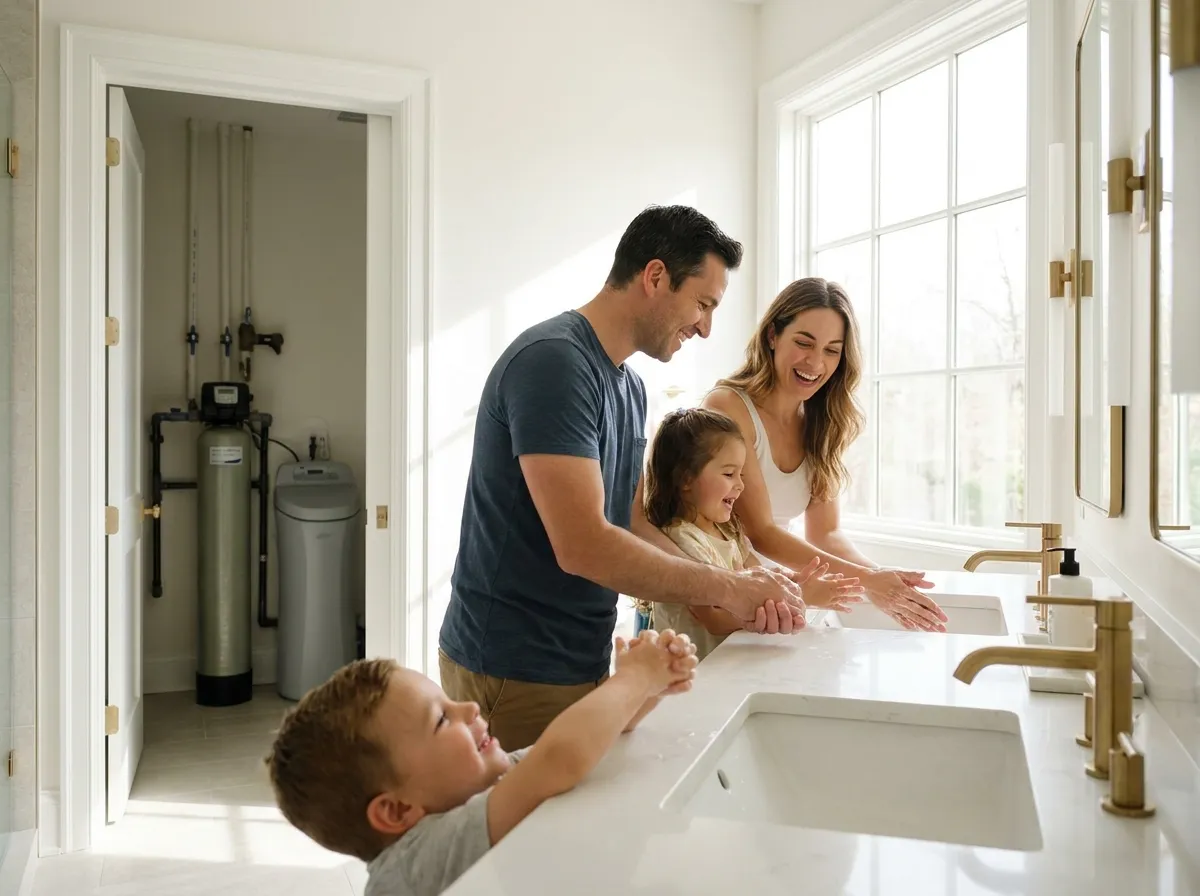
Hard water does more damage than most homeowners realize. Over time, those hidden minerals don’t just leave stubborn white spots on your faucets—they actively shorten the lifespan of your water heater, dishwasher, washing machine, and even your morning coffee maker. If you’re constantly scrubbing cloudy spots off glassware, fighting a losing battle against soap scum, or dealing with dry, itchy skin after every shower, you already know how frustrating it is.
Installing a water softener cuts the problem off at the source. By stripping out the heavy calcium and magnesium, it stops scale buildup in its tracks, keeps your plumbing clear, helps your appliances live longer, and honestly makes everyday cleaning a whole lot easier.
But for most homeowners, the real question isn’t whether a water softener is worth it. It’s figuring out the best way to fit it into the budget.
Average Water Softener Installation Costs:
- Standard System Range: $1,200 to $3,800 (Installed)
- High-Capacity & Specialty Upgrades: Can climb higher depending on home size, severe mineral levels, or if adding whole-home reverse osmosis filtration.
If writing a check for the full amount upfront doesn’t make sense for your finances right now, you don’t have to put the project on hold. Financing allows you to get the system installed immediately, protecting your pipes and appliances today—while breaking the cost down into more manageable monthly payments.
How Water Softener Financing Works
Water softener financing is pretty straightforward: you get the system installed now and pay it off over time through monthly installments.
Let’s be honest: almost nobody actively plans to buy a water softener. It’s usually an unexpected purchase. Maybe you just moved into a new place and realized the water is incredibly harsh, or perhaps your water heater just failed and the technician pointed out massive scale buildup inside the tank.
Instead of putting off a necessary upgrade while you save up the cash—and letting those minerals continue to beat up your plumbing—financing lets you protect your home right away. The actual application process is usually incredibly fast.
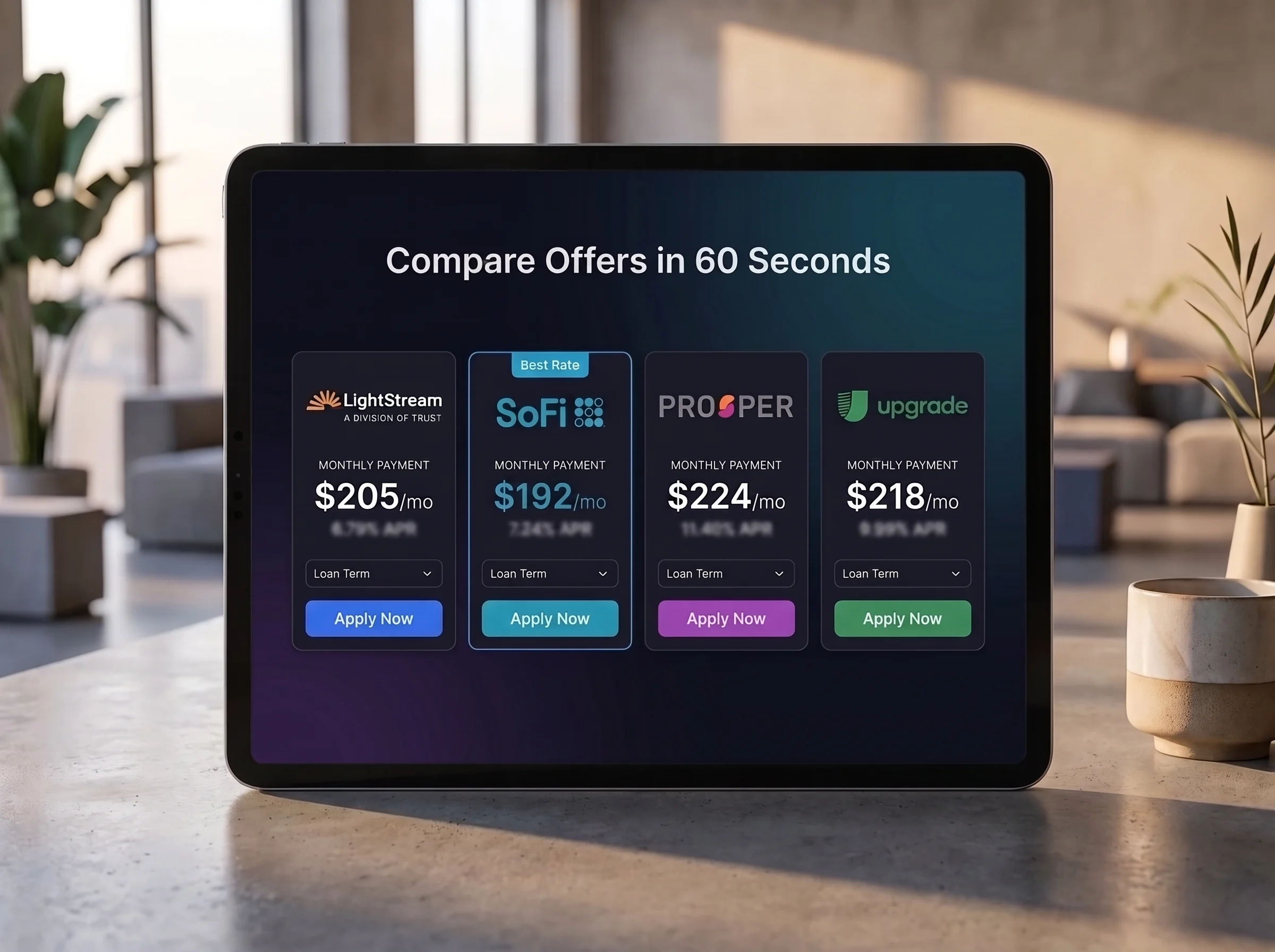
First, a licensed plumber will test your water and recommend the right system size for your household. Once you have a written estimate, you can apply for financing. Depending on the program, you will often see multiple tailored loan offers within just a few minutes.
Once you choose the monthly payment and interest rate that fit your budget, the installer schedules the job. After the system is up and running, your monthly payments begin.
Steps to Finance Your Water Softener Installation:
- Get a water test done: A quick test will confirm your exact hardness levels.
- Review your estimate: Your installer provides a clear quote.
- Apply for financing: Submit a quick application online or through your contractor.
- Compare your options: Look at the interest rates, terms, and monthly payments.
- Pick your plan: Choose the loan option that fits your monthly budget.
- Get it installed: Enjoy immediate access to soft, clean water.
- Pay over time: Make predictable monthly payments until the balance is cleared.
Many specialized home improvement lenders allow you to check your rates and terms through a soft credit pull, meaning you can compare your options without temporarily dinging your credit score.
Water Softener Financing Example
Let’s say your contractor recommends a high-quality, dual-tank water softener to handle a busy household of four. The total installed price comes out to $3,600.
Instead of dipping into your emergency fund to pay the full $3,600 today, you choose a financing plan. By spreading the cost out, you get to enjoy the immediate benefits of scale-free plumbing, softer skin, and cleaner laundry while keeping your savings intact.
Just remember to look beyond the monthly payment before signing. Keep an eye on the interest rate (APR), the length of the loan, and any potential prepayment penalties so you know exactly what the loan costs in the long run.
Average Water Softener Costs
The cost of your system depends on a few key factors: how hard your water is, how much water your family uses, your home’s existing plumbing setup, and local labor rates.
A smaller home with moderate hardness might get by perfectly with a basic, budget-friendly setup. A larger household with very hard water will need a heavy-duty, high-capacity system to keep up with daily demand.
While most standard residential installations land between $1,200 and $3,800, specialty systems designed for severe water issues can cost more. Knowing what goes into these prices helps you compare your options confidently.
Types of Commonly Financed Water Softener Systems
Salt-Based Water Softeners
This is the classic industry standard. These systems use a process called ion exchange, physically swapping out hard calcium and magnesium minerals for tiny amounts of sodium.
Because they actually remove the minerals entirely, they are incredibly effective for homes dealing with moderate to extremely hard water. They do require minor, ongoing maintenance—mostly just adding a bag of salt to the brine tank every month or two.
Dual-Tank Water Softeners
Standard softeners occasionally have to go offline for a few hours to regenerate and clean themselves out, usually in the middle of the night. Dual-tank systems solve this by using two resin tanks that take turns.
While one tank is regenerating, the other keeps working. This guarantees you never run out of soft water, making it a great fit for larger families or homes with high water usage. It costs more upfront, but the uninterrupted performance is a massive quality-of-life upgrade.
Salt-Free Water Conditioners
Technically, salt-free systems don’t “soften” the water by pulling minerals out. Instead, they condition the water, altering the chemical structure of the minerals so they can’t stick to your pipes and appliances.
They are highly popular because they require virtually no maintenance and don’t use salt. However, because the minerals are still physically in the water, they won’t give you that slick, ultra-lathering “soft water feeling” and are best suited for homes with mild to moderate hardness.
Whole-House Reverse Osmosis Systems
If you’re looking for the ultimate level of water purification, a whole-house reverse osmosis system is certainly the gold standard.
Beyond just softening the water, these systems force your water through an ultra-fine membrane and help filter out harsh and heavy metals, chemicals, chlorine, and dissolved solids. They do require a larger upfront investment and more maintenance over time, but they deliver pure high quality water out of every single tap in your home.
What Affects Water Softener Installation Costs?
Every home’s plumbing is a little different, which means installation costs are rarely one-size-fits-all. Beyond the equipment itself, a few specific details will shape your final estimate.
Home Size and Water Usage
A water softener needs to be sized correctly for your household. If a system is too small, it will have to work overtime to keep up, regenerating too often, wasting salt, and wearing out prematurely. Sizing the system properly ensures you get consistent water pressure and a much longer equipment lifespan.
Water Hardness Level
The harder your water, the harder your system has to work. Professional testing measures hardness in “grains per gallon” (GPG), which tells your installer exactly how powerful your system needs to be.
Plumbing Modifications
If your home was built with a “water softener loop” (pre-installed plumbing bypass lines), installation is quick and inexpensive. If your plumber has to cut into your main lines, run new drain connections, add electrical outlets, or reroute pipes to accommodate the unit, the extra labor will increase the final installation cost.
Equipment Quality and Features
Just like any appliance, you pay for the build quality and technology. Premium systems often feature advanced, high-efficiency digital control valves, smart water usage tracking, built-in leak detection, and longer, more comprehensive warranties. While they cost more upfront, these smart features can save you money on salt and water bills down the road.
Ongoing Ownership Costs
Don’t forget to budget for the long-term upkeep of your new system.
If you choose a salt-based system, you will need to buy salt or potassium blocks. Depending on your water usage and hardness, salt typically costs around $50 to $150 per year.
If you prefer a hands-off approach, professional annual maintenance plans—which include system sanitizing, valve inspections, and water testing—usually run between $100 and $300 per year.
Signs You May Need a Water Softener
How do you know if a water softener is actually worth the investment for your home? If you are on municipal water with low mineral content, you probably don’t need one. But if your home has hard water, the warning signs are usually staring you right in the face.
Common Signs of Hard Water
- A stubborn, crusty white buildup on showerheads and around faucets
- Cloudy, spotty glassware right out of a “clean” dishwasher cycle
- Skin that feels dry, tight, or itchy after you shower
- Shampoo and body wash that refuse to lather up nicely
- Stiff, scratchy laundry that fades way too quickly
- Weak water pressure caused by mineral buildup inside your pipes
- An unexpected drop in the efficiency of your water heater
- Having to use double the amount of laundry detergent just to get things clean
If any of these sound familiar, it is a great time to schedule a quick, professional water quality test.
Why Water Testing is Important
A professional water test does more than just measure hardness. It identifies other potential issues like iron, chlorine, or sulfur that might be affecting your water’s taste and smell.
Knowing exactly what is in your water prevents you from buying a system that is over-engineered or underpowered. Getting the right system based on real data keeps your installation costs down and ensures your water stays perfectly soft for years to come.
Water Softener Financing Options Explained
There is no single financing option that works for every household. The right choice for your home depends on a few practical details: the total cost of your system, how fast you need it up and running, your credit profile, and how long you want to spread out the payments.
Dealing with a sudden breakdown is also completely different from planning a major home upgrade. If your current unit just gave out and hard water is already doing damage on your plumbing, getting a fast approval matters most. If you are planning a larger water treatment overhaul, you have the luxury of taking your time to compare rates, terms, and overall borrowing costs.
Here are the most common ways homeowners successfully finance a water softener installation.
1. Financing Directly Through Your Contractor
Many water treatment companies partner with specialized home improvement lenders to offer payment plans right on the spot during your estimate.
This is usually the path of least resistance. You can get your water tested, look over the recommended equipment, review the project quote, and apply for financing all in one sitting without having to hunt for an outside lender on your own.
Most contractors use programs that let you check available offers through a soft credit check, meaning you can view your monthly payment options within minutes without temporarily dinging your credit score. Just keep in mind that final approval still depends on the lender’s standard underwriting process.
While the convenience is tough to beat, do not just sign up for the first plan dropped in front of you. Take a second to review the interest rate (APR), the repayment length, any hidden fees, and the total amount you will end up paying back over time.
2. Unsecured Personal Loans
A personal home improvement loan gives you a lump sum of cash upfront, which you then use to pay your contractor for the equipment and installation.
Most personal loans are unsecured, meaning you do not have to put your home up as collateral. Instead, lenders base their decision entirely on your credit history, income, employment stability, and current debt load.
The best part about personal loans is predictability. They almost always come with fixed interest rates and set monthly payments, so you know exactly what you owe each month and the precise date your balance will hit zero.
They also move incredibly fast. Many online lenders provide an approval decision in minutes and can deposit funds into your account as soon as the next business day. This makes them a great tool if your system failed unexpectedly or you need to tackle severe scale issues immediately.
3. Home Equity Loans
A home equity loan allows you to borrow a fixed sum against the equity you have built up in your property.
Because this loan is secured by your home, qualified homeowners can often lock in a significantly lower interest rate than they would get with an unsecured personal loan. This approach makes a lot of sense if you are tackling a much larger water project—like combining a heavy-duty water softener with a whole-home reverse osmosis system, carbon filtration, or major plumbing repairs.
The main tradeoff here is time. Home equity loans involve a decent amount of paperwork, a longer approval process, possible closing costs, and usually require a formal home appraisal. Because your home secures the debt, falling behind on payments carries serious consequences. Make sure the lower interest rate is worth the extra time and risk before tapping into your equity.
4. Home Equity Line of Credit (HELOC)
A home equity line of credit, or HELOC, works more like a credit card than a traditional upfront loan. Instead of receiving a lump sum, you get access to a set credit line that you can draw from only as you need it. This is incredibly useful if your water treatment project is just one piece of a rolling home renovation and you do not know the exact final cost of the plumbing work upfront.
Keep in mind that most HELOCs come with variable interest rates, meaning your monthly payments can go up if market rates rise. You will also want to keep an eye out for annual fees, minimum draw requirements, and initial closing costs.
5. Credit Cards
Using a credit card can be a smart play for a smaller, more basic water softener installation—especially if you can qualify for a promotional zero-interest (0% APR) offer and have a concrete plan to wipe out the balance before that promotion expires.
But you have to read the fine print carefully. If you are still carrying a balance when the promotional window closes, standard double-digit interest rates will kick in. Even worse, some deferred-interest cards will retroactively charge you interest back to the original purchase date if the balance isn’t paid off in full on time.
For a system costing several thousand dollars, a personal loan or contractor financing plan usually gives you a much safer, more predictable repayment schedule than carrying a large credit card balance.
6. Paying Cash from Savings
Writing a check from savings is easily the most straightforward route. You get to completely skip the lender fees, interest charges, credit checks, and recurring monthly bills.
However, spending your hard-earned cash isn’t always the best strategic move. Draining your emergency savings to buy a water softener can leave you in a tight spot if another major home repair hits next month. A leaky roof, a failed air conditioner, or an unexpected plumbing emergency will not wait for your savings account to recover.
If paying cash leaves your emergency fund uncomfortably low, financing even a portion of the project can give your household budget some crucial breathing room.
How to Qualify for Water Softener Financing
Every lender writes their own playbook for approvals, but almost all of them will look at the exact same financial building blocks. You do not need perfect credit to find a solution; many specialized home improvement lenders work with a wide range of credit profiles. That said, a stronger score and a lighter debt load will always unlock the lowest interest rates and most flexible terms.
Credit Score and Credit History
Your credit score is a quick snapshot of how reliably you have handled borrowed money in the past. There is no single “magic number” required to finance a water softener. A profile that gets declined by a prime bank might be a perfect fit for a specialized home improvement lender. Because rates vary so much based on your history, checking multiple offers is the best way to ensure you are getting a fair deal.
Income, Stability, and Debt-to-Income (DTI)
Lenders want to make sure the new monthly payment fits comfortably into your life without straining your budget. To figure this out, they will look at your monthly income, employment history, and current recurring debts (like housing and auto payments) to calculate your debt-to-income (DTI) ratio. A stable income and a lower DTI ratio make your application much stronger. If you are worried about qualifying on your own, some lenders allow you to add a co-borrower to help secure better terms.
Documents You Should Have Ready
While many online applications give you an initial decision in minutes, a lender may ask you to upload a few documents to verify your details before final approval:
- A valid government-issued photo ID (driver’s license or passport)
- Your Social Security number
- Recent pay stubs, bank statements, or tax documents
- Basic employment details
- A written project estimate from your water treatment contractor
Having these files handy keeps the process moving fast, which is critical if you are trying to get an installation scheduled quickly.
How Long Does Approval Take?
Contractor financing and online personal loans are built for speed. You will often get an initial answer within minutes, and funds can be cleared in just a couple of business days.
Home equity loans and HELOCs take a lot longer, usually several weeks—because the bank has to carefully verify your home’s appraisal value, title history, and equity margins.
If hard water is actively ruining your appliances or clogging your plumbing lines, waiting weeks for a bank approval might end up costing you more in home damage than accepting a slightly higher rate for fast funding.
How to Compare Water Softener Financing Offers
The lowest monthly payment is not always the best deal on the table. A lender can easily lower your monthly payment simply by stretching your loan out over a longer period. While that feels easier on your wallet today, it gives interest more time to compound, which means you will pay significantly more for your water softener by the time the loan is cleared.
Look at the big picture before signing on the dotted line.
Compare the APR, Not Just the Base Interest Rate
The Annual Percentage Rate (APR) is the single best tool for comparing loans because it reflects the true total cost of borrowing. It factors in both the base interest rate and any upfront lender fees, like an origination fee.
For example, a lender advertising a 7% interest rate with a hefty upfront fee might actually cost you more than a lender offering an 8% rate with zero fees. Comparing the APR shows you the actual bottom line.
Find the Right Repayment Balance
A shorter loan term means higher monthly payments, but you will pay drastically less interest overall and be out of debt much faster. A longer term keeps your monthly bill low and manageable, but it increases your total borrowing cost. Try to find a happy medium: a monthly payment you can comfortably handle without stretching the loan past the useful lifespan of the system.
Check for Hidden Fees and Penalties
Always ask about processing fees, closing costs, or origination fees that might be deducted directly from your loan payout. More importantly, check for prepayment penalties. You want a loan that allows you to throw extra cash at the principal or pay off the entire balance early without facing a fee.
Questions to Ask Before You Borrow
- Is the interest rate completely fixed, or can it change over time?
- What is the exact APR on this offer?
- How much will I pay back in total by the end of the loan?
- Are there any origination, processing, or application fees?
- Can I pay this loan off early without a penalty?
- When exactly is my first payment due?
- Does the lender pay the money directly to me or straight to my contractor?
- What happens if the final installation invoice changes slightly?
- Does checking this offer use a soft credit pull, or will it impact my score right away?
Which Financing Option Is Right for You?
The ideal path forward depends on your timing, the scope of your water issues, and your personal financial preferences.
For an Urgent Water Softener Replacement
If your old unit just died and your home is actively flooding with harsh minerals, speed is everything. Contractor financing or an online personal loan will be your fastest options. Neither requires a home appraisal, and approvals happen almost instantly, letting you swap out the equipment before hard water can cause more damage.
For a Whole-Home Water Treatment System
If you are investing in a comprehensive setup—combining a softener with a dedicated iron filter, UV purification, or reverse osmosis—the price tag will be higher. A personal loan is still a solid option, but if you have plenty of home equity, it is worth comparing a home equity loan or HELOC to see if you can lock in a lower long-term rate.
For a Small Equipment Upgrade
If you are just doing minor plumbing tweaks or installing a basic inline system that costs a few hundred dollars, financing the whole thing rarely makes sense. You are better off paying what you can in cash or utilizing a promotional credit card, provided you are 100% certain you can clear the balance before the standard interest rates kick in.
Final Thoughts
A water softener is an incredible investment that protects your plumbing, extends the life of your appliances, saves money on soap, and takes the frustration out of daily cleaning. But the upfront cost is usually the part that makes homeowners hesitate.
Financing bridges that gap, giving you a way to safeguard your home immediately without wiping out your cash reserves. Contractor plans and personal loans offer unparalleled speed, while home equity options can provide lower rates for larger, planned projects.
Just remember to look past the monthly payment. Compare the APR, check for hidden fees, and make sure the timeline aligns with your financial goals.
With Pasha Funding, qualified homeowners can compare personalized financing offers from a network of third-party lenders through a single, secure application. You can look over your options, choose the plan that actually fits your household budget, and get your water fixed without draining your savings.
The information provided by Pasha Funding is for educational and informational purposes only and should not be considered financial, legal, or tax advice. Every homeowner’s financial situation is different, and the financing options discussed may not be suitable for everyone. Before choosing a financing solution, carefully review the lender’s terms and consider consulting a qualified financial professional if needed.
Pasha Funding is a financing marketplace that connects homeowners with financing options offered by participating lending partners. We do not make loans, determine credit eligibility, or guarantee approval or specific loan terms. Pasha Funding is not a direct lender. We may receive compensation from participating lending partners when users submit an application or obtain a loan through our platform. This compensation may affect how and where financing options appear, but it does not influence our editorial evaluations.
Financing offers, rates, terms, and availability are determined solely by participating lenders and may change without notice. Our editorial content is created independently to help consumers better understand home improvement financing. While we strive to keep information accurate and current, financing products, lender requirements, rates, and offers may change over time. Any opinions expressed are those of the author and have not been reviewed, approved, or endorsed by our lending partners.
Explore related resources
- Plumbing Financing Options
- Sewer Line Replacement Financing
- Gas Fireplace Financing
- Septic System Financing
- Tankless Water Heater Financing
- Water Heater Financing
- Water Filtration System Financing
- Water Softener Financing
- Whole House Repipe Financing
- Water Well Financing
- Water Main Line Replacement Financing

Water Softener Financing FAQs
In this guide
- Participating Lender Network
- How to Finance a New Water Softener System Without Breaking the Bank
- How Water Softener Financing Works
- Water Softener Financing Example
- Average Water Softener Costs
- Types of Commonly Financed Water Softener Systems
- What Affects Water Softener Installation Costs?
- Signs You May Need a Water Softener
- Why Water Testing is Important
- Water Softener Financing Options Explained
- How to Qualify for Water Softener Financing
- How to Compare Water Softener Financing Offers
- Which Financing Option Is Right for You?
- Final Thoughts
- Water Softener Financing Calculator
- $270
Water Softener Financing Calculator
1. Enter Your Desired Loan Amount
Your Estimate
Monthly Payment
-
This calculator provides estimates for illustrative purposes only and does not constitute an offer of credit or a commitment to lend. Final APRs, loan amounts, and terms depend on credit approval, income verification, and lender underwriting criteria. Minimum and maximum rates/terms vary by state.
Powered by: Pasha Funding
how it works
3 Simple steps to
finance your project.
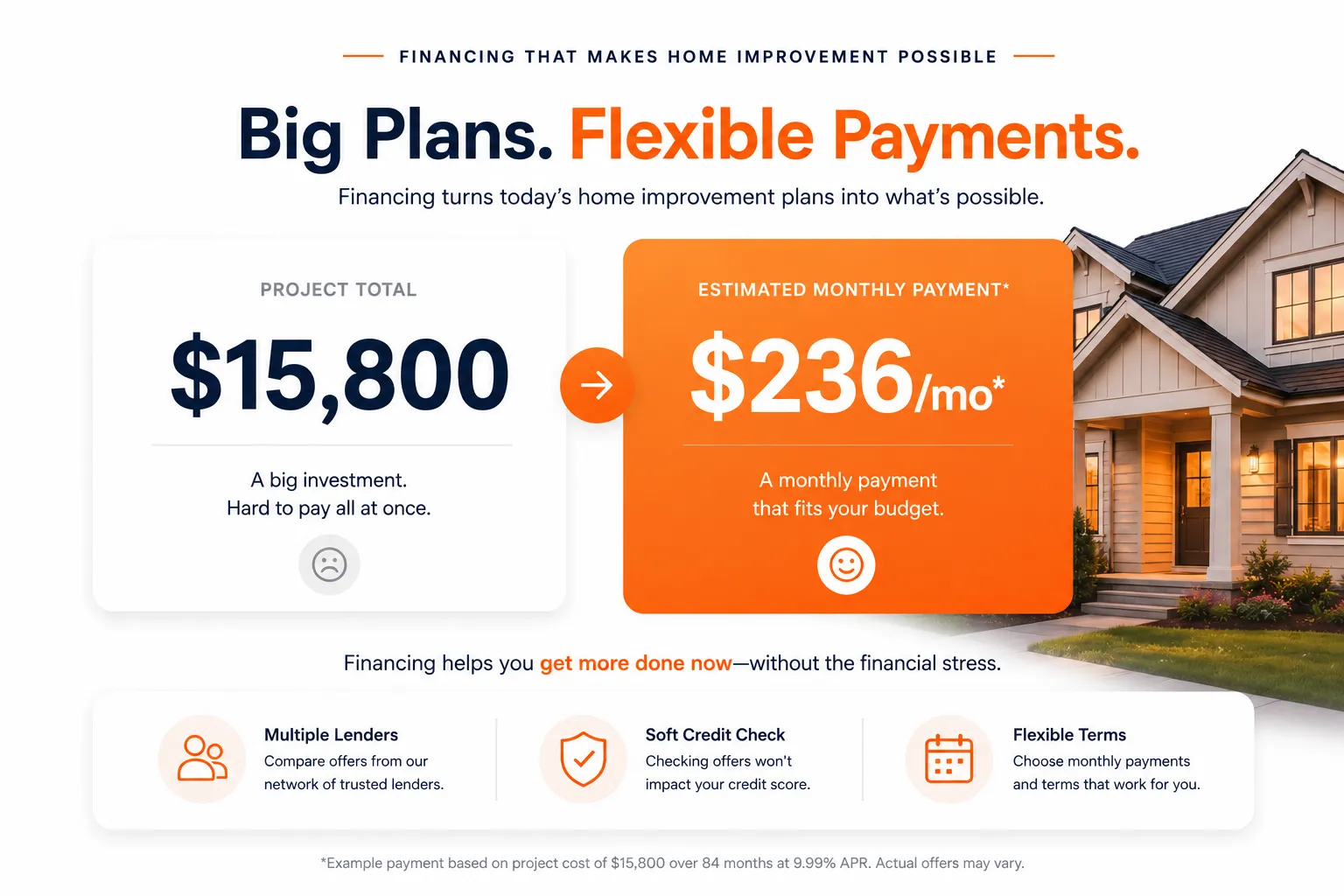
Getting started only takes a minute. Complete one simple application to compare available financing offers from over 18+ lenders, choose the option that fits your budget, and move forward with your home improvement project.
Risk-Free Prequalification
Checking offers won’t impact your credit.
It’s common for homeowners to delay applying because they’re worried about their credit score. With a soft credit check, you can review available financing options without any impact to your credit score.2