Participating Lender Network





Water Heater Financing Guide: Costs, Monthly Payments, and Options Explained
Water heaters have a knack for breaking down at the worst possible moment. One day your shower is working fine, and the next you are facing freezing water, a noisy tank, or a puddle spreading across your basement floor. That is usually followed by a stressful plumbing estimate.
Replacing a standard tank water heater typically runs between $600 and $3,100. If you decide to upgrade to an energy-efficient tankless system, that price tag usually jumps to somewhere between $1,400 and $5,600. Your final invoice depends on the size of the unit, the fuel type, and whether your home requires gas line, plumbing, or electrical upgrades to support the new system.
For most households, this is a major, unexpected expense that is hard to cover fully in cash on short notice.
Average Replacement Costs at a Glance:
- Standard Tank Water Heaters: $600 to $3,100. These systems hold 30 to 80 gallons of warm water, offer a lower upfront cost, and allow for a quick, straightforward replacement.
- Tankless Water Heater Upgrades: $1,400 to $5,600. These units heat water on demand, lower your monthly utility bills, and may require initial gas or electrical infrastructure updates.
- Water heater financing helps you replace a broken unit immediately without draining your emergency savings. By spreading the cost into predictable monthly payments, you can restore hot water to your home and keep your monthly cash flow intact.
This guide breaks down exactly how water heater financing works, what different systems cost, and how to compare your payment options to find the best deal for your wallet.
How Water Heater Financing Works
With water heater financing, you get a new system installed now and pay for it over time through a series of structured monthly payments.
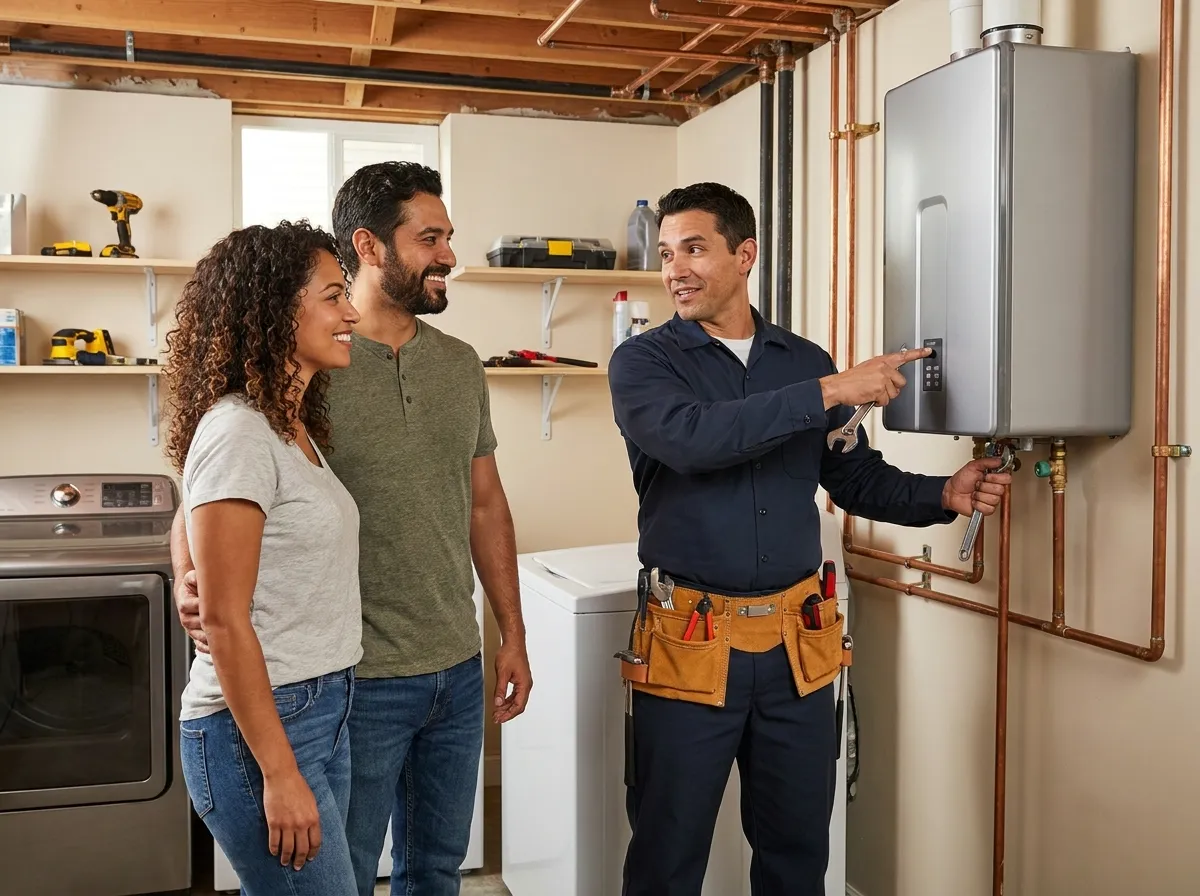
The process starts when a licensed plumber inspects your current water heater. They will let you know if a quick repair is possible or if you need a full replacement, and then they will recommend a tank size or tankless system that fits your household’s daily water needs.
Once you have a written estimate in hand, you can apply for financing. You can do this directly through your plumbing contractor, an online personal loan lender, or your local bank.
Many lenders let you check your rates and payment options using a soft credit check. This is a major advantage because you can compare your loan options without hurting your credit score. If you choose an offer and get approved, the lender will either pay your plumber directly or deposit the cash into your bank account so you can pay them yourself.
Steps to Finance a Water Heater Replacement
- Get a professional inspection: A plumber will confirm whether your unit needs a repair or a full replacement.
- Review the written quote: Ensure the estimate covers the unit, labor, permits, disposal, and any plumbing modifications.
- Apply for financing: Submit a quick application online or through your plumbing company.
- Compare your loan offers: Look closely at the interest rate, loan term, and fees.
- Select your plan: Pick the monthly payment that fits comfortably into your household budget.
- Schedule the installation: Move forward with the work once your funding is confirmed.
- Make monthly payments: Repay the balance over time according to your loan agreement.
Water Heater Financing Example
Let’s say your gas water heater tank starts leaking and cannot be repaired. Your plumber quotes $2,400 for a new tank, installation labor, permits, and minor venting work.
Instead of pulling $2,400 out of your emergency fund (which you might need later for a bigger emergency), you choose to finance the project. You get the new system installed immediately, keep your cash in the bank, and pay off the balance in steady, fixed monthly installments.
Just remember to look at the total cost of the loan before signing. A lower monthly payment might look appealing, but if the repayment term is too long, you will end up paying much more in overall interest by the time the loan is cleared.
Average Water Heater Replacement Costs
The cost to replace a water heater is determined by the type of system, fuel source, capacity, and the complexity of the plumbing work involved.
A simple tank-for-tank swap is usually the most affordable option. Costs will rise if your plumber needs to run larger water lines, modify gas venting, upgrade your electrical panel, or bring your plumbing up to current local building codes. Knowing what goes into these numbers helps you weigh your options with confidence.
What Expenses Can Your Loan Cover?
Most home improvement financing plans are flexible enough to cover the entire invoice. Depending on your lender and approved loan limit, you can use your financing to pay for:
- The water heater unit itself
- Professional installation labor
- Removal and disposal of your old system
- Local permits and safety inspections
- Gas line or electrical panel upgrades
- Venting modifications
- Expansion tanks, drain pans, and code compliance work
Always secure a complete, itemized estimate from your contractor before applying for a loan so you know exactly how much borrowing power you need on your financing application.
Should You Repair or Replace Your Water Heater?
A cold shower does not always mean you need to buy a brand new water heater. A technician can often replace a single failed part, such as a thermostat, heating element, or burner valve, to get your hot water back up and running.
However, if the tank itself is leaking, a repair is usually impossible, and replacement is your only safe option.
When Repair Makes Sense
- The unit is relatively new and still under warranty.
- The tank is dry, rust-free, and in good physical condition.
- The issue is a simple, replaceable part like an anode rod or heating element.
- The repair estimate is significantly lower than the cost of a new system.
When Replacement Makes Sense
- The water heater tank is actively leaking.
- You notice rusty or discolored hot water coming from your taps.
- The unit makes loud rumbling, knocking, or popping noises.
- The system is past its expected lifespan, which is typically 8 to 12 years for tanks.
- You are facing frequent, expensive repairs.
Financing ongoing repairs on an old, failing unit is rarely a smart financial move. Ask your plumber to compare the cost of the repair against the long-term value of a new, efficient replacement.
How to Finance a Water Heater
There is no single best way to pay for a new water heater. The right choice for your household depends on your credit score, how fast you need the money, and your overall financial goals.
Contractor Financing
Many plumbing and HVAC companies partner with third-party lenders to offer financing plans directly. You can apply during your initial estimate and get a decision in minutes. This is highly convenient during a hot water emergency, but you should still review the interest rate and fees carefully before agreeing to the terms.
Personal Home Improvement Loans
A personal loan is an unsecured loan that provides a lump sum of cash to pay your contractor. Because these loans are unsecured, you do not have to put up your home as collateral. You will receive a fixed interest rate and a set monthly payment, which makes budgeting simple. Approvals are often fast, sometimes funding as soon as the next business day.
Home Equity Loans and HELOCs
If you are planning a larger home renovation that includes a water heater upgrade, you might consider borrowing against your home’s equity. A home equity loan or line of credit (HELOC) can offer lower interest rates because the debt is secured by your property. The downside is that the application process is slow, involves closing costs, and requires a home appraisal.
Paying with a Credit Card
Using a credit card can be a good option for a standard, lower-cost tank replacement. If you can qualify for a credit card with a 0% introductory APR and pay off the entire balance before that promotional period ends, you can avoid interest charges completely. Just make sure you understand the terms, as carrying a balance past the deadline can trigger high interest rates.
Cash from Savings
Paying cash is the cheapest route because it eliminates interest costs and lender fees. However, you should avoid draining your entire emergency fund to buy a water heater. If paying cash leaves you vulnerable to other urgent household emergencies, financing a portion of the project is often the safer financial strategy.
Emergency Water Heater Replacement Financing
If your water heater tank fails, you need to act quickly to prevent serious water damage to your home. Turn off the main water valve, shut down the power or gas source to the unit, and call a professional plumber.
When you are in the middle of a hot water emergency, the speed of your funding matters just as much as the cost of the loan.
Even if you are in a rush to get your hot water back, take some time to read the loan agreement. Pay close attention to the Annual Percentage Rate (APR), the total repayment amount, and whether there are any prepayment penalties that prevent you from paying the loan off early.
Financing a Tankless Water Heater Upgrade
Upgrading to a tankless water heater is a highly popular option because these systems take up less space, last longer, and provide endless hot water. However, the conversion process is a major plumbing project.
Understand the Full Conversion Cost
When you are looking at quotes, make sure your plumber includes all the necessary conversion work. A tankless system may require a larger gas line, a new venting system, a condensate drain, and dedicated electrical wiring. Ensure your financing amount is large enough to cover these infrastructure updates, not just the unit itself.
Weigh Energy Savings Against Loan Interest
While a tankless system will reduce your monthly energy bills, you need to factor in the cost of borrowing. A high-interest loan can easily wipe out any monthly utility savings. Try to secure a low APR or a short loan term to maximize the financial return on your energy-efficient upgrade.
How to Qualify for Water Heater Financing
While every lender uses its own criteria, most will look at your credit history, monthly income, employment status, and current debt obligations to determine your eligibility.
Can You Finance a Water Heater with Less-Than-Perfect Credit?
Yes, you can still find financing options if you have fair or rebuilding credit. Many specialized home improvement lenders offer competitive programs designed for a wide range of credit profiles. While you may face a higher interest rate, getting a manageable monthly payment is often still possible if your income is steady and your existing debt is under control.
Documents to Keep Handy
To speed up your loan approval, have your basic financial documents ready before you apply. You will typically need a government-issued photo ID, your Social Security number, recent pay stubs or tax documents, and a copy of your plumber’s written estimate.
How to Compare Water Heater Financing Offers
Smart borrowers look beyond the monthly payment. If you only focus on the monthly payment, you might agree to a long-term loan that costs you double the price of the water heater in interest fees.
Compare the APR and Total Repayment Amount
The Annual Percentage Rate (APR) is the single best number to use when comparing loans. Unlike a simple interest rate, the APR includes the interest rate plus any upfront lender fees, giving you an accurate picture of what the loan actually costs. Always compare the total repayment amount of each offer to see which option is the cheapest overall.
Look Out for Deferred Interest Offers
Many promotional financing plans advertise no interest for a set period. Make sure you confirm whether the offer is true zero-interest or deferred interest. Under a deferred interest plan, if you have even a single dollar left on your balance when the promotional period ends, the lender will charge you interest on the entire original loan amount going back to the purchase date.
Match the Loan Term to the System’s Lifespan
Try to avoid taking out a long-term loan that outlives your water heater. If a standard tank water heater lasts 10 years, you should aim for a repayment term of five years or less. You do not want to find yourself still paying off an old loan when your water heater needs to be replaced again.
Questions to Ask Before You Choose a Financing Option:
- Is the interest rate fixed or variable?
- What is the exact APR on this offer?
- How much will I pay back in total over the life of the loan?
- Are there any origination, processing, or application fees?
- Can I pay this loan off early without a penalty?
Common Water Heater Financing Mistakes
- Focusing only on the monthly payment: Stretching your loan over too many years dramatically increases your total interest costs.
- Financing an incomplete estimate: Ensure your quote includes code upgrades, permits, and disposal fees so you do not have to pay for those out of pocket later.
- Borrowing more than you need: Only borrow the exact amount required for the installation to keep your debt load as light as possible.
- Ignoring the warranty: Ensure your plumber is licensed and registers your new system, as many manufacturers will void your warranty if the system is not professionally installed.
Why Professional Water Heater Installation is Important
A water heater is a complex appliance that connects directly to your home’s water supply, gas lines, electrical panel, and exhaust system. An improper DIY installation can lead to severe water damage, carbon monoxide leaks, electrical hazards, and building code violations.
Hiring a licensed, insured plumber is the safest way to ensure your system is sized correctly, installed safely, and compliant with all local building codes. In addition, professional installation protects your manufacturer’s warranty, giving you long-term peace of mind.
Final Thoughts
A failed water heater is a stressful household emergency, and finding the money for a replacement can put a strain on almost any budget.
Financing allows you to resolve the problem immediately, restoring comfort and safety to your home without wiping out your savings. While contractor plans and personal loans offer unmatched speed, other options like home equity loans can provide lower rates for larger, planned upgrades.
Take your time, compare the APR and total cost of each offer, and choose the plan that aligns with your long-term financial goals.
The information provided by Pasha Funding is for educational and informational purposes only and should not be considered financial, legal, or tax advice. Every homeowner’s financial situation is different, and the financing options discussed may not be suitable for everyone. Before choosing a financing solution, carefully review the lender’s terms and consider consulting a qualified financial professional if needed.
Pasha Funding is a financing marketplace that connects homeowners with financing options offered by participating lending partners. We do not make loans, determine credit eligibility, or guarantee approval or specific loan terms. Pasha Funding is not a direct lender. We may receive compensation from participating lending partners when users submit an application or obtain a loan through our platform. This compensation may affect how and where financing options appear, but it does not influence our editorial evaluations.
Financing offers, rates, terms, and availability are determined solely by participating lenders and may change without notice. Our editorial content is created independently to help consumers better understand home improvement financing. While we strive to keep information accurate and current, financing products, lender requirements, rates, and offers may change over time. Any opinions expressed are those of the author and have not been reviewed, approved, or endorsed by our lending partners.
Explore related resources
- Plumbing Financing Options
- Sewer Line Replacement Financing
- Gas Fireplace Financing
- Septic System Financing
- Tankless Water Heater Financing
- Water Heater Financing
- Water Filtration System Financing
- Water Softener Financing
- Whole House Repipe Financing
- Water Well Financing
- Water Main Line Replacement Financing


FAQs
In this guide
- Steps to Finance a Water Heater Replacement
- Water Heater Financing Example
- What Expenses Can Your Loan Cover?
- When Repair Makes Sense
- When Replacement Makes Sense
- Contractor Financing
- Personal Home Improvement Loans
- Home Equity Loans and HELOCs
- Paying with a Credit Card
- Cash from Savings
- Understand the Full Conversion Cost
- Weigh Energy Savings Against Loan Interest
- Can You Finance a Water Heater with Less-Than-Perfect Credit?
- Documents to Keep Handy
- Compare the APR and Total Repayment Amount
- Look Out for Deferred Interest Offers
- Match the Loan Term to the System’s Lifespan
- Questions to Ask Before You Choose a Financing Option:
how it works
3 Simple steps to
finance your project.
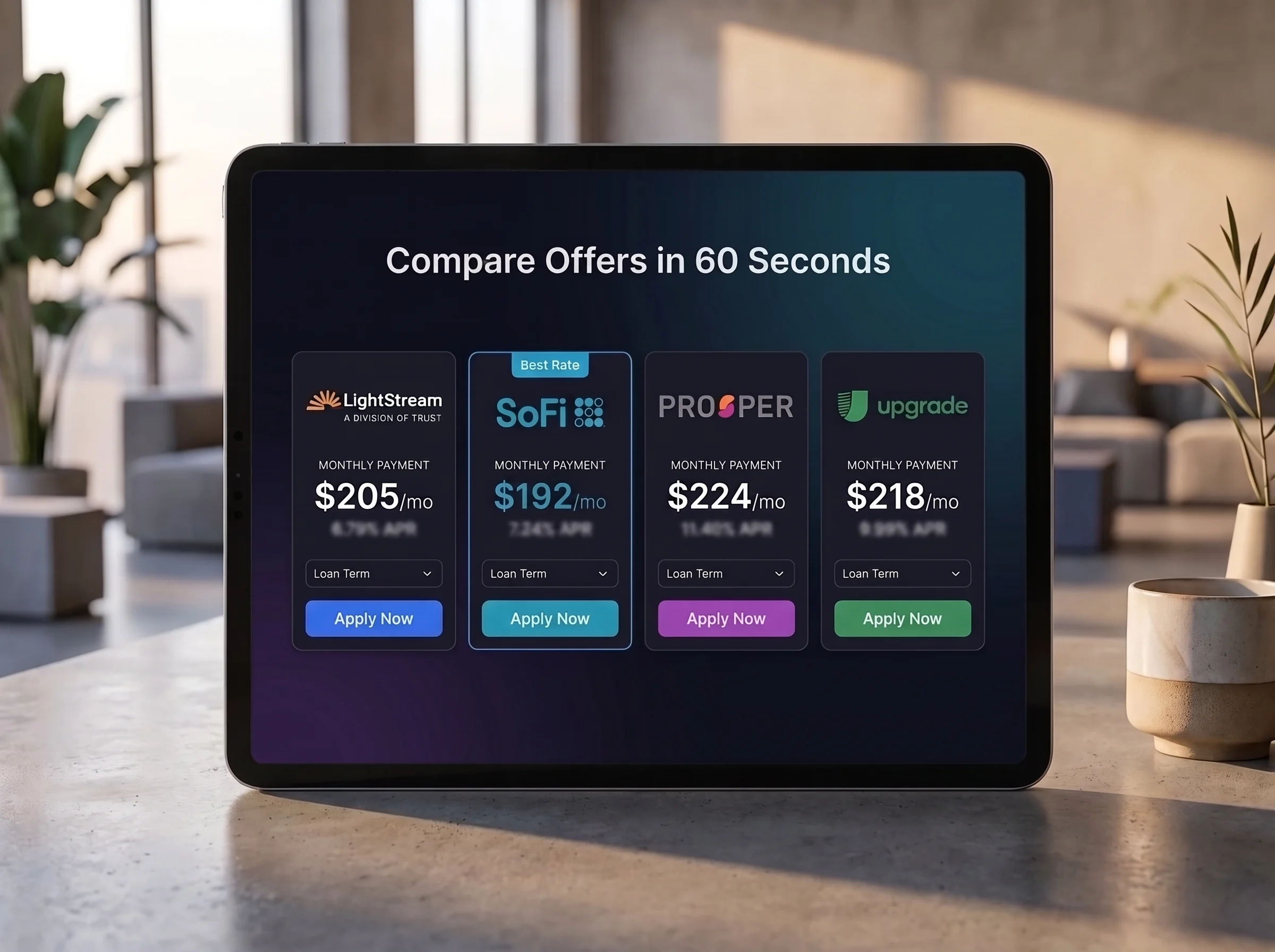
Getting started only takes a minute. Complete one simple application to compare available financing offers from over 18+ lenders, choose the option that fits your budget, and move forward with your home improvement project.
Water Heater Financing Calculator
1. Enter Your Desired Loan Amount
Your Estimate
Monthly Payment
-
This calculator provides estimates for illustrative purposes only and does not constitute an offer of credit or a commitment to lend. Final APRs, loan amounts, and terms depend on credit approval, income verification, and lender underwriting criteria. Minimum and maximum rates/terms vary by state.
Powered by: Pasha Funding
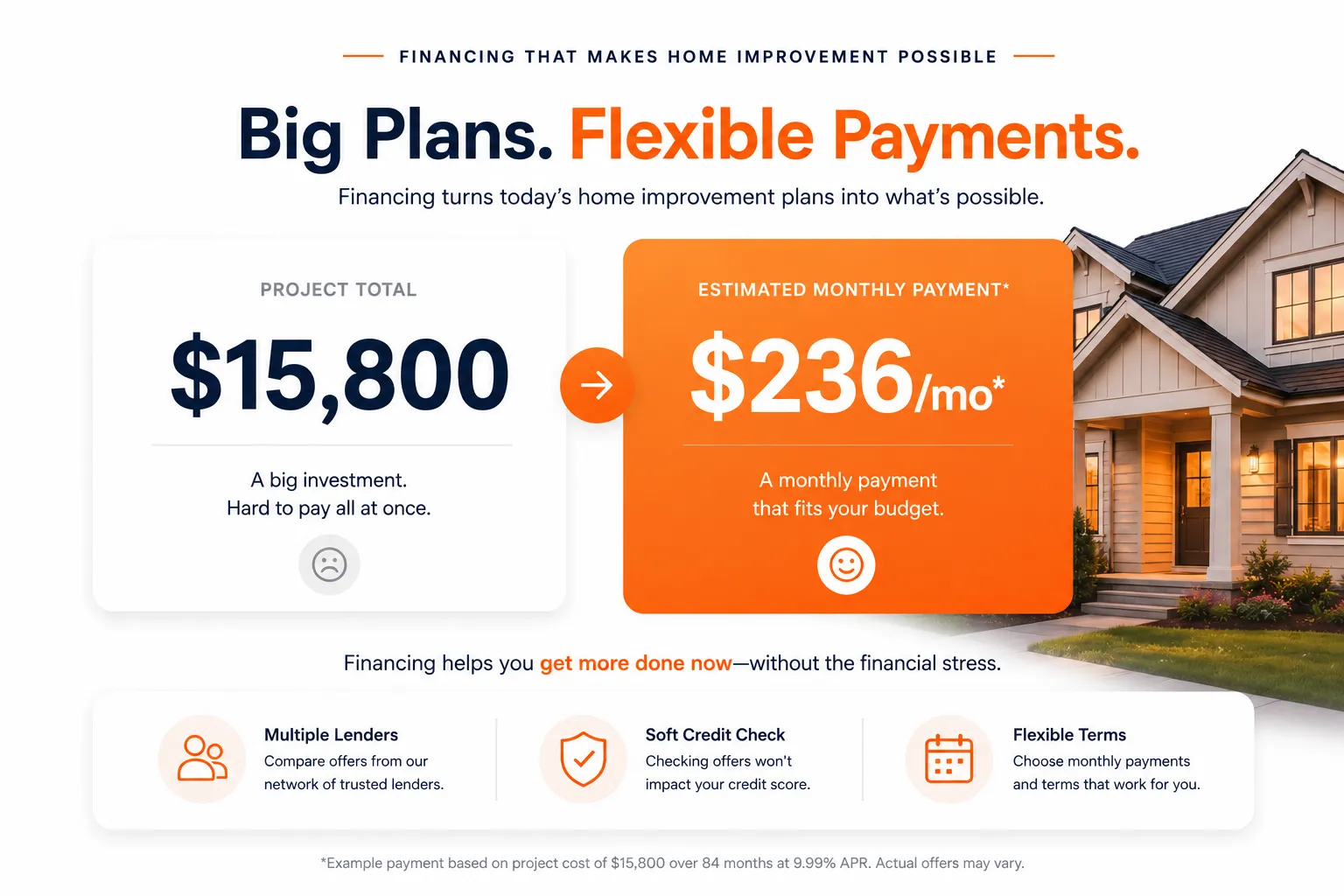
Risk-Free Prequalification
Checking offers won’t impact your credit.
It’s common for homeowners to delay applying because they’re worried about their credit score. With a soft credit check, you can review available financing options without any impact to your credit score.2