Participating Lender Network





financing & loan options for pool enclosures
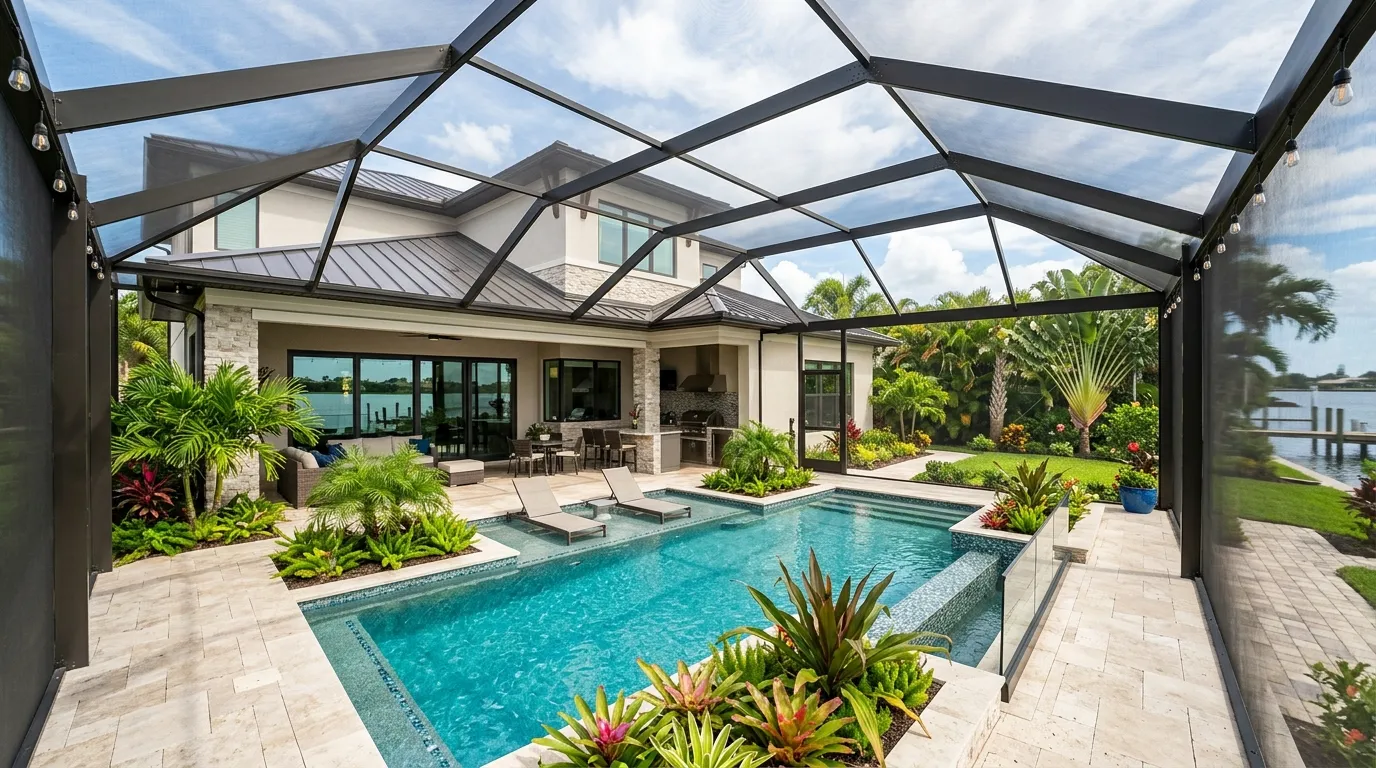
Budgeting for a pool enclosure starts with one decision that sets everything else: the material, since it drives both what the enclosure does and what it costs. A screen cage runs about $4,000 to $14,000, while a tempered-glass or architectural enclosure reaches $35,000 to $90,000 or more and seals out the weather so you can extend the season or swim year-round. The size of the project shapes how you pay for it: a screen cage often fits a personal loan or a contractor’s payment plan, while a large glass or retractable enclosure is where home equity or a bigger loan comes in.
The biggest mistake is choosing an enclosure based on price rather than purpose. A screen cage may be the least expensive option, but it does little to retain heat. If year-round swimming is the goal, saving money upfront could mean paying considerably more to upgrade later. The opposite can be just as costly: investing in a full glass enclosure when all you really need is protection from insects and debris. Before financing the project, decide how you expect to use the pool, choose materials that make sense for your climate, and compare costs based on the fully installed price, not just the enclosure itself.
Key Takeaways
- The material determines the price: an aluminum screen enclosure runs about $8 to $20 per square foot ($4,000 to $14,000), rigid polycarbonate about $25 to $65 ($15,000 to $45,000), and tempered architectural glass about $45 to $120 or more ($35,000 to $90,000+).
- Financing should match the size of the project: personal loans or contractor financing may work well for a screen or mid-range enclosure, while larger glass or retractable projects can make a home equity loan, HELOC, or cash-out refinance worth considering.
- Screens are considerably cheaper than glass: a screened enclosure can cost 50% to 70% less than a comparable glass structure, a practical option when climate control isn’t a priority.
- Retractable systems carry a premium: motorized enclosures that open and close run roughly $75 to $200 per square foot, the most expensive option and usually built from polycarbonate.
- Soft costs move the loan amount: permitting and wind-load engineering, deck reinforcement, and dehumidification for a sealed glass room can add thousands beyond the enclosure itself, so finance the fully installed project, not the panel price.
How Much Does a Pool Enclosure Cost?
Cost comes down to the material, and most enclosures use screen, polycarbonate, or glass, with motorized retractable systems sitting at the top of the range. Each matches a different goal, so pick the one that fits your climate and how much you want to use the pool, since that decides both the experience and the price.
- Aluminum screen (about $8 to $20 per square foot): an aluminum frame with mesh walls, the most affordable option. It keeps out insects, leaves, and debris, cuts UV and cleaning time, and lets air flow through, which makes it the standard in warm southern climates. It doesn’t hold heat or block cold.
- Rigid polycarbonate (about $25 to $65 per square foot): clear or tinted impact-resistant panels that block the elements and can be built low or tall. A middle tier that extends the swim to three seasons and adds child-safety enclosure, less expensive than glass but prone to fogging and discoloration over time.
- Tempered architectural glass (about $45 to $120+ per square foot): the premium choice, with unobstructed views, the least maintenance, and true four-season, climate-controlled use when paired with heating and dehumidification. It’s the most expensive fixed material by a wide margin.
- Motorized retractable (about $75 to $200 per square foot): a telescopic system, usually polycarbonate, that opens and closes so you can uncover the pool on nice days. The most expensive option overall because of the track, motor, and engineering.
| Material | Cost per sq ft | Typical total | Primary purpose | Best financing |
|---|---|---|---|---|
| Aluminum screen | $8–$20 | $4,000–$14,000 | Insects, debris, light shade | Personal loan or 0% card |
| Rigid polycarbonate | $25–$65 | $15,000–$45,000 | Three-season swim, child safety | Personal loan or contractor loan |
| Tempered glass | $45–$120+ | $35,000–$90,000+ | Four-season climate control | HELOC, home equity, or cash-out refi |
Cost ranges from HomeGuide and Fixr. Motorized retractable systems run higher, roughly $75 to $200 per square foot. Actual prices vary.
Shape matters too: flat and curved roofs are cheapest, while gable, dome, lean-to, and segmented shapes add roughly 10% to 20%. A lean-to enclosure that attaches to the house lets you step straight out from indoors.
Screen vs. Glass Pool Enclosure: Which Is Better?
This is the choice that moves your budget the most, because the cost gap between the two is large. Screen enclosures typically cost 50% to 70% less than a comparable glass one, so an enclosure that runs $8,000 to $14,000 in screen could reach $40,000 or more in glass. What you gain by paying up for glass is four-season, all-weather use, unobstructed views, and lower maintenance, since there’s no mesh to rescreen. What you give up with screen is season extension and the polished look, but you keep airflow and a far lower price. If you live where the pool sits idle in winter anyway, screen usually wins on value; if you want to swim in cold months, glass or polycarbonate is what makes that possible.
Resale value is part of the math too. A screen cage is close to expected in warm-climate markets like Florida and the Gulf Coast, where buyers assume a pool has one, so it protects value more than it adds a premium. A high-end glass or retractable enclosure can raise a home’s appeal in the right market, but rarely returns its full cost at sale, so treat it as a lifestyle upgrade you finance for your own use, not an investment that pays itself back.
Does Homeowners Insurance Cover a Pool Enclosure?
Sometimes, and it’s worth checking before you build or rebuild. A pool enclosure is usually treated as a detached or other structure under a standard HO-3 policy, which covers structures on an open-perils basis, meaning covered for any cause except those the policy specifically excludes. The catch is that many policies limit or exclude screen and mesh structures, or cover only partial replacement, and the exclusions that matter most for an enclosure, like wear and tear, gradual deterioration, and sometimes wind or named-storm damage in certain regions, are exactly what tends to damage one. A sudden, non-excluded event, like a fallen tree or a fire, is more likely to be covered than slow deterioration or a rescreen. Read your policy’s other-structures limit and its wind and screen provisions, per guidance from the Insurance Information Institute, and confirm the coverage before a storm rather than after.
This matters most in hurricane-prone states. In Florida, Louisiana, Texas, and the Carolinas, the windstorm portion of a policy often covers the aluminum structural framework but explicitly excludes the screen mesh itself, so a storm that shreds the screening (a “cage screen tear-off”) may leave you paying to rescreen out of pocket even when the frame is covered. If you live in one of these states, read the windstorm rider’s screen language closely before you assume a rebuild is covered.
How Do You Finance a Pool Enclosure?
Because enclosures range from a few thousand dollars to well into five figures, the right financing depends on the type you build. How the common paths compare:
- Unsecured personal loan: a common choice for a screen or mid-range enclosure. It funds fast as a lump sum, places no lien on your home, and carries a fixed rate with predictable payments. Because the contractor sees you as a cash customer, it can even add negotiating room. Good credit earns the best terms.
- Contractor or retailer financing: many enclosure companies offer payment plans through a lending partner, sometimes with a promotional 0% period. Compare it against an outside loan, and check whether a “no interest” offer is a true 0% or deferred interest.
- Home equity loan or HELOC: worth considering for a large glass or retractable enclosure, since it usually carries the lowest relative rate. The trade-off is a lien on your home, an appraisal, and closing costs, which can outweigh the savings on a smaller screen cage.
- Cash-out refinance or new-mortgage inclusion: if you’re already refinancing or buying, some lenders let you roll the enclosure into the mortgage, spreading it over a long term at a mortgage rate.
How Do You Qualify for Pool Enclosure Financing?
What it takes to qualify depends on the enclosure. A screen cage financed with a personal loan is underwritten on your credit and income alone. A large glass or retractable enclosure financed with home equity is a bigger process with an appraisal, so it helps to know what a lender weighs and how to work through it.
What Do Lenders Look at for a Pool Enclosure Loan?
For a personal loan, contractor financing, or a home equity product, a lender is weighing four things:
- Your credit score and history set your rate and approval. Good credit or better earns the lowest personal-loan rates and the best contractor promotions; fair credit still qualifies with most lenders at a higher cost.
- Your debt-to-income ratio, your monthly debt payments against your gross income, tells the lender whether you can take on another payment. Most look for it below the 36% to 43% range.
- Your income and employment back it up: recent pay stubs and W-2s, or one to two years of tax returns and 1099s if you’re self-employed.
- Your home equity matters only for the secured options. A home equity loan or HELOC on a large glass or retractable enclosure depends on your home’s value and your equity, and involves an appraisal; a screen cage rarely needs one.
The figure that trips people up is the installed total. An enclosure is quoted per square foot, but the loan needs to cover the frame, screening or panels, any electrical for fans and lighting, permits, and labor, so borrow against the full installed cost rather than the base square-foot number.
How to Apply for Pool Enclosure Financing
1. Get an itemized installed quote. Have the contractor break out the frame, panels or screen, electrical, permits, and labor, so you borrow against the real installed total, not a per-square-foot estimate that leaves out the extras.
2. Check your own credit first. Look at your score and report and fix any errors before a lender sees them. If your score sits just below the next tier, a few weeks of paying down balances can move you into a better rate.
3. Prequalify with a few lenders. Compare a personal loan, contractor financing, and any home equity option, prequalifying with a soft pull where you can, so you can weigh the offers directly.
4. Compare on total cost, not the monthly payment. A smaller monthly figure is often just a longer term that costs more overall. Weigh the rate, any fees, and the total you’ll repay, and check whether a contractor’s 0% offer is a real promotion or deferred interest.
5. Apply for the one that fits. Once you’ve picked the loan, submit the full application, which triggers a hard credit check and, for a home equity loan or HELOC, the appraisal and closing.
A screen cage on a personal loan tends to move fast, often approved the same day and funded within a few business days. A home equity loan or HELOC for a large glass enclosure takes a few weeks because of the appraisal and closing, so build that into your timeline.
Closing Thoughts
How you pay for a pool enclosure comes down to which type you build. A screen cage is affordable enough for a personal loan or a contractor payment plan, and it delivers most of the everyday benefit in a warm climate. A large glass or retractable enclosure, the kind that lets you swim year-round, is where home equity or a mortgage-based option makes sense, since it carries the lowest relative rate on a bigger amount. Contractor financing can be convenient if the promotional terms are clear.
Before you borrow, total the full installed project rather than a per-square-foot figure, and match the enclosure to your climate so you’re not paying for glass to solve a bug problem. Check whether your insurance covers enclosure damage before a storm, and compare any financing offer on the total you will repay rather than the monthly figure.
The information provided by Pasha Funding is for educational and informational purposes only and should not be considered financial, legal, or tax advice. Every homeowner’s financial situation is different, and the financing options discussed may not be suitable for everyone. Before choosing a financing solution, carefully review the lender’s terms and consider consulting a qualified financial professional if needed.
Pasha Funding is a financing marketplace that connects homeowners with financing options offered by participating lending partners. We do not make loans, determine credit eligibility, or guarantee approval or specific loan terms. Pasha Funding is not a direct lender. We may receive compensation from participating lending partners when users submit an application or obtain a loan through our platform. This compensation may affect how and where financing options appear, but it does not influence our editorial evaluations.
Financing offers, rates, terms, and availability are determined solely by participating lenders and may change without notice. Our editorial content is created independently to help consumers better understand home improvement financing. While we strive to keep information accurate and current, financing products, lender requirements, rates, and offers may change over time. Any opinions expressed are those of the author and have not been reviewed, approved, or endorsed by our lending partners.

See also:
- Swimming Pool Financing & Loans
- Above Ground Pool Financing
- Fiberglass Pool Financing
- Pool Enclosure Loans
Pool financing options by state:
Frequently Asked Questions
how it works
3 Simple steps to
finance your project.
Getting started only takes a minute. Complete one simple application to compare available financing offers from over 18+ lenders, choose the option that fits your budget, and move forward with your home improvement project.
Pool Enclosure Financing Calculator
1. Enter Your Desired Loan Amount
Your Estimate
Monthly Payment
-
This calculator provides estimates for illustrative purposes only and does not constitute an offer of credit or a commitment to lend. Final APRs, loan amounts, and terms depend on credit approval, income verification, and lender underwriting criteria. Minimum and maximum rates/terms vary by state.
Powered by: Pasha Funding
Risk-Free Prequalification
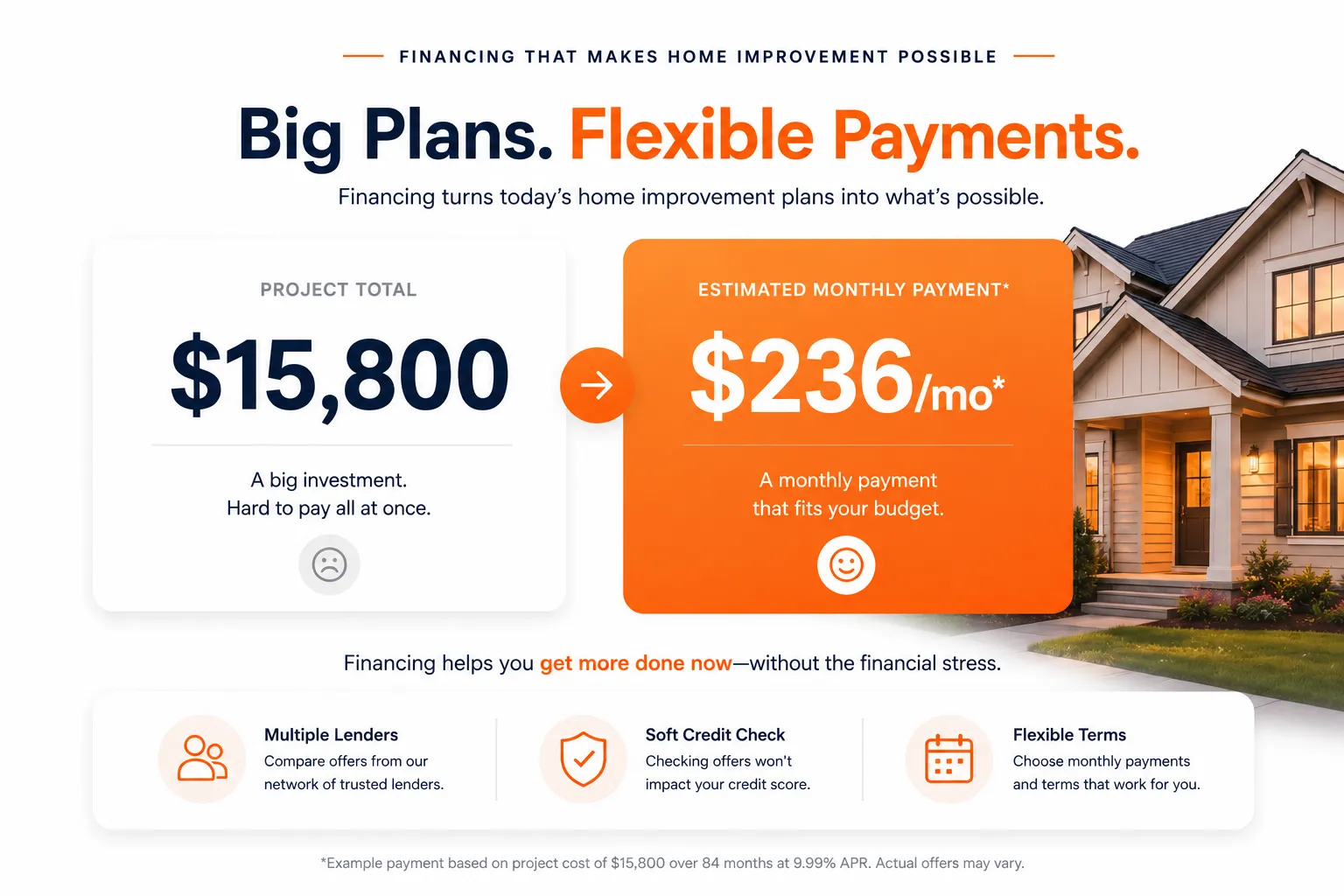
Checking offers won’t impact your credit.
It’s common for homeowners to delay applying because they’re worried about their credit score. With a soft credit check, you can review available financing options without any impact to your credit score.2