Participating Lender Network





How to Finance an Above-Ground Pool
An above-ground pool runs anywhere from about $1,000 for a small soft-sided setup to $12,000 or more for a large aluminum-framed pool installed with a deck, and the material you pick drives both the price and how many seasons it lasts. A soft-sided or inflatable pool is cheap and goes up in an afternoon but may last only a few years, while a metal or resin frame costs more and lasts a decade or longer. Because a basic kit is small enough to buy outright while a full installed package with decking and fencing reaches five figures, a smaller pool is often paid from savings or a 0% intro card, and a larger one is where a personal loan fits. The sticker on the kit is only the start, so it pays to price the site prep, electrical, and fencing before you decide how to pay.
Key Takeaways
- The material sets the price and lifespan: a soft-sided pool runs $200 to $2,500, a steel or resin frame $1,500 to $5,000 for the kit, and aluminum $4,000 to $12,000+.
- The kit is only the start: site leveling, electrical, fencing, and permits commonly add $2,000 to $8,500 on top of the pool itself.
- Soft-sided pools are truly DIY, but resin and metal-framed pools are best installed by a pro, since a botched hard-sided install can cost more to fix than the labor would have.
- A pool raises your homeowners insurance, and insurers typically require fencing, a self-closing gate, and sometimes an alarm as a condition of coverage.
- Unlike an in-ground pool, an above-ground pool usually does not raise your property taxes, since it is not a permanent structure.
Above-Ground Pool Cost by Type
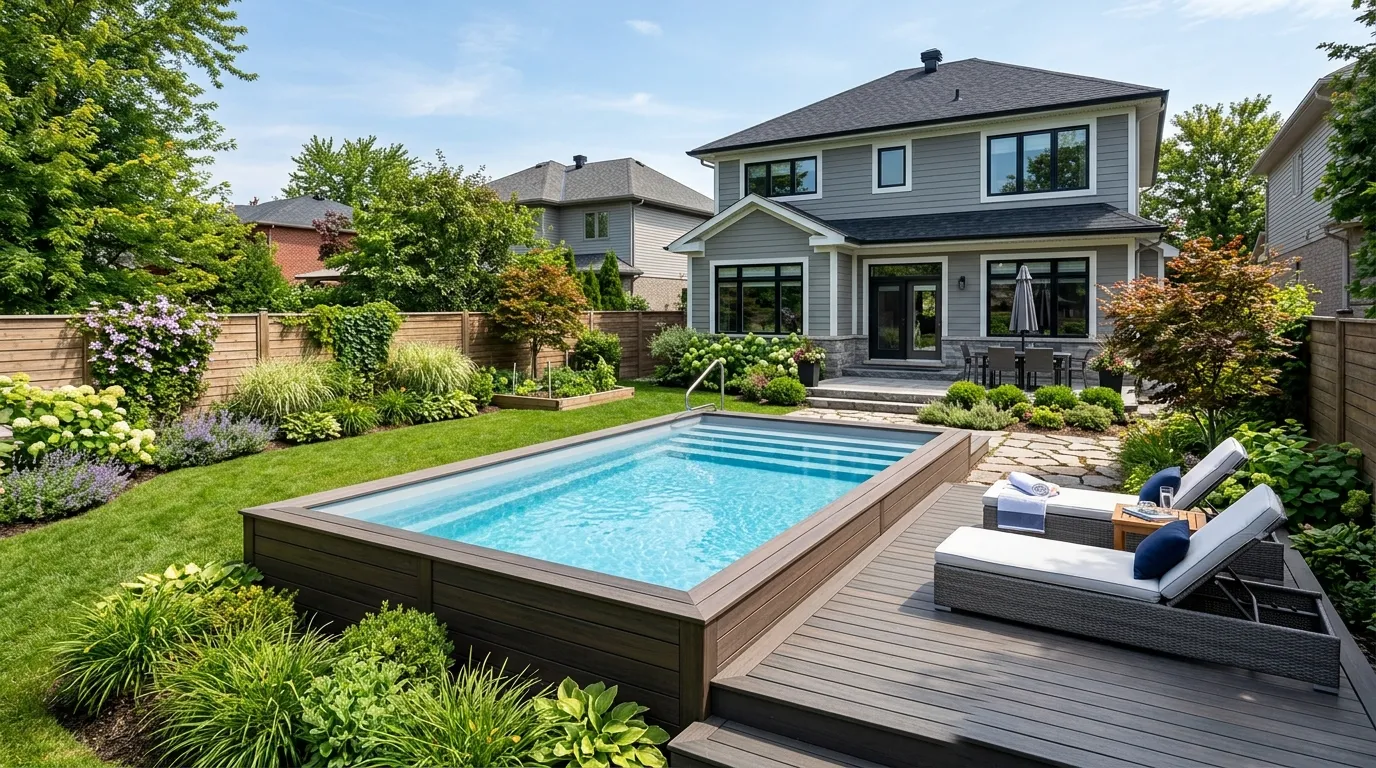
Above-ground is an umbrella term covering everything from a pop-up ring pool to a resin-and-composite system that looks nearly semi-inground. The frame material is the biggest lever on price and durability. Here is how the common types compare on installed cost.
- Soft-sided and inflatable: the cheapest and easiest, set up in an afternoon, but typically last only two to five years.
- Steel frame: the budget hard-sided choice, strong and affordable, though prone to rust and corrosion over time.
- Resin: won’t rust and stays cooler to the touch, a middle-price option that resists corrosion better than steel.
- Aluminum: the premium tier, light and rust-proof, and the longest-lasting frame, which is why it costs the most.
Can You Install an Above-Ground Pool Yourself?
It depends on the type, and this is where above-ground pools genuinely differ from in-ground. A soft-sided or inflatable pool is a true DIY project you can set up in a few hours with no special skills. A resin or metal-framed pool is a different matter: professional installation adds $1,000 to $3,000 but comes with proper yard leveling, correct electrical work, and usually a workmanship guarantee. A hard-sided pool that develops a leak or structural problem from a rushed DIY install can cost more to fix than the labor would have. One rule holds regardless of type: any electrical work for the pump, heater, or lighting should go to a licensed electrician, since code requires it wherever water is involved.
How Do You Finance an Above-Ground Pool?
Because above-ground pools span such a wide price range, the right financing depends mostly on which end you land on. How the common paths compare:
| Financing Option | Best Fit | Key Details & Trade-Offs |
|---|---|---|
| Savings or 0% Intro APR Card | Soft-sided pool or basic steel kit ($200–$3,000) | Ideal if you can repay the balance inside the promotional window to avoid interest. |
| Unsecured Personal Loan | Mid-range resin or hybrid pool with installation ($3,000–$10,000) | Funds quickly with no lien on your home, fixed rates, and predictable payments. Requires good credit for best terms; watch for origination fees. |
| Home Equity Loan or HELOC | Premium aluminum pool with deck, fence, and electrical ($10,000+) | Carries lower relative interest rates, but places a lien on your home and requires equity, an appraisal, and closing costs. |
| Retailer or Dealer Financing | Promotional point-of-sale offers | Offered through third-party lenders. Compare total cost against outside loans and confirm whether “no interest” is true 0% or deferred interest. |
How Do You Qualify for Above-Ground Pool Financing?
Qualifying is quick for a purchase this size, and the goal is to size the loan to the full project rather than the kit alone. A short path:
- Total the real project, not the kit price: add site leveling, electrical, fencing, and permits to the pool cost so you borrow against the amount you will actually spend.
- Check your credit and prequalify with a soft pull: compare real offers without affecting your score, and weigh them on total repayment rather than the monthly figure.
- Match the tool to the tier: a card or small personal loan suits a soft-sided or steel kit, while home equity borrowing is mainly for a premium installed package.
The Bottom Line
How you pay for an above-ground pool comes down to which type you buy. A soft-sided pool or a basic steel kit is affordable enough for savings or a 0% intro card you clear inside the promotional window. A mid-range resin or hybrid pool with installation fits a personal loan that funds fast without touching your equity. A premium aluminum pool with a full deck, fence, and electrical work is the main case for a home equity loan or HELOC, since your home secures the larger amount.
Before you borrow, total the whole project rather than the kit sticker, since site prep, electrical, and a required fence often add as much as the pool itself. Call your insurer about coverage conditions before installation, choose a frame material that matches how long you plan to keep the pool, and compare any loan offer on the total you will repay rather than the monthly figure.
The information provided by Pasha Funding is for educational and informational purposes only and should not be considered financial, legal, or tax advice. Every homeowner’s financial situation is different, and the financing options discussed may not be suitable for everyone. Before choosing a financing solution, carefully review the lender’s terms and consider consulting a qualified financial professional if needed.
Pasha Funding is a financing marketplace that connects homeowners with financing options offered by participating lending partners. We do not make loans, determine credit eligibility, or guarantee approval or specific loan terms. Pasha Funding is not a direct lender. We may receive compensation from participating lending partners when users submit an application or obtain a loan through our platform. This compensation may affect how and where financing options appear, but it does not influence our editorial evaluations.
Financing offers, rates, terms, and availability are determined solely by participating lenders and may change without notice. Our editorial content is created independently to help consumers better understand home improvement financing. While we strive to keep information accurate and current, financing products, lender requirements, rates, and offers may change over time. Any opinions expressed are those of the author and have not been reviewed, approved, or endorsed by our lending partners.

See also:
- Swimming Pool Financing & Loans
- Above Ground Pool Financing
- Fiberglass Pool Financing
- Pool Enclosure Loans
Pool financing options by state:
Frequently Asked Questions
how it works
3 Simple steps to
finance your project.
Getting started only takes a minute. Complete one simple application to compare available financing offers from over 18+ lenders, choose the option that fits your budget, and move forward with your home improvement project.
Above Ground Pool Financing Calculator
1. Enter Your Desired Loan Amount
Your Estimate
Monthly Payment
-
This calculator provides estimates for illustrative purposes only and does not constitute an offer of credit or a commitment to lend. Final APRs, loan amounts, and terms depend on credit approval, income verification, and lender underwriting criteria. Minimum and maximum rates/terms vary by state.
Powered by: Pasha Funding
Risk-Free Prequalification
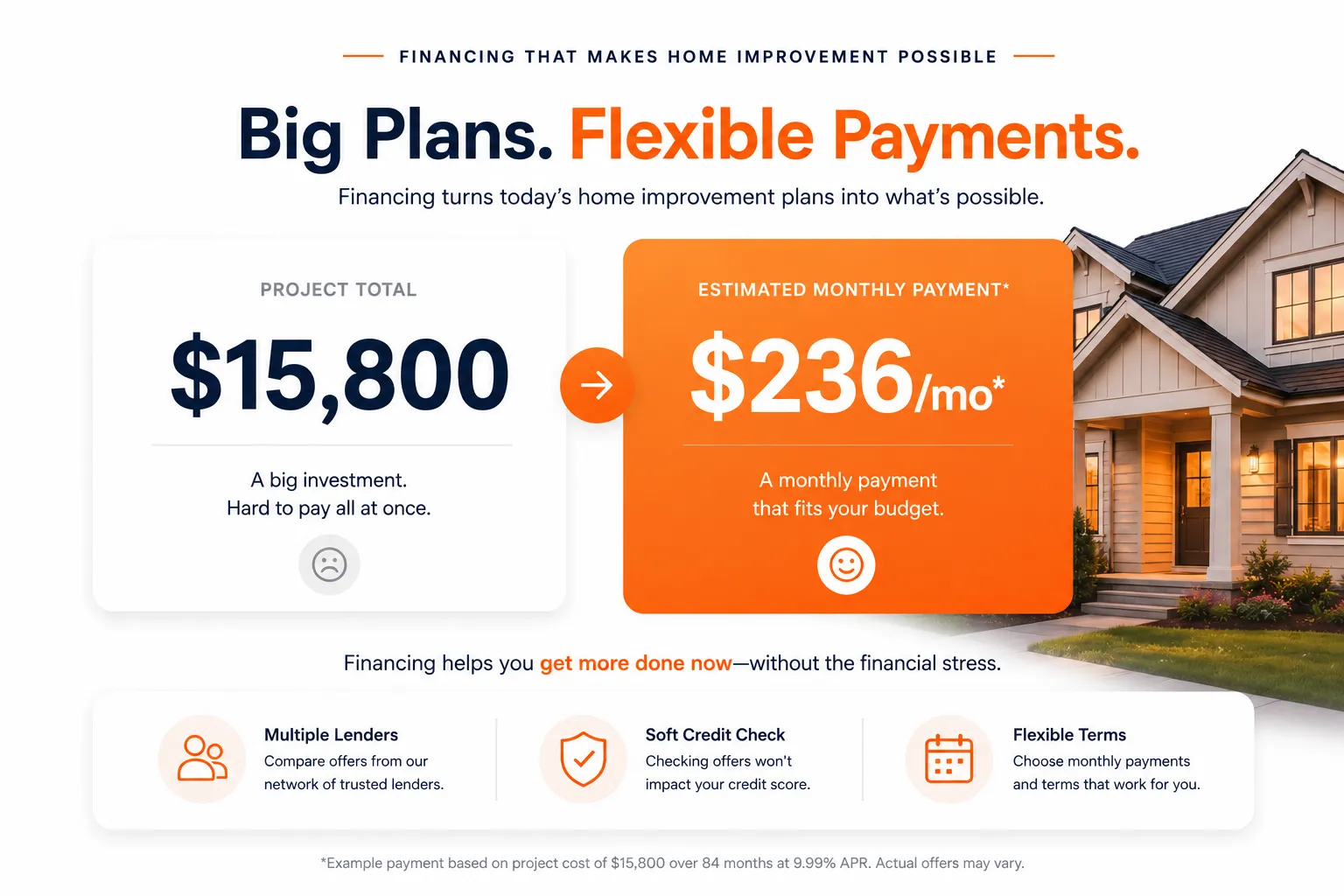
Checking offers won’t impact your credit.
It’s common for homeowners to delay applying because they’re worried about their credit score. With a soft credit check, you can review available financing options without any impact to your credit score.2