Participating Lender Network






How to Finance a new swimming pool in florida
A new in-ground pool in Florida runs about $50,000 to $110,000 or more, higher than the national average, because coastal building codes, a near-standard screen enclosure, and elevated labor all add to the bill. Where you land depends heavily on your region: South Florida commands a premium over Central and North Florida, and a screen enclosure alone adds $10,000 to $30,000 or more. Because a Florida pool is a high five-figure project, most homeowners finance it, commonly with a home equity loan, a home equity line of credit (HELOC), or a cash-out refinance, since a new pool generally can’t be rolled into a purchase mortgage. A personal loan can cover a smaller project or fill a gap. Before you borrow, it helps to understand what makes a Florida pool cost what it does.
Key Takeaways
- A Florida in-ground pool typically costs $50,000 to $110,000+, with many complete projects landing around $70,000 once decking, equipment, and permits are included.
- A screen enclosure (pool cage) adds $10,000 to $30,000+ and is close to standard in Florida for insects, sun, and debris, with coastal cages engineered for hurricane wind loads.
- Region drives price: South Florida runs 15% to 25% higher than Central and North Florida on labor and coastal code requirements.
- Florida law requires every new residential pool to have at least one approved safety feature before it passes final inspection.
- Because the ticket is large, most Florida pools are financed with home equity, a HELOC, or a cash-out refinance rather than paid in cash.
How Much Does a Pool Cost in Florida?
Florida sits above the national average, where an in-ground pool runs closer to $65,000. A realistic starting budget in Florida is around $70,000, and the spread is wide because the material and the site do most of the work.
- Vinyl-liner pools: the most affordable in-ground option, often starting around $25,000 to $55,000, using a wall system with a fitted vinyl surface.
- Fiberglass pools: a pre-molded shell dropped into the excavation, commonly $35,000 to $65,000, popular in Florida for a fast install.
- Concrete (gunite) pools: the fully custom option and the Florida standard for larger builds, often $50,000 to $85,000 or more before upgrades.
Beyond the pool itself, decking and pavers ($5,000 to $35,000), a spa, automation, lighting, and water features all add up, and a high-end custom project with a screen enclosure can reach $100,000 to $150,000 or more.
Why Do Florida Pools Need a Screen Enclosure?
The pool cage is the cost that defines a Florida pool and that homeowners from other states rarely expect. A screen enclosure keeps out mosquitoes and love bugs, cuts down on leaves and debris, blocks a large share of UV so the water stays cooler and needs fewer chemicals, and adds a usable, shaded outdoor room. Most Florida pool owners consider it close to essential rather than optional.
It is also a real structural project, not just screen and framing. A cage adds $10,000 to $20,000 or more, and coastal enclosures cost more because they must be engineered to transfer hurricane wind loads to the ground, with sealed engineering drawings, concrete footers, and framing rated for 110-plus mph winds. That is why a Fort Myers or Emerald Coast cage can run well above an inland one of the same size. If you know you want the enclosure, building it with the pool is usually cheaper than a separate mobilization and permit later, and financing the whole project at once avoids taking out a second loan.
What Are Florida’s Pool Safety Requirements?
Florida’s Residential Swimming Pool Safety Act (Chapter 515, Florida Statutes) requires every new residential pool to include at least one approved safety feature before it can pass final inspection. You choose from a defined list:
- A compliant barrier or fence at least four feet high surrounding the pool.
- An approved safety pool cover that meets the state standard.
- Exit alarms on doors and windows with direct access to the pool.
- Self-closing, self-latching doors with the latch positioned high on the door.
Skipping this is not a minor matter: failing to equip a new pool with an approved feature is a second-degree misdemeanor under Florida law, and local counties, especially in South Florida and along the coast, can layer additional requirements on top. A screen enclosure with self-latching doors often satisfies the barrier requirement, which is one more reason the cage is standard here. Fold the safety feature and its permit into your budget from the start.
How Much Does Pool Cost Vary by Region in Florida?
Location within the state moves the price as much as the pool type. South Florida (Miami-Dade, Broward, Palm Beach) runs 15% to 25% higher than Central and North Florida, driven by higher labor costs and stricter coastal building codes. Coastal counties anywhere in the state add engineering and wind-load requirements that inland areas do not face, and permit fees and approval times vary widely by county. If you are comparing quotes, make sure they are from installers who build to your county’s code, since a bid built to inland standards will not hold up on the coast.
How Do You Finance a Pool in Florida?
Because a Florida pool is a large project, the financing choice usually comes down to whether you tap home equity or borrow unsecured. One Florida-specific point: you generally cannot roll a new pool into a home purchase mortgage, so a pool built after you buy is funded separately. Here is how the common paths compare:
- Home equity loan: the best fit for a complete pool and screen enclosure package with a known total. It carries a fixed rate and usually the lowest relative rate of these options because your home secures it, giving predictable payments. It requires good-to-excellent credit and meaningful built-up equity, an appraisal, and closing costs, and it places a lien on your home.
- HELOC: ideal for a phased build, such as digging the pool now and adding the cage later, since you draw against the line as you go. It carries a lower relative rate than unsecured borrowing, but the rate is typically variable, so your monthly payment can move up or down over time.
- Cash-out refinance: the best choice when you also want to reset your existing mortgage, since it replaces your current loan with a larger one and takes the difference in cash for the pool. It locks the whole balance into one long-term rate, but it resets your primary mortgage term and carries full closing costs.
- Unsecured personal loan: best for a smaller pool, a standalone screen enclosure, or filling a gap the equity financing doesn’t cover. It funds fast and places no lien on your home, but it carries a higher relative rate than the equity options and may include an origination fee taken from your proceeds.
To see the trade-off in practice, picture a $75,000 pool and enclosure project. Funded with a home equity loan, it carries a lower relative rate and a lien on your home, but you pay appraisal and closing costs and your house is on the line. Funded with a personal loan, you skip the closing costs and keep your home free of a lien, but you accept a higher relative rate. The secured route generally costs less to carry over the life of the loan, while the unsecured route costs more but keeps your home out of the deal, which is the real question to weigh rather than the monthly figure alone.
Is Pool Financing Tax-Deductible?
Sometimes, and a pool is a stronger case than most home projects, but the rule is specific. Interest on a home equity loan, HELOC, or cash-out refinance is deductible only when the money is used to “buy, build, or substantially improve” the home that secures the loan, per IRS Publication 936. A permanent in-ground pool that adds lasting value to the property generally counts as a capital improvement, so the interest may qualify. Decorative or portable extras are different: a standalone water feature added later or a portable accessory typically does not meet the substantial-improvement test on its own. Because the line depends on how the work is classified and on your overall mortgage debt, confirm your situation with a CPA before assuming a deduction.
Does a Pool Add Value to a Florida Home?
More than in most of the country. In a warm-climate market like Florida, a pool is a feature buyers actively look for, and it can add roughly $15,000 to $40,000 to a home’s appraised value depending on size and finish, compared with far less or nothing in cooler states. A screen enclosure adds to that appeal, since buyers see a maintained cage as a sign of a well-kept home. Even so, most homeowners do not recover the full installation cost at resale, so the year-round use you get from a Florida pool is the real return, with the value bump as a bonus. Because the state’s climate makes a pool usable nearly all year, that everyday use is worth more here than in a place with a three-month season.
How Do You Qualify for Pool Financing in Florida?
Qualifying for a large pool loan leans on both your credit and, for the equity options, your home’s value. Have this documentation ready before you apply:
- A line-item contractor bid built to local county codes: one that separates the pool shell, decking, screen enclosure, and permit fees, so you borrow against the full built-to-code total rather than the shell alone. In Florida, the cage and permits are a large share of the cost, so an itemized bid matters.
- Proof of income: recent pay stubs, W-2s, or 1099s and tax returns if you are self-employed.
- Your debt-to-income (DTI) ratio: tally your monthly debt against gross income; lenders generally look for a DTI under the 36% to 43% range.
- A current home valuation or recent appraisal: home equity loans, HELOCs, and cash-out refinances all depend on your home’s value and how much equity you hold, so a valuation sets what you can borrow.
With those in hand, prequalify with a soft credit check to compare real offers without affecting your score, and weigh them on the total you will repay rather than the monthly figure.
The Bottom Line
How you pay for a Florida pool depends on the size of the project and your equity. For a full in-ground pool with a screen enclosure, a home equity loan or HELOC usually offers the lowest relative rate, and a cash-out refinance can work if you also want to adjust your mortgage. A personal loan fits a smaller pool, a standalone enclosure, or a gap in the budget, and funds quickly without a lien. Remember a new pool generally can’t be rolled into a purchase mortgage, so plan to finance it separately.
Before you borrow, get an itemized, built-to-code quote that includes the screen enclosure, the required safety feature, decking, and county permits, and confirm the installer builds to your region’s wind and code standards. Weigh the year-round use you’ll actually get against the total cost, and compare any loan offer on the amount you will repay rather than the monthly figure.
The information provided by Pasha Funding is for educational and informational purposes only and should not be considered financial, legal, or tax advice. Every homeowner’s financial situation is different, and the financing options discussed may not be suitable for everyone. Before choosing a financing solution, carefully review the lender’s terms and consider consulting a qualified financial professional if needed.
Pasha Funding is a financing marketplace that connects homeowners with financing options offered by participating lending partners. We do not make loans, determine credit eligibility, or guarantee approval or specific loan terms. Pasha Funding is not a direct lender. We may receive compensation from participating lending partners when users submit an application or obtain a loan through our platform. This compensation may affect how and where financing options appear, but it does not influence our editorial evaluations.
Financing offers, rates, terms, and availability are determined solely by participating lenders and may change without notice. Our editorial content is created independently to help consumers better understand home improvement financing. While we strive to keep information accurate and current, financing products, lender requirements, rates, and offers may change over time. Any opinions expressed are those of the author and have not been reviewed, approved, or endorsed by our lending partners.

See also:
- Swimming Pool Financing & Loans
- Above Ground Pool Financing
- Fiberglass Pool Financing
- Pool Enclosure Loans
Pool financing options by state:
Frequently Asked Questions
In this guide
- How Much Does a Pool Cost in Florida?
- Why Do Florida Pools Need a Screen Enclosure?
- What Are Florida’s Pool Safety Requirements?
- How Much Does Pool Cost Vary by Region in Florida?
- How Do You Finance a Pool in Florida?
- Is Pool Financing Tax-Deductible?
- Does a Pool Add Value to a Florida Home?
- How Do You Qualify for Pool Financing in Florida?
- The Bottom Line
how it works
3 Simple steps to
finance your project.
Getting started only takes a minute. Complete one simple application to compare available financing offers from over 18+ lenders, choose the option that fits your budget, and move forward with your home improvement project.
swimming Pool Financing Calculator
1. Enter Your Desired Loan Amount
Your Estimate
Monthly Payment
-
This calculator provides estimates for illustrative purposes only and does not constitute an offer of credit or a commitment to lend. Final APRs, loan amounts, and terms depend on credit approval, income verification, and lender underwriting criteria. Minimum and maximum rates/terms vary by state.
Powered by: Pasha Funding
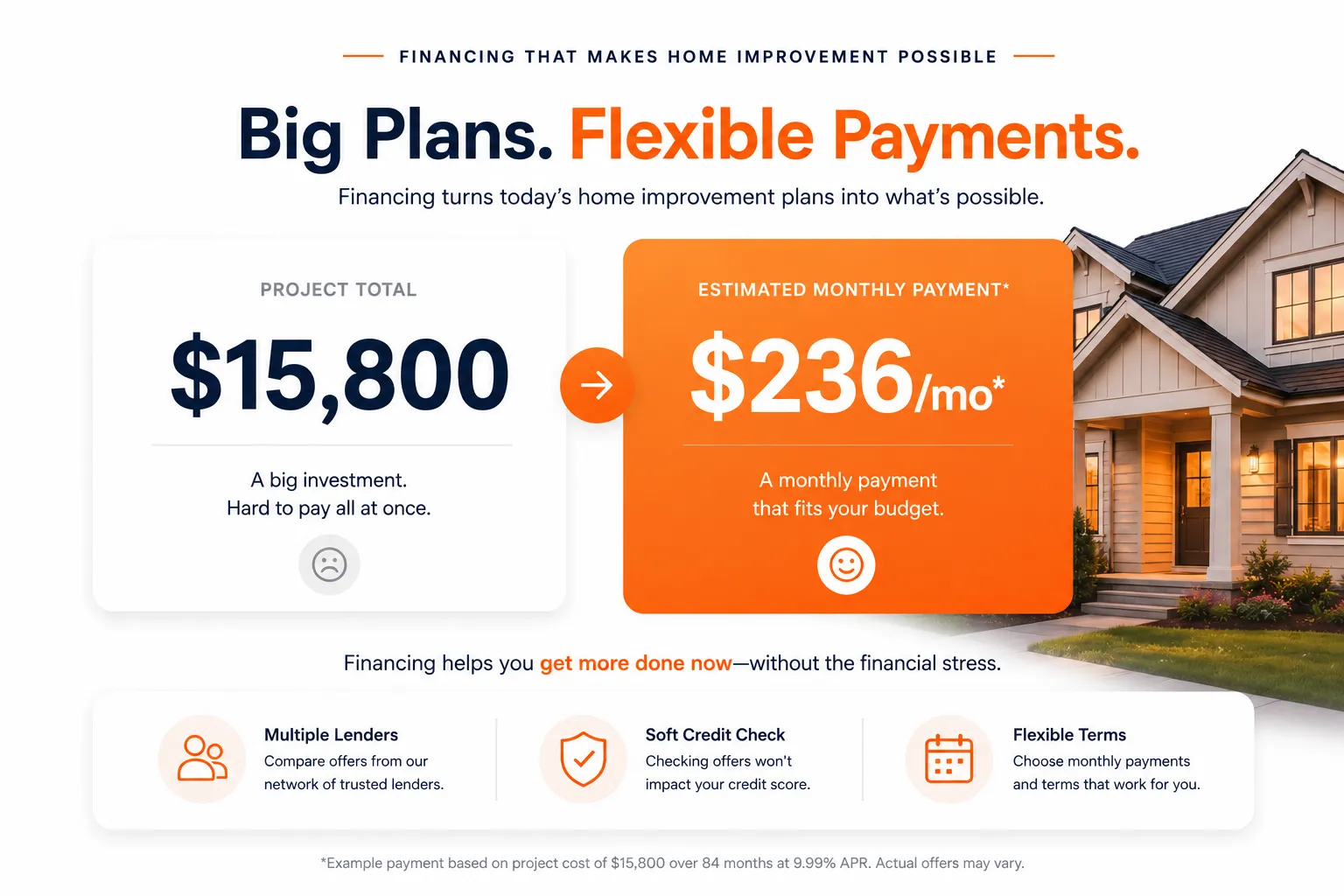
Risk-Free Prequalification
Checking offers won’t impact your credit.
It’s common for homeowners to delay applying because they’re worried about their credit score. With a soft credit check, you can review available financing options without any impact to your credit score.2