
Participating Lender Network





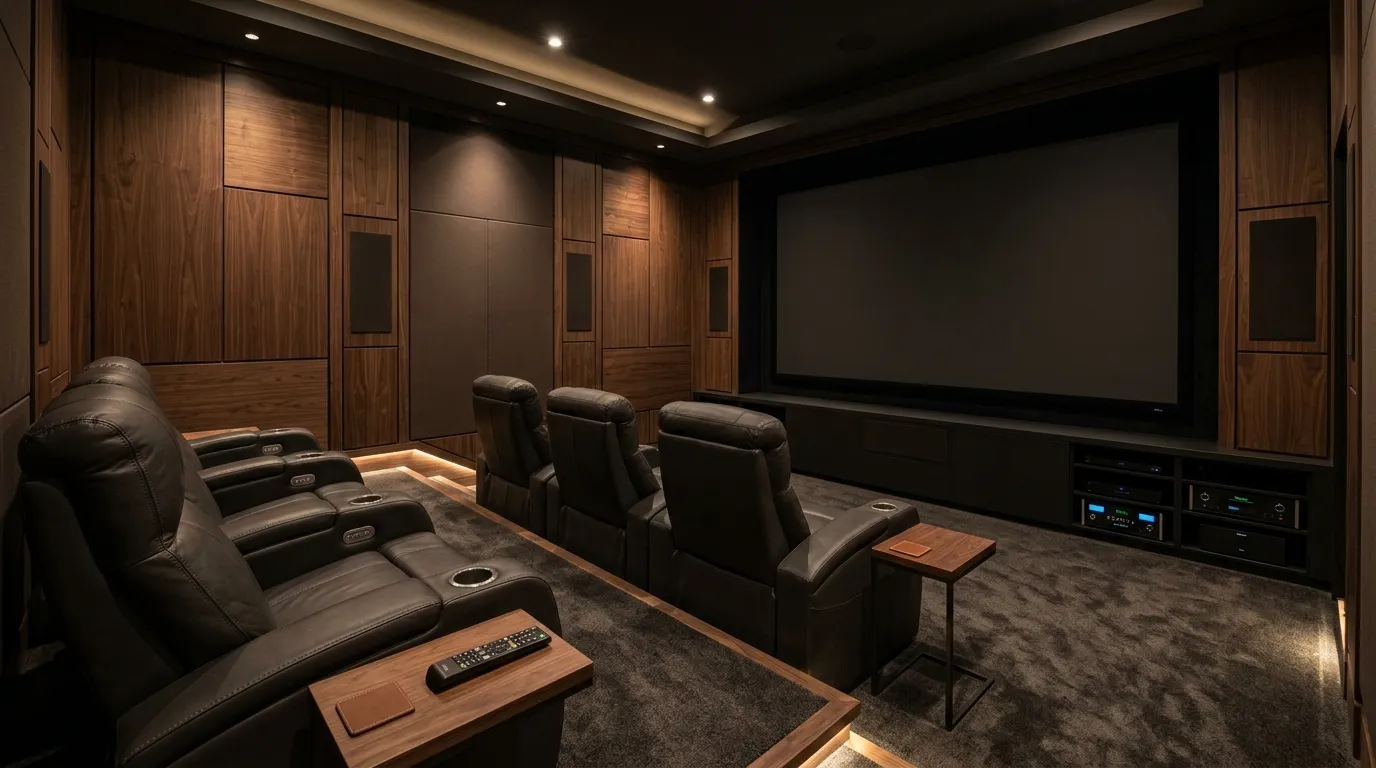
How to Finance a Home Theater
A home theater is one of the more flexible home projects when it comes to budget, since what you spend depends almost entirely on how far you take the room. A simple media room with a large TV and surround sound runs about $6,000 to $15,000, while a dedicated, soundproofed cinema with a projector and tiered seating typically costs $25,000 to $50,000 or more. Because it’s an elective upgrade rather than a necessary repair, most homeowners finance it with a personal loan, a home equity loan or HELOC, or a 0% intro credit card for smaller builds. The right choice depends on the size of the project, how much equity you have, and how quickly you need the money.
Key Takeaways
- The media-room vs. dedicated-theater choice drives everything: a media room with a TV and surround sound runs $6,000 to $15,000, while a dedicated projector theater with soundproofing starts around $25,000.
- Most of a dedicated theater’s cost is construction, not electronics: soundproofing, wiring, circuits, and seating often exceed the AV gear.
- A home theater rarely returns its cost at resale: appraisers usually count the finished square footage at standard rates, not the theater premium, so build it for enjoyment.
- Phasing works well here: you can build the room and wiring first, then add speakers, seating, and automation over time to spread the cost.
- A personal loan fits a one-time build with no lien on your home, while a HELOC may cost less if the theater is part of a larger basement finish.
- Keep expensive gear removable if resale matters, since built-in finishes add more appraised value than loose electronics you can take with you.
How Much Does a Home Theater Cost?
What you spend comes down mostly to one decision: whether you’re upgrading a multipurpose family room or building a room dedicated entirely to watching. A basic setup runs about $2,000 to $5,000, a high-end dedicated theater lands around $25,000 to $42,000, and most homeowners fall in the middle, roughly $6,000 to $15,000 for a solid media room.
Costs also run 20% to 35% above the national range in high-cost metros and large custom homes.
Where Does the Money Actually Go?
Many people assume the audio and video equipment dominates the budget, but in a dedicated build, construction and furnishings often cost more than the gear. Here’s how a project breaks down:
- Seating ($500 to $2,500 per chair): a row of four premium recliners can reach $8,000, and tiered platform seating adds framing cost.
- Soundproofing ($3,500 to $7,000): real sound isolation means raising the wall’s Sound Transmission Class (STC) rating with double-layer drywall, Green Glue damping compound, mass loaded vinyl (MLV), and decoupling the wall so bass doesn’t travel through the framing. That runs well above standard drywall’s $1,500 to $4,000.
- Wiring and pre-wire ($1,500 to $4,000): low-voltage in-wall wiring for speakers and displays, ideally run through conduit (smurf tube) with Cat6A and 48Gbps HDMI 2.1 lines so the room can carry future 8K and 120Hz signals. Retrofitting through finished walls costs more.
- Dedicated electrical ($700 to $2,000): the AV rack should run on its own dedicated 20-amp isolated circuit, at $250 to $900 for the line, which prevents the electrical noise and speaker hum that shared circuits cause.
- Acoustic treatment and finishes ($2,000 to $15,000+): absorption panels, bass traps, and specialty wall finishes that control reflections inside the room (separate from blocking sound from escaping it).
- Calibration ($300 to $1,000): professional tuning of the picture and sound, the step that separates good gear from a great result.
Media Room vs. Dedicated Theater: Which Should You Build?
It’s worth settling this before you price anything, because it affects the budget more than any single piece of equipment. A media room is a multipurpose space with strong audio and video: a large TV or projector, surround sound, and comfortable seating. It still functions as a living space and doesn’t require blackout construction. A dedicated theater is a single-purpose room built for performance, with light control, soundproofing, tiered seating, and acoustic treatment. That added construction is the main reason its cost is so much higher.
Which one makes sense often depends on how long you plan to stay. If you expect to sell within the next three to five years, a media room is usually the better choice, because a flexible space appeals to more buyers and avoids the resale penalty a highly customized theater can carry. If this is a long-term home, a dedicated theater can be worth it, and phasing the work helps manage the cost. Complete the disruptive infrastructure first, the framing, soundproofing, wiring, and seating, then add the electronics over time. That approach lowers how much you borrow up front and lets you buy gear as prices drop.
Does a Home Theater Add Resale Value?
A home theater rarely returns its full cost at resale. Appraisers value a home based on finished square footage, not the equipment inside it, so loose electronics add little or nothing to an official appraisal. A projector, receiver, and seating you can unplug and take with you generally carry no separate weight, which means a large equipment investment often doesn’t appear in the appraised value. What does count is the built-in, permitted construction, the finished room, in-wall wiring, and soundproofing, and even that is usually credited at standard finished-space rates rather than a theater premium. Most homeowners recover somewhere around 65% of what they spend.
There’s also a buyer-pool consideration. Like a swimming pool, a highly customized theater appeals to some buyers and looks like wasted space to others who would rather have a bedroom or office. None of this means you should skip the project. It means you should build it for how much you’ll use it, not as an investment, and keep the expensive electronics removable so you can take that value with you.
How Do You Finance a Home Theater?
Because a home theater is an elective expense, it’s worth starting with the least expensive source of funds and moving to more costly options only if you need to. It also helps to compare the total cost of each option rather than the monthly payment, since a low monthly payment often means a longer term and more interest overall.
| OPTION | BEST FOR | THE CATCH |
|---|---|---|
| Cash or true 0% card | Small builds under $5,000 | Must clear the full balance before the intro period ends |
| Home equity loan / HELOC | Large or bundled basement builds | Closing costs, weeks to fund, a lien on your home |
| Personal loan | Quick, standalone media rooms | Higher rate than a HELOC, but no collateral |
| Retailer / store financing | Last resort only | Often a deferred-interest trap (see below) |
How Do You Qualify for Home Theater Financing?
Qualifying for a project like this is usually simple, but planning out a few theater-specific details first can help you borrow only what you actually need.
Settle the media-room vs. dedicated-theater question first. This single decision can swing the budget by tens of thousands, so lock the scope before you price a loan. A media room and a dedicated cinema are different projects with very different amounts to finance.
Get an itemized quote separating construction from electronics, and consider phasing. Ask the installer to break out framing, soundproofing, wiring, seating, and AV gear, so you can decide what to build now and what to add later. Financing the infrastructure now and the gear over time often means a smaller loan.
Check your credit and prequalify with a soft pull. Review your credit report for errors and prequalify with a soft credit check to compare real offers without affecting your score, then weigh them on total repayment rather than the monthly figure.
The Bottom Line
How you pay for a home theater depends on the size of the build and whether it stands alone or is part of a larger project. In general, the least expensive sources come first: cash or a true 0% card for a small setup, a home equity loan or HELOC when the theater is part of a larger basement finish, and a personal loan for a quick standalone build. Retailer financing should be a last resort, and it’s worth confirming that any “no interest” offer is a genuine 0% APR rather than deferred interest.
Before you borrow, decide how much theater you actually want, and ask your contractor for an itemized quote that separates construction and wiring from the electronics. That makes it clear what you’re financing and lets you phase the equipment over time. A home theater is a purchase to enjoy rather than an investment that pays you back at resale, so it makes sense to borrow with that in mind.
Explore related resources
The information provided by Pasha Funding is for educational and informational purposes only and should not be considered financial, legal, or tax advice. Every homeowner’s financial situation is different, and the financing options discussed may not be suitable for everyone. Before choosing a financing solution, carefully review the lender’s terms and consider consulting a qualified financial professional if needed.
Pasha Funding is a financing marketplace that connects homeowners with financing options offered by participating lending partners. We do not make loans, determine credit eligibility, or guarantee approval or specific loan terms. Pasha Funding is not a direct lender. We may receive compensation from participating lending partners when users submit an application or obtain a loan through our platform. This compensation may affect how and where financing options appear, but it does not influence our editorial evaluations.
Financing offers, rates, terms, and availability are determined solely by participating lenders and may change without notice. Our editorial content is created independently to help consumers better understand home improvement financing. While we strive to keep information accurate and current, financing products, lender requirements, rates, and offers may change over time. Any opinions expressed are those of the author and have not been reviewed, approved, or endorsed by our lending partners.


Frequently Asked Questions
how it works
3 Simple steps to
finance your project.
Getting started only takes a minute. Complete one simple application to compare available financing offers from over 18+ lenders, choose the option that fits your budget, and move forward with your home improvement project.
Home Theater Financing Calculator
1. Enter Your Desired Loan Amount
Your Estimate
Monthly Payment
-
This calculator provides estimates for illustrative purposes only and does not constitute an offer of credit or a commitment to lend. Final APRs, loan amounts, and terms depend on credit approval, income verification, and lender underwriting criteria. Minimum and maximum rates/terms vary by state.
Powered by: Pasha Funding
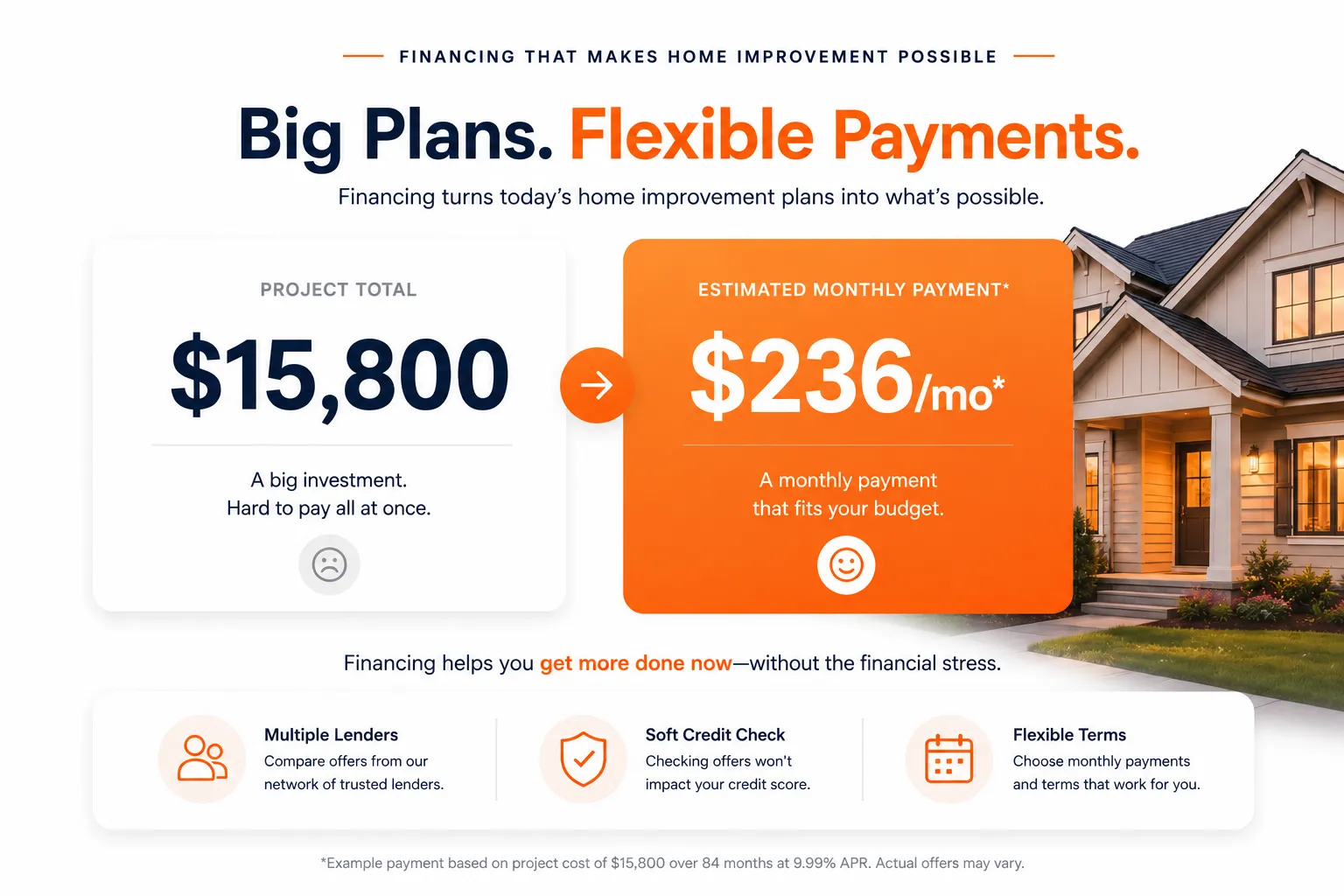
Risk-Free Prequalification
Checking offers won’t impact your credit.
It’s common for homeowners to delay applying because they’re worried about their credit score. With a soft credit check, you can review available financing options without any impact to your credit score.2