
Participating Lender Network





How to Finance & Pay for a home gym
A home gym is one of the few home projects where many people never need to borrow at all. A basic setup of dumbbells, a bench, and a mat can be assembled for a few hundred dollars, while a full garage or basement conversion with commercial-grade equipment, flooring, and electrical work can run past $25,000. Most people who do finance a gym use a personal loan, a home equity loan or HELOC for a larger build, or a 0% intro credit card for equipment they can pay off quickly. Because the low end is so affordable, the real question is less about how to finance a gym than whether you need to.
Key Takeaways
- A basic equipment setup often costs a few hundred to a couple thousand dollars, which many buyers can cover without financing at all.
- The cost jumps when you convert a space: a garage or basement build-out with flooring, electrical, and ventilation is what pushes a gym into loan territory.
- Buying equipment gradually, or used, is usually cheaper than financing a full setup at once, since fitness gear depreciates quickly and appears often on the resale market.
- A home gym rarely returns its cost at resale, and converting a bedroom into a gym can even lower value by reducing the bedroom count.
- Financing makes the most sense for the construction side of a build, not the equipment, since the room improvements are the durable, higher-cost part.
How Much Does a Home Gym Cost?
What you spend depends far more on whether you’re buying equipment or building a room than on any single machine. A basic home gym runs about $300 to $1,000, a mid-range setup lands around $1,500 to $3,000, and a premium or converted-space gym reaches $7,000 to $25,000 or more once construction is involved. The equipment tiers are affordable enough that financing is often optional – it’s the room conversion that changes the math.
Costs also run higher in expensive metro areas and where a conversion requires permitted electrical or structural work.
Where Does the Money Go in a Converted Space?
For an equipment-only gym, the machines are the whole budget. Once you convert a garage or basement, the construction line items are what add up, and they’re the part worth financing since they’re durable and improve the room itself:
- Room conversion ($7,000 to $25,000+): refinishing a garage or basement, framing, insulation, and drywall, before any equipment goes in.
- Flooring ($200 to $4,000): rubber or specialty flooring that protects the slab and handles dropped weight, priced by the square foot and material.
- Electrical ($300 to $2,000): new outlets, lighting, and enough amperage for cardio machines, with a panel upgrade adding $500 to $2,400 if your service can’t handle the load.
- Ventilation or HVAC ($2,000 to $10,000): heating, cooling, or air circulation for a garage or basement that wasn’t built as living space.
- Mirrors and finishing ($250 to $500+): wall mirrors, plus lighting and paint that make the space usable and appealing.
Should You Finance a Home Gym or Pay Cash?
For most equipment purchases, paying cash or buying gradually is the better move. A basic or mid-range setup falls within reach of many household budgets, and spreading purchases over a few months lets you avoid interest entirely. Fitness equipment also depreciates quickly and shows up constantly on the resale market, so buying used racks, plates, and benches can cut the cost of a serious setup substantially.
Financing starts to make sense in two situations: when you’re converting a space and the construction cost runs into five figures, or when you want a complete premium setup at once rather than assembled over time. In those cases, the durable improvements, flooring, electrical, and the room itself, are what justify a loan, since they outlast any single piece of equipment.
Does a Home Gym Add Resale Value?
A home gym rarely returns its full cost at resale, and how you build it matters more than what you spend. The equipment itself adds little appraised value since most of it leaves with you, and a dedicated fitness room appeals to some buyers while looking like wasted space to others.
One point is easy to overlook: converting a bedroom into a gym can actually reduce your home’s value by lowering the bedroom count, which buyers and appraisers weigh directly. A garage or basement conversion is safer ground, since a permitted, well-finished conversion recovers around 80% of its cost by adding livable square footage, though a gym-specific use tends to return less than an office or extra bedroom would. The most resale-friendly approach is a flexible, well-finished space with quality flooring and good lighting that a future buyer could repurpose, rather than a heavily specialized fitness room.
How Do You Finance a Home Gym?
If you decide financing makes sense, the right option depends on the size of the project and whether you’re buying equipment or building a room.
| OPTION | BEST FOR | SECURED? | KEY COST TO WATCH |
|---|---|---|---|
| Personal loan | Equipment packages or smaller conversions | No, no lien on your home | Origination fee; higher rate than home equity |
| Home equity loan / HELOC | Five-figure garage or basement build-outs | Yes, your home is collateral | Appraisal and closing costs; risk to the home |
| 0% intro APR card | Equipment you can repay within the promo window | No | Interest owed if not cleared before the promo ends |
| Retailer financing | Last resort | No | Often deferred interest (see below) |
Is Home Gym Financing Tax-Deductible?
Sometimes, and only for the construction side. Interest on a home equity loan or HELOC is deductible only when the funds are used to buy, build, or substantially improve the home that secures the loan, per IRS Publication 936. That means the interest on money spent framing, wiring, or adding HVAC to a basement or garage conversion may qualify, while interest on funds spent on freestanding equipment like racks and treadmills does not, since that gear isn’t part of the home. A personal loan or credit card used for a gym is not deductible at all. The rules are specific and depend on your situation, so confirm with a CPA before claiming anything.
How Do You Qualify for Home Gym Financing?
Qualifying is generally straightforward, since the amounts are smaller than most renovations. A few steps keep you from borrowing more than the project warrants.
Separate the equipment budget from the construction budget first. Decide what you can pay for outright, especially used equipment, and reserve financing for the durable room improvements. This alone often shrinks the loan you need.
For a conversion, get itemized contractor bids and confirm permit needs. Ask for flooring, electrical, and any HVAC work to be broken out, and check whether your electrical or structural changes require a permit, folding those fees into the amount you finance.
Check your credit and prequalify with a soft pull. Review your credit report, then prequalify with a soft credit check to compare real offers without affecting your score, and weigh them on total repayment rather than the monthly figure.
Having your paperwork ready speeds up any application. Most lenders will want:
- Proof of income: recent pay stubs, W-2s, or tax returns if you’re self-employed.
- Your debt-to-income ratio: lenders generally prefer total monthly debt payments below 36% to 43% of gross income, so it helps to know roughly where you land before applying.
- Equity documentation (for home equity borrowing): a recent mortgage statement and, for a HELOC or home equity loan, an appraisal the lender will usually order to confirm available equity.
The Bottom Line
Whether to finance a home gym depends mostly on which kind of project you’re taking on. For equipment, paying cash or buying gradually usually beats borrowing, since gear is affordable at the low end and cheaper used. For a garage or basement conversion that runs into five figures, financing the construction can make sense: a personal loan for a smaller build, or a home equity loan or HELOC when the work is larger or part of a broader remodel.
Before you borrow, decide how much of the project you can cover with cash and used equipment, and reserve any loan for the flooring, electrical, and room work that lasts. A home gym is a purchase to use rather than an investment that pays you back at resale, so it’s worth keeping the borrowed portion as small as the project allows.
Explore related resources
The information provided by Pasha Funding is for educational and informational purposes only and should not be considered financial, legal, or tax advice. Every homeowner’s financial situation is different, and the financing options discussed may not be suitable for everyone. Before choosing a financing solution, carefully review the lender’s terms and consider consulting a qualified financial professional if needed.
Pasha Funding is a financing marketplace that connects homeowners with financing options offered by participating lending partners. We do not make loans, determine credit eligibility, or guarantee approval or specific loan terms. Pasha Funding is not a direct lender. We may receive compensation from participating lending partners when users submit an application or obtain a loan through our platform. This compensation may affect how and where financing options appear, but it does not influence our editorial evaluations.
Financing offers, rates, terms, and availability are determined solely by participating lenders and may change without notice. Our editorial content is created independently to help consumers better understand home improvement financing. While we strive to keep information accurate and current, financing products, lender requirements, rates, and offers may change over time. Any opinions expressed are those of the author and have not been reviewed, approved, or endorsed by our lending partners.


Frequently Asked Questions
how it works
3 Simple steps to
finance your project.
Getting started only takes a minute. Complete one simple application to compare available financing offers from over 18+ lenders, choose the option that fits your budget, and move forward with your home improvement project.
Home Gym Financing Calculator
1. Enter Your Desired Loan Amount
Your Estimate
Monthly Payment
-
This calculator provides estimates for illustrative purposes only and does not constitute an offer of credit or a commitment to lend. Final APRs, loan amounts, and terms depend on credit approval, income verification, and lender underwriting criteria. Minimum and maximum rates/terms vary by state.
Powered by: Pasha Funding
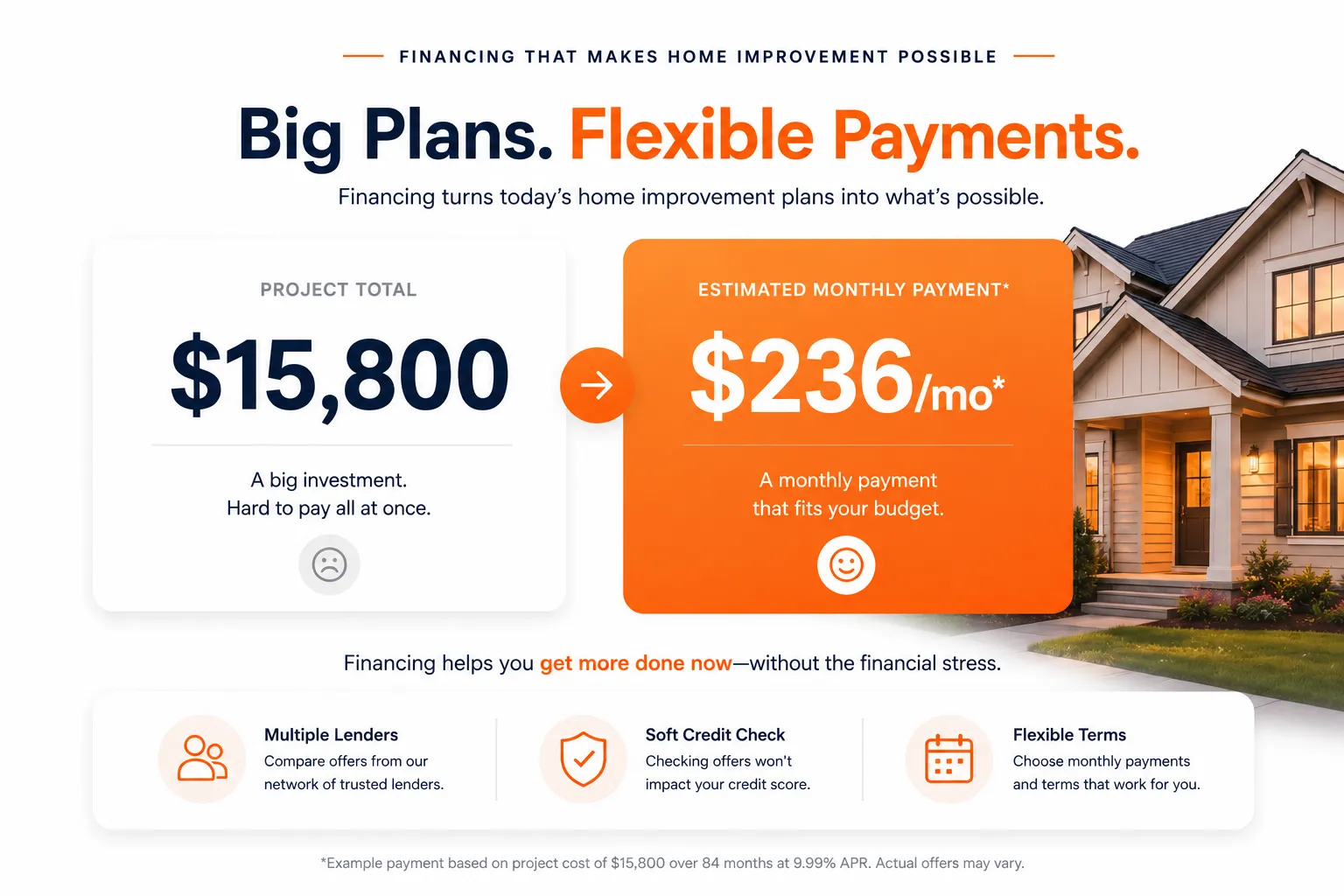
Risk-Free Prequalification
Checking offers won’t impact your credit.
It’s common for homeowners to delay applying because they’re worried about their credit score. With a soft credit check, you can review available financing options without any impact to your credit score.2