

Participating Lender Network





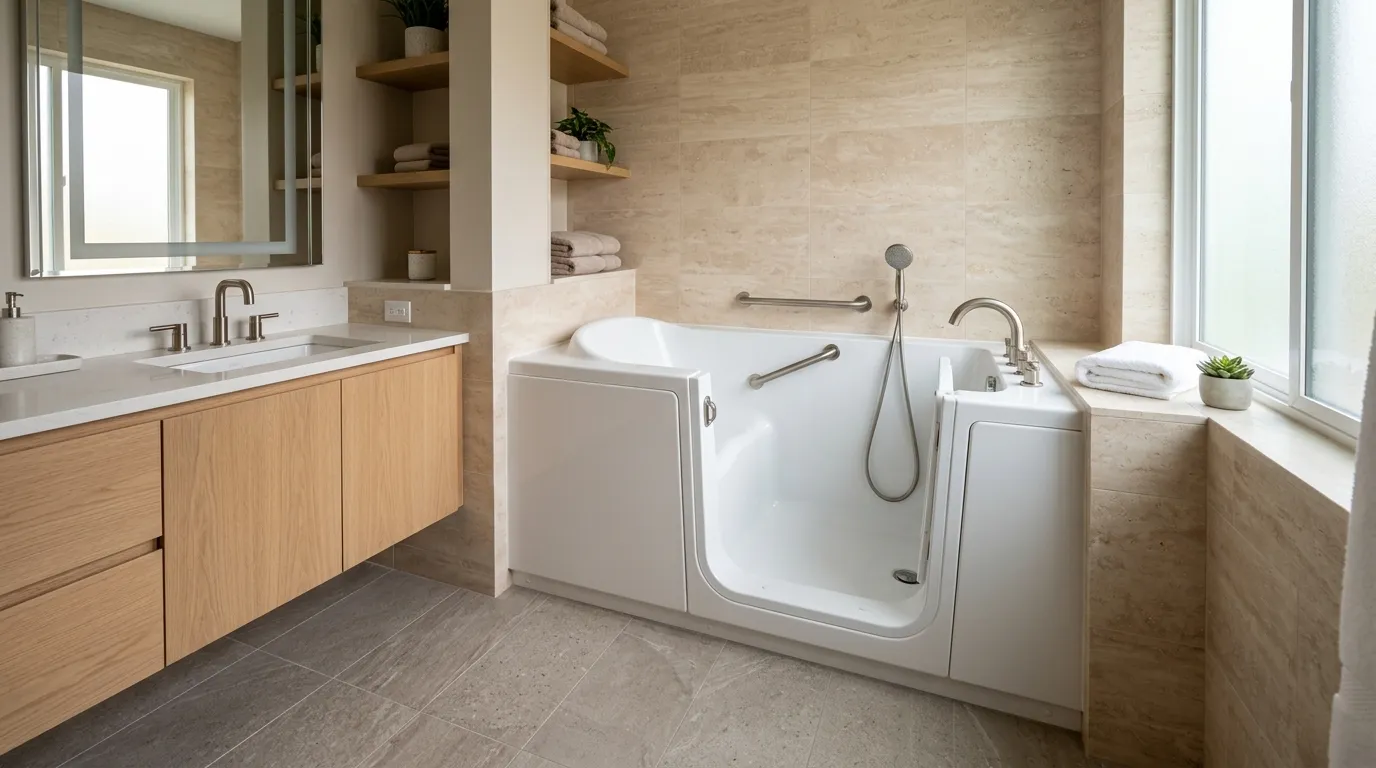
Walk-In Tub Cost & Financing Guide
A walk-in tub costs about $4,000 to $15,000 installed, with a basic soaker at the low end and a bariatric or dual-jet hydrotherapy model at the top, and most homeowners pay for it with a personal loan, a home equity loan, or a VA grant or Medicaid waiver if they qualify. The tricky part isn’t the financing so much as the buying: this is an industry known for high-pressure in-home sales and inflated quotes, so knowing what a tub should cost and how to pay for it protects you as much as any loan.
Key Takeaways
- Tub walk-in tub type drives the price: a basic soaker runs $3,000 to $7,000, a hydrotherapy or air-jet model $10,000 to $15,000, and a bariatric or combination tub $12,000 to $20,000.
- Two costs catch buyers off guard: a bigger water heater ($1,400 to $5,600) to fill the deep tub, and floor reinforcement for a heavy or bariatric model.
- The walk-in tub industry uses aggressive in-home sales, so never sign a same-day “today only” deal and always get three itemized quotes.
- A walk-in tub isn’t always the right accessibility choice: a roll-in shower may fit better for a wheelchair user or someone who can’t sit down into a tub.
- A personal loan funds fast for an urgent safety need, while a home equity loan may cost less if you’re also remodeling the bathroom.
- Original Medicare doesn’t cover walk-in tubs, but a Medicaid waiver or VA grant may cover part of the cost with a doctor’s documentation.
How Much Does a Walk-In Tub Cost by Type?
The type of tub and its therapy features set most of the price, and the tub itself is usually 50% to 70% of the total. A basic soaker walk-in tub runs about $3,000 to $7,000 installed, a hydrotherapy or air-jet model $10,000 to $15,000, a combination tub $12,000 to $20,000, and a bariatric model $15,000 to $20,000.
| Tub Type | Installed Cost | Best For |
|---|---|---|
| Soaker | $3,000-$7,000 | Safe entry without therapy features |
| Air-jet or hydrotherapy | $10,000-$15,000 | Arthritis, circulation, joint pain relief |
| Combination (air + water) | $12,000-$20,000 | Both massage types in one tub |
| Bariatric / wheelchair-accessible | $15,000-$20,000 | Larger frames; wider door and seat |
Installed cost ranges from Fixr and Mad City.
Two choices beyond the therapy features affect both cost and usability. The door swing matters: an inward-swinging door is standard and saves space, while an outward-swinging door needs more room but is easier to enter with a walker or wheelchair. And the two therapy systems aren’t interchangeable, an air bath pushes warm air through the water for a gentle, diffuse massage suited to sensitive skin, while a hydrotherapy tub uses pressurized water jets for targeted relief better for arthritis and joint pain, so match the system to the actual need rather than paying for the most features. Costs also run higher in expensive metro markets.
What Hidden Costs Come With a Walk-In Tub?
The sticker price rarely covers the whole job. These extras surprise most buyers, so ask any installer to put each one in writing before you sign:
- Water heater upgrade ($1,400 to $5,600): a walk-in tub holds far more water than a standard tub, so filling it can outrun a small water heater and leave you in cold water. A larger or tankless unit is often required.
- Dedicated electrical circuits ($1,500 to $3,000 if a panel upgrade is needed): combination air/water jet tubs and models with an in-line heater need two to three dedicated 20-amp GFCI circuits to run those systems at once. An older electrical panel frequently can’t carry that load and needs upgrading first.
- Floor reinforcement ($1,000 to $3,000): a heavy hydrotherapy or bariatric tub full of water may need the floor structure reinforced.
- Tile, wall repair, permits, and old-tub removal: budget for finishing around the new tub, permit and inspection fees (often $100 to $500 plus a $50 to $200 inspection), and hauling away the old tub.
One point of confusion worth clearing up: an “in-line heater” inside a hydrotherapy tub does not heat cold tap water. It only maintains the temperature of water that’s already in the tub, so a high-capacity or tankless primary water heater is still mandatory. The in-line heater is a comfort feature, not a substitute for the water heater upgrade above.
How Fast Does a Walk-In Tub Drain?
Drain speed is a real safety issue, not just a convenience, because the bather sits in the tub while it empties. It comes down to the drain line:
- Standard 1.5-inch drain: can take up to 15 minutes to empty a 60-gallon walk-in tub, meaning a long, chilling wait.
- 2-inch gravity drain or a powered quick-drain pump: cuts that to about 2 to 3 minutes, which reduces the risk of the bather getting cold or chilled while stuck waiting.
For an elderly or medically frail user, a fast-drain system is worth prioritizing over cosmetic upgrades.
Walk-In Tub vs. Roll-In Shower: Which Is Better?
Before financing a tub, it’s worth confirming a tub is what you actually need, because for some people a roll-in shower is the safer and cheaper choice. The decision comes down to how the person moves, not which product markets better.
A walk-in tub fits someone who can still take a small step over a low threshold, wants to sit and soak, and benefits from hydrotherapy for arthritis or circulation. Its limitation is the fill-and-drain wait and the few-inch threshold, which can still be an obstacle for the most limited mobility. A roll-in (or zero-threshold) shower has a completely flush floor that a wheelchair, rollator, or shower chair rolls straight into, with no step at all, which makes it the better fit for a wheelchair user, someone who can’t lower themselves into a tub, or a person whose mobility is declining and who wants a solution that keeps working as needs change. A roll-in shower is also often less expensive than a high-end therapy tub and lets a caregiver assist more easily. If soaking is the goal and transfers are reliable, a walk-in tub is a good match; if wheelchair or step-free access is the priority, lead with the shower. This is an accessibility and safety decision; for a full bathroom renovation beyond the accessible fixture, see our bathroom remodel financing guide.
How Do You Avoid Overpaying for a Walk-In Tub?
The walk-in tub market is known for aggressive in-home sales, and protecting yourself here saves more than shopping for a loan does. The two most common traps are same-day “today only” pricing and all-inclusive quotes that hide extra fees, so the defense is simple: get three itemized quotes and never sign on the first visit.
Some national brands send a salesperson to your home who quotes a high price, then offers a steep “if you sign tonight” discount designed to stop you from comparing. That urgency is a sales tactic, not a real deadline. A genuine safety need still allows a few days to compare bids. Ask each installer for a line-item quote that separates the tub unit, labor, any water-heater upgrade, tile or wall repair, permit fees, and removal of the old tub, since so-called all-inclusive quotes often bury delivery, permit, and disposal charges. Comparing three itemized quotes side by side is the single clearest way to see who’s fair and who’s padding the total.
What Should You Check Before Buying a Walk-In Tub?
A few specifics separate a safe, well-installed tub from an expensive problem. Confirm each of these before you commit:
- Door seal warranty: the door relies on a silicone or rubber pressure gasket, and a failed seal can flood the bathroom. Look for a manufacturer lifetime door-seal warranty that also covers the labor to fix it, not just the part.
- Scald-prevention valve (code): plumbing codes require the tub filler to include an ASSE 1070 thermostatic mixing valve that caps the water at 120°F, which matters because a user with reduced heat sensitivity can be scalded without feeling it in time. Confirm the quote includes it.
- Doorway width for bariatric tubs: bariatric tubs are often 32 to 35 inches wide, while a standard interior bathroom doorway is only 28 to 30 inches. Getting the unit into the room can require widening the frame or removing drywall, adding roughly $500 to $1,500. Measure the doorway before ordering an oversized tub.
How Do You Finance a Walk-In Tub?
With a tub in the $4,000 to $15,000 range, the right loan depends on how urgent the need is and whether the tub is part of a larger bathroom project.
Personal Loans
A personal loan funds within days with no lien on your home, which fits an urgent safety need, someone at real fall risk who can’t wait weeks. It works with any installer, and having it prequalified before the sales visit lets you negotiate the tub as a cash buyer rather than accepting dealer financing under pressure.
Home Equity Loans and HELOCs
If you’re combining the tub with a broader bathroom remodel or a larger accessibility project, borrowing against home equity usually carries a lower rate than a personal loan. The tradeoffs are closing costs and a few weeks to fund, which suits a planned project rather than an emergency.
VA Grants and Medicaid Waivers
A veteran with a service-connected disability may be able to use the VA’s HISA grant toward a walk-in tub, and some Medicaid waivers cover a medically necessary tub for eligible residents. These don’t require repayment but run on a slower timeline. The accessibility upgrades hub covers VA grants, Medicaid waivers, and HSA/FSA funds in more detail.
Dealer and Manufacturer Financing
Most walk-in tub companies offer payment plans through a partner lender. These can work, but the loan comes from a third party, so compare the total cost against an outside personal loan or HELOC before signing, especially since dealer financing is often presented as part of a same-day close.
Does Medicare or Insurance Cover a Walk-In Tub?
This is a common and costly assumption, so it’s worth stating plainly. Original Medicare (Parts A and B) does not cover a walk-in tub, because it classifies the tub as a home modification rather than durable medical equipment.
Two narrower paths exist. Some Medicare Advantage (Part C) plans have added limited home-safety or accessibility allowances, so if you’re on an Advantage plan, call it and ask, with a physician’s note of medical necessity ready. And a Medicaid waiver may cover a medically necessary walk-in tub for eligible low-income residents in some states, though coverage and waiting lists vary. Standard homeowners insurance won’t pay to add a tub either, since it covers sudden accidental damage rather than voluntary improvements. If a doctor documents the tub as medically necessary, its cost may also count toward a medical tax deduction or HSA/FSA reimbursement, covered on the hub.
How Do You Qualify for Walk-In Tub Financing?
Qualifying is less about the loan than about confirming the right product and the true installed cost first, so you finance the complete job.
Confirm a tub is the right fit, then pick the type. Decide between a walk-in tub and a roll-in shower based on the user’s mobility, then choose the tub type (soaker, air, hydrotherapy, or bariatric) that matches the actual need rather than the most features a salesperson pushes.
Get three itemized quotes including the hidden costs. Insist each quote separates the tub, labor, any water-heater upgrade, floor reinforcement, tile repair, and permit fees, so you finance the real total rather than a base price that grows after demolition. This step matters more here than in most projects because of the sales practices in this market.
Match the loan to the timeline and check your credit. For an urgent safety need, a prequalified personal loan funds fast; for a tub bundled with a remodel, a home equity option may cost less. Review your credit report for errors and prequalify with a soft credit check to compare real offers without affecting your score, then weigh them on total repayment rather than the monthly figure.
The Bottom Line
How you pay for a walk-in tub depends on how urgent the need is and whether it’s a standalone safety upgrade or part of a bathroom remodel. For an urgent fall risk, a prequalified personal loan funds fast and lets you negotiate as a cash buyer. For a tub bundled into a larger renovation, a home equity loan or HELOC usually costs less, and a veteran or Medicaid-eligible homeowner should check grant options first since those don’t require repayment.
Before you borrow, confirm a walk-in tub is the right fit versus a roll-in shower for the person’s mobility, then get three itemized quotes and refuse any same-day pressure to sign, since comparing real numbers is what keeps this purchase from costing far more than it should.
More related financing options
The information provided by Pasha Funding is for educational and informational purposes only and should not be considered financial, legal, or tax advice. Every homeowner’s financial situation is different, and the financing options discussed may not be suitable for everyone. Before choosing a financing solution, carefully review the lender’s terms and consider consulting a qualified financial professional if needed.
Pasha Funding is a financing marketplace that connects homeowners with financing options offered by participating lending partners. We do not make loans, determine credit eligibility, or guarantee approval or specific loan terms. Pasha Funding is not a direct lender. We may receive compensation from participating lending partners when users submit an application or obtain a loan through our platform. This compensation may affect how and where financing options appear, but it does not influence our editorial evaluations.
Financing offers, rates, terms, and availability are determined solely by participating lenders and may change without notice. Our editorial content is created independently to help consumers better understand home improvement financing. While we strive to keep information accurate and current, financing products, lender requirements, rates, and offers may change over time. Any opinions expressed are those of the author and have not been reviewed, approved, or endorsed by our lending partners.


FAQ
In this guide
- What Counts as an Accessibility Upgrade?
- How Much Do Accessibility Upgrades Cost?
- How Long Does a Wheelchair Ramp Need to Be?
- How Do You Finance Accessibility Upgrades?
- Does Medicare or Medicaid Cover Home Modifications?
- Which Accessibility Upgrade Do You Need?
- Do You Need a Permit for Accessibility Modifications?
- How Do You Qualify for Accessibility Upgrade Financing?
- The Bottom Line
FAQ
how it works
3 Simple steps to
finance your project.
Getting started only takes a minute. Complete one simple application to compare available financing offers from over 18+ lenders, choose the option that fits your budget, and move forward with your home improvement project.
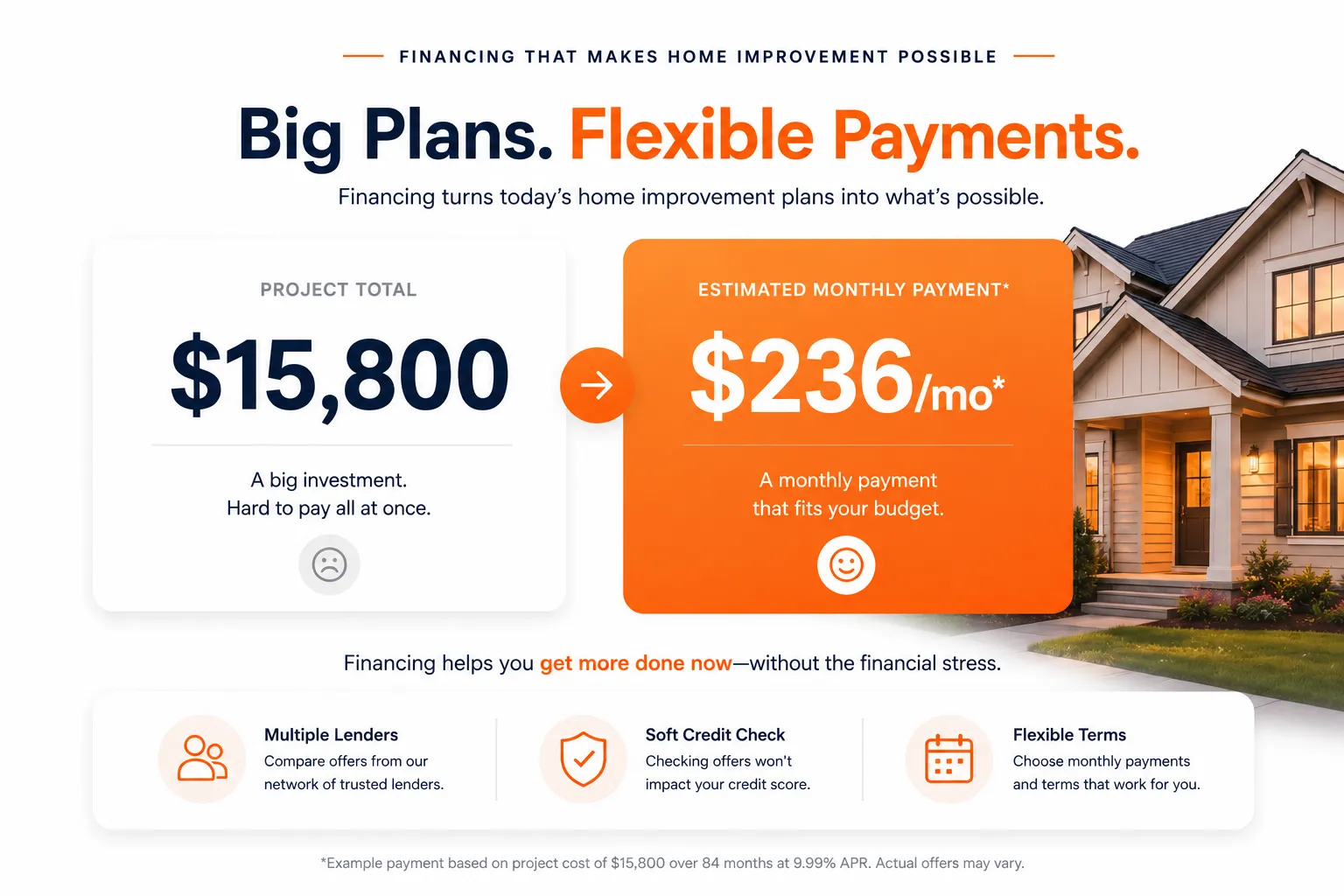
Walk-In Tub Financing Calculator
1. Enter Your Desired Loan Amount
Your Estimate
Monthly Payment
-
This calculator provides estimates for illustrative purposes only and does not constitute an offer of credit or a commitment to lend. Final APRs, loan amounts, and terms depend on credit approval, income verification, and lender underwriting criteria. Minimum and maximum rates/terms vary by state.
Powered by: Pasha Funding
Risk-Free Prequalification
Checking offers won’t impact your credit.
It’s common for homeowners to delay applying because they’re worried about their credit score. With a soft credit check, you can review available financing options without any impact to your credit score.2