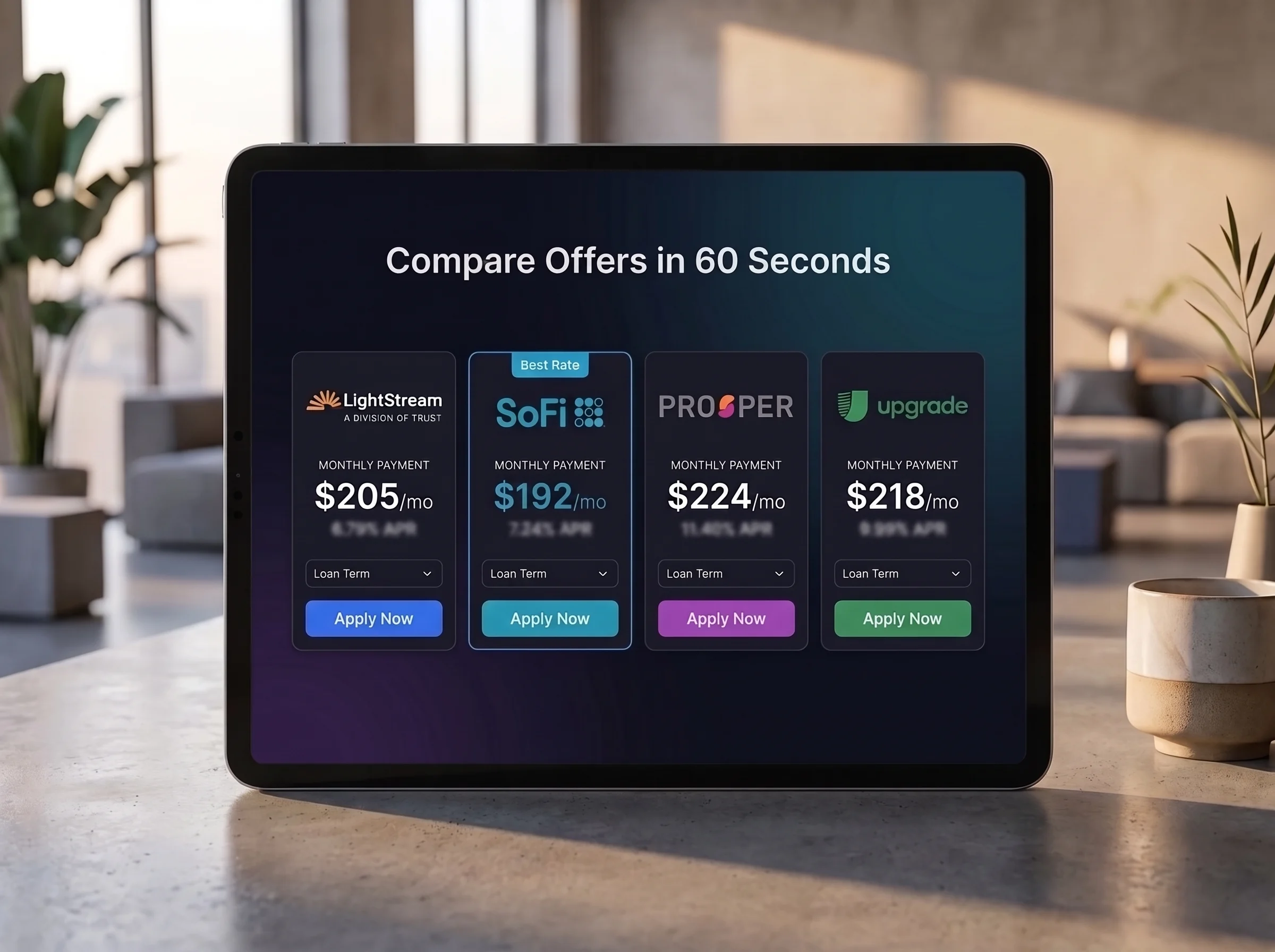
Participating Lender Network





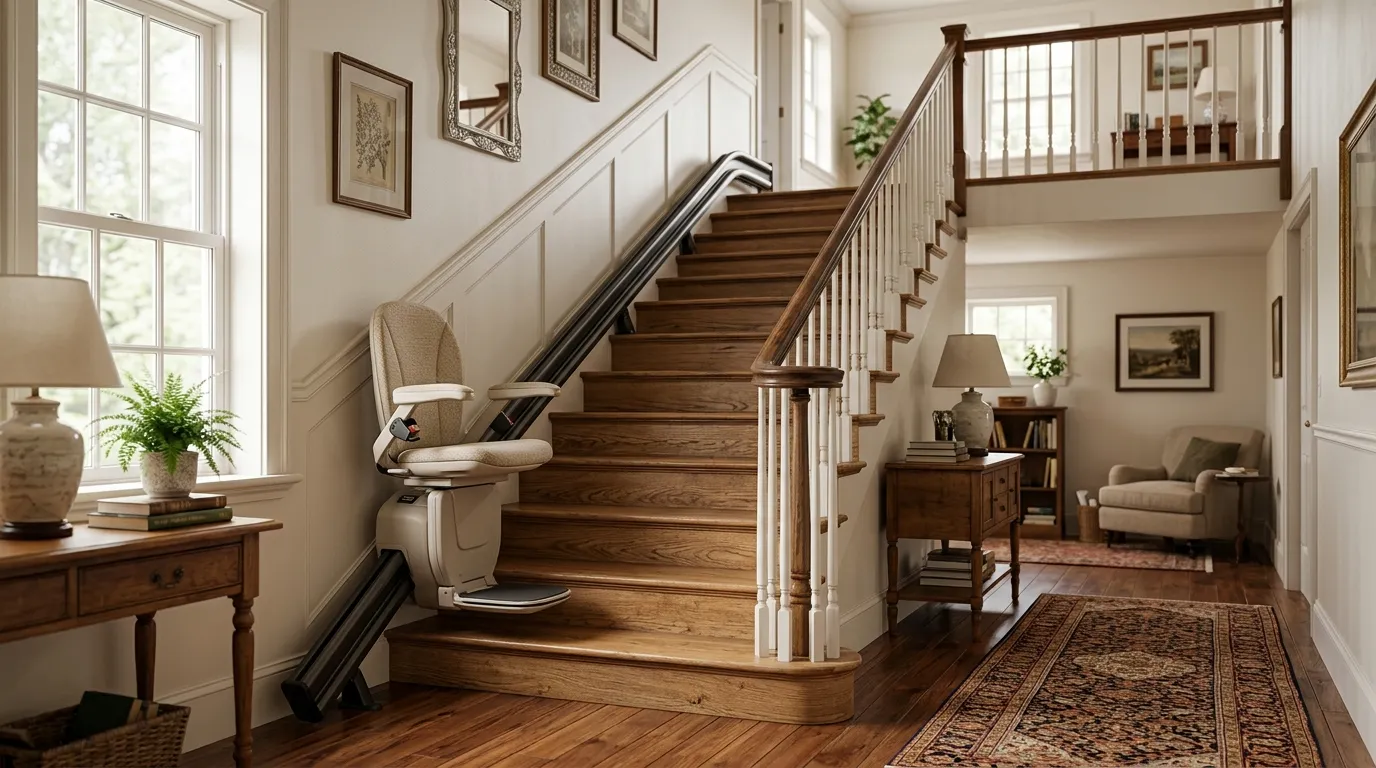
How to Finance a Stairlift
A straight stairlift costs roughly $2,000 to $8,500 installed, while a curved one, custom-built to your exact staircase, runs about $8,000 to $20,000, and you can pay for it with a personal loan, a manufacturer or dealer financing plan, a rental if the need is temporary, or a Medicaid waiver or VA grant if you qualify. Because the straight-versus-curved split can swing the cost three or four times over, knowing which one your stairs require is the first thing to pin down before you borrow a dollar.
Key Takeaways
- Staircase shape is the biggest price factor by far: a straight stairlift runs about $2,000 to $8,500, a curved one $8,000 to $20,000, because a curved rail is custom-manufactured for your stairs.
- If the need is short-term, like recovery from surgery, renting at roughly $100 to $300 a month can beat buying and reselling.
- A reconditioned straight stairlift can save 30% to 50% versus new, since straight rails are reusable; curved rails almost never are.
- Original Medicare does not cover stairlifts, but a Medicaid HCBS waiver, a Medicare Advantage plan, or a VA grant sometimes will.
- A personal loan funds fastest when the need is urgent, while dealer financing spreads the cost but comes from a third-party lender worth comparing.
- Watch for a dealer quoting a curved rail on stairs that only turn at the very top: a straight rail with a hinge often does the same job for thousands less.
How Much Does a Stairlift Cost, Straight vs. Curved?
The single question every installer asks first is whether your staircase is straight or curved, because the answer decides most of the price. A new straight stairlift costs about $2,000 to $8,500 installed, while a curved model runs roughly $8,000 to $20,000, and the gap comes down entirely to the rail.
| Stairlift Type | Installed Cost | Best For |
|---|---|---|
| Reconditioned straight | $2,000-$3,500 | Budget option on a straight staircase |
| New straight | $2,000-$8,500 | A straight run with no turns or landings |
| Outdoor straight | $3,500-$12,000 | Porch, deck, or garage-entry steps |
| New curved | $8,000-$20,000 | Any staircase with a turn, landing, or curve |
| Bariatric / heavy-duty | $4,000-$12,000+ | Higher weight capacity (see below) |
Installed cost ranges from HomeGuide and Modernize. Bariatric range reflects reinforced double-rail systems.
A straight rail is essentially an aluminum track cut to length from factory stock, which is why a straight unit can often be measured, ordered, and installed within a week. A curved rail has to be custom-bent to match every turn, landing, and angle of your specific staircase, so it is manufactured to order, takes weeks to arrive, and carries most of the price difference in that fabrication work. Costs also vary by region, running 10% to 20% higher in expensive metro markets and lower in rural areas.
What Does a Heavy-Duty or Bariatric Stairlift Cost?
Weight capacity is a real cost tier, not a rounding error. A standard stairlift is rated for about 250 to 300 pounds. A heavy-duty model rated for 350 to 400 pounds adds roughly $500 to $1,500 over a standard unit. A bariatric model, rated for 450 to 600 pounds, is a different machine: it needs a reinforced chassis and sometimes a double-rail system to carry the load safely, which pushes installed cost to roughly $4,000 to $12,000 or more. If the user is near a standard unit’s limit, size up rather than borrow against the wrong capacity, since exceeding the rating is both unsafe and voids the warranty.
Do You Need an Outlet for a Stairlift?
Nearly every modern stairlift runs on a DC battery, which is why it keeps working during a power outage, a genuine safety advantage. The catch is the charger: it plugs into a standard 110V/120V AC outlet at the top or bottom landing to keep the battery topped up. If there’s no outlet within reach of a landing, you’ll need an electrician to run a line, which adds about $150 to $300 to the total. It’s a small cost, but it’s one that doesn’t show up in the headline price, so ask whether your quote assumes an existing outlet.
Should You Rent, Lease, or Buy a Stairlift?
Stairlifts are one of the few home accessibility products with a real rental market, which gives you a financing choice most home improvements don’t offer. The right answer turns on how long you’ll need it.
For a temporary need, recovering from a hip replacement, healing a broken leg, a stretch of limited mobility that’s expected to improve, renting usually makes more sense than buying. Rentals run roughly $100 to $300 a month plus a one-time installation fee, so a few months of rental costs far less than buying a unit and trying to resell it afterward. For a permanent or long-term need, buying is almost always cheaper over time, since monthly rental payments add up past the purchase price within a year or two.
One important limit: the rental market is essentially a straight-stairlift market. Because a curved rail is custom-built for one specific staircase, it can’t be pulled out and reinstalled in someone else’s home, so curved units are rarely available to rent and are almost always a purchase. If your staircase is curved and the need is temporary, ask whether a straight lift on part of the staircase, or a different interim solution, could bridge the gap rather than committing to a curved purchase.
Can You Buy a Used or Reconditioned Stairlift?
Yes, and for a straight staircase it’s one of the biggest savings levers available. A reconditioned straight stairlift, a dealer trade-in that’s been rebuilt with a new motor and seat, typically costs $2,000 to $3,500 and can save 30% to 50% versus a new unit. Because straight rails are standard stock cut to length, a used one can be fitted to a different staircase, which is what makes the resale market work.
Curved reconditioned units are a different story. Since each curved rail is bent to one home’s exact geometry, a used curved rail almost never matches a new staircase, so genuine curved savings are rare and usually limited to the chair unit rather than the rail. When buying reconditioned, confirm the unit comes with professional installation and a warranty, since a rebuilt lift installed without support can cost more in service calls than it saved up front.
It’s worth setting expectations on the other side of the transaction too. If you plan to resell your own straight lift later, dealers rarely buy back a used unit for more than 10% to 20% of what you paid, so don’t count on recovering much. Removal is also not invisible: because stairlift rails anchor into the stair treads rather than the wall, taking one out leaves small anchor holes in the steps (though usually not in the wall), which a bit of wood filler and touch-up handles but is worth knowing before installation.
Are Stairlifts Required to Meet a Safety Code?
Yes. Stairlift design, manufacturing, and installation are governed by ASME A18.1, the safety standard for platform lifts and stairway chairlifts. A code-compliant lift includes an obstruction sensor on the footrest and carriage that stops the lift if it meets a shoe, a pet, or debris on the stairs, a seatbelt, a swivel seat that locks in place so the user exits onto the landing rather than near the stair edge, and an emergency stop control. When you compare quotes, confirm the unit is listed to ASME A18.1, since these features are what make the lift safe rather than optional upgrades.
Will a Stairlift Fit a Narrow Staircase?
Clearance is the practical constraint people forget until installation day. A folded stairlift seat and footrest typically stick out 11 to 13 inches from the wall, while an unfolded unit in use extends 24 to 27 inches. On a staircase narrower than about 30 to 32 inches, that folded footprint can crowd the walking path for others in the household, and a lift near a doorway at the bottom of the stairs may need a folding (hinged) rail so the track doesn’t block the doorway or create a tripping hazard when the lift isn’t in use. A folding rail is a common add-on, so if your stairs are narrow or end at a door, ask whether one is included in the quote.
How Do You Finance a Stairlift?
Once you know whether you’re buying straight or curved, new or reconditioned, the financing choice follows the size of the bill and how fast you need it.
Personal Loans
A personal loan puts a fixed sum in your account within days, with no lien on your home, which fits the common situation where a stairlift is needed quickly after a fall or a hospital discharge. It works with any dealer and any lift type, and the speed matters more than the rate when someone can’t safely use the stairs right now.
Dealer and Manufacturer Financing
Most stairlift companies offer monthly payment plans, sometimes advertised at a low monthly figure. These can be convenient since it’s one company handling the sale and the financing, but the loan itself comes from a third-party lender, so compare the total cost against an outside personal loan before signing rather than anchoring on the monthly number alone.
Grants and Waivers
Several programs can cut or cover the cost for those who qualify. A Medicaid Home and Community-Based Services (HCBS) waiver may pay for a stairlift in many states when it’s needed to keep someone safely at home, and a veteran with a service-connected disability may be able to use a VA grant. These don’t require repayment but run on a slower timeline, so they suit a planned purchase. The accessibility upgrades hub covers VA grants, HSA and FSA funds, and the tax-deduction rules in more detail.
Home Equity Options
For a higher-cost curved installation, a home equity loan or HELOC usually carries a lower rate than an unsecured personal loan, with the tradeoff of a slower closing, which fits a planned purchase better than an urgent one.
Does Medicare or Insurance Cover a Stairlift?
This trips up many families, so it’s worth being direct. Original Medicare (Parts A and B) does not cover a stairlift, because it classifies stairlifts as home modifications rather than durable medical equipment.
There are two narrower paths. Some Medicare Advantage (Part C) plans have added limited stairlift or home-safety benefits, so if you’re on an Advantage plan, call it directly and ask, with a physician’s note of medical necessity ready. And on the Medicaid side, an HCBS waiver can cover a stairlift for eligible low-income residents in many states, precisely because keeping someone in their home costs the state less than nursing-home care. When a waiver applies, it can cover 100% of the cost, but approval isn’t automatic: it usually requires a functional assessment showing the lift is what keeps the person out of a nursing home, and processing routinely takes three to six months. That timeline is the catch, so if the need is urgent, you may have to finance the lift now and pursue the waiver in parallel rather than waiting on it. Standard homeowners insurance won’t pay to add a stairlift either, since it covers sudden accidental damage rather than voluntary improvements. Contact your state Medicaid office or Area Agency on Aging to check waiver availability where you live, since programs and waiting lists vary by state.
How Do You Qualify for Stairlift Financing?
Qualifying for a stairlift is less about the loan than about nailing down which stairlift you actually need, since that single fact can change the amount you finance by three or four times.
Measure the staircase and confirm straight vs. curved first. Before you request financing, have a dealer measure your stairs and tell you in writing whether you need a straight or curved rail, the total rail length, and the weight capacity. This is the number that determines your budget, and financing a straight-rail estimate only to discover you need a curved rail leaves you thousands short.
Get the full installed quote in writing. Ask for one all-in installed price rather than a stack of separate line items for the chair, rail, delivery, and training, since separated quotes can hide the real total. Confirm whether any permit or inspection is included.
Pick the loan that fits the timeline, then check your credit. For an urgent need, a personal loan that funds in days is usually right. For a planned curved installation, a home equity option or a grant may cost less if you can wait. Review your credit report for errors and total your monthly debts, since most lenders want your total debt, including the new payment, at or below roughly 43% of your gross income, then prequalify with a soft credit check to compare real offers without affecting your score.
The Bottom Line
How you pay for a stairlift depends most on your staircase and how long you’ll need the lift. For a temporary need, renting a straight unit at a monthly rate usually beats buying and reselling. For a permanent need on a straight staircase, buying, and considering a reconditioned unit, is the lower-cost path, with a personal loan covering it fast when the need is urgent. A curved staircase is where the real money is, so it’s worth checking Medicaid waiver, VA, and home equity options before financing, since the amount is large enough that the rate and repayment terms matter.
Before you borrow, get a dealer to measure your stairs and confirm in writing whether you need a straight or curved rail, since that one answer sets your budget, and get a second opinion if you’re quoted a curved rail on stairs that run mostly straight.
More related financing options
The information provided by Pasha Funding is for educational and informational purposes only and should not be considered financial, legal, or tax advice. Every homeowner’s financial situation is different, and the financing options discussed may not be suitable for everyone. Before choosing a financing solution, carefully review the lender’s terms and consider consulting a qualified financial professional if needed.
Pasha Funding is a financing marketplace that connects homeowners with financing options offered by participating lending partners. We do not make loans, determine credit eligibility, or guarantee approval or specific loan terms. Pasha Funding is not a direct lender. We may receive compensation from participating lending partners when users submit an application or obtain a loan through our platform. This compensation may affect how and where financing options appear, but it does not influence our editorial evaluations.
Financing offers, rates, terms, and availability are determined solely by participating lenders and may change without notice. Our editorial content is created independently to help consumers better understand home improvement financing. While we strive to keep information accurate and current, financing products, lender requirements, rates, and offers may change over time. Any opinions expressed are those of the author and have not been reviewed, approved, or endorsed by our lending partners.


FAQ
In this guide
- What Counts as an Accessibility Upgrade?
- How Much Do Accessibility Upgrades Cost?
- How Long Does a Wheelchair Ramp Need to Be?
- How Do You Finance Accessibility Upgrades?
- Does Medicare or Medicaid Cover Home Modifications?
- Which Accessibility Upgrade Do You Need?
- Do You Need a Permit for Accessibility Modifications?
- How Do You Qualify for Accessibility Upgrade Financing?
- The Bottom Line
FAQ
how it works
3 Simple steps to
finance your project.
Getting started only takes a minute. Complete one simple application to compare available financing offers from over 18+ lenders, choose the option that fits your budget, and move forward with your home improvement project.
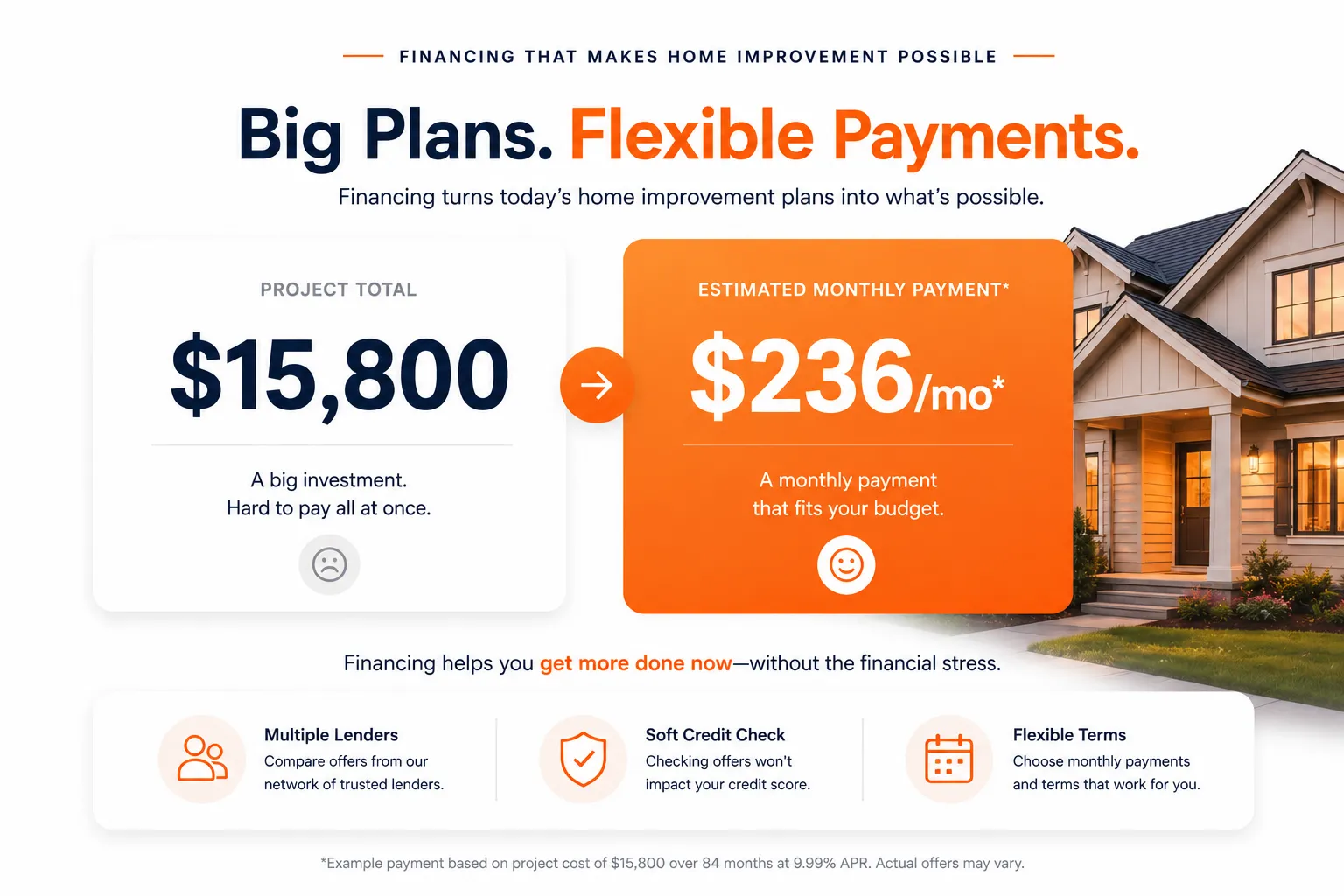
Stairlift Financing Calculator
1. Enter Your Desired Loan Amount
Your Estimate
Monthly Payment
-
This calculator provides estimates for illustrative purposes only and does not constitute an offer of credit or a commitment to lend. Final APRs, loan amounts, and terms depend on credit approval, income verification, and lender underwriting criteria. Minimum and maximum rates/terms vary by state.
Powered by: Pasha Funding
Risk-Free Prequalification
Checking offers won’t impact your credit.
It’s common for homeowners to delay applying because they’re worried about their credit score. With a soft credit check, you can review available financing options without any impact to your credit score.2