Participating Lender Network





how to finance a shed
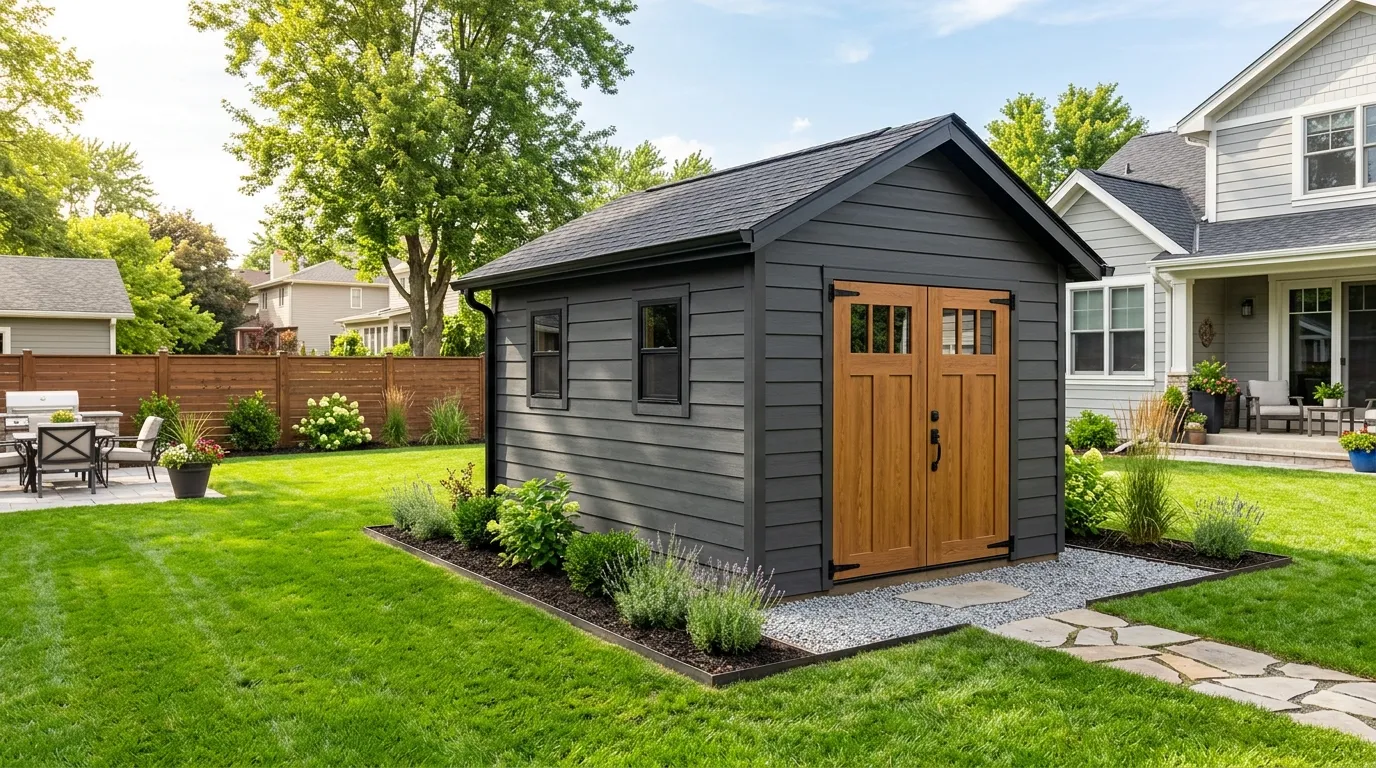
A storage shed runs anywhere from about $500 for a DIY kit to $36,000 or more for a large custom-built workshop, with most homeowners spending around $3,500, and the biggest lever on price is how you get the shed. A flat-pack resin or metal kit you assemble yourself is the cheap end, a pre-built shed delivered and set in your yard is the middle, and a contractor building on site is the top. Because a shed spans that whole range, the type you choose decides how you pay: a small kit often goes on a card or savings, while a larger delivered or custom shed is commonly financed with a personal loan, retailer financing, or a rent-to-own plan. The trap is pricing the shed and forgetting the foundation, delivery, and permit that ride along with it, so it helps to know the full cost before you borrow.
Key Takeaways
- How you get the shed sets the price: a DIY resin or metal kit runs $500 to $2,500, a pre-built delivered shed $2,500 to $13,500, and a custom stick-built shed $7,000 to $36,000+.
- Size matters more than material: square footage is the single biggest cost driver, ahead of whether you pick wood, metal, or vinyl.
- The shed price forgets the extras: a foundation, delivery, and a permit can turn a $1,500 shed into a $3,000 project.
- Financing scales to the shed: a card or personal loan suits most, while retailers often offer point-of-sale or rent-to-own plans.
- A foundation is cheap insurance: a shed set on bare dirt traps moisture and rots, so a gravel or concrete pad protects the investment.
How Much Does a Shed Cost?
A shed’s price comes down to how you get it, and the three routes line up almost perfectly with three tiers: a DIY kit you assemble, a pre-built shed delivered to your yard, or a custom shed built on site. Each trades cost against effort, durability, and upkeep.
| Shed type | Average cost | Build time | Lifespan | Maintenance |
|---|---|---|---|---|
| DIY kit | $500–$2,500 | A weekend, DIY | 10–20 years | Low to moderate |
| Pre-built, delivered | $2,500–$13,500 | Delivered in a day | 15–25 years | Varies by material |
| Custom stick-built | $7,000–$36,000+ | Days to weeks | 20–30+ years | Depends on finish |
Cost ranges from Angi. Actual prices vary by size, material, region, and site conditions.
A DIY kit is the budget path for basic storage, and the trade-off is that the lighter-duty models are exactly that and the labor is yours. A pre-built shed suits buyers who want it done without lifting a tool: it arrives finished and is set in place in a day. A custom stick-built shed is the route when you want a specific size, finish, or built-in features, or a structure that matches the house, which is why it sits at the top of the range.
What Is the Best Material for a Shed?
Material affects the look, the upkeep, and the long-term cost more than the upfront price. Here is how the three common choices compare:
Metal
- Pros: the most cost-effective over time, durable, fire-resistant, and low-maintenance, with no rot or insect damage.
- Cons: basic panels can dent and scratch, may rust at damaged spots over the years, and tend to look utilitarian.
Vinyl or resin
- Pros: won’t rot, peel, or need paint, resists insects and moisture, and wipes clean easily.
- Cons: mid-range pricing that climbs for larger premium units, and less easily customized than wood.
Wood
- Pros: the best looks and the easiest to customize or match to your house, and simple to modify or repair.
- Cons: needs sealing or painting every couple of years, costs more to maintain, and is vulnerable to rot and insects if neglected.
Metal and vinyl keep ongoing costs low, while wood trades higher upkeep for appearance and flexibility. Match the material to how much maintenance you’re willing to do, not just the sticker.
How Do You Finance a Shed?
Because sheds range from a few hundred dollars to well over $15,000, the right financing depends on the size of the project. How the common paths compare:
- Savings or a credit card: the simplest route for a kit or small delivered shed in the hundreds to low thousands, especially with a rewards card you pay off quickly.
- Unsecured personal loan: a common choice for a mid-range or custom shed. It funds fast as a lump sum, places no lien on your home, and carries a fixed rate with predictable payments, and amounts can start as low as $500, which suits smaller projects. Good credit earns the best terms.
- Retailer or point-of-sale financing: many shed sellers offer financing through a lending partner at checkout, sometimes with a promotional period. Compare it against an outside loan, and check whether a “no interest” offer is a true 0% or deferred interest.
- Rent-to-own: common in the shed world, a lease-purchase plan, often with no credit check, that spreads payments and can end in ownership. It is easy to qualify for with weak or no credit, but it is by far the most expensive way to get a shed: because these contracts are structured as leases rather than loans, they sidestep the interest-rate caps that apply to credit, and the effective cost can be extreme. Read the full-term total before signing, and treat it as a last resort.
How Do You Qualify for Shed Financing?
What it takes to get approved depends on how you pay. A small kit on a credit card asks nothing beyond an account you already have. A custom stick-built workshop financed with a personal loan is underwritten like any home-improvement loan, so it helps to know what a lender looks at and how to work through it.
What Do Lenders Look at for a Shed Loan?
For a personal loan or retailer financing, a lender is mainly weighing three things:
- Your credit score and history set your rate and whether you’re approved. Good credit or better earns the lowest rates and the best promotional offers; fair credit still qualifies with most personal-loan lenders at a higher cost.
- Your debt-to-income ratio, your monthly debt payments against your gross income, tells the lender whether you can take on another payment. Most look for it below the 36% to 43% range.
- Your income confirms you can carry the payment. Because sheds are relatively affordable, lenders usually just want recent pay stubs or proof of steady income, not the deep documentation a five-figure loan requires.
Home equity only enters the picture on the rare high-end custom build large enough to justify a home equity loan or HELOC, which would add an appraisal; for most sheds, an unsecured loan is the norm and no equity or appraisal is involved.
How to Apply for Shed Financing, Step by Step
1. Total the full project, not the shed sticker. Add the foundation, delivery, assembly, permit, and any electrical to the shed price, so you borrow against what you’ll actually spend rather than coming up short and paying for the extras separately.
2. Check your own credit first. Look at your score and report and fix any errors before a lender sees them. If your score sits just below the next tier, a few weeks of paying down balances can move you into a better rate.
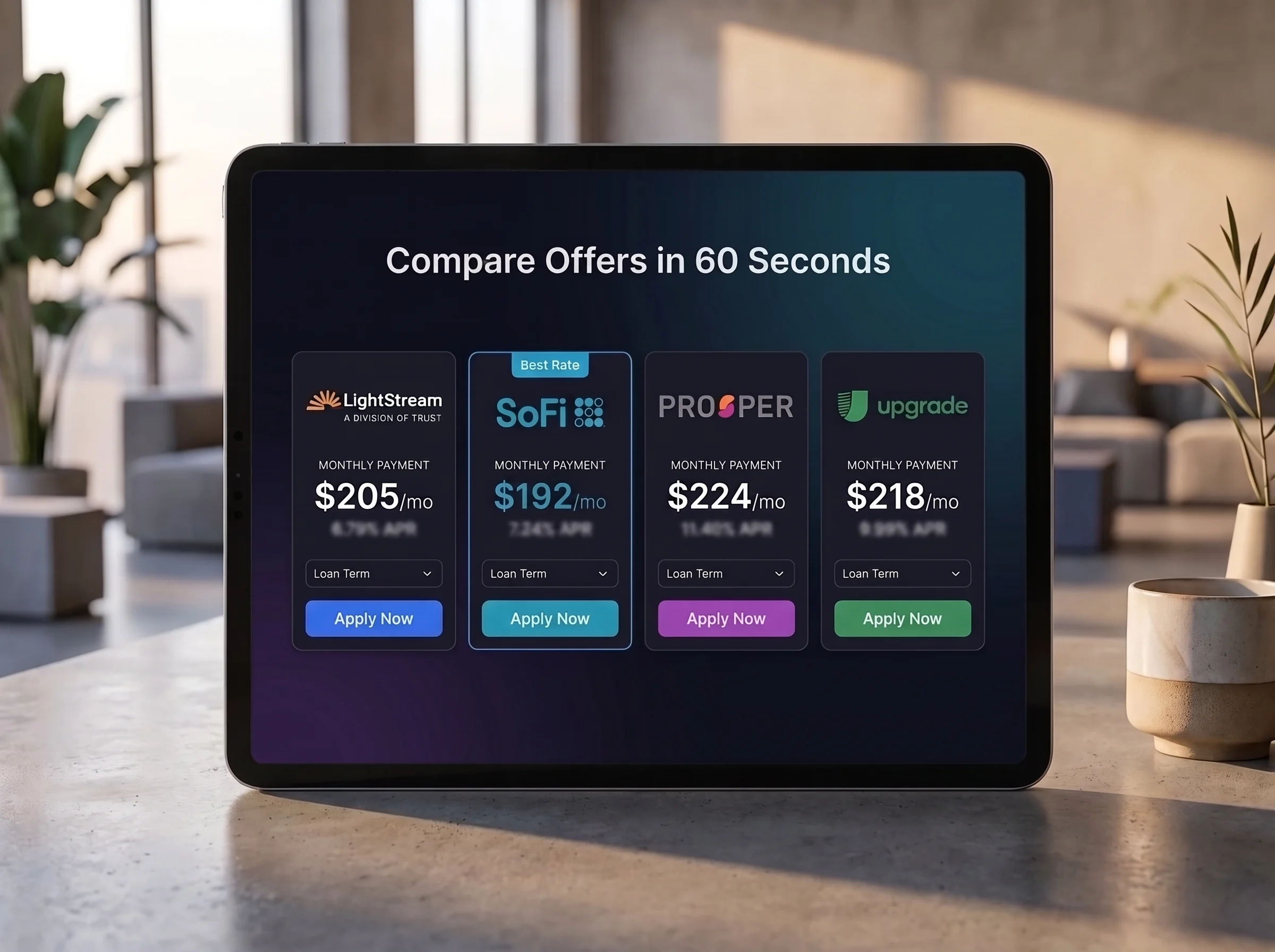
3. Prequalify with a few lenders. Most personal-loan lenders, and many shed retailers, show you real rates through a soft credit check that leaves your score untouched. Line up two or three so you can compare offers directly, including any rent-to-own or retailer plan.
4. Compare on total cost, not the monthly payment. A smaller monthly figure is often just a longer term that costs more overall, and rent-to-own especially can look affordable per week while costing far more across the full term. Weigh the rate, any fees, and the total you’ll repay.
5. Apply for the one that fits. Once you’ve picked the loan, submit the full application, which triggers a hard credit check. For a personal loan this is usually quick.
Shed financing tends to move fast: a personal loan is often approved the same day and funded within a few business days, and retailer financing is typically decided at checkout, so financing rarely holds up your timeline.
The Bottom Line
How you pay for a shed comes down to which type you buy. A DIY kit or small delivered shed is affordable enough for savings or a card you clear quickly. A mid-range delivered shed or a custom build is where financing helps, and a personal loan is a common fit because it funds fast and adds no lien. Retailer financing can be convenient at checkout, and rent-to-own is an accessible option with weaker credit, though it usually costs more overall than a loan.
Before you borrow, total the whole project rather than the shed sticker, since the foundation, delivery, and a permit can add up to as much as the shed on a small build. Choose your material for the upkeep you’re willing to do, and compare any financing offer on the total you will repay rather than the monthly figure.
The information provided by Pasha Funding is for educational and informational purposes only and should not be considered financial, legal, or tax advice. Every homeowner’s financial situation is different, and the financing options discussed may not be suitable for everyone. Before choosing a financing solution, carefully review the lender’s terms and consider consulting a qualified financial professional if needed.
Pasha Funding is a financing marketplace that connects homeowners with financing options offered by participating lending partners. We do not make loans, determine credit eligibility, or guarantee approval or specific loan terms. Pasha Funding is not a direct lender. We may receive compensation from participating lending partners when users submit an application or obtain a loan through our platform. This compensation may affect how and where financing options appear, but it does not influence our editorial evaluations.
Financing offers, rates, terms, and availability are determined solely by participating lenders and may change without notice. Our editorial content is created independently to help consumers better understand home improvement financing. While we strive to keep information accurate and current, financing products, lender requirements, rates, and offers may change over time. Any opinions expressed are those of the author and have not been reviewed, approved, or endorsed by our lending partners.


Frequently Asked Questions
how it works
3 Simple steps to
finance your project.
Getting started only takes a minute. Complete one simple application to compare available financing offers from over 18+ lenders, choose the option that fits your budget, and move forward with your home improvement project.
Shed Financing Calculator
1. Enter Your Desired Loan Amount
Your Estimate
Monthly Payment
-
This calculator provides estimates for illustrative purposes only and does not constitute an offer of credit or a commitment to lend. Final APRs, loan amounts, and terms depend on credit approval, income verification, and lender underwriting criteria. Minimum and maximum rates/terms vary by state.
Powered by: Pasha Funding
Risk-Free Prequalification
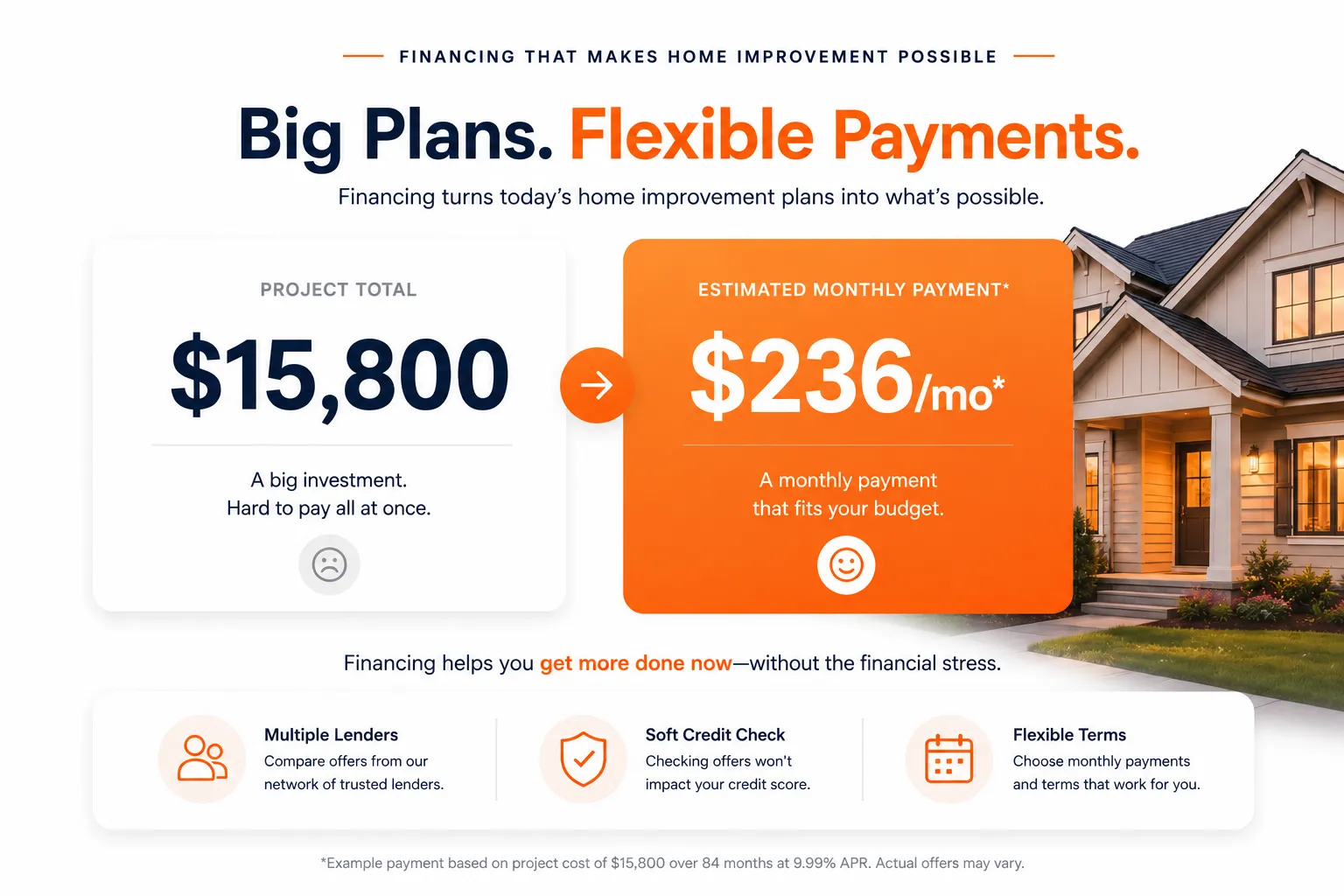
Checking offers won’t impact your credit.
It’s common for homeowners to delay applying because they’re worried about their credit score. With a soft credit check, you can review available financing options without any impact to your credit score.2