Participating Lender Network





How to finance a backyard sports basketball court
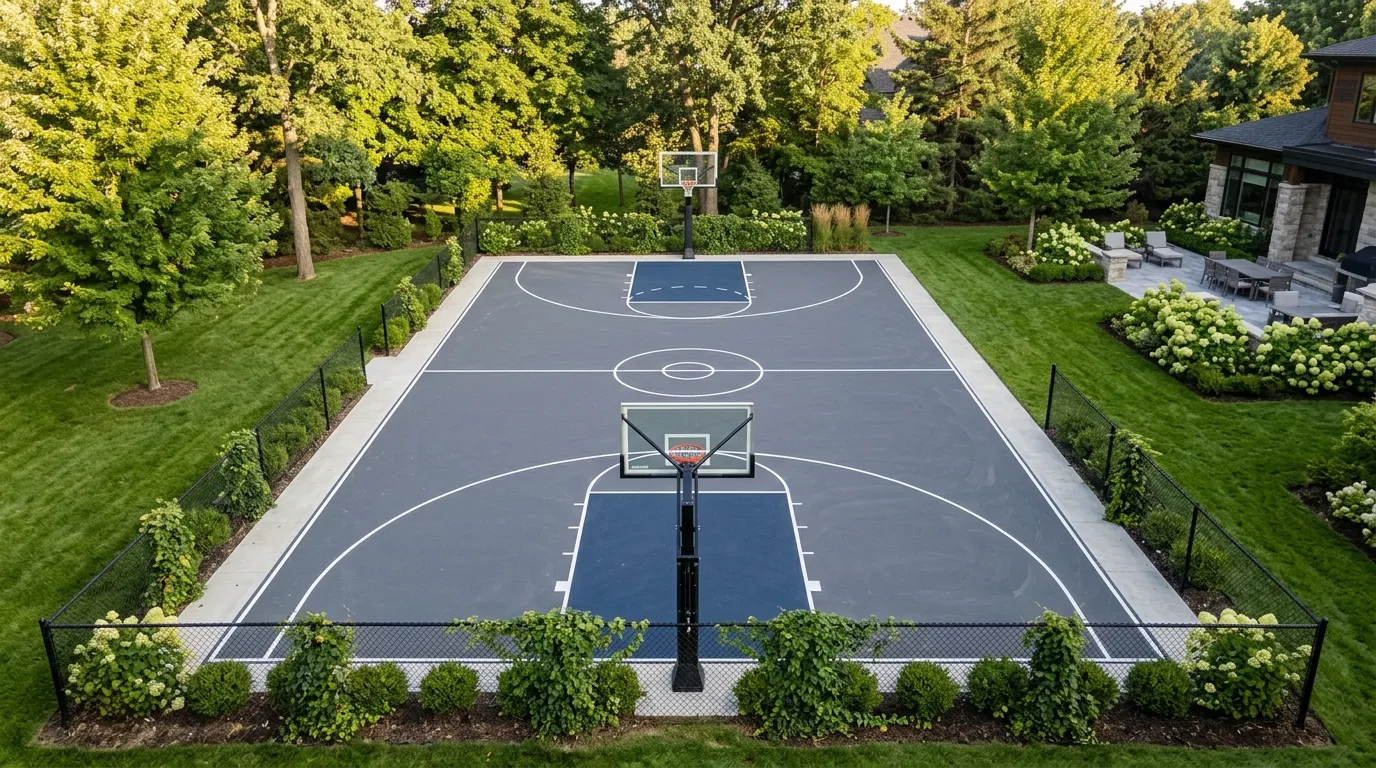
A backyard court can range from a $3,600 painted half-court slab to a $75,000 full-size build with fencing, lighting, and a cushioned multi-sport surface. Because the scope decides whether this is an out-of-pocket weekend upgrade or a project worth financing, it pays to set your budget before you break ground. Smaller courts and resurfacing jobs are often covered with savings or a 0% intro credit card, while a full build with site work is where a personal loan, home equity line of credit (HELOC), or home equity loan makes sense. The size of the court and the condition of your yard decide the number more than the hoop or the paint, so the first step is understanding what goes under the surface.
Key Takeaways
- Court size and surface set the price: a 30×30 half-court runs about $3,600 to $14,400 for a basic build, while a full-size court with site work, fencing, and lighting can reach $75,000.
- The base is the real cost, not the paint: grading, excavation, drainage, and a concrete or asphalt subsurface are where the money goes, and sport tiles still need that base underneath.
- Skimping on the base backfires: a poor foundation cracks and fails, so it’s the last place to cut, and a properly built court lasts 15 to 25 years.
- Permits are usually required for a permanent court, and setback, lot-coverage, and drainage rules can reshape or block your design before you start.
- Add-ons stack up fast: hoops ($1,000 to $5,000), fencing ($3,000 to $8,000), and LED lighting ($2,000 to $10,000) each add meaningfully to the total.
- A multi-sport court holds its value best, since striping for pickleball and other games appeals to more buyers than a single-use basketball slab.
How Much Does a Backyard Basketball Court Cost?
The price depends on the size of the court, the surface system, and how much work your yard needs before anything is poured. A basic 30×30 half-court runs about $3,600 to $14,400 for an asphalt or concrete base with a painted surface and one hoop, while a full build with fencing and lighting ranges from roughly $20,000 to $75,000. Outdoor courts run $4 to $16 per square foot for the surface alone, and site work is the variable that moves the total most.
Costs also run higher in expensive metro areas and where a sloped or poorly draining yard needs extra grading.
Where Does the Money Go on a Backyard Court?
- Site prep and base (largest single cost): grading, excavation, drainage, and a poured concrete or asphalt subsurface, which every surface system sits on and which decides how long the court lasts.
- Surface system ($4 to $16 per square foot): painted acrylic over concrete at the low end, or snap-together sport tiles that add cushioning and drainage at the higher end.
- Hoop system ($1,000 to $5,000): from an anchored pole to a premium adjustable in-ground system.
- Fencing ($3,000 to $8,000): perimeter fencing or netting to keep the ball in and define the court.
- LED lighting ($2,000 to $10,000): pole-mounted lights for night play, which add an electrical run to the project.
Why a Strong Base Matters More Than the Court Surface
A backyard court is a groundwork project with a game surface on top. The base, meaning the graded, drained, and poured foundation, is what holds the court flat and crack-free for decades, and it’s the part you can’t fix cheaply once the surface goes down. A properly built court lasts 15 to 25 years; one built on a rushed or poorly drained base cracks, heaves, and needs early repair.
This is why two quotes for the “same” court can differ by thousands. A yard that is flat and drains well needs little prep, while a sloped or wet lot needs grading, fill, and drainage work before the first truck of concrete arrives. When you compare bids, look at what each one includes for site preparation, not just the surface, since that line is where the durability and the price both live.
Do You Need a Permit to Build a Backyard Court?
Usually, yes, and the rules can reshape your plans before you start. A permanent court of concrete, asphalt, or pavers typically requires a building permit, with fees of $100 to $1,000 and inspections before and after construction. Three local rules catch homeowners off guard:
- Setbacks: most areas require the court to sit a set distance from property lines, which can shrink the court you’re able to build.
- Impervious-surface and lot-coverage limits: concrete and asphalt don’t absorb water, so a large court can push your lot past its allowed coverage, forcing permeable tile or a drainage plan.
- HOA architectural review: if you’re in an HOA, the board may need to approve the court’s size, surface, and even color before you build.
Confirm all three with your building department and HOA before you design the court, and fold permit fees into the amount you finance.
Does a Backyard Court Add Resale Value?
It can, but the return depends on the buyer and the build. A well-made court is a strong selling point for active families and appeals to the growing number of buyers who want outdoor recreation space, and listings with sport amenities have drawn rising search interest. That said, a court rarely returns its full cost, and a single-purpose basketball slab appeals to a narrower group than a versatile space does.
The way to protect the return is to build for flexibility. A multi-sport court striped for basketball, pickleball, and other games reaches more buyers than a basketball-only court, and a neutral, well-maintained surface reads as a feature rather than something the next owner has to tear out. As with any recreation upgrade, build it for how your family will use it, and treat the resale benefit as a bonus rather than the reason to spend.
How Do You Finance a Backyard Basketball Court?
If you decide to borrow, match the loan to the size of the project and whether the court stands alone or is part of a larger backyard renovation.
- Personal loan: funds quickly with no lien on your home, which fits a half-court or a resurfacing job and works with any contractor.
- Home equity loan or HELOC: usually the lowest rate for a large full-size or multi-sport build, and a natural fit when the court is part of a broader landscaping or backyard project.
- 0% intro APR credit card: useful for a small resurfacing job or a hoop-and-surface upgrade you can repay within the promotional window, as long as you clear the balance before it ends.
- Contractor financing: some court builders offer promotional plans, but compare the total against an outside loan and confirm whether a “no interest” offer is a true 0% or deferred interest.
How Do You Qualify for Backyard Court Financing?
Qualifying works like any home-improvement loan, with a couple of steps specific to a court that keep the amount right.
Get an itemized bid that separates site work from the surface. Ask each contractor to break out grading, drainage, and the base from the surface, fencing, and lighting, so you can compare bids accurately and see where the durability and the cost sit.
Confirm the permit, setback, and lot-coverage rules first. Since these can change the court’s size or require drainage work, pin them down before you finalize the budget, and fold permit fees into the amount you finance.
Check your credit and prequalify with a soft pull. Review your credit report, then prequalify with a soft credit check to compare real offers without affecting your score, and weigh them on total repayment rather than the monthly figure.
The Bottom Line
How you pay for a backyard court comes down to the size of the build. A half-court or a resurfacing job is small enough for a personal loan that funds quickly without touching your equity, or even a 0% intro card if you can repay it in the promotional window. A full-size or multi-sport court running into five figures is where a home equity loan or HELOC usually costs less, especially when the court is part of a broader backyard project.
Two things protect your budget on a court like this: itemized bids that separate the site work and base from the surface, since that’s where both quality and price live, and confirming your permit, setback, and lot-coverage rules before you finalize the design. Build it for how your family will actually play, keep the borrowed amount matched to a court your yard and budget can support, and treat any resale bump as a bonus rather than the reason to build.
The information provided by Pasha Funding is for educational and informational purposes only and should not be considered financial, legal, or tax advice. Every homeowner’s financial situation is different, and the financing options discussed may not be suitable for everyone. Before choosing a financing solution, carefully review the lender’s terms and consider consulting a qualified financial professional if needed.
Pasha Funding is a financing marketplace that connects homeowners with financing options offered by participating lending partners. We do not make loans, determine credit eligibility, or guarantee approval or specific loan terms. Pasha Funding is not a direct lender. We may receive compensation from participating lending partners when users submit an application or obtain a loan through our platform. This compensation may affect how and where financing options appear, but it does not influence our editorial evaluations.
Financing offers, rates, terms, and availability are determined solely by participating lenders and may change without notice. Our editorial content is created independently to help consumers better understand home improvement financing. While we strive to keep information accurate and current, financing products, lender requirements, rates, and offers may change over time. Any opinions expressed are those of the author and have not been reviewed, approved, or endorsed by our lending partners.

Frequently Asked Questions
In this guide
how it works
3 Simple steps to
finance your project.
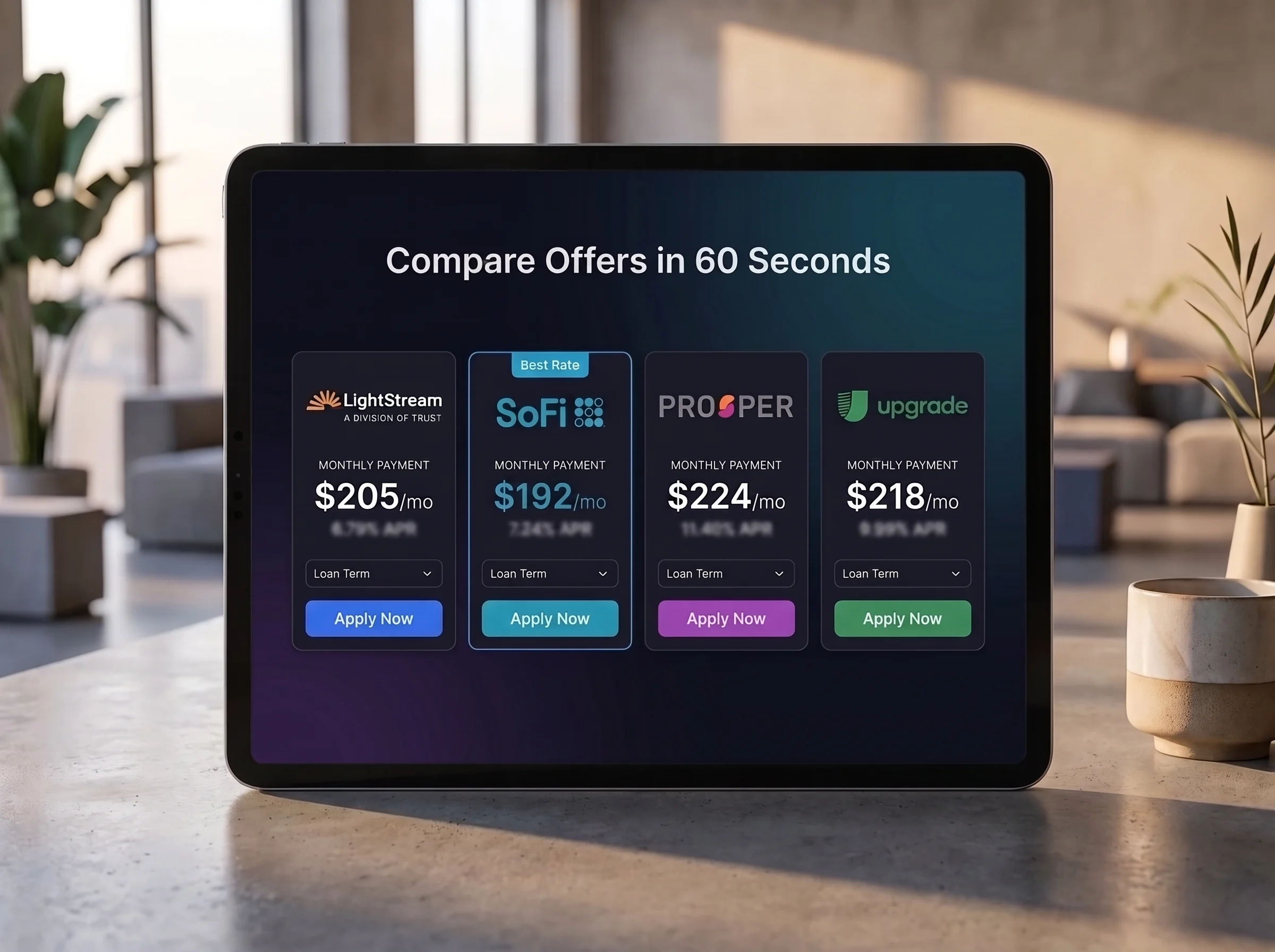
Getting started only takes a minute. Complete one simple application to compare available financing offers from over 18+ lenders, choose the option that fits your budget, and move forward with your home improvement project.
Backyard Court Financing Calculator
1. Enter Your Desired Loan Amount
Your Estimate
Monthly Payment
-
This calculator provides estimates for illustrative purposes only and does not constitute an offer of credit or a commitment to lend. Final APRs, loan amounts, and terms depend on credit approval, income verification, and lender underwriting criteria. Minimum and maximum rates/terms vary by state.
Powered by: Pasha Funding
Risk-Free Prequalification
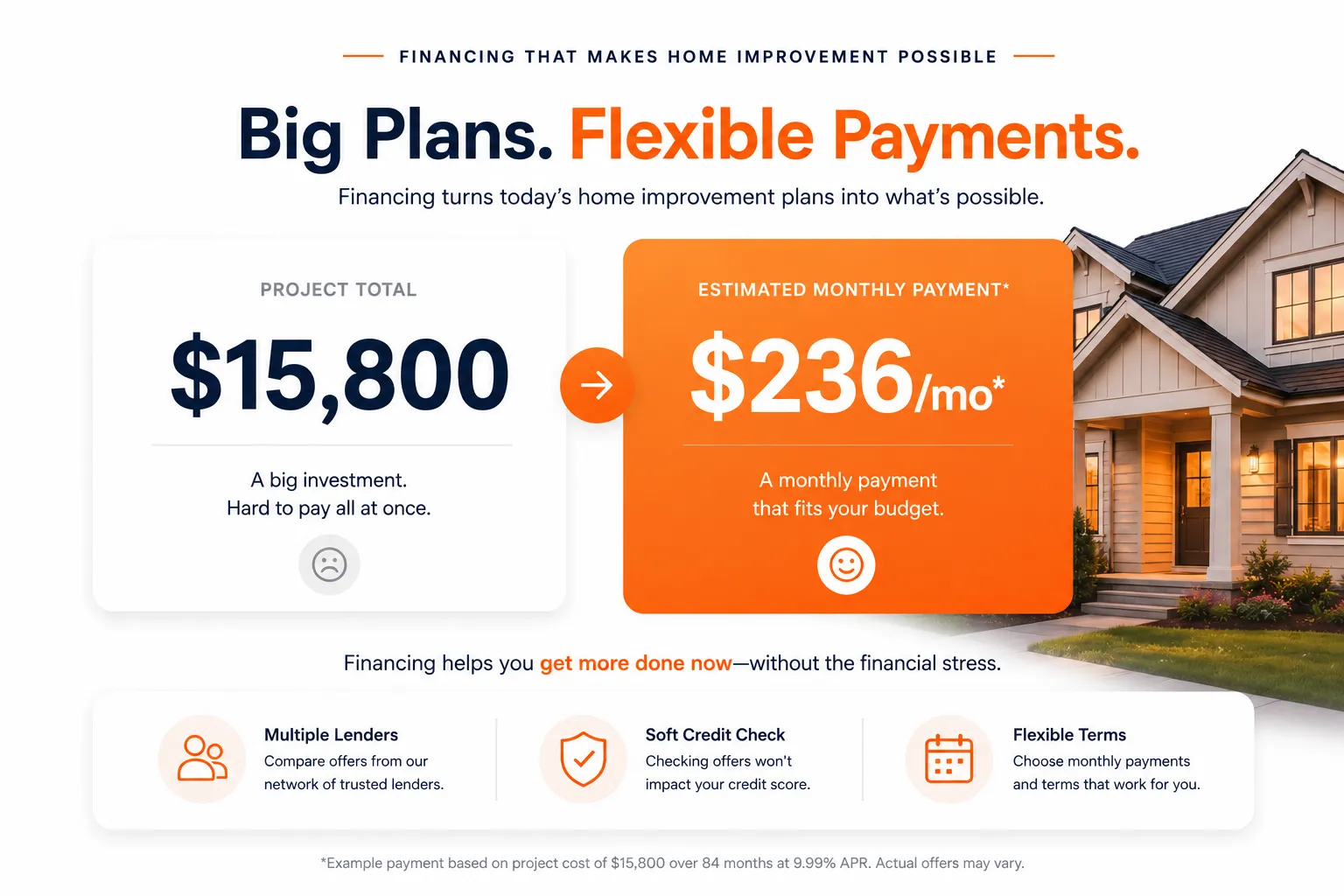
Checking offers won’t impact your credit.
It’s common for homeowners to delay applying because they’re worried about their credit score. With a soft credit check, you can review available financing options without any impact to your credit score.2