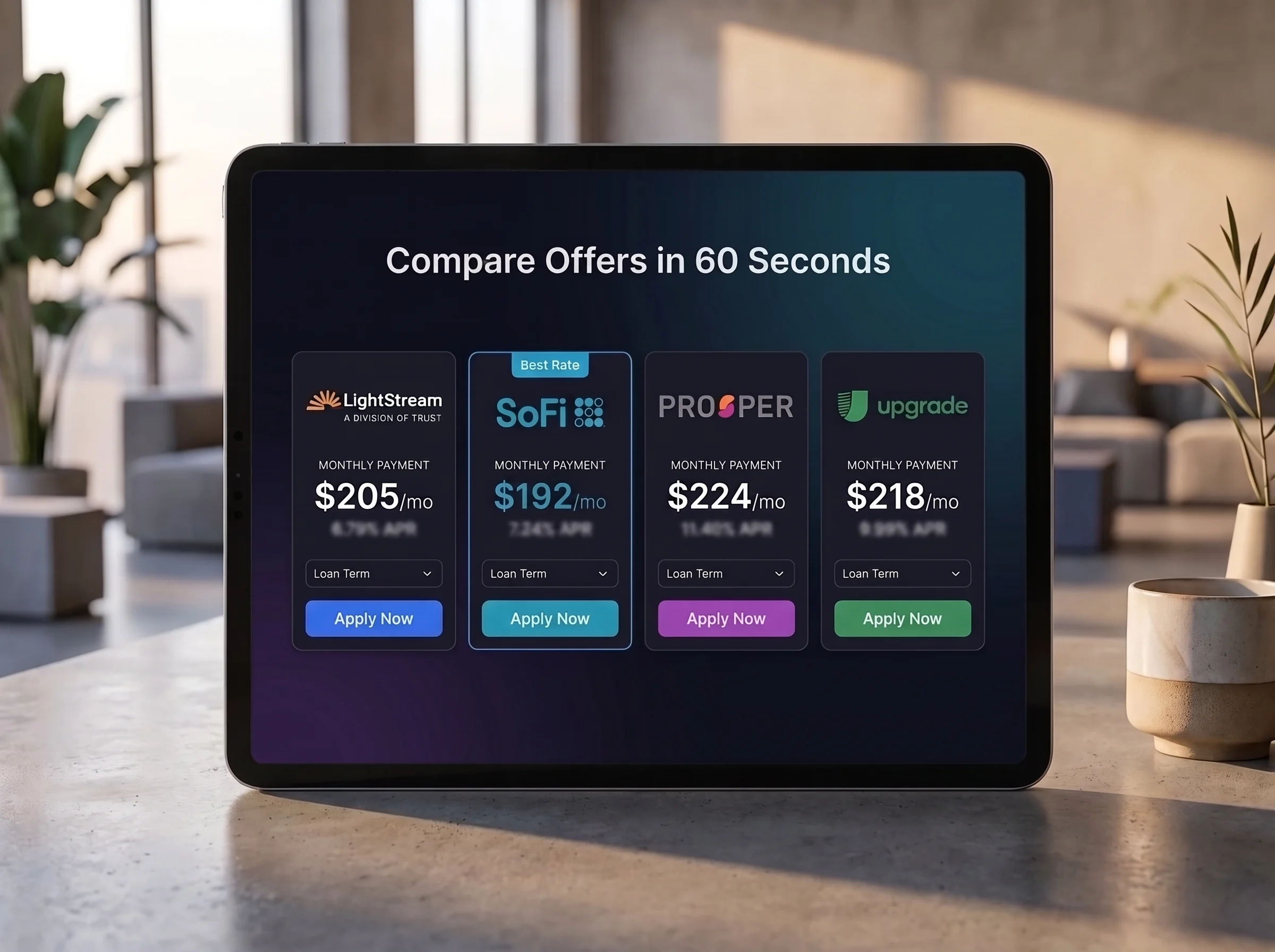
Participating Lender Network





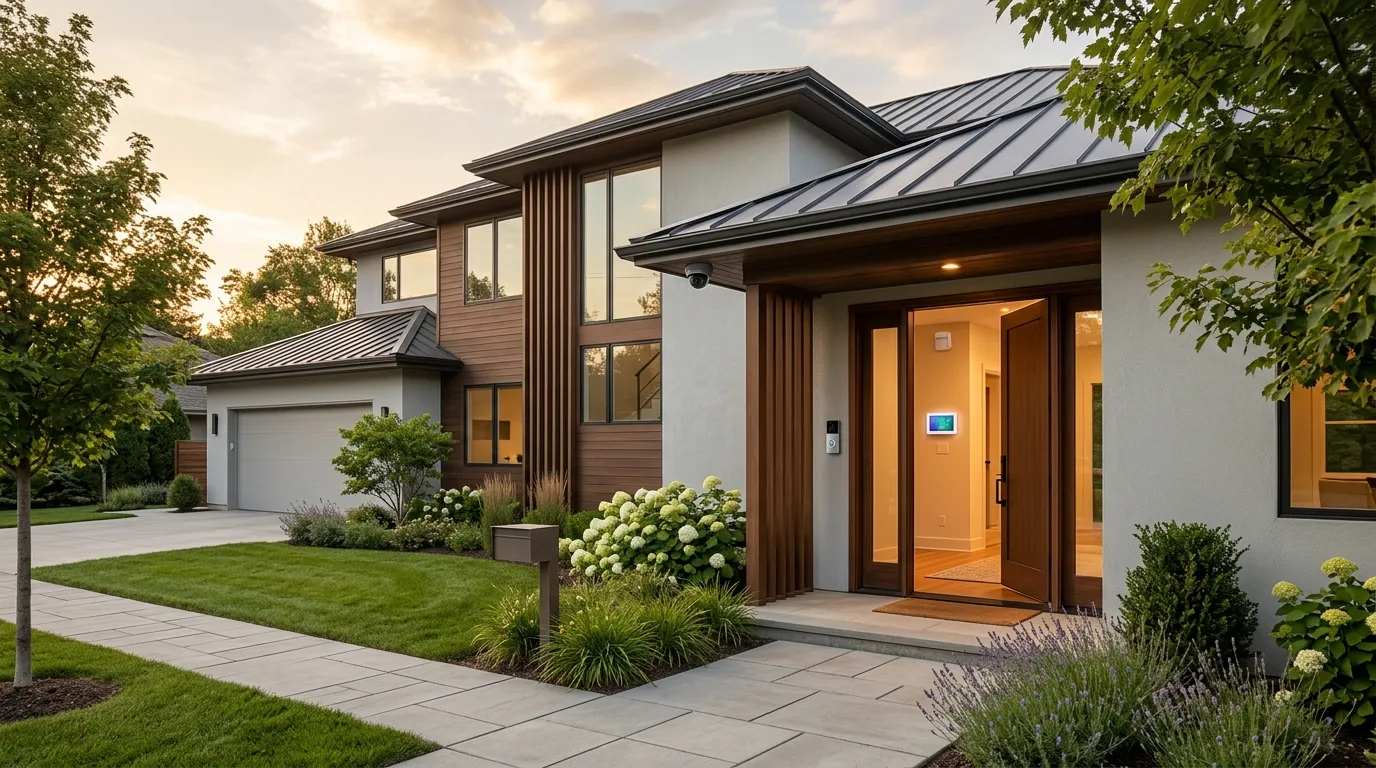
home security financing & loan options for homeowners
Budgeting for a home security system means managing two separate costs: the hardware you buy once, and the monthly subscription you pay to keep it monitored. Equipment runs from about $200 for a DIY starter kit to $2,000 or more for a professionally installed setup with cameras, while professional monitoring ranges from $0 if you self-monitor to roughly $60 a month. How you pay tracks that split: a small kit often goes on a card, a larger system is commonly financed through the provider or a personal loan, and the monitoring stays a separate ongoing bill.
The trap is looking only at the hardware. A cheap equipment package can hide a mandatory multi-year monitoring contract, while buying your gear outright leaves you free to switch plans anytime. Before financing high-end cameras or signing a monitoring agreement, add up your full multi-year commitment, not just the checkout price.
Key Takeaways
- Two costs, not one: equipment is a one-time $200 to $2,000+ purchase, while monitoring is an ongoing $10 to $60 a month, or free if you self-monitor.
- DIY vs. professional is the main fork: DIY systems (SimpliSafe, Ring, Wyze) install in under an hour with no contract, while professional systems (ADT, Vivint) include installation but often require a multi-year agreement.
- Watch the contract: professionally installed systems can carry 2-to-3-year monitoring contracts with early-termination fees, so read the term before you sign.
- A monitored system can lower your insurance: many insurers discount homeowners premiums for a monitored alarm, often in the 2% to 15% range.
- Financing fits larger systems: a card suits a small kit, while a personal loan, provider equipment financing, or lease-to-own covers a whole-home setup.
How Much Does a Home Security System Cost?
Because the equipment and the monitoring are billed separately, budget for both. The equipment is what you install; the monitoring is what pays for someone to watch the system and dispatch help.
- Equipment (one-time): a basic DIY kit with a hub and a few sensors starts around $200 to $300, a mid-size setup with a camera or two runs $400 to $700, and a professionally installed whole-home system with multiple cameras and automation can reach $600 to $2,000 or more.
- Monitoring (monthly): self-monitoring, where alerts come to your phone and you respond, is free or a few dollars a month, while professional monitoring with 24/7 dispatch runs roughly $10 to $60 a month depending on the brand and plan. Camera cloud recording is sometimes billed on top.
The cheapest path is a DIY kit with self-monitoring; the most hands-off is a professionally installed system with 24/7 monitoring, which costs more upfront and monthly but includes installation and response.
Is DIY or Professional Home Security Better?
This choice drives both your cost and your commitment. A DIY system is one you buy, set up yourself, and monitor on flexible month-to-month terms. A professional system is installed by a technician and usually tied to a monitoring agreement.
- DIY systems (SimpliSafe, Ring, Wyze): equipment you install in well under an hour, often no contract, monitoring you can start, stop, or skip month to month, and gear that’s portable if you move. Best for renters, smaller budgets, and anyone who wants flexibility.
- Professional systems (ADT, Vivint): a technician designs and installs the system, monitoring is included, and the setup is more capable, but these often require a 2-to-3-year contract with an early-termination fee, and the equipment stays with the home. Best for whole-home coverage and hands-off response.
Does a Home Security System Lower Your Insurance?
Often, yes, and it can offset part of the cost. Many insurers offer a homeowners premium discount for a monitored alarm system, since it lowers the risk of burglary and fire loss. According to the Insurance Information Institute, features like a central or monitored alarm and smoke detectors are common sources of premium discounts, and the savings commonly land in the 2% to 15% range depending on the insurer and the system. A centrally monitored system tends to earn a bigger discount than a local alarm. Ask your insurer which features qualify and how much you’d save before you buy, since the discount can help the monitoring pay for part of itself, though you shouldn’t buy a system for the discount alone.
How Do You Finance a Home Security System?
Because equipment costs range from a couple hundred dollars to a few thousand, the right financing depends on the size of the system. Remember that this covers the equipment; monitoring is a separate ongoing bill. How the common paths compare:
- Savings or a credit card: the simplest route for a DIY kit in the low hundreds, especially with a rewards card you pay off quickly.
- Provider equipment financing: professional installers like Vivint and ADT often offer to finance the equipment over 24 to 60 months, sometimes at a promotional 0%, tied to a monitoring agreement. Confirm the term, whether the rate is a true 0% or deferred interest, and how it interacts with the monitoring contract.
- Buy-now-pay-later or lease-to-own: many retailers offer installment or lease-to-own plans, sometimes with no hard credit check, which are accessible with weaker credit but usually cost more overall than a loan.
- Unsecured personal loan: a fit for a larger whole-home system if you’d rather own the equipment outright and keep monitoring separate. It funds fast, adds no lien, and carries a fixed rate, though some lenders charge an origination fee.
How Do You Qualify for Home Security Financing?
What it takes to get approved depends on how much you’re financing. A basic DIY kit on a credit card asks nothing beyond an account you already have. A larger professional system spread through provider financing or a personal loan is underwritten more like a small home-improvement loan, so it helps to know what a lender weighs and how to work through it.
What Do Lenders Look at for a Home Security Loan?
For provider equipment financing or a personal loan, a lender is mainly weighing three things:
- Your credit score and history set your rate and whether you’re approved. Good credit or better earns the lowest rates and the best 0% equipment offers; fair credit still qualifies with most personal-loan lenders and many provider programs, at a higher cost.
- Your debt-to-income ratio, your monthly debt payments against your gross income, tells the lender whether you can take on another payment. Most look for it below the 36% to 43% range.
- Your income confirms you can carry the payment. Because security equipment is relatively low-cost, lenders usually want only recent pay stubs or proof of steady income, not the deep documentation a large loan requires.
One wrinkle specific to security: provider financing is often tied to a monitoring agreement, so the lender is effectively approving you for the equipment and the service together. Read what the financing commits you to before you sign.
How to Apply for Home Security Financing
1. Separate the equipment from the monitoring. Total the one-time equipment and installation cost, since that’s what you finance, and budget the monthly monitoring separately as an ongoing bill rather than folding it into the loan in your head.
2. Check your own credit first. Look at your score and report and fix any errors before a lender or provider sees them. If your score sits just below the next tier, a few weeks of paying down balances can move you into a better rate.
3. Prequalify with a few options. Compare a provider’s equipment financing against an outside personal loan, both usually available through a soft credit check that leaves your score untouched, so you can weigh them side by side.
4. Compare on total cost, not the monthly payment. A low monthly figure can hide a longer term or a monitoring contract you’re locked into. Weigh the equipment financing rate, any fees, the monitoring term, and the early-termination penalty together.
5. Apply for the one that fits. Once you’ve picked the route, submit the application, which triggers a hard credit check. For a DIY kit on a card or a small personal loan, this is usually quick.
Home security financing tends to move fast: a personal loan is often approved the same day and funded within a few business days, and provider equipment financing is typically decided at the point of sale, so financing rarely holds up your install.
The Bottom Line
How you pay for home security depends on the system and how much you want handled for you. A DIY kit with self-monitoring is affordable enough for savings or a card you clear quickly, and it keeps you free of any contract. A professionally installed system spreads the equipment cost through provider financing, often at 0% over a few years, but ties you to a monitoring agreement, so weigh the convenience against the commitment. A personal loan is a fit when you’d rather own the equipment outright and shop monitoring separately.
Before you borrow, separate the one-time equipment cost from the ongoing monthly monitoring, and read any professional contract’s term and cancellation fee before signing. Ask your insurer whether the system earns a premium discount, and compare any financing offer on the total you will repay rather than the monthly figure.
The information provided by Pasha Funding is for educational and informational purposes only and should not be considered financial, legal, or tax advice. Every homeowner’s financial situation is different, and the financing options discussed may not be suitable for everyone. Before choosing a financing solution, carefully review the lender’s terms and consider consulting a qualified financial professional if needed.
Pasha Funding is a financing marketplace that connects homeowners with financing options offered by participating lending partners. We do not make loans, determine credit eligibility, or guarantee approval or specific loan terms. Pasha Funding is not a direct lender. We may receive compensation from participating lending partners when users submit an application or obtain a loan through our platform. This compensation may affect how and where financing options appear, but it does not influence our editorial evaluations.
Financing offers, rates, terms, and availability are determined solely by participating lenders and may change without notice. Our editorial content is created independently to help consumers better understand home improvement financing. While we strive to keep information accurate and current, financing products, lender requirements, rates, and offers may change over time. Any opinions expressed are those of the author and have not been reviewed, approved, or endorsed by our lending partners.

Frequently Asked Questions
how it works
3 Simple steps to
finance your project.
Getting started only takes a minute. Complete one simple application to compare available financing offers from over 18+ lenders, choose the option that fits your budget, and move forward with your home improvement project.
Home Security Financing Calculator
1. Enter Your Desired Loan Amount
Your Estimate
Monthly Payment
-
This calculator provides estimates for illustrative purposes only and does not constitute an offer of credit or a commitment to lend. Final APRs, loan amounts, and terms depend on credit approval, income verification, and lender underwriting criteria. Minimum and maximum rates/terms vary by state.
Powered by: Pasha Funding
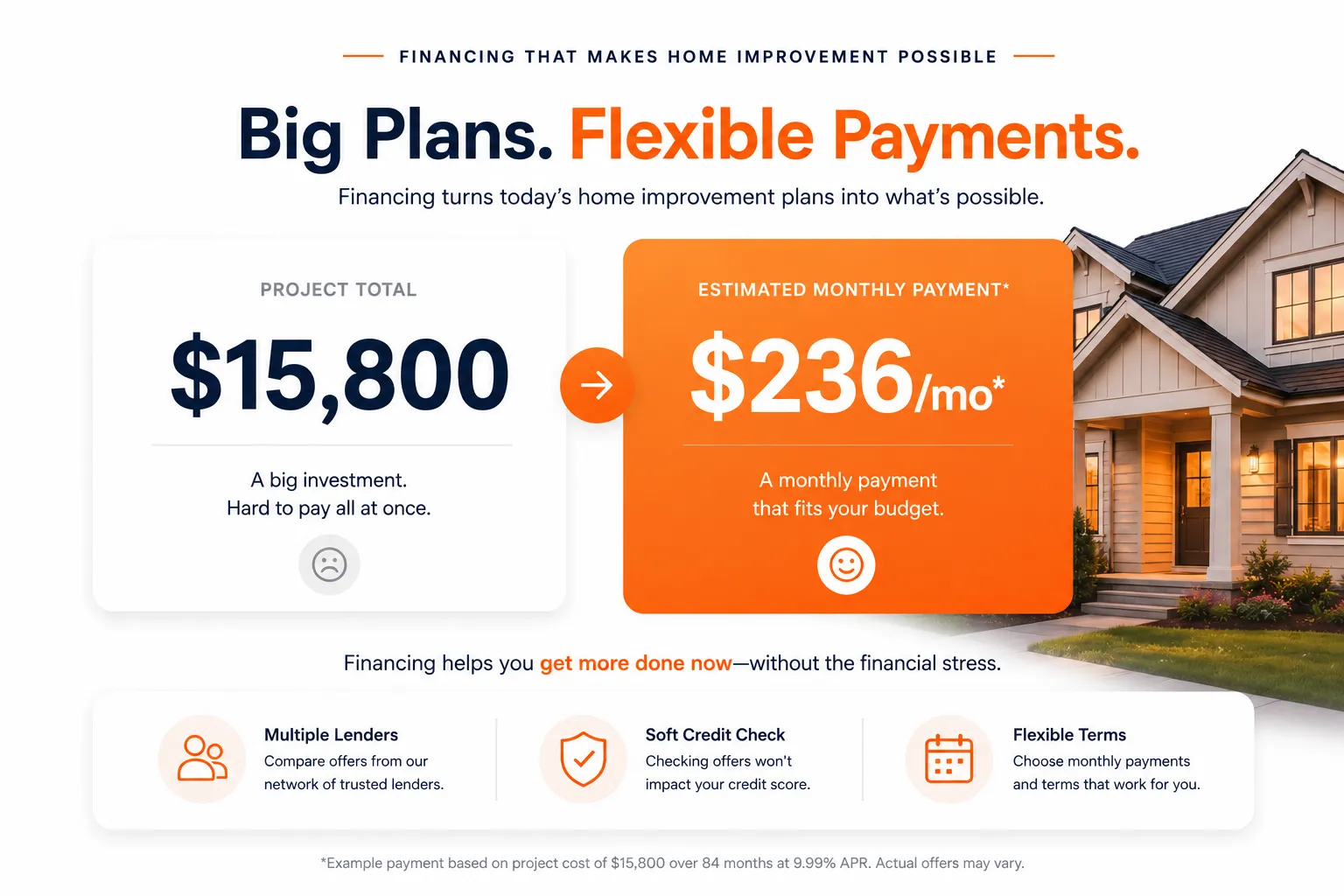
Risk-Free Prequalification
Checking offers won’t impact your credit.
It’s common for homeowners to delay applying because they’re worried about their credit score. With a soft credit check, you can review available financing options without any impact to your credit score.2