Participating Lender Network





How to Finance a Home Generator
A home generator ranges from about $500 for a basic portable unit to $20,000 or more for a whole-house standby system installed, and where you land depends first on which type you need. A portable generator plus a transfer switch covers essential circuits for a few thousand dollars, while a permanently wired standby unit that starts automatically during an outage is a five-figure project once installation is counted. Because a small portable can go on a card or savings while a standby install is a larger job, the type you choose decides how you pay: a portable is often bought outright, and a standby is commonly financed with a personal loan, a manufacturer’s financing program, or home equity. The number that catches people off guard is the installation, not the generator itself, so it helps to know the full cost before you borrow.
Key Takeaways
- Portable generators run $500 to $2,500 for the unit, plus $400 to $2,000 for a transfer switch or interlock so you can power your home safely.
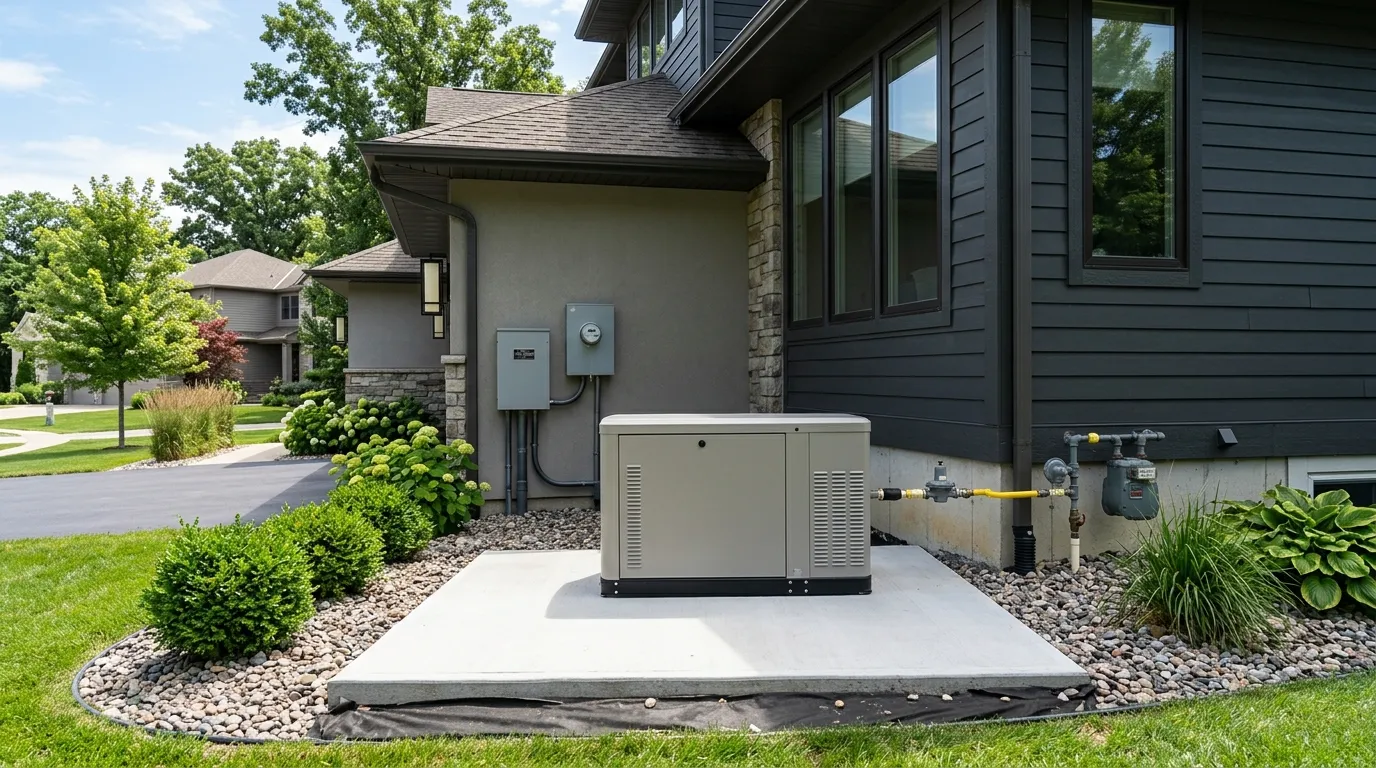
- Whole-house standby systems run $7,000 to $20,000+ installed, covering the unit, an automatic transfer switch, a pad, fuel hookup, permits, and licensed labor.
- The install is the real cost: a generator advertised near $6,000 can become a $14,000 project once the transfer switch, gas line, pad, and two trades are added.
- Fuel choice matters: natural gas runs cheapest and never needs refilling, while propane suits homes off the gas grid but needs a dedicated storage tank.
- A personal loan, a manufacturer financing program, or home equity covers a standby install; a portable is often bought outright.
Portable vs. Standby Generator: Which Do You Need?
This is the decision that sets your budget, because the two are different tools at very different prices. A portable generator is a machine you roll out, start yourself, and connect to a few key circuits. A standby generator is a permanent appliance wired into your panel that switches on within seconds of an outage, with no effort from you.
- Portable generator plus transfer switch: a gasoline or dual-fuel unit ($500 to $2,500) wired to a manual transfer switch or interlock ($400 to $2,000) that safely powers 6 to 10 essential circuits: the fridge, sump pump, well pump, and select lights. You start and refuel it manually. A transfer switch is not optional: connecting a generator to your wiring without one causes dangerous back-feed into the grid, violating National Electrical Code (NEC) standards. Additionally, the CPSC warns portable units must run outdoors only, at least 20 feet away from doors and windows, to prevent carbon monoxide poisoning.
- Whole-house standby generator: a permanently installed unit ($7,000 to $20,000+ all in) fueled by natural gas or propane, with an automatic transfer switch that hands the house over to generator power in about 10 to 20 seconds. It runs continuously for days and requires zero manual effort during a storm.
A portable is the budget path for keeping the essentials on; a standby is for whole-home coverage and hands-off convenience, especially where outages are long or frequent.
Why Does Generator Installation Cost So Much?
The sticker on a standby generator is only the start, and the installation stack is where budgets go wrong. A unit advertised near $6,000 can become a $14,000 project once everything around it is added, because a proper install is a multi-trade job. What goes into the total:
- Automatic transfer switch ($500 to $5,500): the device that safely switches your home to generator power; a whole-home automatic switch costs far more than a small manual one.
- Concrete or composite pad ($200 to $600): a level, code-compliant base required to keep the unit elevated and stable.
- Fuel hookup ($500 to $5,000): a high-volume natural gas line extension if you have service, or a propane tank setup ($800 to $2,500) if you do not.
- Electrical work and municipal permits: trenching, conduit runs from the switch to your main breaker panel, plus local municipal permits and utility inspections (typically $200 to $800).
- Licensed labor: a standby install requires both a licensed master electrician and a certified gas/plumbing technician, logging several hours each.
Should You Choose Natural Gas or Propane for Your Home Generator?
Standby generators run on natural gas or propane, and the choice affects both cost and long-term convenience. Natural gas connects directly to your municipal utility line, costs the least to run per hour, and never needs refueling—making it the default where a line exists. Propane is the answer when off the gas grid: it stores in an on-site 250-to-500-gallon tank, runs completely independent of public infrastructure, but requires purchasing or leasing that tank ($800 to $2,500) and scheduling periodic refills. If you already have natural gas service, it is almost always the more economical fuel path; if you do not, propane makes a whole-house standby generator fully viable.
How Do You Finance a Home Generator?
Because generator projects range from a few hundred dollars to well over $15,000, the right financing depends on the size of the job. How the common paths compare:
- Savings or a credit card: the simplest route for a portable unit and manual transfer switch in the hundreds to low thousands, provided you can clear the card balance quickly to avoid high APRs.
- Unsecured personal loan: the common choice for a whole-house standby install. It funds fast, places no lien on your property, and carries a fixed rate with predictable monthly payments. Good-to-excellent credit secures the most competitive terms without prepayment penalties.
- Manufacturer or dealer financing: brands like Generac and Briggs & Stratton offer financing through partners such as Synchrony, arranged by your installer at the point of sale. Compare the total repayment cost against an outside loan, and confirm whether promotional terms represent true 0% APR or deferred interest.
- Home equity loan or HELOC: worth considering for an extensive standby install if you want the lowest possible interest rate, since your home secures the debt. The trade-off includes a lien on your property, appraisal requirements, and potential closing costs, which may outweigh rate savings on mid-sized projects.
How Do You Qualify for Generator Financing?
For most generator installations, qualifying for financing is relatively simple. The key is to finance the full turnkey project cost, including the generator, installation, electrical work, permits, and any required fuel-system upgrades, rather than just the equipment price. Recommended steps:
- Get a detailed, itemized bid: verify that the quote includes the generator unit, transfer switch, mounting pad, fuel plumbing, electrical permits, and certified labor so you borrow the exact amount required.
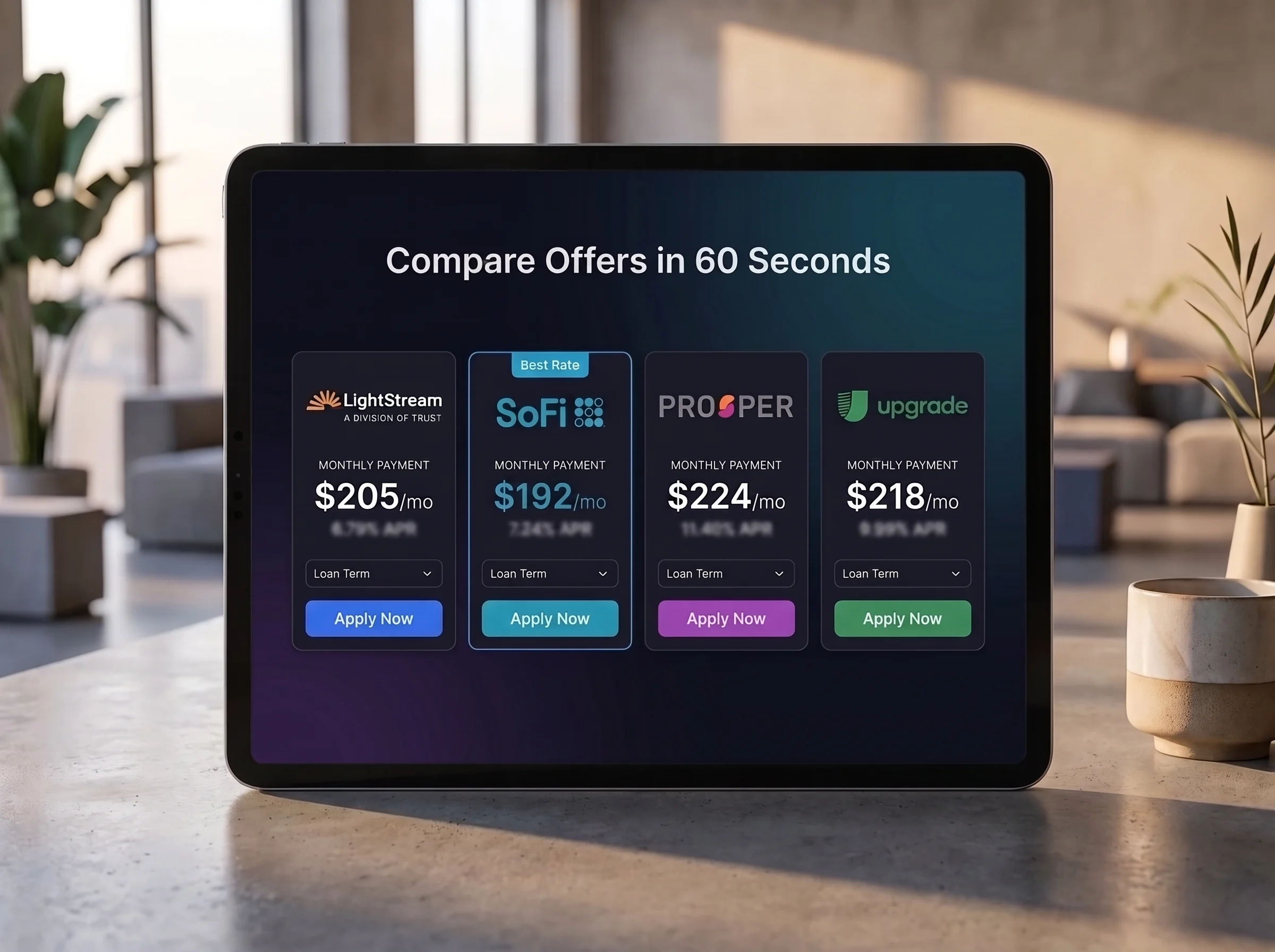
- Prequalify with a soft credit pull: compare terms and APRs across multiple lenders without lowering your credit score, evaluating offers on total repayment cost rather than monthly payment alone.
- Match financing to the project scope: reserve cards or short-term financing for portable setups, and utilize fixed-rate personal loans, dealer programs, or home equity for complete standby installations.
The Bottom Line
How you pay for a home generator comes down to the system you select. A portable unit paired with a manual transfer switch is manageable with cash or short-term credit. A whole-house standby install is where dedicated financing makes sense: a personal loan funds quickly without placing a lien on your home, while manufacturer financing offers point-of-sale convenience if the promotional terms are transparent. Home equity delivers the lowest baseline interest rate for large projects, balanced against property collateral requirements.
Before you commit, obtain an all-inclusive itemized estimate. Because transfer switches, gas lines, and specialized labor often equal the cost of the generator itself, financing the complete turnkey project ensures no surprise out-of-pocket costs on installation day.
The information provided by Pasha Funding is for educational and informational purposes only and should not be considered financial, legal, or tax advice. Every homeowner’s financial situation is different, and the financing options discussed may not be suitable for everyone. Before choosing a financing solution, carefully review the lender’s terms and consider consulting a qualified financial professional if needed.
Pasha Funding is a financing marketplace that connects homeowners with financing options offered by participating lending partners. We do not make loans, determine credit eligibility, or guarantee approval or specific loan terms. Pasha Funding is not a direct lender. We may receive compensation from participating lending partners when users submit an application or obtain a loan through our platform. This compensation may affect how and where financing options appear, but it does not influence our editorial evaluations.
Financing offers, rates, terms, and availability are determined solely by participating lenders and may change without notice. Our editorial content is created independently to help consumers better understand home improvement financing. While we strive to keep information accurate and current, financing products, lender requirements, rates, and offers may change over time. Any opinions expressed are those of the author and have not been reviewed, approved, or endorsed by our lending partners.


Frequently Asked Questions
how it works
3 Simple steps to
finance your project.
Getting started only takes a minute. Complete one simple application to compare available financing offers from over 18+ lenders, choose the option that fits your budget, and move forward with your home improvement project.
Home Generator Financing Calculator
1. Enter Your Desired Loan Amount
Your Estimate
Monthly Payment
-
This calculator provides estimates for illustrative purposes only and does not constitute an offer of credit or a commitment to lend. Final APRs, loan amounts, and terms depend on credit approval, income verification, and lender underwriting criteria. Minimum and maximum rates/terms vary by state.
Powered by: Pasha Funding
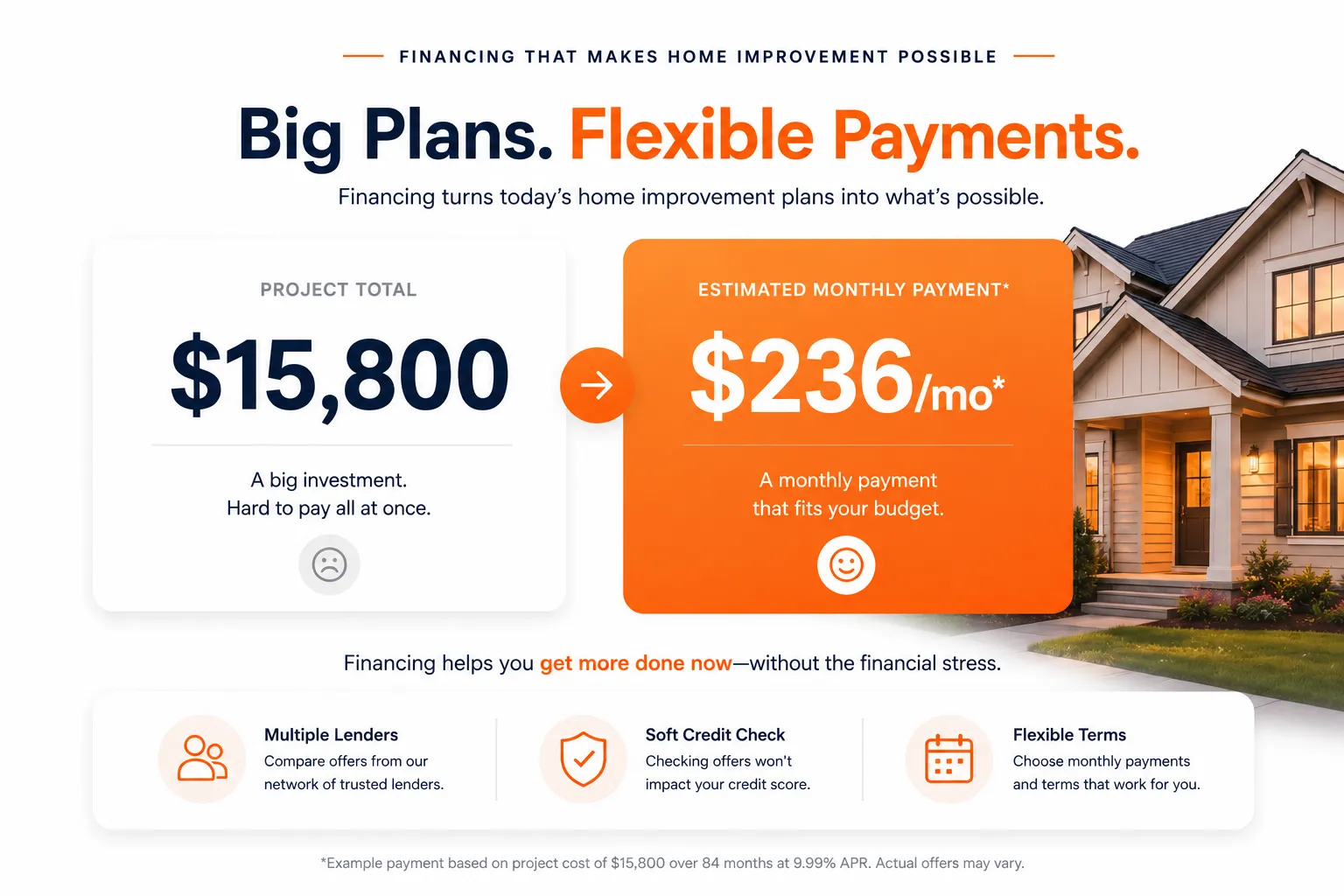
Risk-Free Prequalification
Checking offers won’t impact your credit.
It’s common for homeowners to delay applying because they’re worried about their credit score. With a soft credit check, you can review available financing options without any impact to your credit score.2