
Participating Lender Network





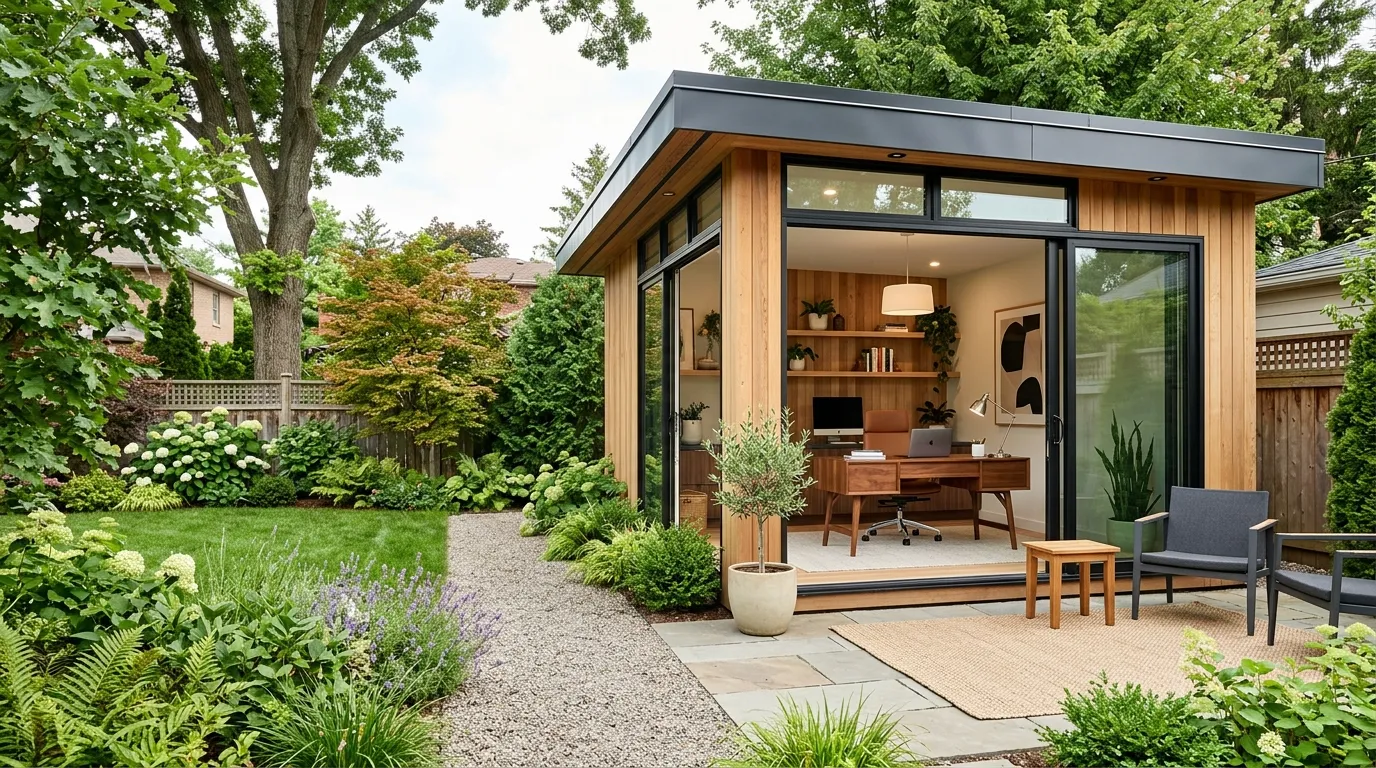
How to Finance a Backyard Office or Studio
A backyard office can range from a $3,000 insulated shed kit you finish yourself to a $40,000 custom timber-frame studio wired and heated for year-round work. Because the finish level decides whether this is a weekend project or a permitted build with an electrician and an HVAC crew, it pays to settle what you need before you order anything. A basic shell or DIY kit is often covered with savings or a 0% intro credit card, while a finished, powered prefab studio or a custom build is where a personal loan, home equity line of credit (HELOC), or home equity loan fits. The real question is not the size of the structure but whether it has power, insulation, and climate control, because that is what separates a shed from an office and drives the budget.
Key Takeaways
- A finished, powered backyard office typically runs $10,000 to $30,000 all-in, with DIY shell kits far lower and custom timber-frame builds higher.
- The build type sets the price: a DIY kit runs $3,000 to $6,000, a prefab studio $12,000 to $25,000 installed, and a custom build $20,000 to $40,000+.
- Power, insulation, and climate control are what separate a shed from an office, and site prep, electrical, and HVAC add $2,500 to $10,000 on top of any structure’s base price.
- Running electricity almost always needs a permit and a licensed electrician, even when the structure itself is small enough to be permit-exempt.
- A detached office used exclusively and regularly for business can qualify for the home-office deduction if you are self-employed, but the building itself is a depreciated capital cost, not an instant write-off.
How Much Does a Backyard Office Cost?
The all-in price depends on the build type and, more than anything, on the finish level. A finished, powered backyard office typically costs $10,000 to $30,000, with DIY shell kits landing well below that and custom builds above it. A shed conversion can come in low if the shell is already sound, a prefab studio sits in the middle, and a custom timber-frame build tops the range. The tiers overlap because the same square footage can be a bare shell or a four-season workspace depending on what goes inside.
Prices also run higher in expensive metro areas and where a sloped yard or a long electrical run from the house adds site-work cost.
Where Does the Money Go on a Backyard Office?
The structure itself is only part of the cost. Turning a basic shell into a comfortable space where you can work 40 hours a week requires the right systems, utilities, and site preparation:
- The structure ($3,000 to $40,000+): a DIY kit shell at the low end, a turnkey prefab studio in the middle, or a custom on-site build at the top.
- Foundation or pad: a gravel base, concrete pad, or adjustable footings to sit the building on, sized to your yard and the unit’s weight.
- Electrical ($1,000 to $5,000): a licensed electrician, trenched conduit from your main panel, and an electrical permit, which is what makes the space usable after dark and in winter.
- Insulation and climate control: insulation, finished walls, and a mini-split heat pump for year-round comfort, often the difference between a three-season shed and a true office.
- Interior finish: flooring, lighting, and any built-in desk or storage.
What Separates a Shed From a Real Office?
The single biggest cost driver is not square footage, it is whether the building is powered, insulated, and climate-controlled. A bare shell and a four-season office can be the same size and still differ by tens of thousands of dollars, because the second one carries an electrical run, insulation, finished walls, and heating and cooling. Running power is the step that turns a shed into a workspace, and it usually requires a licensed electrician, trenched conduit from your main panel, and its own permit.
This is why deciding on the finish level first is what sets your budget. If you only need a warm-weather spot for a laptop, an insulated kit keeps the cost low. If you will work in it through the winter and take video calls, you are financing a small building with real systems, and that pushes the project toward the top of the range. A prefab studio splits the difference by arriving pre-wired and insulated, though you still pay for the pad, delivery, and a power connection.
Do You Need a Permit for a Backyard Office?
Often the structure is exempt but the wiring is not, which surprises people. The building itself is frequently exempt if it is one story and under a local size threshold, commonly 100 to 200 square feet, but electrical work almost always requires its own permit regardless of size. Two other rules apply either way:
- Setbacks: the office must sit a set distance from property lines, which can dictate where it goes and how big it can be.
- Habitable-use rules: the moment a structure has plumbing or is treated as living or rentable space, it crosses into ADU territory and full permitting, which is a different and more expensive path.
Confirm the structure threshold, the electrical permit, and setbacks with your local building department before you order, since these can change what you are able to build and add fees to fold into the budget.
Is a Backyard Office Tax-Deductible?
Sometimes, and a detached office is actually one of the easier cases to qualify, but the rules have real edges. Under IRS Publication 587 and Section 280A, a separate free-standing structure used exclusively and regularly for business can qualify for the home-office deduction, and unlike a room inside the house, it does not have to be your principal place of business. The catches that trip people up:
- Self-employed only: the home-office deduction generally applies to the self-employed and business owners, not to employees who work from home on a W-2.
- Exclusive use: the office has to be used only for business. If it doubles as a guest room or a gym, it does not qualify.
- The building is a capital cost: you generally cannot deduct the construction cost in one year. The structure is depreciated over many years, while operating costs like electricity and a share of utilities can be deducted annually.
This is a narrow provision with a diagnosis-free but strict test, so confirm your situation with a CPA before counting on it. Even so, for a self-employed owner it can offset part of the ongoing cost of the space.
Does a Backyard Office Add Value to Your Home?
It can, and the shift to remote work has made a dedicated backyard workspace one of the faster-growing home-improvement categories. A well-built, permitted, insulated office reads to buyers as usable square footage and flexible space, which helps at resale. A cheap uninsulated shed with an extension cord run to it does not, and can even register as something the next owner has to deal with.
The way to protect the value is to build it properly and pull the permits: a four-season structure with legitimate wiring and a clean inspection trail is an asset, while an unpermitted conversion can complicate a sale. Let how you actually work decide the build, since an office sized and finished for your own routine is the one you will get years of use from, whether or not the next owner pays extra for it.
How Do You Finance a Backyard Office?
Choose your financing based on the finish level and whether the office is a standalone project or part of a larger property upgrade.
- Personal loan: funds quickly with no lien on your home, which fits a prefab studio or a mid-range build and works with any supplier or contractor.
- Home equity loan or HELOC: usually the lowest rate for a custom four-season build, and a natural fit when the office is part of a broader backyard or property upgrade.
- 0% intro APR credit card: useful for a DIY kit or a shell you finish yourself, if you can repay the balance within the promotional window.
- Contractor or supplier financing: some prefab companies offer promotional plans, but compare the total against an outside loan and confirm whether a “no interest” offer is a true 0% or deferred interest.
How Do You Qualify for Backyard Office Financing?
Qualifying works like any home-improvement loan, with a step or two specific to a detached office that keep the amount right.
Price the finished, powered result before you borrow. Get a quote that includes the pad, delivery, the electrical run, and climate control, not just the structure’s base price, so the loan covers the real total rather than the sticker.
Confirm the electrical permit and setback rules first. Since the wiring almost always needs a permit even when the structure does not, pin down those fees and fold them into the amount you finance.
Check your credit and prequalify with a soft pull. Review your credit report, then prequalify with a soft credit check to compare real offers without affecting your score, and weigh them on total repayment rather than the monthly figure.
The Bottom Line
How you pay for a backyard office comes down to the finish level. A DIY kit or a shell you fit out yourself is small enough for a 0% intro card or savings. A prefab studio in the low five figures fits a personal loan that funds fast without touching your equity. A custom four-season build is where a home equity loan or HELOC usually costs less, especially when the office is part of a broader property project.
Whatever you choose, price the finished result rather than the advertised base, since the pad, the electrical run, and climate control are what make the space usable and what most quotes leave out. Confirm the electrical permit and setbacks before you order, build it well enough to hold its value, and if you are self-employed, ask a CPA whether the space qualifies for the home-office deduction before you file.
The information provided by Pasha Funding is for educational and informational purposes only and should not be considered financial, legal, or tax advice. Every homeowner’s financial situation is different, and the financing options discussed may not be suitable for everyone. Before choosing a financing solution, carefully review the lender’s terms and consider consulting a qualified financial professional if needed.
Pasha Funding is a financing marketplace that connects homeowners with financing options offered by participating lending partners. We do not make loans, determine credit eligibility, or guarantee approval or specific loan terms. Pasha Funding is not a direct lender. We may receive compensation from participating lending partners when users submit an application or obtain a loan through our platform. This compensation may affect how and where financing options appear, but it does not influence our editorial evaluations.
Financing offers, rates, terms, and availability are determined solely by participating lenders and may change without notice. Our editorial content is created independently to help consumers better understand home improvement financing. While we strive to keep information accurate and current, financing products, lender requirements, rates, and offers may change over time. Any opinions expressed are those of the author and have not been reviewed, approved, or endorsed by our lending partners.


Frequently Asked Questions
In this guide
how it works
3 Simple steps to
finance your project.
Getting started only takes a minute. Complete one simple application to compare available financing offers from over 18+ lenders, choose the option that fits your budget, and move forward with your home improvement project.
Backyard Home Office Financing Calculator
1. Enter Your Desired Loan Amount
Your Estimate
Monthly Payment
-
This calculator provides estimates for illustrative purposes only and does not constitute an offer of credit or a commitment to lend. Final APRs, loan amounts, and terms depend on credit approval, income verification, and lender underwriting criteria. Minimum and maximum rates/terms vary by state.
Powered by: Pasha Funding
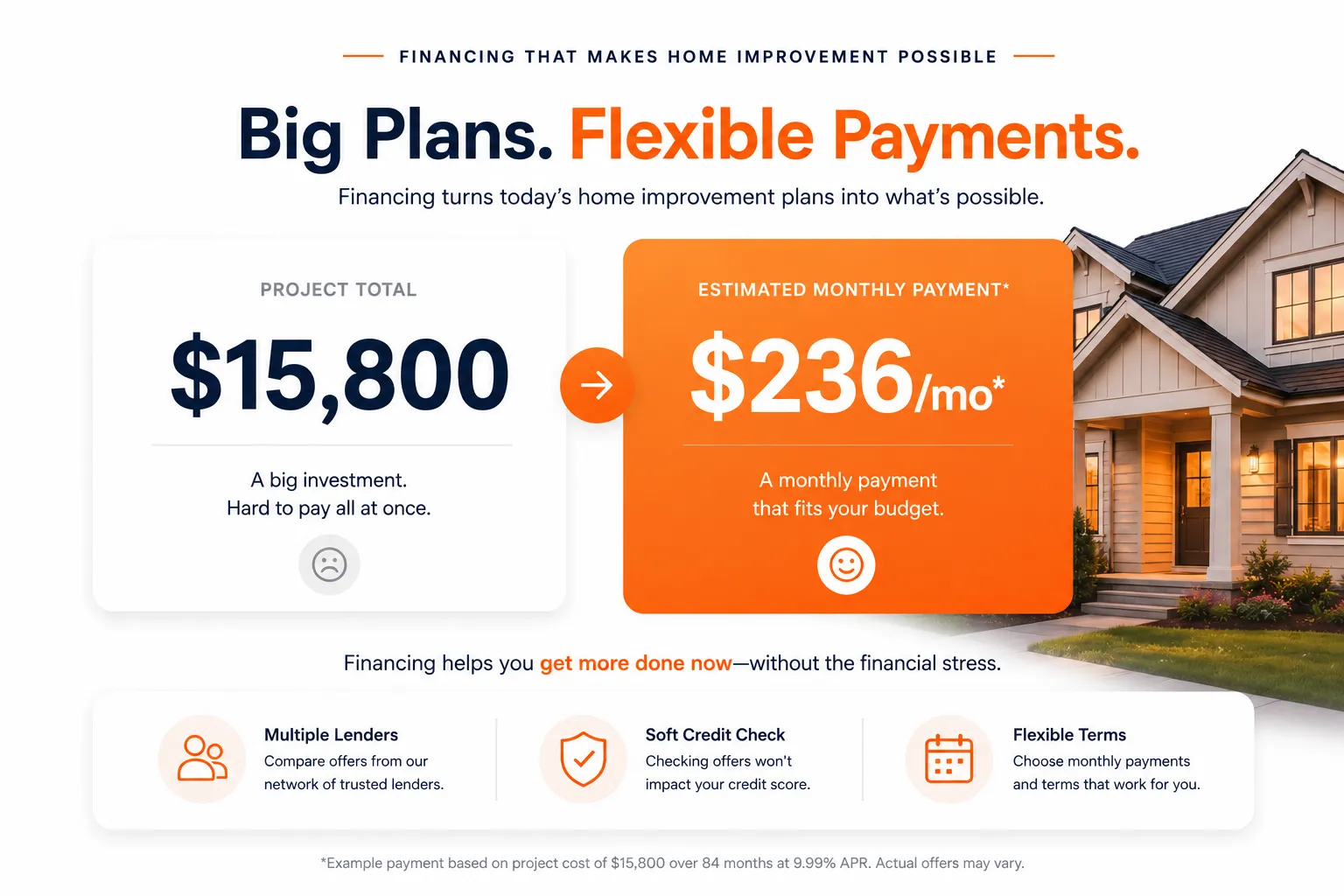
Risk-Free Prequalification
Checking offers won’t impact your credit.
It’s common for homeowners to delay applying because they’re worried about their credit score. With a soft credit check, you can review available financing options without any impact to your credit score.2